23 Small Bathroom Organization Ideas That Feel Fuss-Free
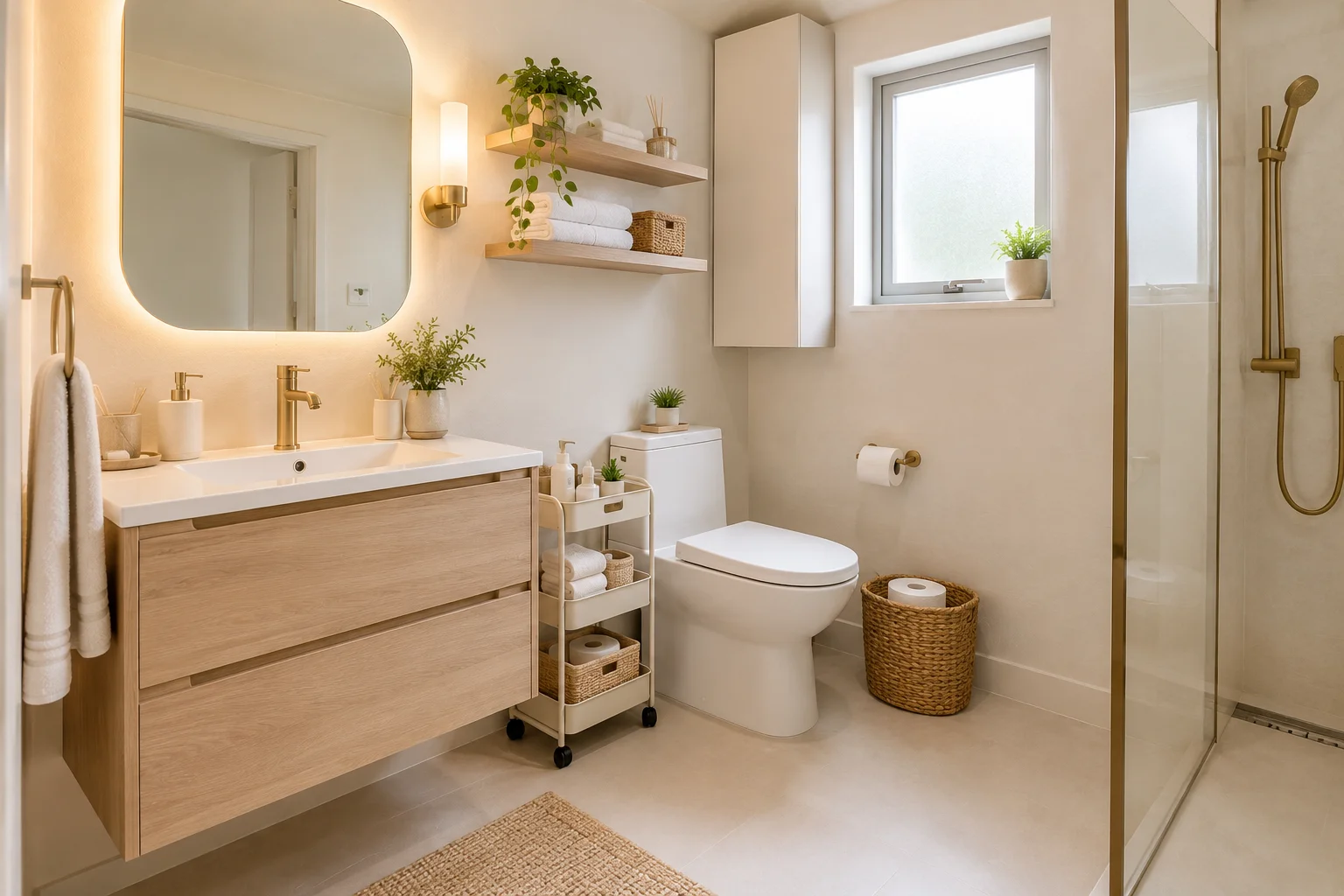
Small Bathroom Organization Ideas can make a cramped bathroom feel much easier to use without requiring a major renovation. The right mix of vertical storage, compact organizers, hidden cabinets, and smart countertop solutions can keep everyday essentials within reach while leaving valuable floor space open.
These ideas work for apartment bathrooms, rental homes, family bathrooms, and compact powder rooms. From wall-mounted shelves and drawer dividers to over-the-door storage and neatly arranged baskets, each solution focuses on making the most of the space you already have.
1. Floating Corner Shelves
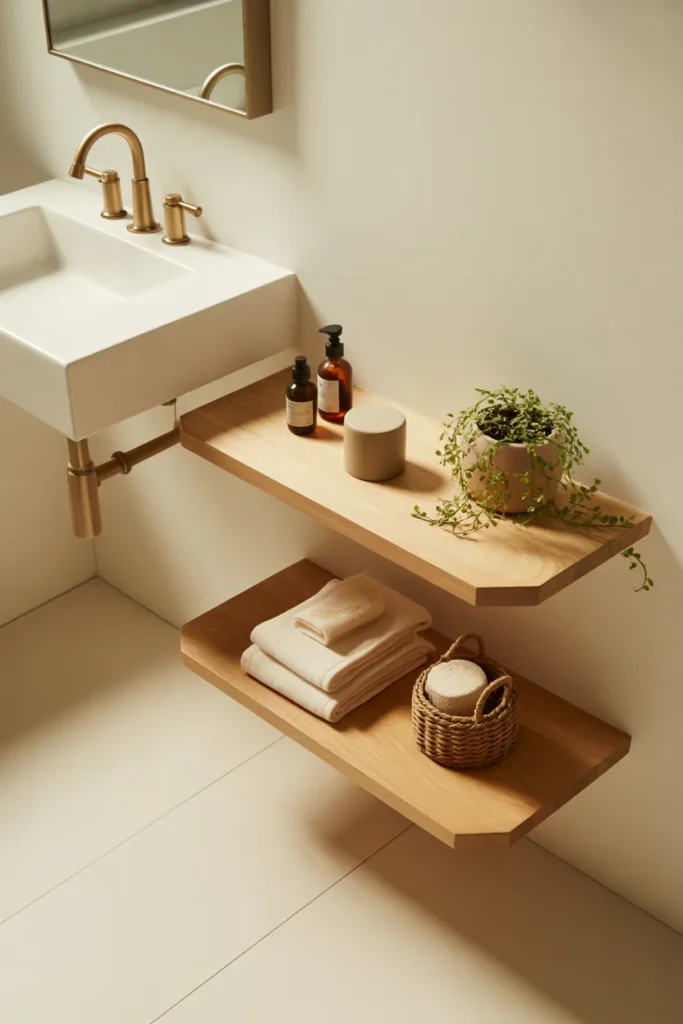
Floating corner shelves turn an otherwise ignored area into useful storage without taking up floor space. Install two or three narrow shelves above the toilet, beside the vanity, or in an empty corner. White, light oak, or warm bamboo finishes keep the arrangement visually light.
Keep the shelves for items you use often, such as folded washcloths, small jars, skincare bottles, or spare toilet paper. Leave some open space between groups rather than filling every inch. This keeps the corner from looking crowded and makes cleaning around the shelves easier.
2. Slim Rolling Storage Cart
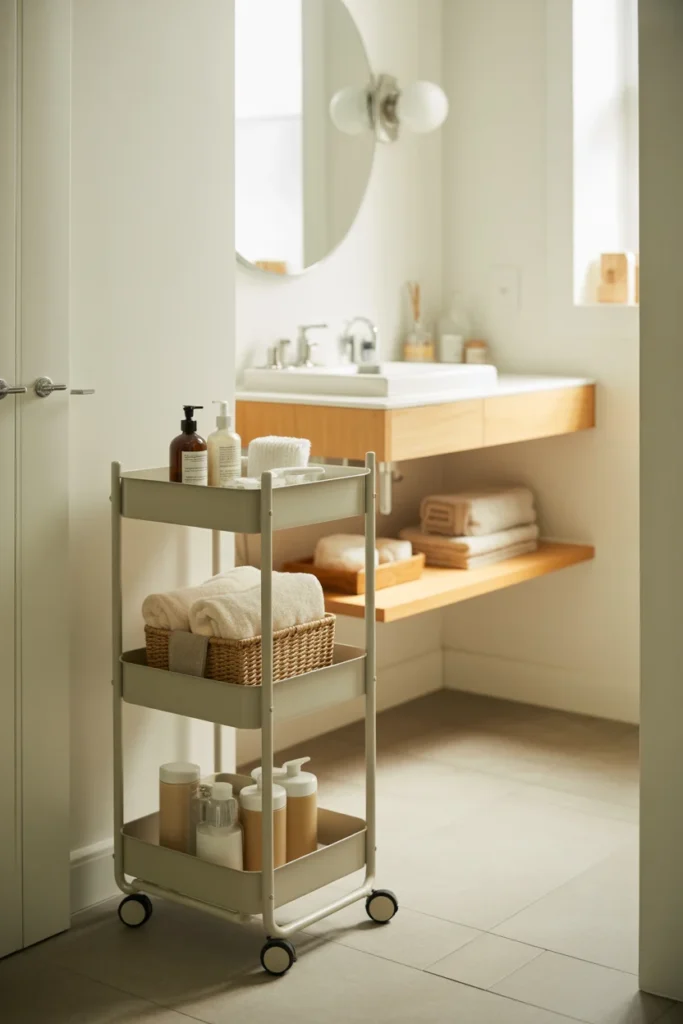
- Best Location: Beside the vanity, toilet, or shower
- Width: Look for a narrow cart that leaves comfortable walking clearance
- Materials: Metal, bamboo, or moisture-resistant plastic
- Storage: Toiletries, towels, cleaning supplies, and hair tools
- Budget: Low to moderate
A slim rolling cart is especially useful when permanent storage is limited. Choose one with several shallow tiers so bottles remain visible instead of becoming buried. A wheeled design can also be pulled forward when cleaning and tucked back against the wall afterward.
3. Over-Door Storage
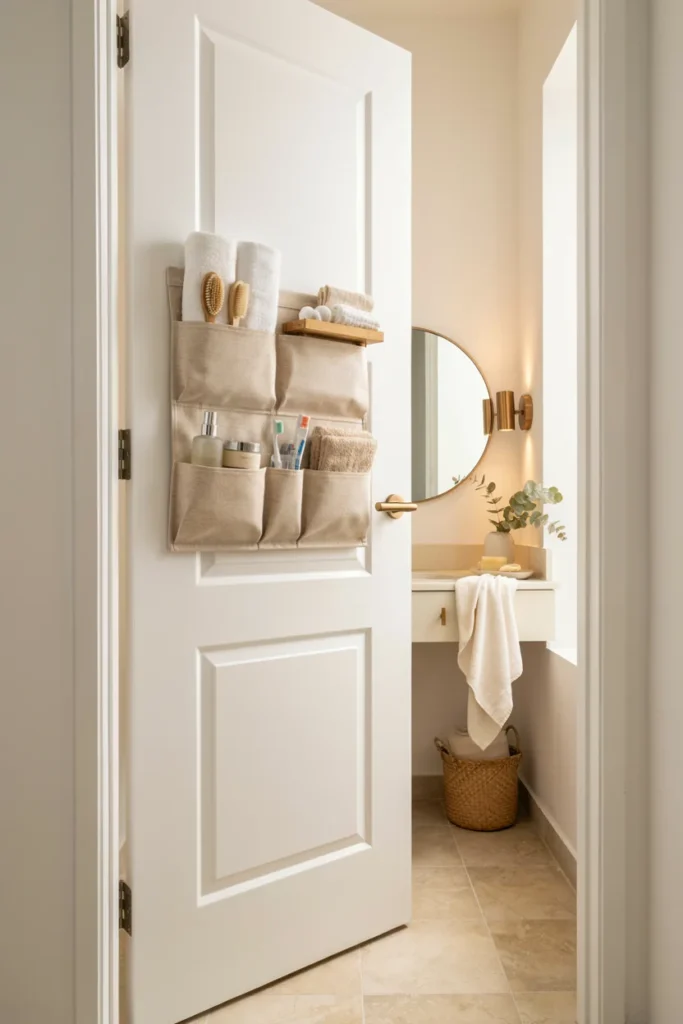
Quick Tip: Treat the back of the bathroom door as usable vertical storage. A slim over-door organizer can hold hair products, brushes, cosmetics, toilet paper, or small cleaning supplies without occupying floor area.
Choose an organizer with shallow pockets if the door sits close to another wall or fixture. Neutral fabric or clear pockets can keep the arrangement visually tidy while making frequently used products easy to find.
4. Organized Vanity Drawers
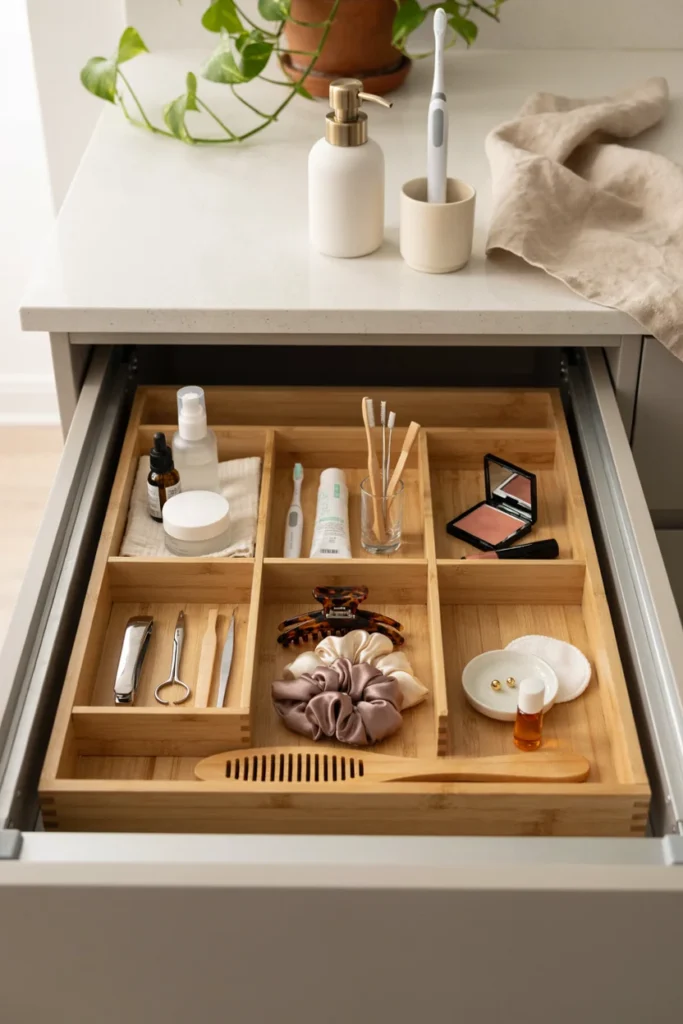
BEFORE
The vanity counter is covered with bottles, brushes, cosmetics, and small daily essentials. With no clear landing space, cleaning becomes inconvenient and the entire bathroom feels more cluttered than its actual size.
AFTER
A divided drawer organizer moves most of the everyday products below the countertop. Only a soap dispenser and one or two frequently used items remain visible, creating a cleaner surface without sacrificing convenience.
Use adjustable compartments to separate categories such as skincare, dental products, cosmetics, and grooming tools. Check drawer height before buying an organizer so the compartments fit without preventing the drawer from closing properly.
5. Shower Storage
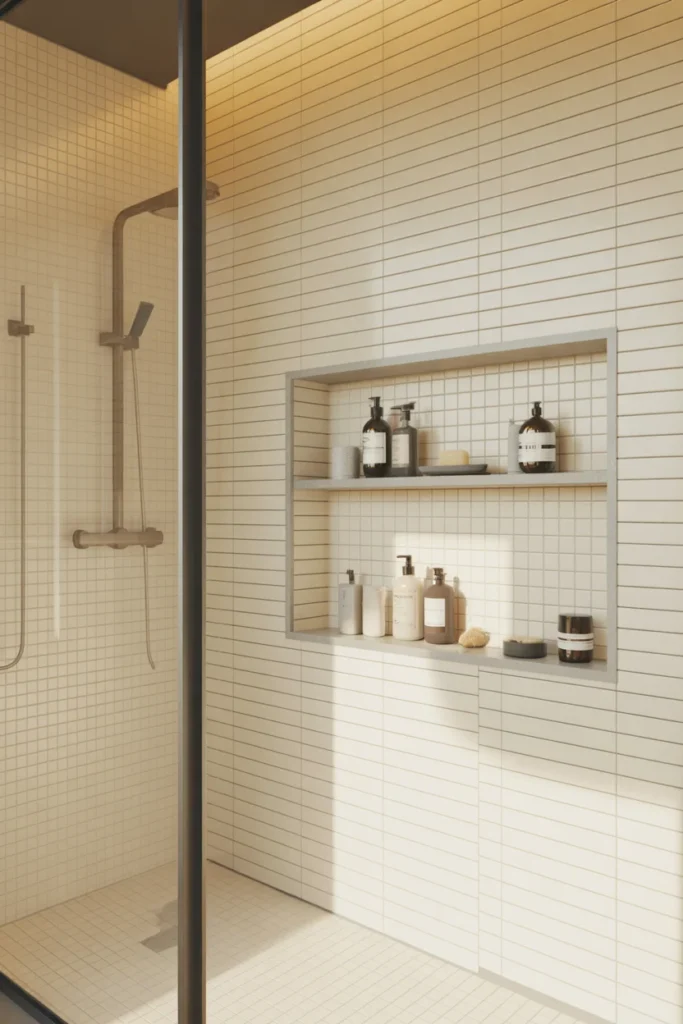
- Measure the wall: Identify a suitable shower wall while accounting for plumbing and existing fixtures.
- Choose the storage size: Keep the niche proportional to the shower and large enough for daily bottles.
- Coordinate materials: Match the tile or use a subtle contrasting finish for definition.
- Group products: Place shampoo and conditioner together while keeping smaller items in a compact basket.
- Maintain the niche: Wipe shelves regularly to prevent soap residue and buildup.
A built-in niche works particularly well during a bathroom renovation because it creates dedicated shower storage without adding a bulky caddy. For an existing bathroom, a corner shower shelf can provide a similar organizing function with less construction.
6. Open Baskets Under the Sink
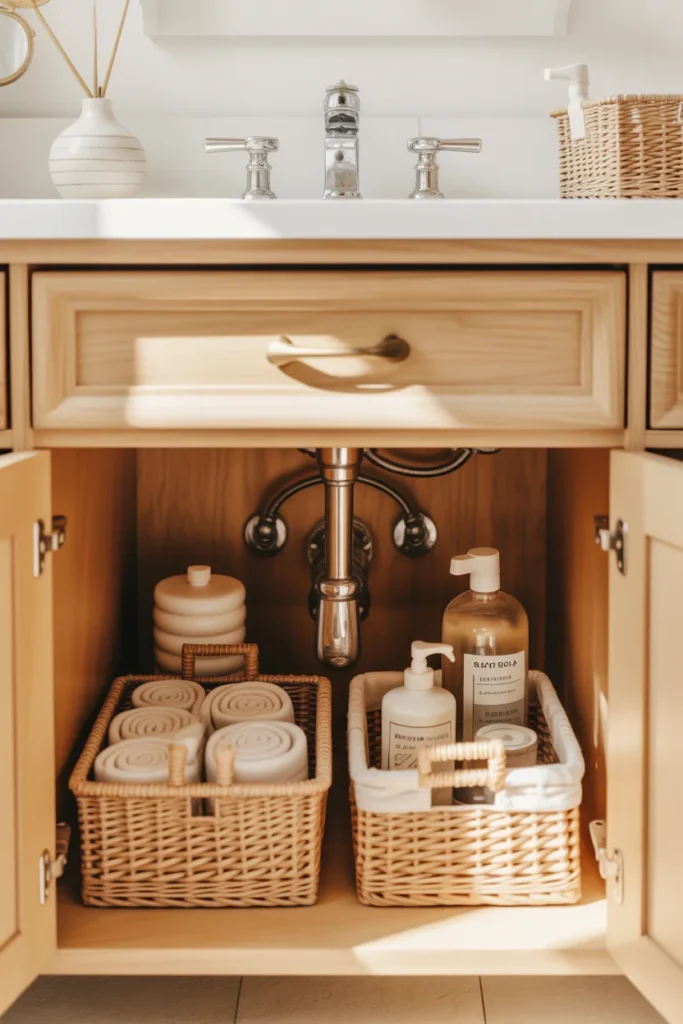
| Feature | Open Baskets | Stackable Bins |
| Visual Feel | Soft and decorative | Clean and structured |
| Access | Quick to grab | Better for grouped items |
| Best For | Towels and refill supplies | Small toiletries |
| Maintenance | Easy to remove | Easy to wipe |
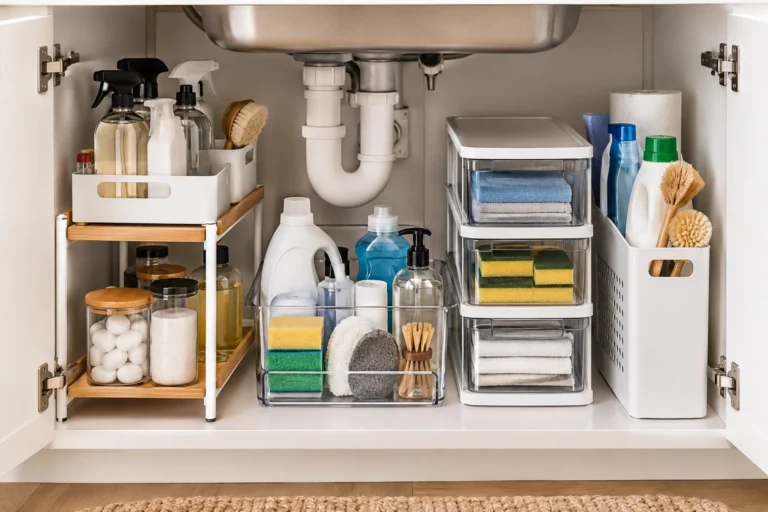
Both options can make awkward under-sink areas more functional. Baskets suit bathrooms with a warmer, natural decorating style, while stackable bins can create more defined categories. Measure around plumbing pipes first and leave enough clearance to remove each container easily.
7. Countertop Storage Tray
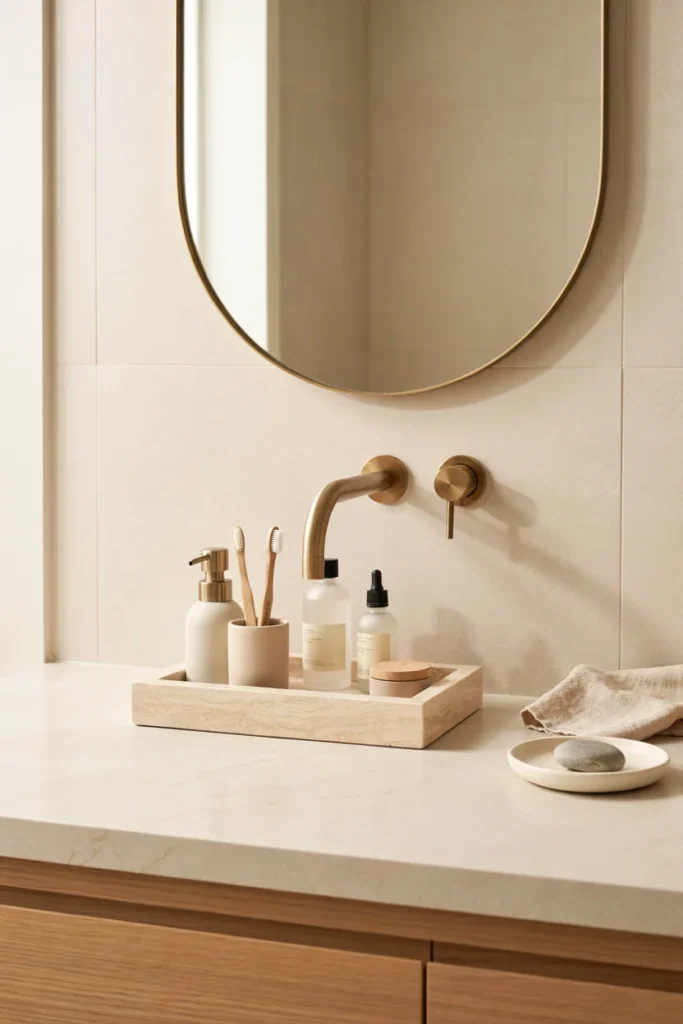
DO:
- Keep only daily-use products on the counter.
- Use one tray to group small essentials.
- Choose containers that match the bathroom finish.
- Leave a clear area for cleaning and everyday use.
DON’T:
- Cover the entire vanity with bottles.
- Mix too many container styles.
- Store rarely used products beside the sink.
- Choose organizers that are difficult to wipe clean.
The main goal is controlled visibility. A small tray can visually unite several necessary items, while everything else can move into drawers, cabinets, or baskets. This approach keeps the vanity functional without making it look bare or overly styled.
See Also 21 Modern Black Bathroom Shower Ideas
8. Over-Toilet Cabinet
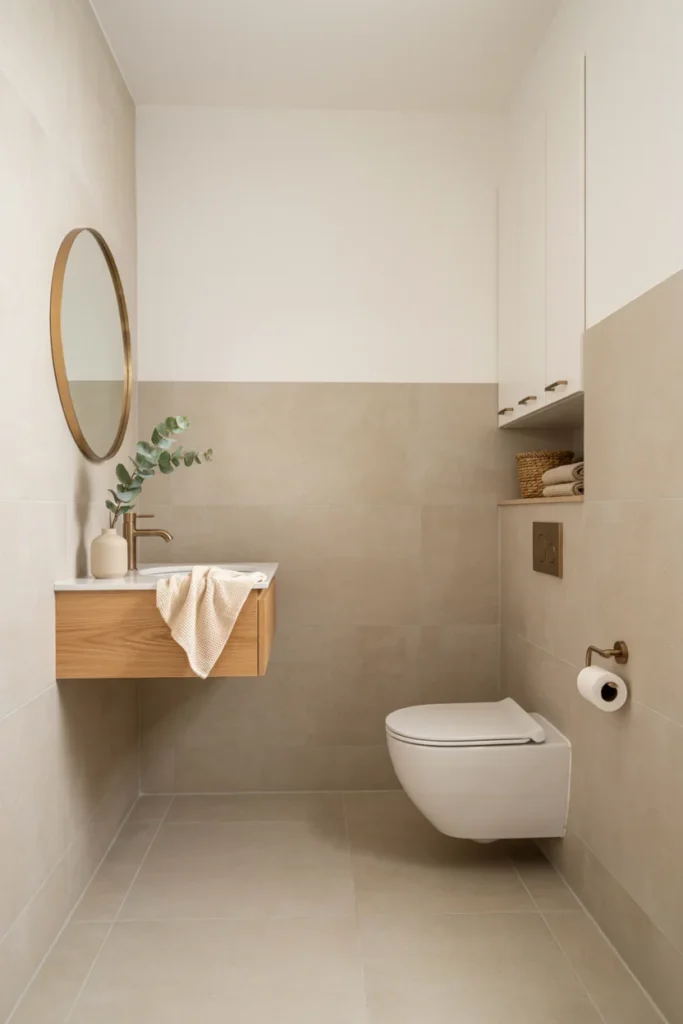
Placement: Wall above the toilet
Storage: Toiletries, paper goods, towels, and cleaning supplies
Style: Traditional, modern, farmhouse, or minimalist
Best Feature: Uses vertical wall space without extending into the floor area
An over-toilet cabinet is useful when the bathroom has a blank wall above the toilet. Choose a shallow model that does not interfere with the toilet lid or make the room feel visually top-heavy. Closed doors also help conceal less attractive household supplies.
9. Drawer Dividers
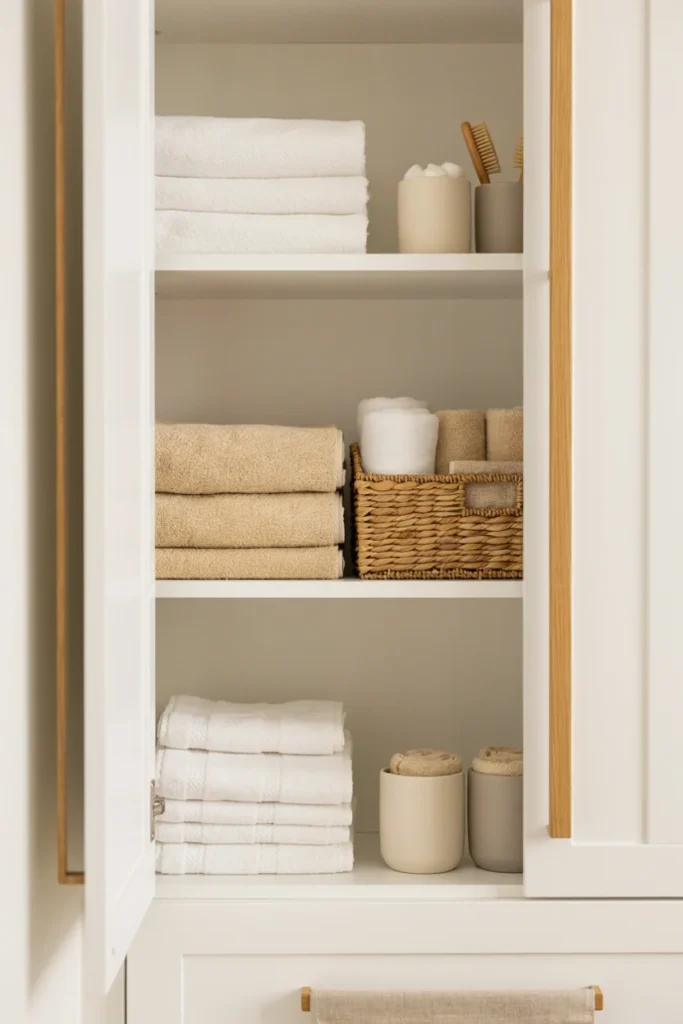
Drawer dividers prevent small bathroom items from becoming one large mixed-up collection. Use separate sections for toothbrush accessories, cosmetics, skincare, shaving supplies, or hair accessories. Adjustable dividers are particularly useful because the categories can change as your storage needs evolve.
For shallow drawers, choose low-profile inserts instead of deep boxes. Group similar products together and avoid creating too many tiny compartments. A few clearly defined zones are easier to maintain than an organizer packed with dozens of small sections.
10. Magnetic Wall Strip
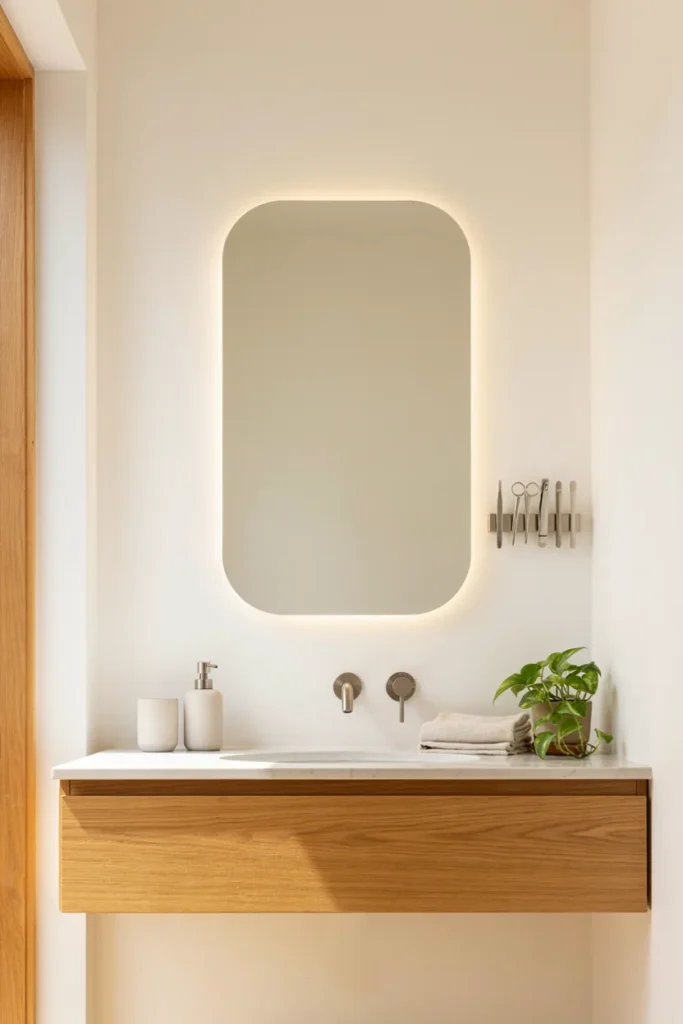
A magnetic strip can keep small metal grooming tools off the vanity and inside drawers. Install it on an accessible wall near the vanity or inside a cabinet door, depending on your layout. It can hold compatible tweezers, nail tools, clips, or other lightweight metal accessories.
Before installation, check the surface and mounting method, particularly in a humid bathroom. Keep sharp grooming tools out of children’s reach and avoid placing the strip where it could interfere with electrical fixtures or water.
11. Matching Labeled Bins
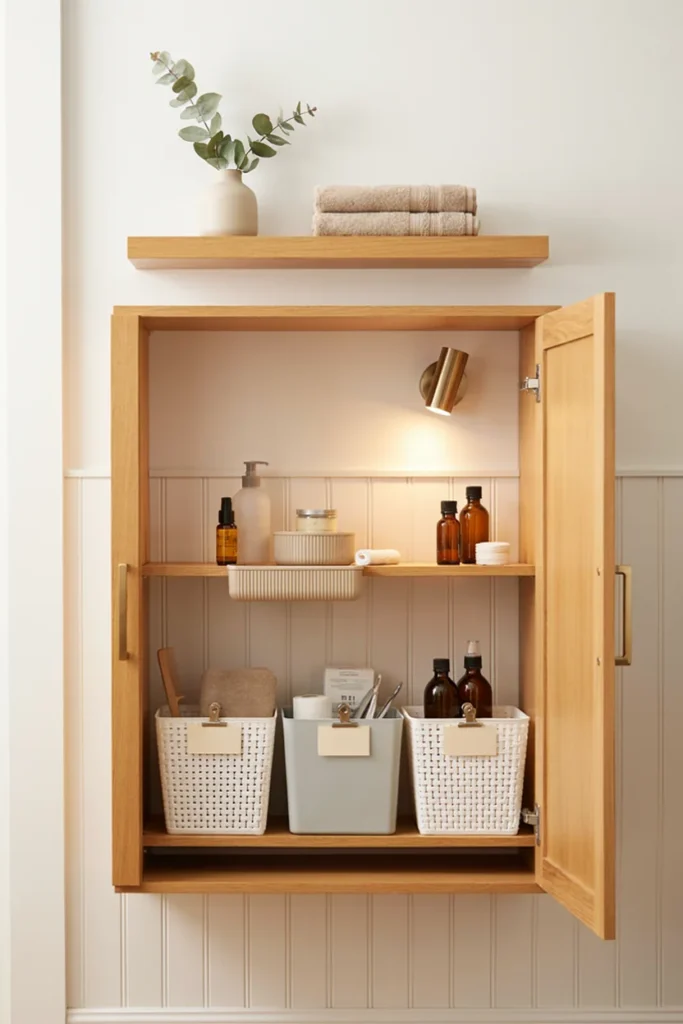
Quick Tip: Use a small number of matching bins for categories rather than labeling every individual product. Useful categories include “Hair,” “Skincare,” “First Aid,” “Travel,” and “Refills.”
Place the bins inside a linen cabinet, under the sink, or on a high shelf. Consistent labels make shared bathrooms easier to manage because everyone can quickly return items to their designated location.
12. Linen Shelf Organization
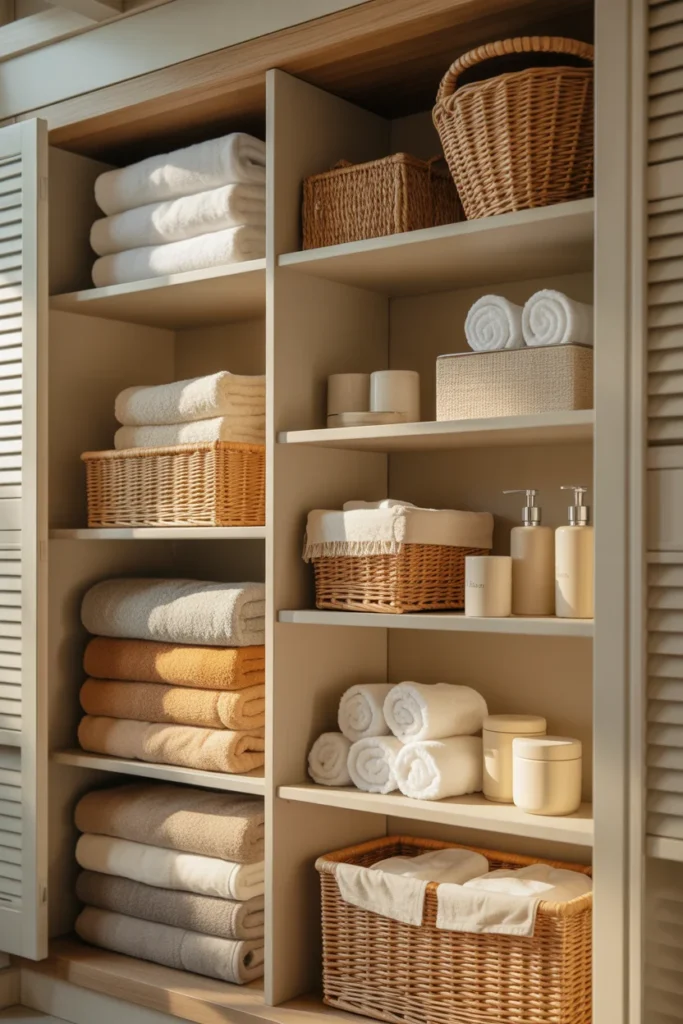
BEFORE
Towels are stacked unevenly, spare toiletries are mixed together, and small products disappear behind larger packages. The shelf technically has storage capacity, but the arrangement makes it difficult to see what is available.
AFTER
Folded towels occupy one defined section while labeled containers hold toiletries and backup supplies separately. The front edge remains visible, making it easier to find what is needed without pulling everything forward.
Fold towels to a consistent size and use baskets for smaller items. Leave a little vertical clearance above each category so the shelf remains easy to access rather than becoming tightly packed.
13. Under-Sink Pull-Out Bins
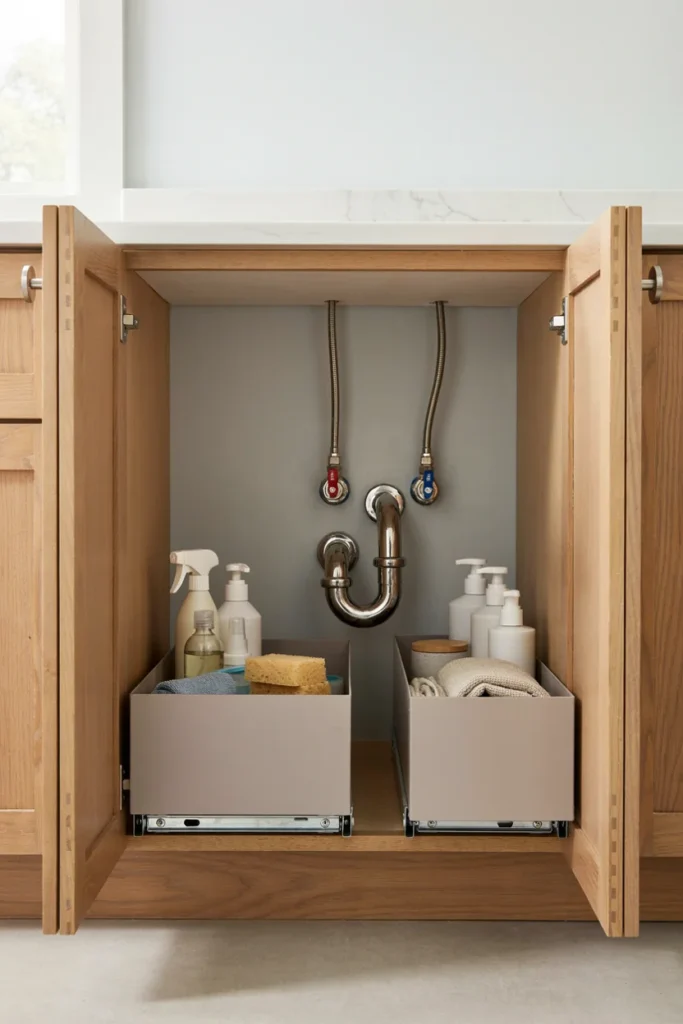
- Clear the cabinet: Remove everything and identify what actually needs to remain under the sink.
- Measure carefully: Check cabinet width, depth, height, and plumbing placement.
- Choose the right bin: Select a pull-out container that can clear the pipes.
- Group supplies: Keep cleaning products together and toiletries in a separate container.
- Leave access space: Make sure shutoff valves and plumbing remain reachable.
Pull-out storage is especially helpful in deep cabinets because it brings items at the back within reach. If drilling is unsuitable for a rental, freestanding pull-out bins can provide a similar arrangement without permanent installation.
14. Narrow Wall-Mounted Cabinet
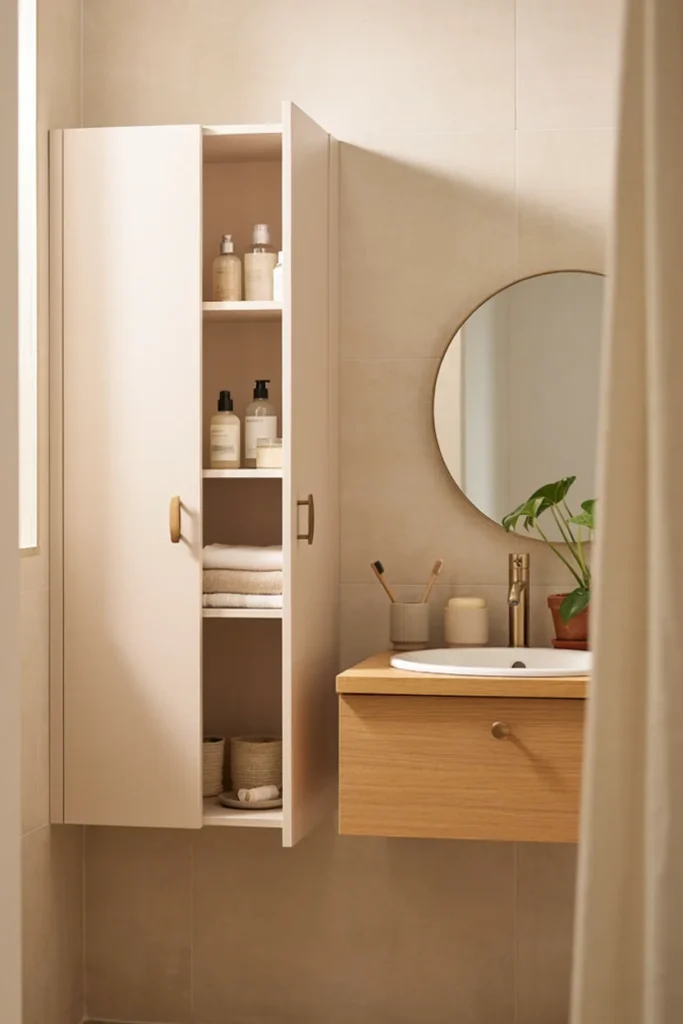
| Feature | Shallow Cabinet | Deep Cabinet |
| Space Requirement | Less projection | More wall depth |
| Visual Effect | Light and discreet | More substantial |
| Best Use | Daily toiletries | Larger backup supplies |
| Access | Quick | More storage capacity |
A narrow cabinet can add concealed storage to a wall that cannot accommodate a full-size unit. Choose a finish that coordinates with the vanity or wall color so the cabinet feels integrated. Keep frequently used products at eye level and less-used items higher up.
15. Shower Storage Organization
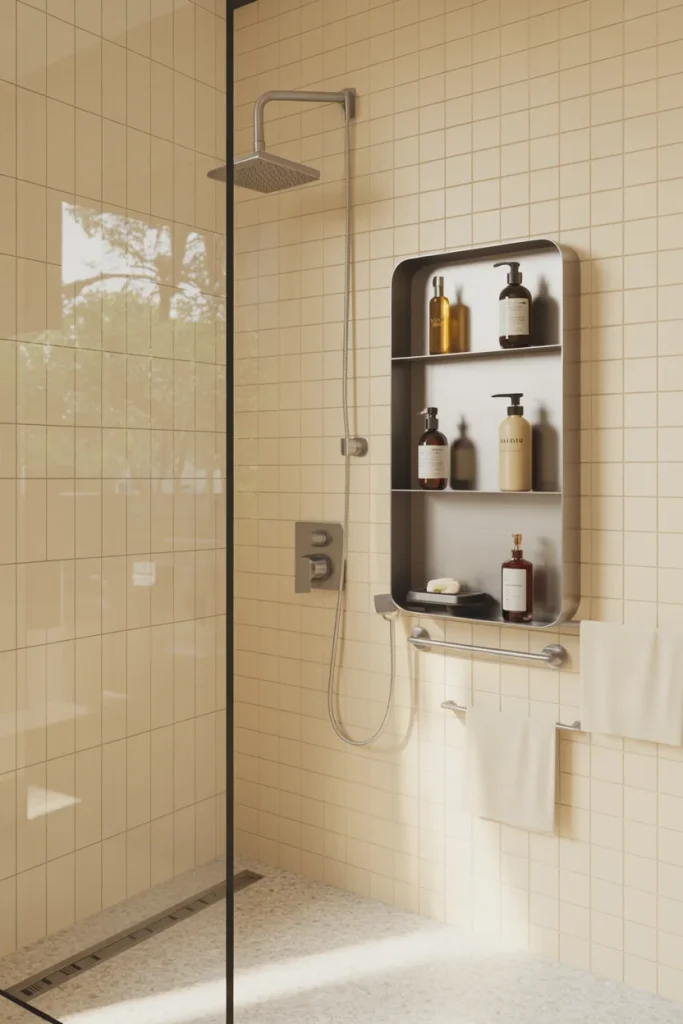
DO:
- Group products by use.
- Keep bottles upright.
- Use rust-resistant materials.
- Clean shelves regularly.
DON’T:
- Let bottles collect around the shower floor.
- Overload a suction organizer.
- Store products where they block the drain.
- Ignore moisture when choosing materials.
Good shower organization depends on both accessibility and durability. Stainless steel, coated metal, quality plastic, and other moisture-resistant materials can handle the environment better than finishes that swell or corrode easily.
16. Behind-Door Hooks
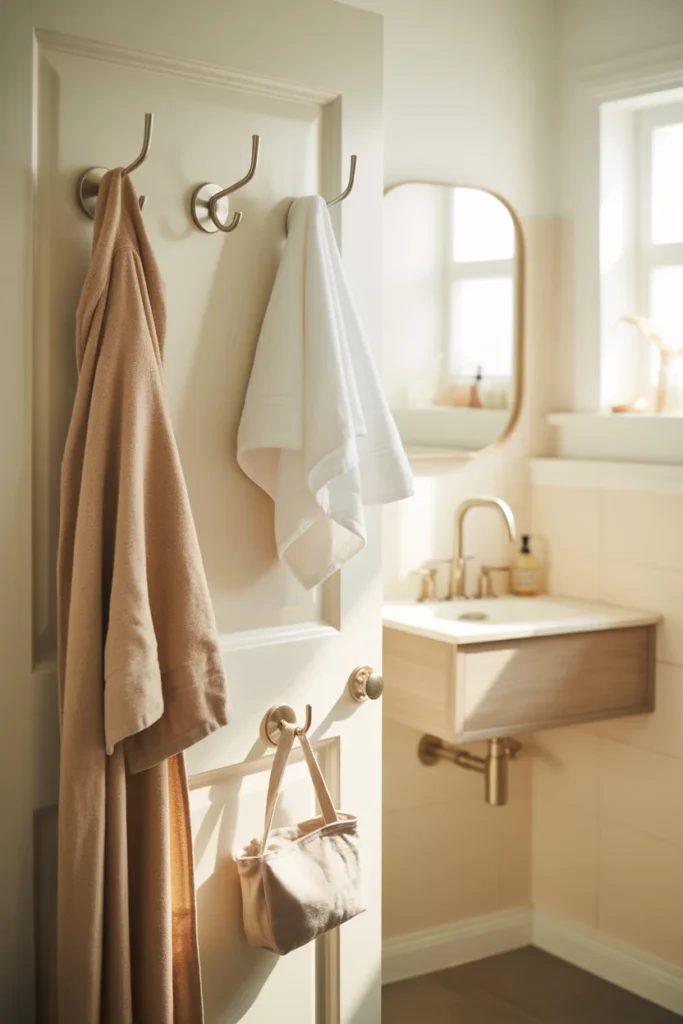
Best Placement: Back of bathroom door
Ideal For: Robes, towels, brushes, and toiletry bags
Difficulty: Beginner
Space Needed: Minimal
Hooks are one of the simplest ways to create additional hanging storage. Use two or three rather than covering the entire door. If drilling is not allowed, choose removable hooks rated for the weight of the item being hung and follow the manufacturer’s installation instructions.
17. Tiered Vanity Organizer
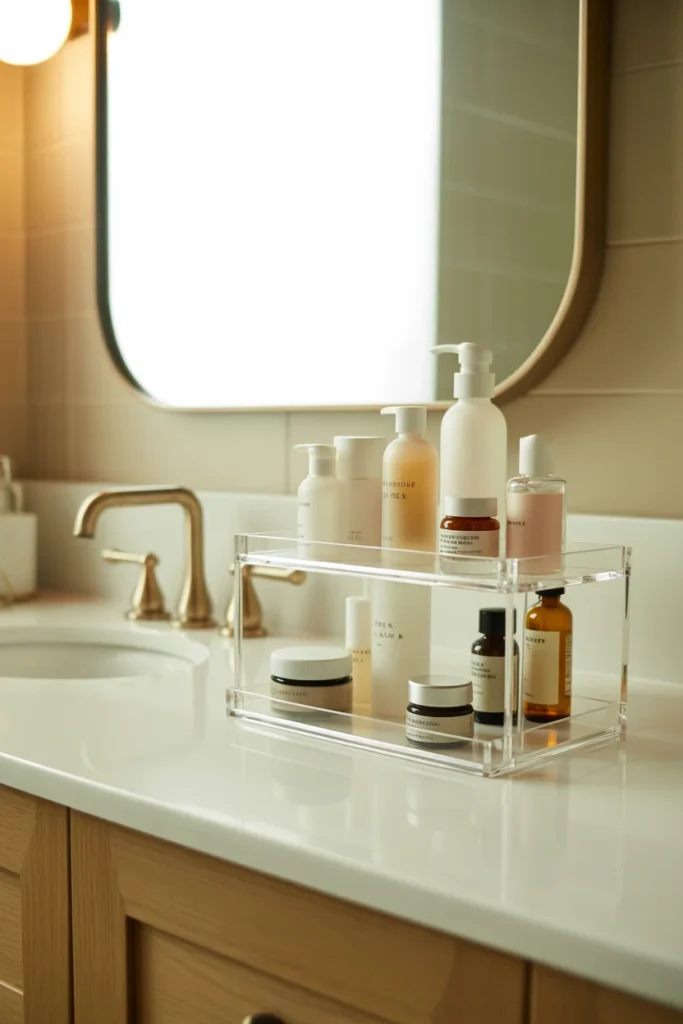
A tiered organizer creates multiple levels inside a cabinet or on a countertop, making shorter bottles easier to see. Place taller products toward the back and smaller containers toward the front. This arrangement reduces the need to move several items just to reach one bottle.
Acrylic works with modern bathrooms, while bamboo or wood-look organizers add warmth. For open countertop use, keep the organizer limited to products used daily so the display remains intentional rather than becoming another clutter zone.
18. Recessed Medicine Cabinet
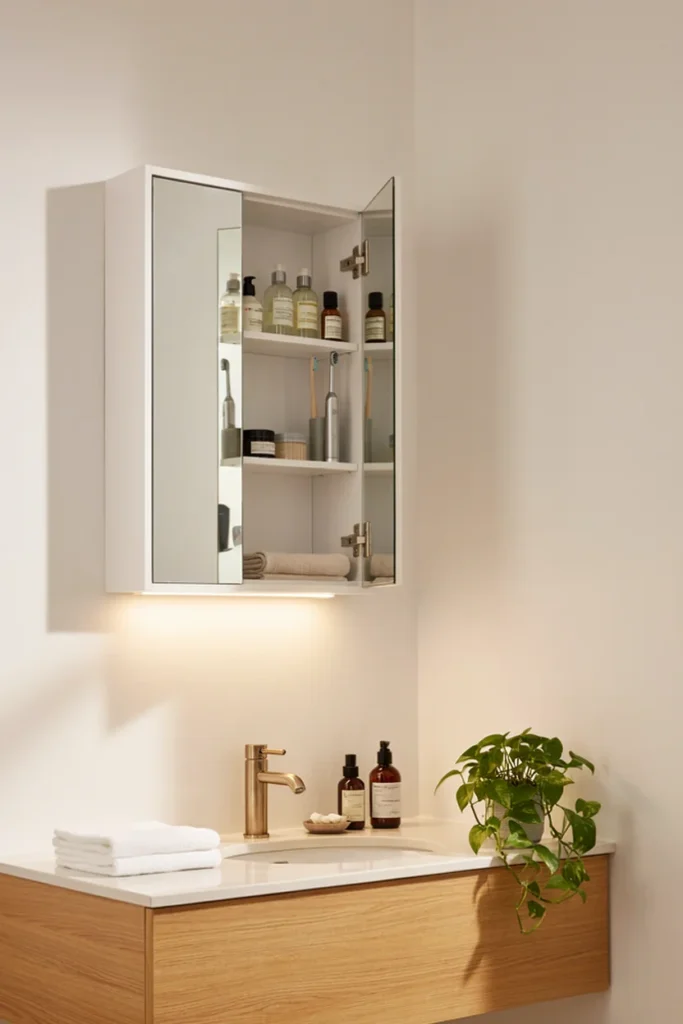
A recessed medicine cabinet can provide substantial storage while sitting nearly flush with the wall. It is particularly useful above a vanity because the mirror can perform two jobs at once. Adjustable shelves allow different bottle heights to be organized vertically.
During installation, the wall cavity must be suitable and clear of important plumbing or electrical components. For existing bathrooms, a surface-mounted mirrored cabinet can provide a similar storage function without opening the wall.
19. Step-Up Shelf Inside Cabinets
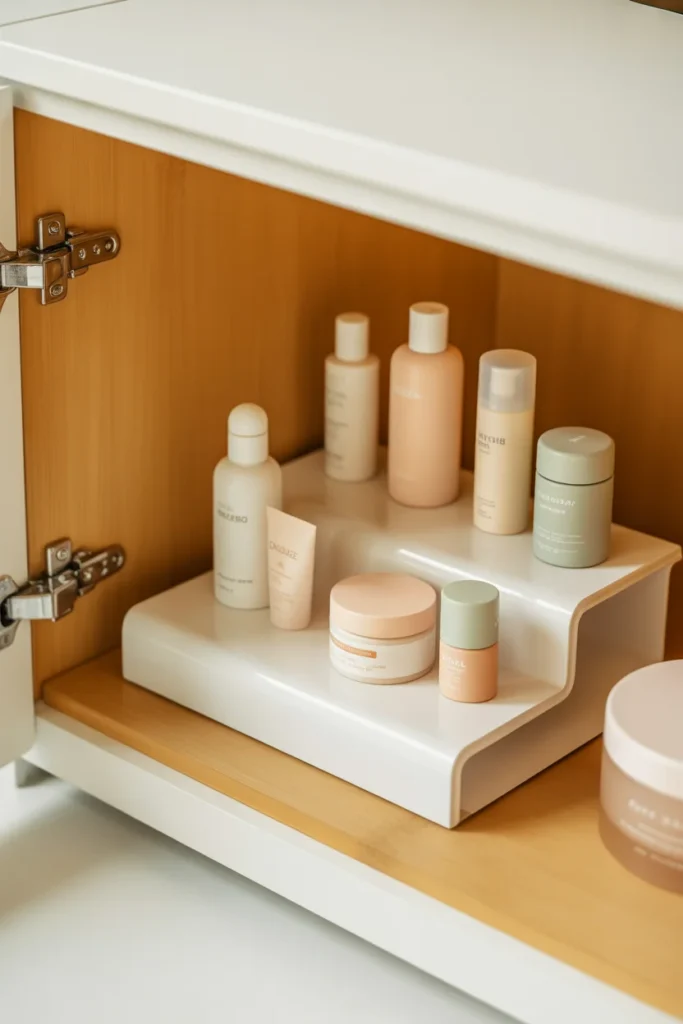
Quick Tip: Add a small riser or stepped shelf inside a bathroom cabinet to make short containers visible behind taller ones. This works especially well for skincare bottles, cosmetics, and medicine containers.
Keep heavier items on the lower level and lighter products above. Avoid stacking unstable bottles near the cabinet edge. A simple stepped organizer can turn one deep shelf into several usable visual levels.
20. Toilet Paper Storage
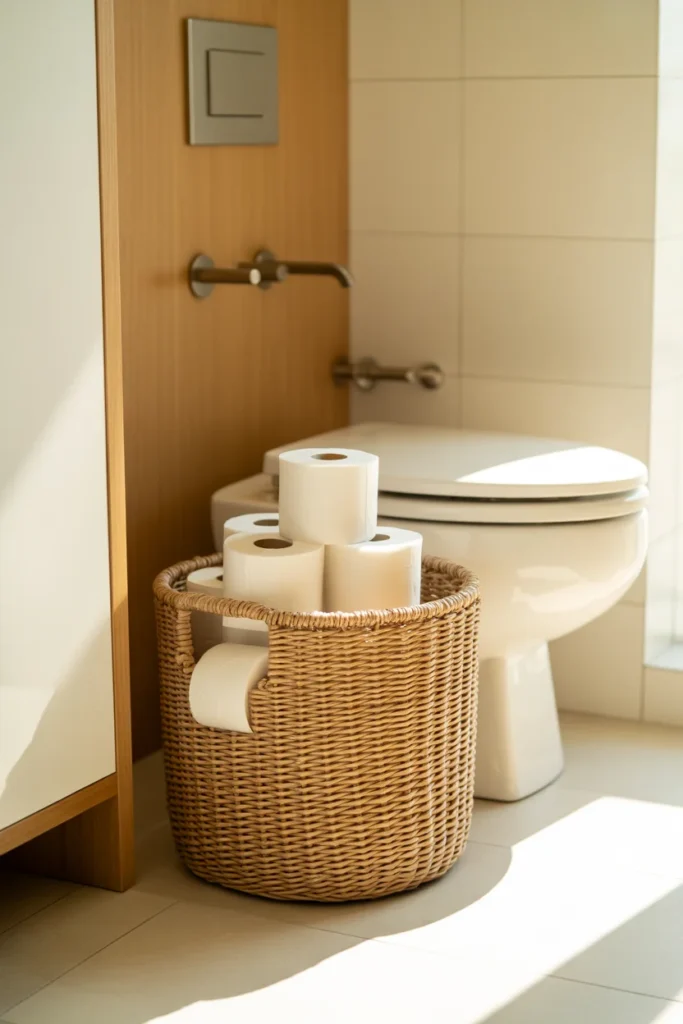
BEFORE
Extra toilet paper is stacked wherever there is room, leaving rolls exposed beside the toilet or scattered across a cabinet shelf. The bathroom feels untidy even though the supplies are necessary.
AFTER
A slim basket or vertical holder keeps spare rolls together in one predictable location. A woven basket can soften a modern bathroom, while a metal or wood holder can coordinate with existing fixtures.
Choose a container that holds several rolls without becoming bulky. Keep it far enough from splash zones to prevent moisture damage, and leave one or two rolls easily accessible for quick replacement.
21. Wall-Mounted Cup Holders
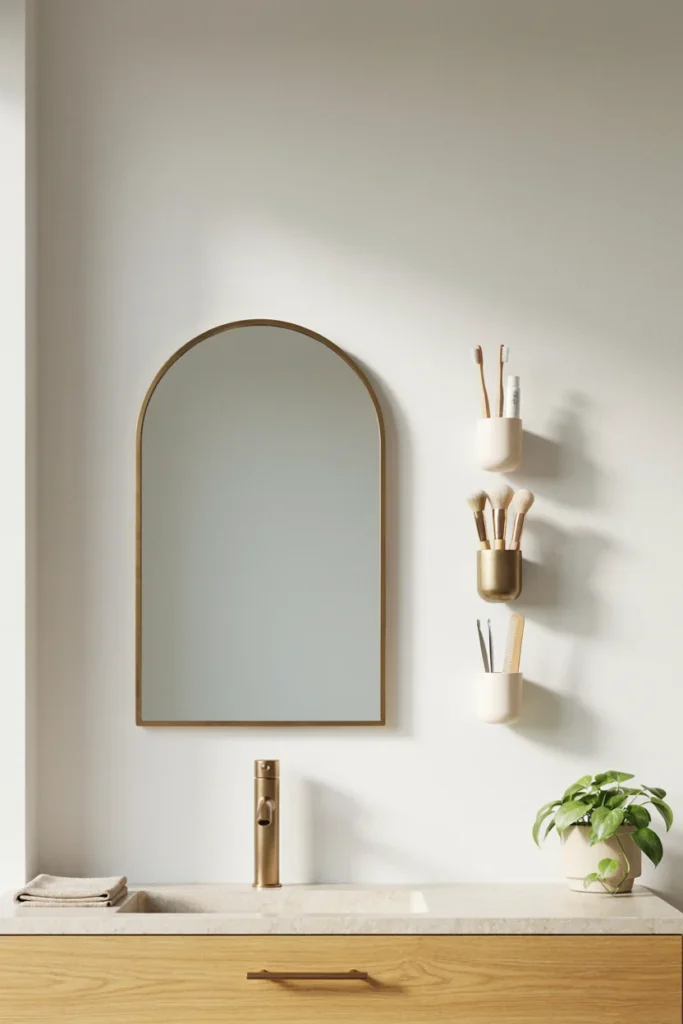
Wall-mounted cups or small holders can free up valuable vanity space around the sink. Use them for toothbrushes, toothpaste, makeup brushes, or grooming tools. Mount them at a comfortable height where users can reach them without stretching across the sink.
Choose holders that can be removed and washed easily. For shared bathrooms, assign separate cups or compartments to different household members to keep personal items organized and clearly separated.
22. Under-Cabinet Storage Rack
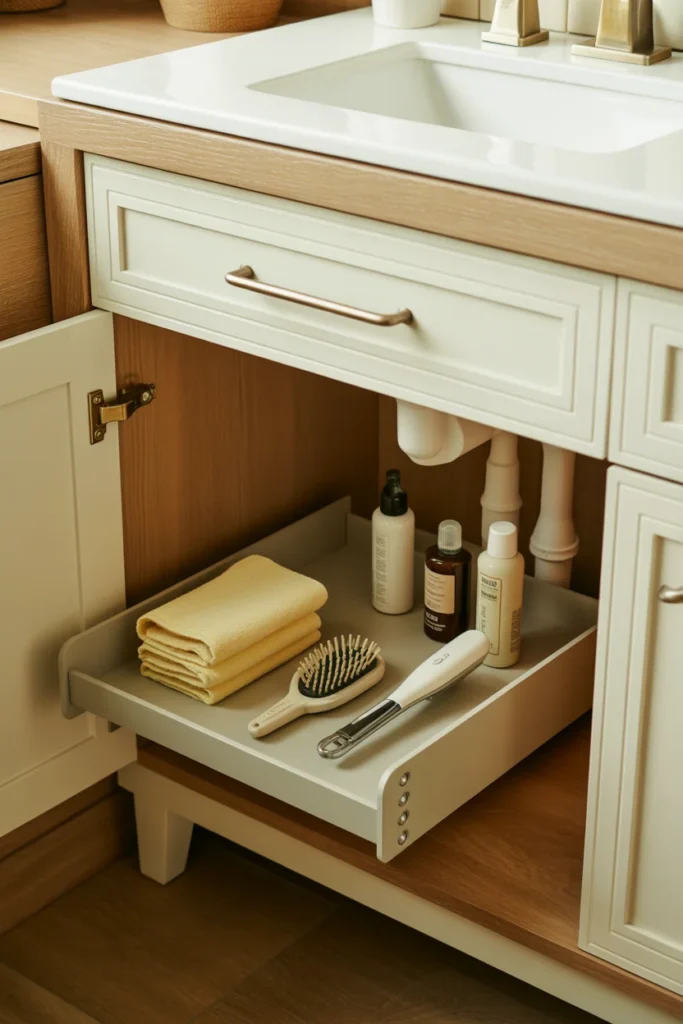
Room: Compact bathroom with a vanity cabinet
Materials: Powder-coated metal, stainless steel, or durable plastic
Best Use: Hair tools, towels, cleaning cloths, or small supplies
Budget: Low to moderate
An under-cabinet rack can create useful storage in the vertical space beneath a shelf or cabinet surface. Choose a design that does not obstruct doors, plumbing, or drawers. This is also a practical place for items that need to remain accessible but do not deserve countertop space.
23. Clear Acrylic Product Bins
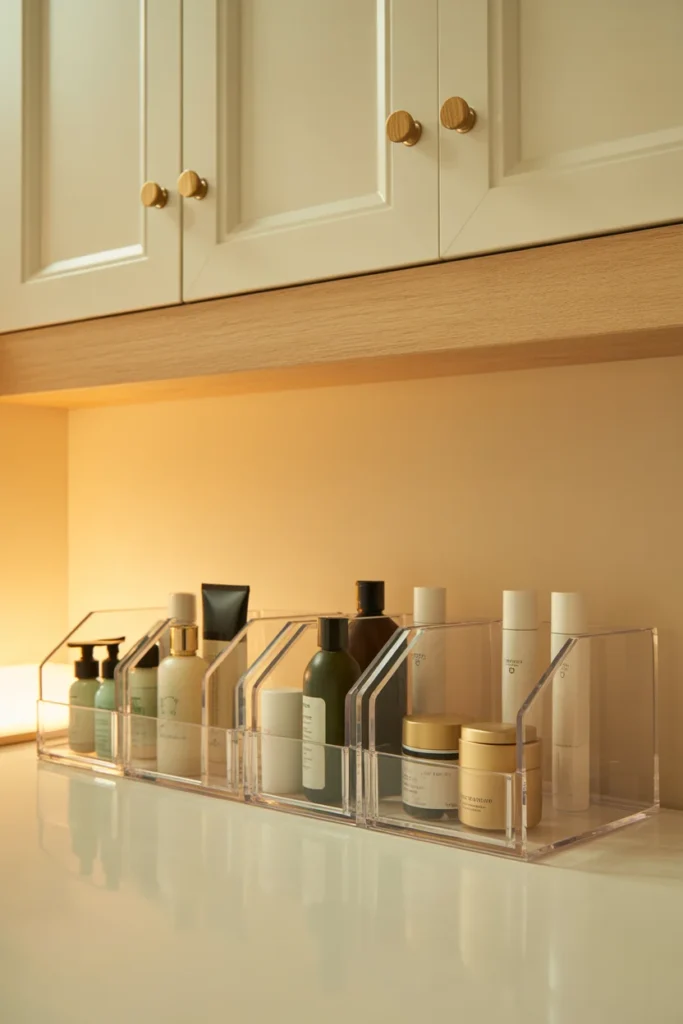
Clear acrylic bins make bathroom products visible at a glance while keeping categories contained. Use one bin for skincare, another for hair products, and another for backup toiletries. Their transparent construction makes it easier to identify what is inside without opening every container.
They work especially well inside vanity cabinets and on open shelves. Keep the categories broad enough to stay useful, and remove expired or rarely used products regularly. A quick monthly reset can prevent these bins from becoming overcrowded.
Practical Tips for a Fuss-Free Bathroom
Measure Before Buying
Measure cabinet interiors, shelves, wall gaps, and door clearance before purchasing organizers. A storage product that is only slightly too wide can make an entire cabinet frustrating to use.
Store by Frequency
Keep everyday products within easy reach and move backup or seasonal items higher up or farther back. This reduces unnecessary searching and keeps high-use areas less cluttered.
Mix Open and Closed Storage
Open shelves are convenient for attractive everyday items, while closed cabinets are better for products you would rather keep out of sight. Combining both creates a practical balance between accessibility and visual calm.
Keep Moisture in Mind
Bathrooms expose storage materials to humidity, splashes, and frequent cleaning. Choose finishes that can tolerate moisture, and avoid materials that warp or deteriorate quickly in damp areas.
Leave Some Empty Space
Storage works better when containers are not packed to their limits. Leaving a little room makes it easier to put things away and gives the bathroom a cleaner visual appearance.
Reassess Regularly
Every few weeks, check drawers, cabinets, and baskets for products that have expired, emptied, or stopped being useful. Removing unnecessary items is often more effective than adding another organizer.
Conclusion
The most effective Small Bathroom Organization Ideas do not require a large bathroom or an expensive renovation. Floating shelves, drawer dividers, rolling carts, baskets, wall-mounted storage, and carefully planned cabinets can each solve a specific problem while preserving valuable floor and counter space.
Start with the area that causes the most frustration, measure before buying anything, and choose storage that matches how your household actually uses the room. Save these ideas for your next bathroom refresh, then adapt the colors, materials, and containers to your decorating style and budget. A few thoughtful changes can make everyday routines feel much more orderly.
FAQs
1. How do I organize a very small bathroom?
Start by using vertical and hidden storage. Over-door organizers, floating shelves, drawer dividers, under-sink bins, and mirrored cabinets can add capacity without taking much floor space. Keep daily-use items accessible and store backups elsewhere.
2. How can I organize a small bathroom without cabinets?
Use floating shelves, rolling carts, baskets, wall-mounted hooks, magnetic strips, over-door organizers, and narrow storage towers. Choose shallow pieces that preserve walking space and avoid overcrowding the walls.
3. What should I keep on a small bathroom counter?
Keep only products used every day, such as hand soap and perhaps a toothbrush holder. Group small items on one tray and move backup supplies, cosmetics, and rarely used products into drawers or cabinets.
4. How do I organize the space under a bathroom sink?
Begin by measuring around the plumbing. Use pull-out bins, stackable containers, or baskets to create separate categories for cleaning supplies, toiletries, and backup products. Keep shutoff valves and plumbing connections accessible.
5. How can I make bathroom storage look less cluttered?
Use matching containers, broad categories, consistent finishes, and a combination of open and closed storage. Avoid filling every shelf completely. Keeping some visual breathing room can make even a heavily used bathroom feel more orderly.