17 Stunning Cave Homes That Feel Like a Luxury Escape
Cave homes have a natural character that is difficult to recreate with conventional construction. Stone walls, curved ceilings, earthy textures, and tucked-away spaces can make a home feel both dramatic and incredibly peaceful.
I love how these homes balance raw architecture with comfortable furnishings, creating interiors that feel connected to nature while still offering the warmth and elegance of a luxury retreat.
1. Modern Minimalist Cave Home
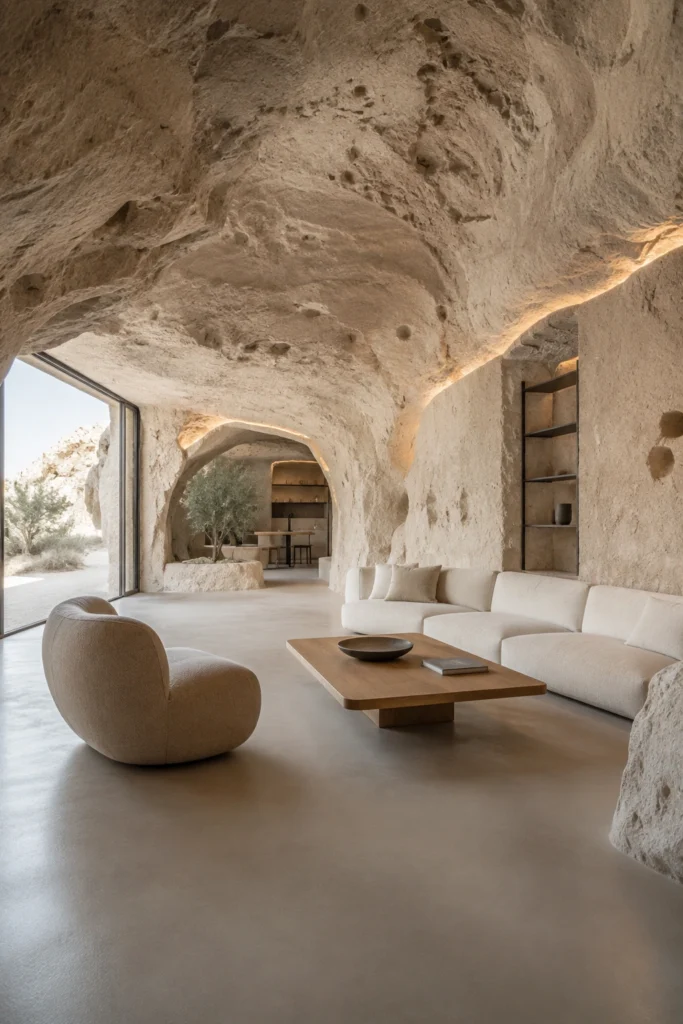
A modern minimalist cave home lets the natural rock become the main feature instead of covering it with excessive decoration. Clean-lined furniture, soft neutral colors, and simple lighting work beautifully against rough stone surfaces. From my experience with natural interiors, keeping the furnishings restrained makes unusual architecture feel much more intentional.
Choose pieces that add comfort without competing with the cave structure.
- Use cream, beige, taupe, and warm gray throughout the interior.
- Pair smooth furniture with naturally textured stone walls.
Large openings can also bring daylight deep into the home, making the space feel surprisingly spacious. A streamlined kitchen, low-profile sofa, and understated lighting can create a polished look while allowing the original rock formations to remain the star.
2. Cozy Cave Home With Natural Stone Walls
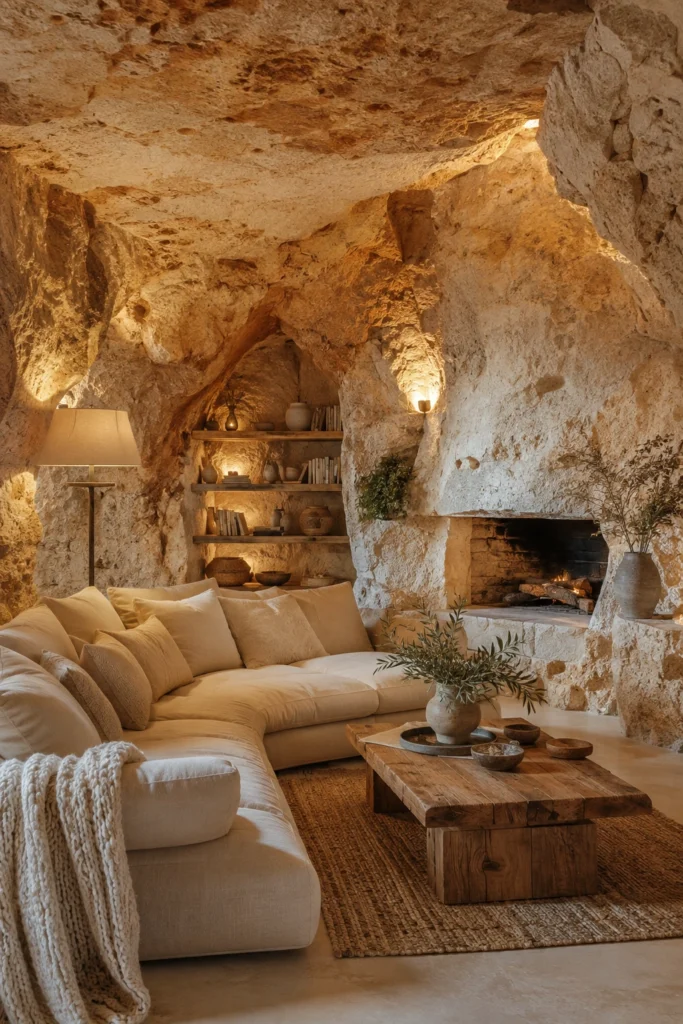
Natural stone walls instantly give a cave home warmth and personality. Instead of trying to make the walls perfectly uniform, I would let their irregular shapes and variations remain visible. The result feels authentic and cozy, especially when paired with soft textiles and warm lighting.
A comfortable seating area can make the stone surroundings feel especially inviting.
- Add chunky woven throws, linen cushions, and textured rugs.
- Use warm lamps and wall sconces to emphasize the stone texture.
Wooden furniture also works beautifully here because it softens the harder appearance of rock. A few plants, handcrafted accessories, and earthy artwork can complete the space without making it feel overly decorated.
3. Luxury Cave Home With Floor-to-Ceiling Windows

Floor-to-ceiling windows create a stunning contrast between the enclosed feeling of a cave and the openness of the outdoors. I especially like this approach because the windows transform the surrounding landscape into living artwork while allowing plenty of natural light inside.
The interior can remain sophisticated without becoming visually heavy.
- Choose streamlined furniture in cream, tan, or charcoal.
- Keep window treatments minimal to preserve the views.
Stone walls combined with expansive glass create an impressive balance of solid and transparent materials. Add a sculptural sofa, elegant pendant lighting, and a simple natural wood table to create a space that feels more like a private luxury retreat than a traditional home.
4. Rustic Cave Home With Warm Wood Accents

Warm wood is one of the easiest ways to make a rustic cave home feel comfortable. Stone provides weight and texture, while wood introduces warmth and softness. I have always found that this combination creates an especially welcoming atmosphere because neither material feels overly polished.
Use wood throughout the room in subtle, practical ways.
- Add exposed wooden beams or a reclaimed wood dining table.
- Choose wooden cabinets, stools, and bedside furniture.
Soft cream fabrics and woven accessories can further balance the rugged stone surfaces. A fireplace can become another natural focal point, especially when surrounded by comfortable seating and warm ambient lighting.
5. Mediterranean-Inspired Cave Home

Mediterranean design pairs naturally with cave architecture because both celebrate earthy materials and relaxed living. Think whitewashed surfaces, warm stone, terracotta, natural wood, and simple furnishings. This combination can make a cave home feel bright, relaxed, and connected to its surroundings.
I would keep the palette warm but uncomplicated.
- Introduce terracotta pottery, woven baskets, and linen fabrics.
- Use olive green, sandy beige, and muted clay tones as accents.
Arched openings and built-in niches can reinforce the Mediterranean character. Add comfortable lounge seating, a rustic dining table, and plenty of natural textures to create an interior that feels like a peaceful coastal retreat.
6. Modern Underground Cave Retreat
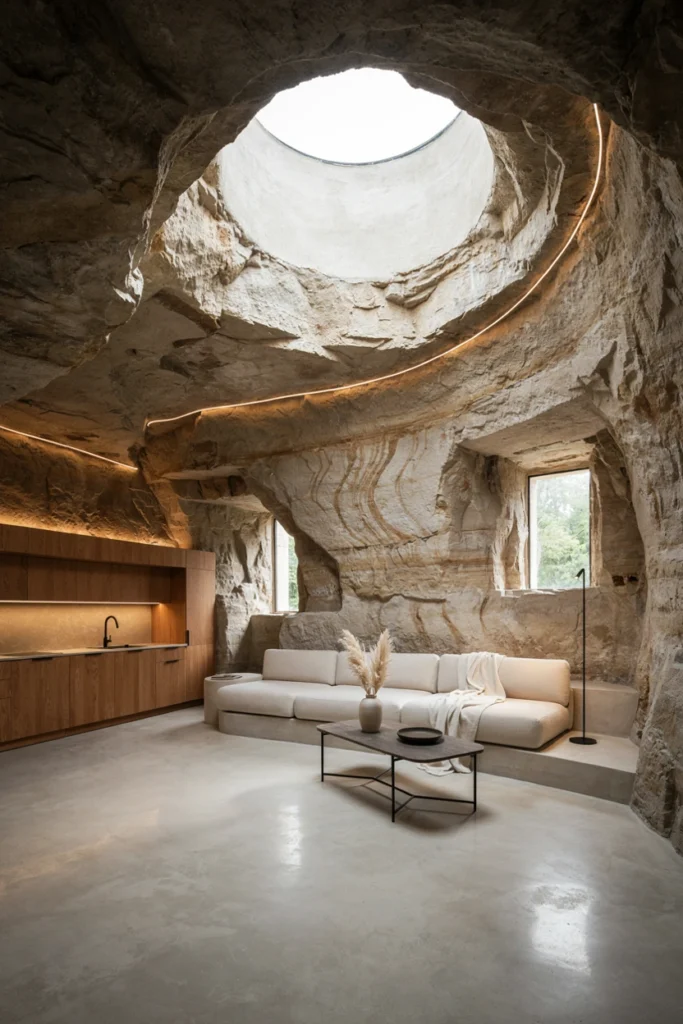
An underground cave retreat can feel incredibly private while still looking sophisticated. The key is to prevent the interior from becoming dark or enclosed. Thoughtful lighting, reflective surfaces, and carefully positioned openings can make the space feel surprisingly open.
I would focus on creating several layers of lighting throughout the home.
- Combine recessed ceiling lights with floor and table lamps.
- Use glass doors or skylights wherever the architecture allows.
Modern furniture in neutral colors keeps the rooms visually calm. Polished concrete floors can contrast beautifully with rough stone walls, while soft rugs and upholstered seating add the comfort needed for everyday living.
7. Cave Home With a Cozy Living Room
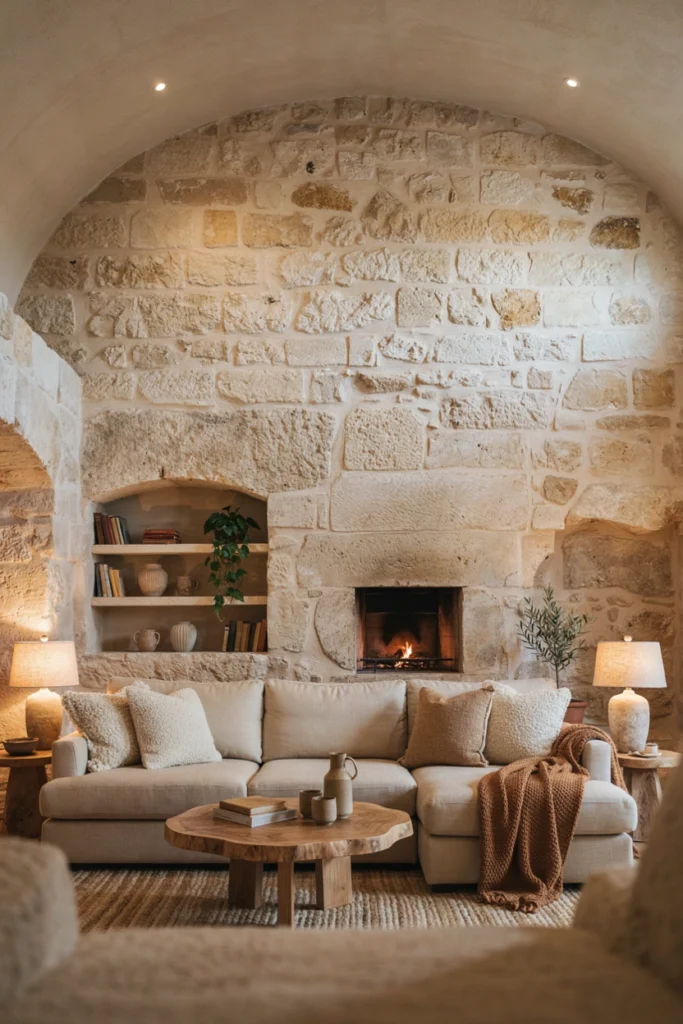
A cave living room should feel like a place where you naturally want to slow down. Deep seating, warm lighting, soft rugs, and exposed stone can create an intimate atmosphere without requiring much decoration. In my view, the architecture already provides enough visual interest.
Start with one comfortable seating arrangement and build around it.
- Position a large sofa toward the most attractive stone wall or view.
- Add a textured rug to visually define the sitting area.
A low wooden coffee table and a few carefully selected accessories can finish the room. If the cave includes a fireplace, make it the central gathering point for an especially cozy effect.
8. Elegant Cave Bedroom With Stone Walls
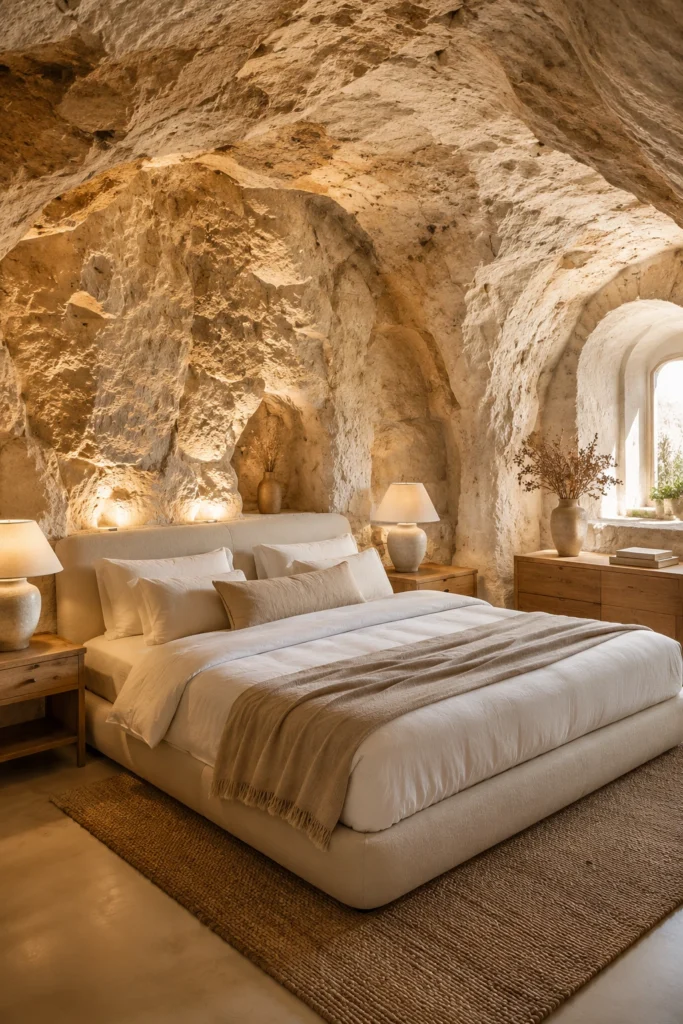
A cave bedroom can feel wonderfully secluded, almost like a private boutique hotel suite. Exposed stone behind the bed creates a dramatic natural headboard, while soft bedding keeps the room comfortable and inviting.
I would avoid filling the bedroom with too many decorative pieces.
- Choose linen or cotton bedding in warm neutral shades.
- Add soft bedside lighting to highlight the stone without making it harsh.
A wooden bed frame can bring warmth into the room, while a simple bench or woven rug adds texture. If possible, position the bed toward a small window or opening so the room receives natural daylight without losing its sheltered character.
9. Cave Home With a Modern Kitchen
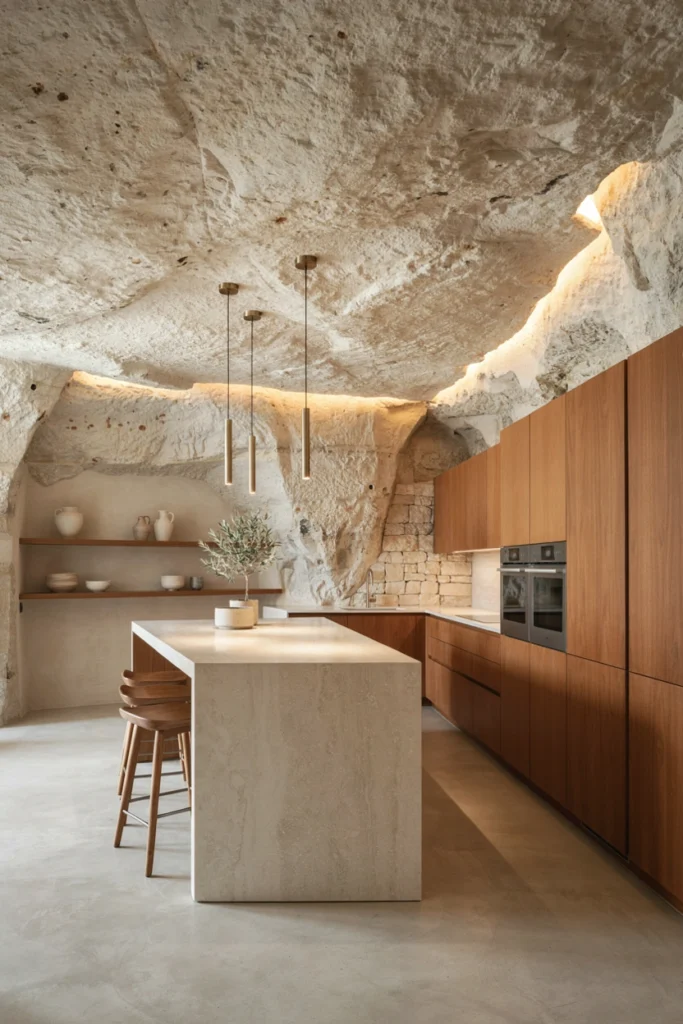
A modern kitchen can look surprisingly beautiful inside a cave because sleek cabinetry creates a strong contrast with rough natural rock. The combination feels contemporary without losing the character of the original structure.
Keep the cabinetry simple and let the surrounding stone provide the visual interest.
- Choose flat-panel cabinets in wood, cream, or muted gray.
- Add stone countertops and understated hardware.
Open shelving can provide space for ceramics and everyday pieces while preventing the kitchen from feeling too enclosed. Warm pendant lights above an island can also soften the harder surfaces and create an inviting place for casual meals.
10. Cave Home With an Indoor-Outdoor Connection
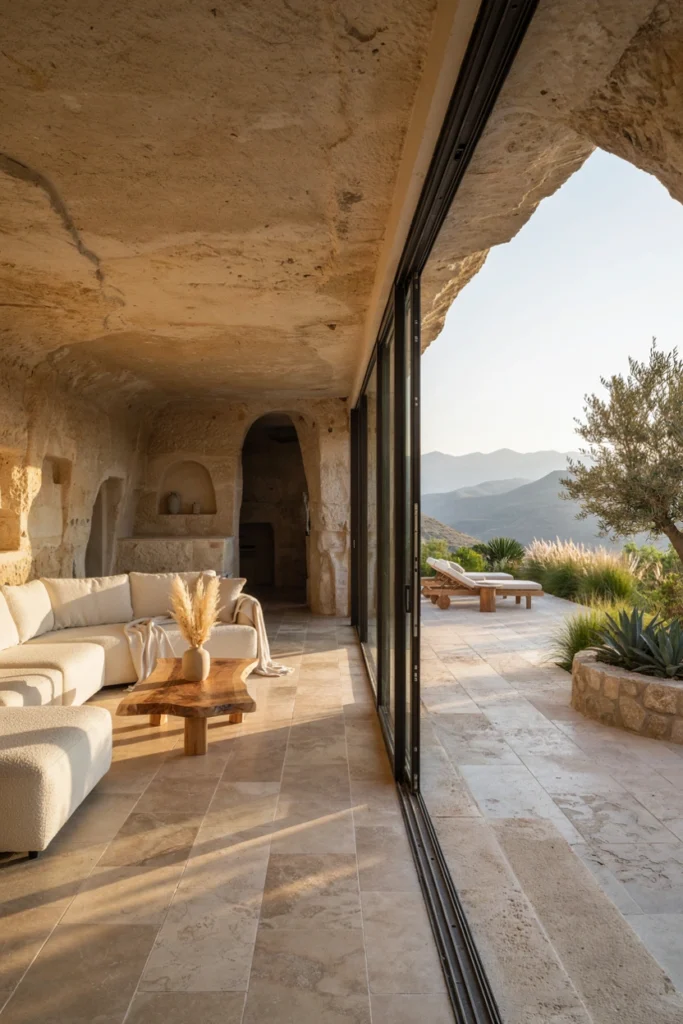
Connecting a cave home directly to the outdoors can dramatically change how the interior feels. Wide glass doors, outdoor terraces, courtyards, or shaded patios allow fresh air and daylight to become part of the living experience.
I particularly like this idea for cave homes surrounded by dramatic natural scenery.
- Use matching stone or flooring materials inside and outside.
- Choose furniture that visually connects the two spaces.
An outdoor lounge can extend the living room during warmer months. Add simple seating, greenery, and soft outdoor lighting to create a natural transition between the sheltered cave interior and the open landscape.
11. Earthy Cave Home With Natural Textures

An earthy cave home feels most successful when its materials appear natural rather than overly coordinated. Stone, wood, linen, wool, clay, rattan, and woven fibers can create layers of texture while keeping the color palette calm.
This is one of the easiest styles to recreate even if you do not live in an actual cave.
- Combine rough stone with soft linen and woven fabrics.
- Use clay pottery, wood accessories, and natural fiber rugs.
Keep the colors close to nature, including sand, brown, cream, olive, and warm gray. The result feels relaxed and timeless while allowing the architecture to remain the main attraction.
12. Luxury Cave Home With a Spa-Like Bathroom
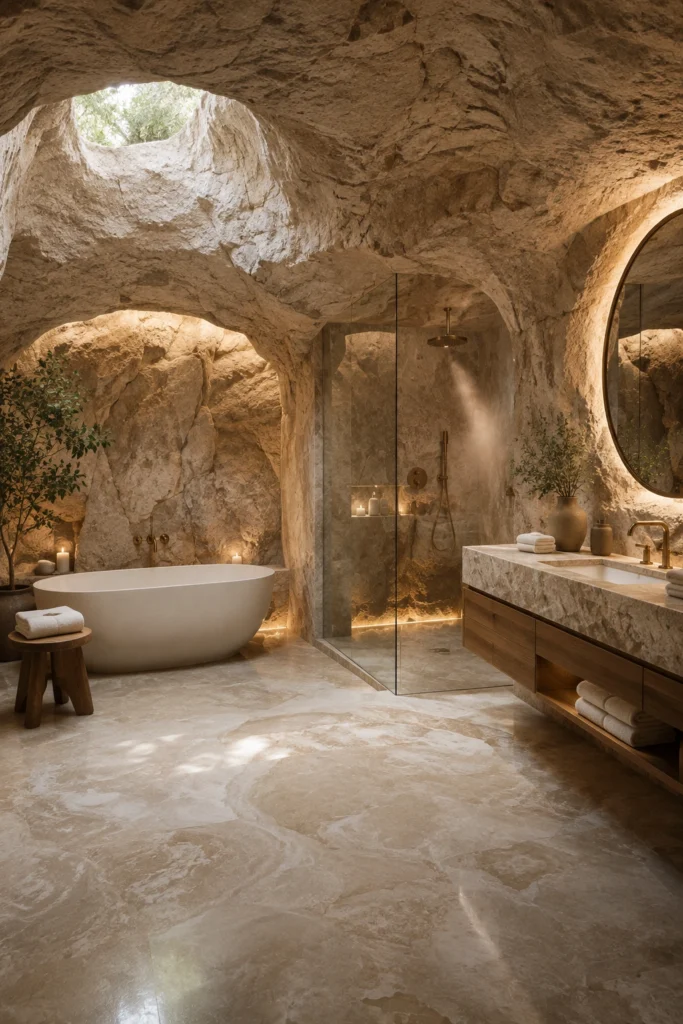
A cave bathroom can become one of the most impressive rooms in the entire home. Natural stone walls provide a built-in spa atmosphere, while modern fixtures and soft lighting add luxury without overwhelming the surroundings.
I would focus on creating a calm, uncluttered environment.
- Install a rainfall shower or freestanding soaking tub.
- Use warm lighting and natural stone surfaces throughout.
A floating vanity can make the bathroom feel lighter, especially when paired with a large mirror. Add folded towels, a wooden stool, and a few simple plants to reinforce the relaxing atmosphere.
13. Small and Cozy Cave Home

Small cave homes can feel incredibly charming when every part of the layout serves a purpose. Rather than trying to make the home appear larger through excessive decoration, focus on comfortable proportions and smart storage.
I would use the natural curves and niches as part of the design.
- Build storage directly into existing alcoves where possible.
- Choose compact furniture with clean, simple shapes.
A small sofa, multifunctional dining table, and built-in shelving can provide everything the space needs. Light colors and strategically placed mirrors can also help reflect daylight and make the interior feel brighter.
14. Contemporary Cave Home With Dramatic Lighting
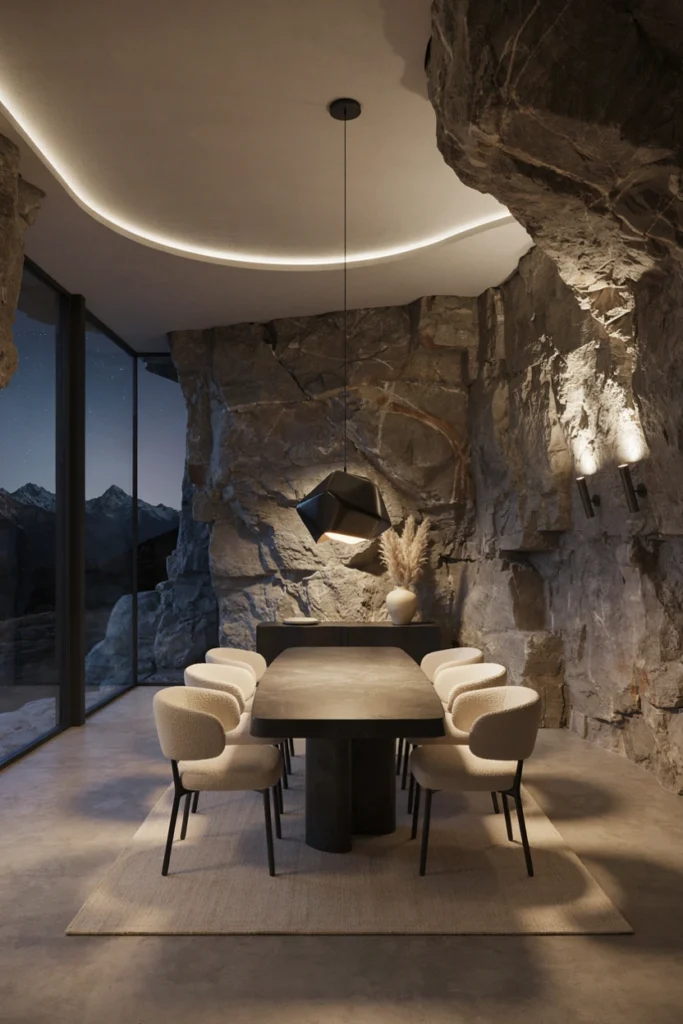
Lighting can completely transform a cave interior. Recessed fixtures, concealed LED strips, wall sconces, and carefully positioned pendant lights can highlight the natural contours of the stone while creating a sophisticated evening atmosphere.
This approach works especially well when the architecture includes dramatic curves or unusual rock formations.
- Use accent lighting to highlight distinctive stone textures.
- Layer ambient, task, and decorative lighting throughout the rooms.
Avoid relying on one bright ceiling fixture. Several softer light sources will create depth and make the cave feel more luxurious after sunset.
15. Cave Home With a Stunning Outdoor Terrace

An outdoor terrace gives a cave home a valuable extension of its living space. Whether it overlooks mountains, a valley, a forest, or the sea, the terrace can become a natural place for dining, relaxing, and entertaining.
I would keep the outdoor design relatively simple so the landscape remains the focus.
- Add comfortable lounge chairs or a compact outdoor sofa.
- Use natural stone, wood, and subtle outdoor lighting.
A pergola or shaded structure can provide protection from strong sunlight. Add potted Mediterranean plants, herbs, or native greenery to make the terrace feel connected to the surrounding landscape.
16. Bohemian-Inspired Cave Home
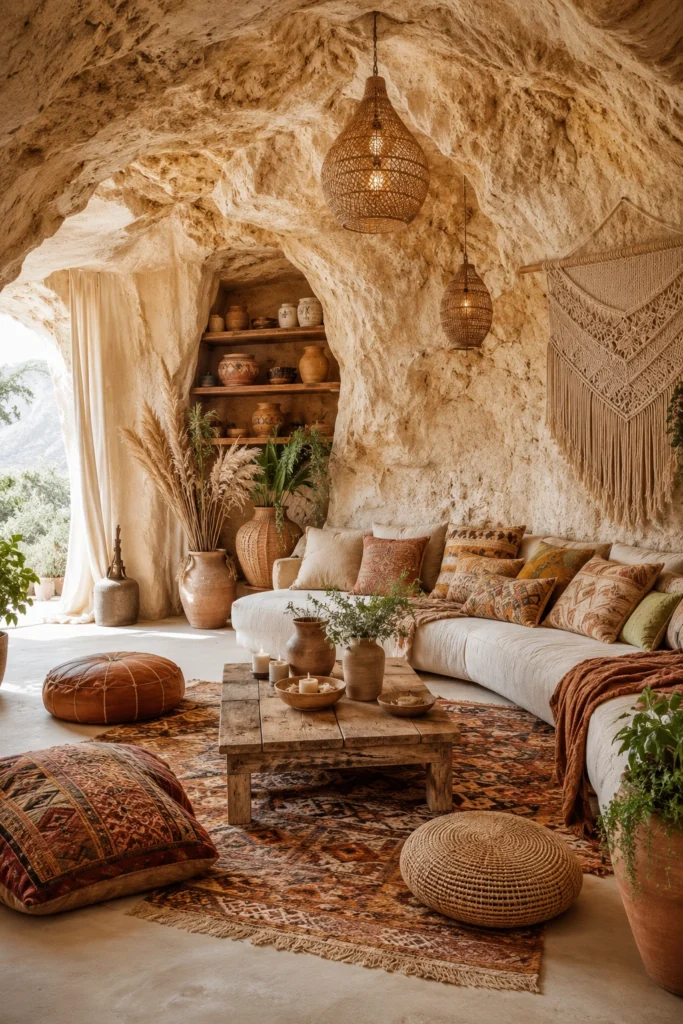
A bohemian cave home can feel relaxed, artistic, and wonderfully personal. The organic shape of the cave provides an ideal background for layered textiles, woven accessories, vintage furniture, and handmade pieces.
The trick is to layer textures without making the room feel cluttered.
- Mix patterned cushions with woven throws and natural rugs.
- Add baskets, macramé, ceramics, and plants for personality.
Low seating and wooden furniture can enhance the casual atmosphere. Keep the base palette earthy, then introduce muted terracotta, mustard, olive, or dusty blue for subtle color.
17. High-End Cave Home With Resort-Style Design

For a truly luxurious cave home, combine the drama of natural stone with the comfort and polish of a high-end resort. Think oversized furniture, elegant bathrooms, dramatic views, sophisticated lighting, and carefully selected materials.
The goal is not to make the home flashy. Instead, luxury should come from quality, comfort, and thoughtful details.
- Use premium natural materials such as stone, wood, linen, and leather.
- Create dedicated spaces for relaxation, dining, wellness, and entertaining.
A private terrace, indoor pool, spa bathroom, or fireplace lounge can elevate the experience further. The strongest designs let the cave remain authentic while adding modern comforts in a subtle way.
Why Cave Homes Feel So Unique
Cave homes have an atmosphere that conventional houses often struggle to reproduce. Their curved walls, natural stone, sheltered rooms, and connection to the landscape create a sense of privacy and permanence.
What I find most appealing is the contrast between the rugged structure and comfortable modern interiors. A cave home does not need to feel primitive. With the right materials and lighting, it can feel warm, refined, and remarkably luxurious.
Key Design Ideas to Borrow From Cave Homes
You do not need to live inside a cave to use some of these design principles. The same ideas can work beautifully in a conventional home.
Consider incorporating:
- Natural stone: Use stone walls, fireplaces, backsplashes, or accent surfaces.
- Earthy colors: Build your palette around beige, cream, brown, clay, olive, and warm gray.
- Curved shapes: Introduce rounded furniture, arches, niches, or sculptural lighting.
- Natural materials: Combine wood, linen, wool, rattan, clay, and stone.
- Layered lighting: Mix ambient lighting with accent fixtures and soft lamps.
- Indoor-outdoor living: Use large windows, glass doors, patios, and terraces to connect spaces.
These details can give an ordinary room some of the same peaceful character found in a cave home.
How to Make a Cave Home Feel Bright and Luxurious
The biggest challenge with cave interiors is often natural light. Dark stone can absorb light, so thoughtful planning makes a major difference.
Start with every opportunity to bring daylight inside. Large windows, glass doors, skylights, and courtyards can dramatically brighten the interior. Then use warm artificial lighting to fill darker corners after sunset.
For a luxurious finish, keep the furniture streamlined and invest in tactile materials rather than excessive decoration. Cream upholstery, natural wood, polished stone, soft rugs, and quality linen can make the space feel sophisticated while preserving its earthy character.
Final Thoughts
Cave homes prove that luxury does not have to mean excessive decoration. Some of the most beautiful spaces rely on natural materials, thoughtful lighting, comfortable furniture, and a strong connection to the landscape.
Whether you are designing an actual cave retreat or simply borrowing its earthy style, these ideas can help create a home that feels peaceful, distinctive, and wonderfully timeless.
Frequently Asked Questions
Are cave homes comfortable to live in?
Yes, cave homes can be very comfortable when properly designed and maintained. Modern ventilation, insulation, plumbing, heating, cooling, and lighting systems can provide many of the same conveniences found in conventional homes. The natural stone surroundings can also create a peaceful atmosphere and help moderate indoor temperatures.
Are cave homes naturally energy efficient?
Many cave homes can benefit from the insulating properties of surrounding earth and rock. These materials can help reduce temperature fluctuations, which may lower heating and cooling demands. However, energy efficiency depends on factors such as location, construction methods, ventilation, insulation, windows, and the home’s mechanical systems.
How do you decorate a cave home?
Start by treating the natural rock as an architectural feature rather than something that needs to be hidden. Pair stone with warm wood, neutral upholstery, linen, woven materials, and earthy colors. Use layered lighting to brighten darker areas and choose furniture that follows the natural curves and proportions of the space.
Are cave homes expensive to build?
Costs vary considerably depending on the location, geological conditions, accessibility, structural work, utilities, and level of finish. Converting an existing cave can have very different costs from excavating and constructing a new underground residence. Specialist engineering and waterproofing can also add significantly to the overall budget.
Where are cave homes most commonly found?
Cave dwellings and modern cave homes can be found in regions with suitable geological formations and long histories of cave habitation. Examples include parts of Spain, Italy, Turkey, Greece, China, and the southwestern United States. Modern versions also appear in other locations where architects can safely work with natural rock or underground spaces.