26 Coastal Living Room Ideas for a Relaxed Beachy Feel
Coastal Living Room Ideas bring the relaxed beauty of the beach into your home through soft colors, natural materials, and comfortable furniture. Whether you live near the ocean or simply love a light, breezy interior, there are plenty of ways to create this welcoming look.
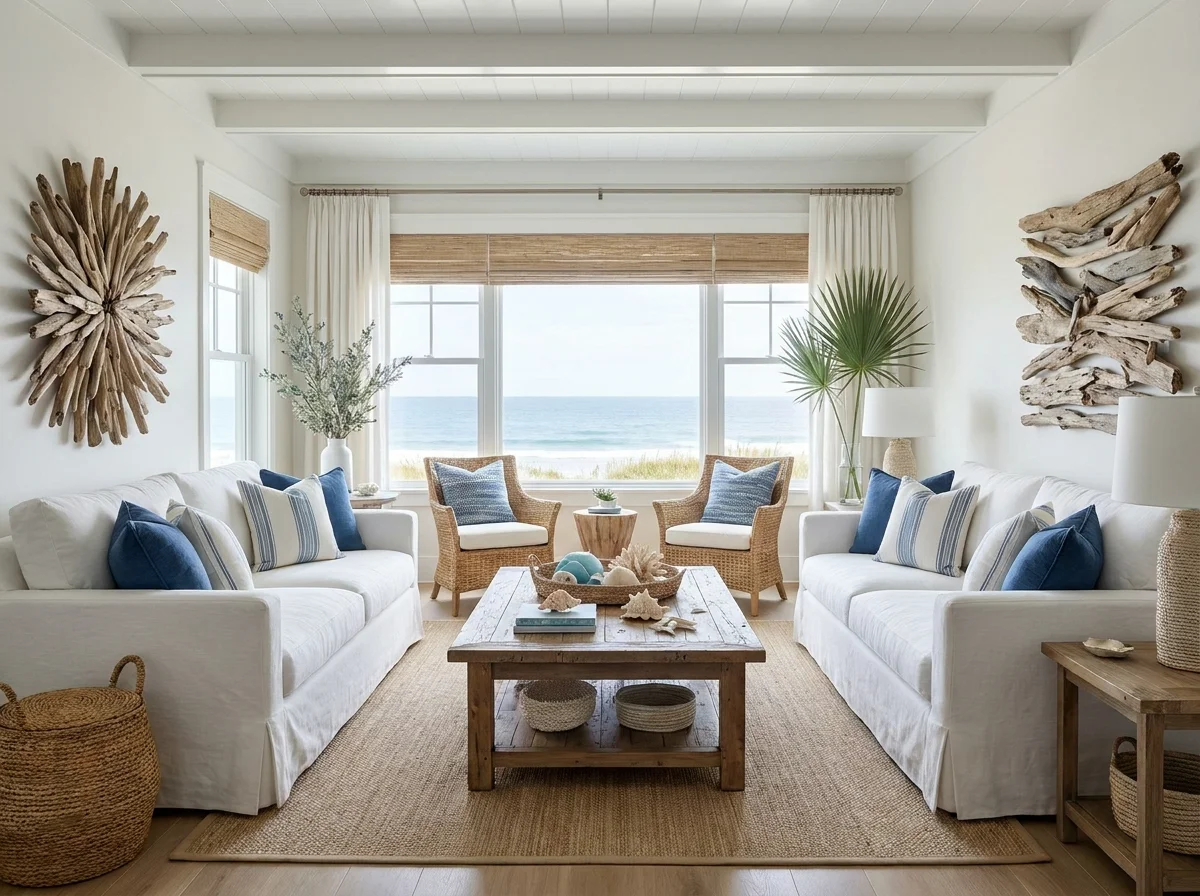
From white linen sofas and woven accents to blue decor, weathered wood, and beautiful coastal wall art, these ideas offer inspiration for large living rooms, small apartments, and family spaces without making your home feel overly themed.
1. Choose a Soft White and Beige Color Palette
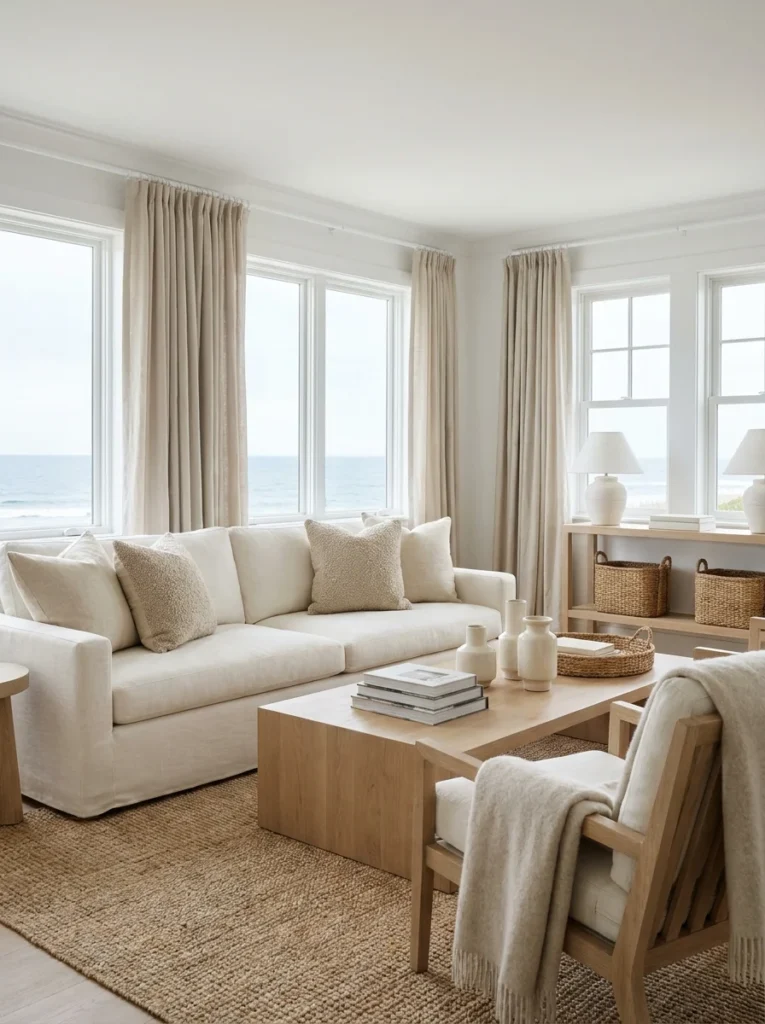
A combination of warm white, sandy beige, and creamy ivory creates a peaceful foundation for a coastal-inspired living room. Start with white or off-white walls, then introduce beige upholstery, natural wood furniture, and soft neutral cushions. The subtle contrast keeps the room interesting without making it feel busy.
For added depth, layer different shades through curtains, rugs, and decorative accessories. A cream sofa paired with a light oak coffee table and textured beige rug creates a welcoming arrangement. This palette also reflects natural light beautifully, making darker living rooms feel brighter and more open. Choose washable fabrics if you have children or pets.
2. Add Natural Wood Furniture
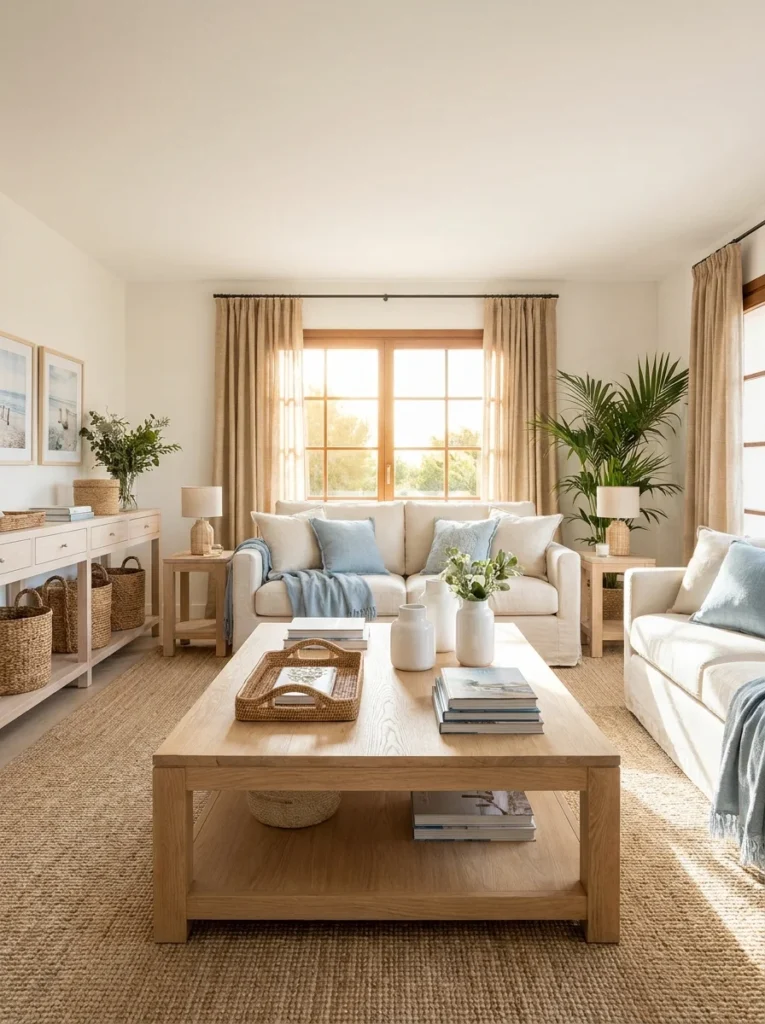
- Coffee Table: Choose a light oak, pine, or reclaimed wood coffee table with a simple silhouette.
- Side Tables: Add matching or slightly different wooden tables beside the sofa.
- Storage: Use a wooden console or cabinet to keep everyday living room essentials organized.
- Color Combination: Pair honey-toned wood with white upholstery, cream walls, and soft blue accessories.
- Finishing Touch: Decorate with a ceramic vase, a small stack of books, or a woven basket.
Natural wood introduces warmth that balances the cooler shades often found in beach-inspired interiors. Avoid overly polished or dark finishes if you want to maintain a light atmosphere. A slightly textured wood grain gives the furniture a more relaxed appearance.
3. Decorate with Light Blue Accents
Quick Tip:
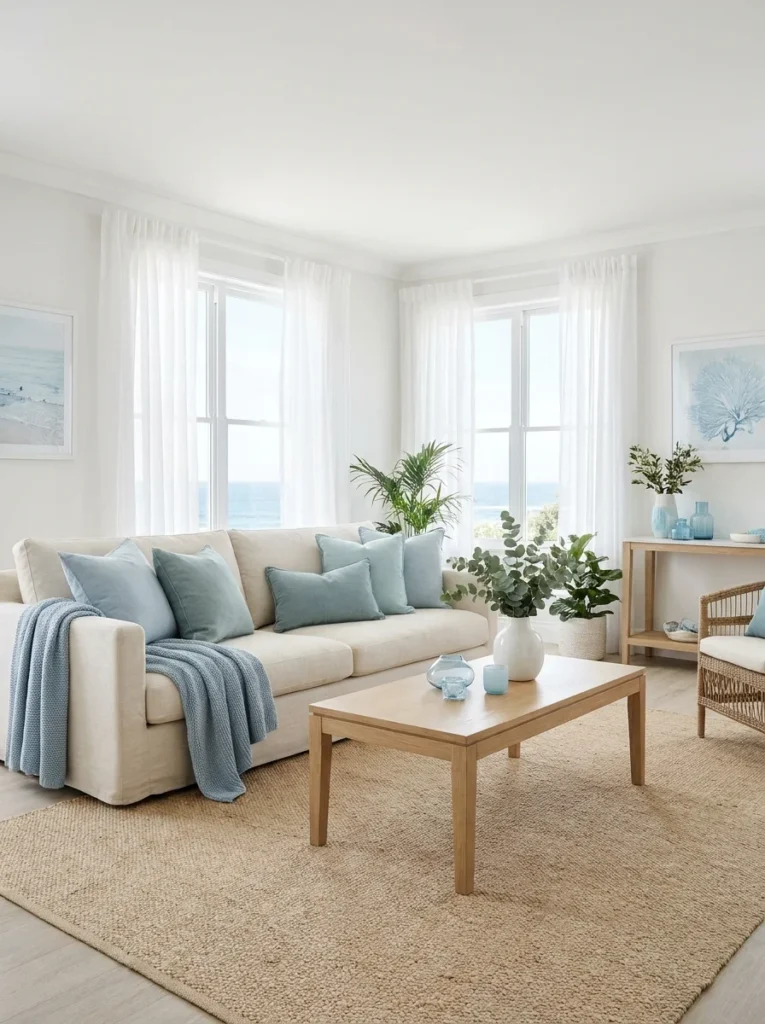
Use light blue as an accent rather than covering every surface with it. Start with two or three blue cushions, a ceramic vase, or a soft blue throw. Repeat the same shade in a small piece of artwork to create a coordinated look.
Pale blue, dusty aqua, and muted sea glass tones work particularly well against white walls and sandy neutrals. A neutral sofa can become the focal point with a combination of blue cushions in different fabrics. Keep the larger furniture pieces understated so the room remains easy to update when your decorating preferences change.
4. Create a Relaxed Coastal Farmhouse Look
BEFORE
A living room with plain walls, heavy furniture, and little variation in texture can feel disconnected from the relaxed farmhouse atmosphere. Dark accessories and bulky arrangements may also make the room appear visually crowded.
AFTER
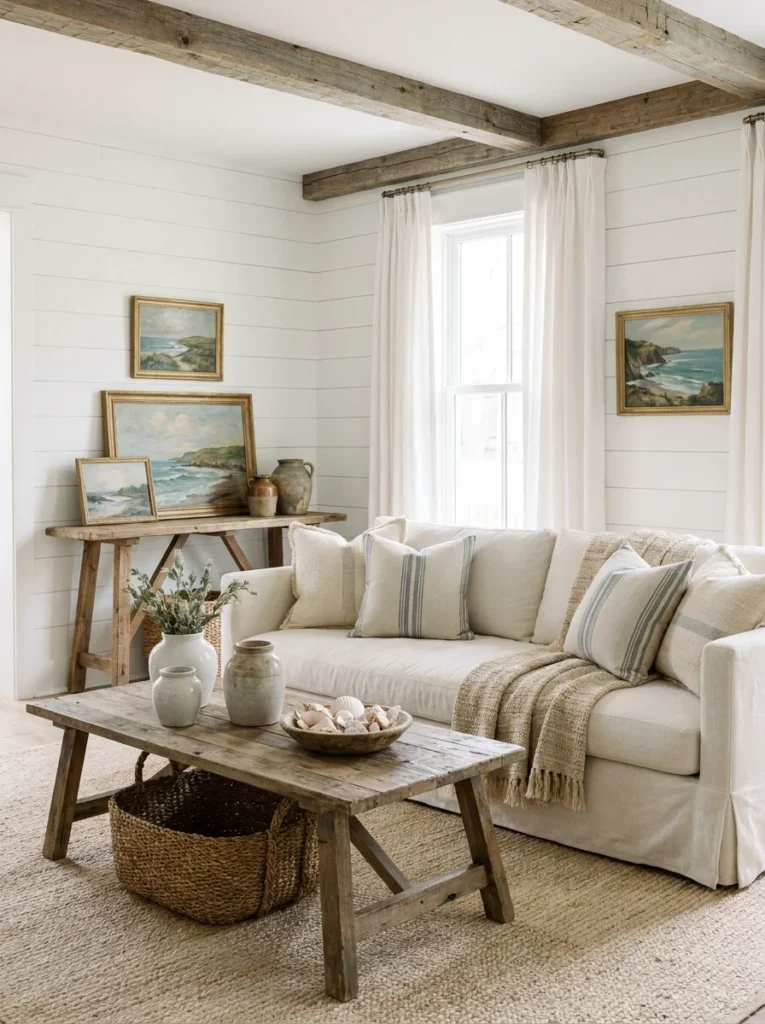
White shiplap-style wall details, a comfortable linen sofa, and a distressed wooden coffee table introduce a softer coastal farmhouse character. Woven baskets and striped cushions add the finishing touches.
To recreate the look, combine traditional farmhouse materials with lighter beach-inspired colors. A reclaimed wood console, simple white curtains, and a neutral area rug provide plenty of character without requiring a complete furniture replacement.
5. Use a Large Jute Area Rug
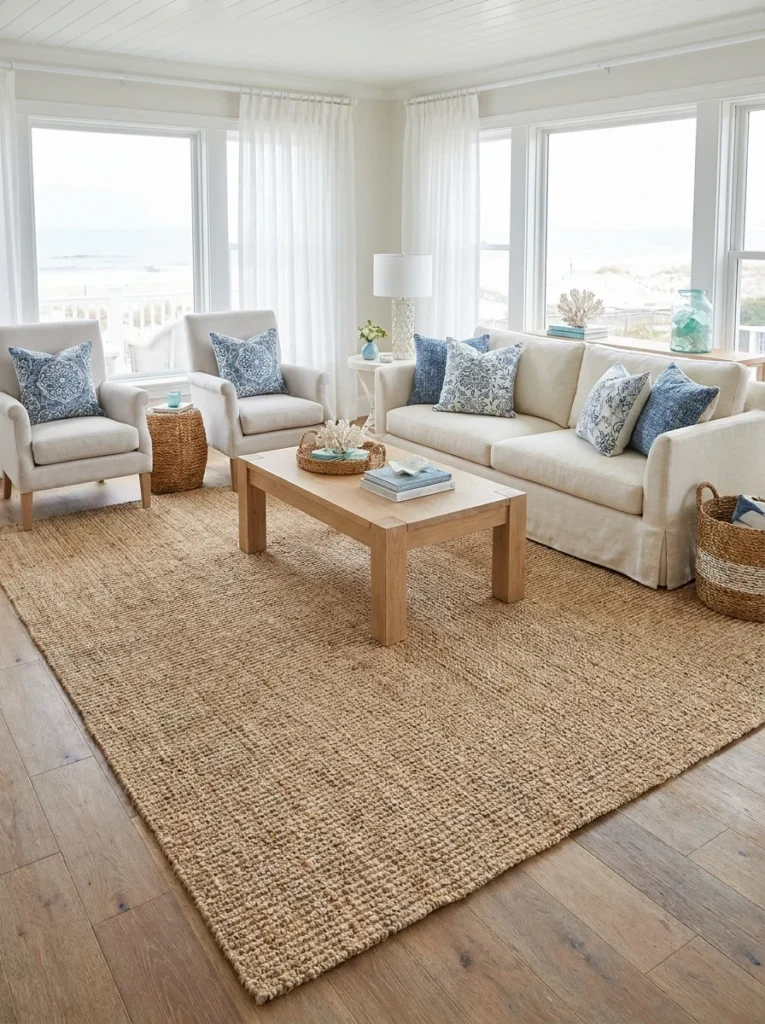
- Measure the Seating Area: Choose a rug large enough for at least the front legs of your main seating pieces to rest on it.
- Select a Natural Texture: Look for jute, sisal, or a similar woven material in a warm sandy shade.
- Coordinate the Furniture: Pair the rug with cream sofas, wooden tables, and neutral accent chairs.
- Add Softer Layers: Place a small cotton or wool accent rug over part of the jute rug if you want additional comfort.
A large natural-fiber rug visually connects the seating arrangement and introduces an earthy beach-house feeling. It works particularly well in open-plan spaces where you want to define the living room without using partitions. Keep in mind that jute can be sensitive to moisture and may not be the easiest option for households with frequent spills.
6. Add Comfortable Linen Sofas
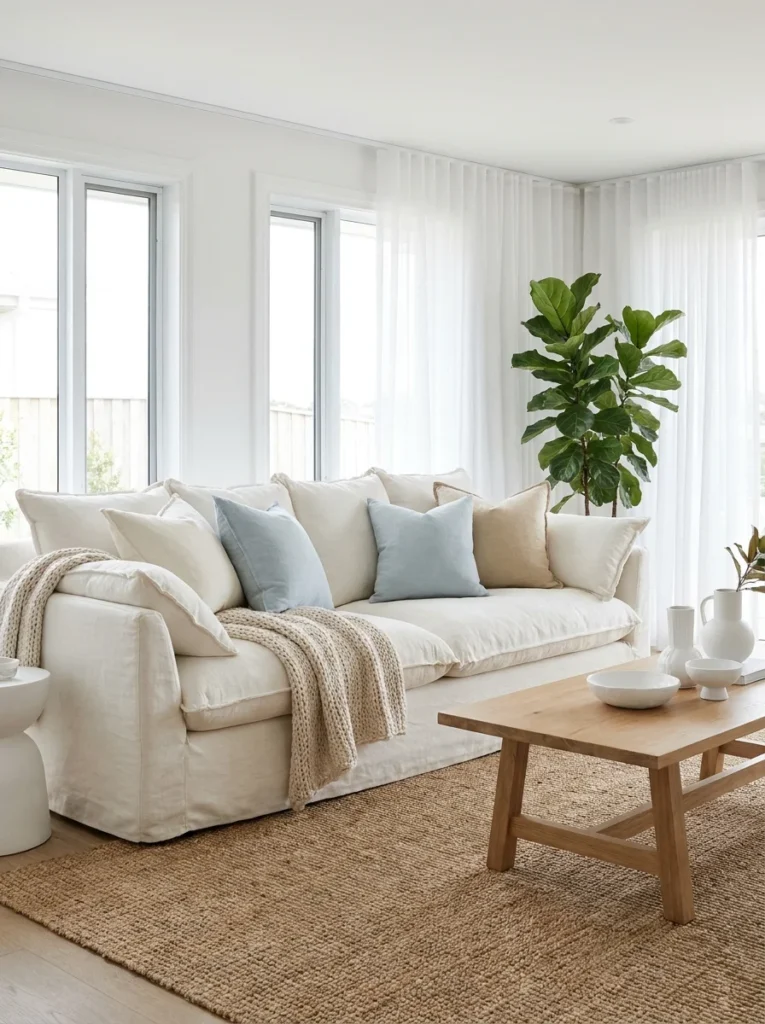
| Feature | Linen Sofa | Performance Fabric Sofa |
| Appearance | Relaxed and naturally textured | Clean and versatile |
| Comfort | Breathable and soft | Depends on fabric construction |
| Maintenance | Can wrinkle and stain | Often easier to clean |
| Best For | Casual beach-inspired rooms | Busy family living rooms |
| Color Options | Cream, ivory, beige | Wide range of neutrals and blues |
A linen sofa creates a relaxed atmosphere because its natural texture feels informal rather than overly polished. Choose a generous design with comfortable cushions and enough seating for your household. If spills are a concern, performance fabric in a linen-like finish can offer a similar appearance with easier everyday care.
7. Incorporate Rattan Accent Chairs
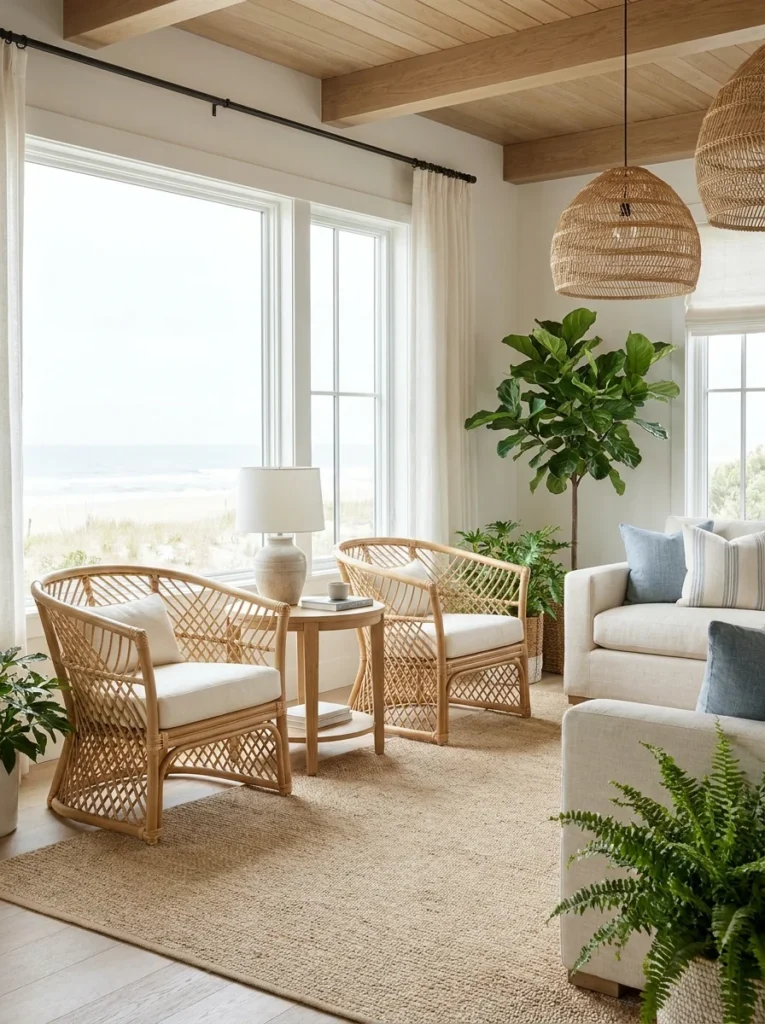
DO:
- Choose natural rattan chairs with curved backs or woven sides.
- Add cream or white seat cushions for extra comfort.
- Place a pair of chairs near a window or opposite the main sofa.
- Balance the woven texture with smooth wooden tables and soft fabrics.
DON’T:
- Fill every corner with matching woven furniture.
- Choose oversized chairs that interrupt the walking path.
- Leave frequently used seating without comfortable cushions.
- Combine too many competing natural patterns.
Rattan chairs bring a distinctive beach-house texture without relying on obvious ocean-themed accessories. A single statement chair can brighten an empty corner, while two matching chairs create a practical conversation area. Keep approximately 30 to 36 inches for main walking routes wherever the room allows.
8. Decorate with Coastal Wall Art
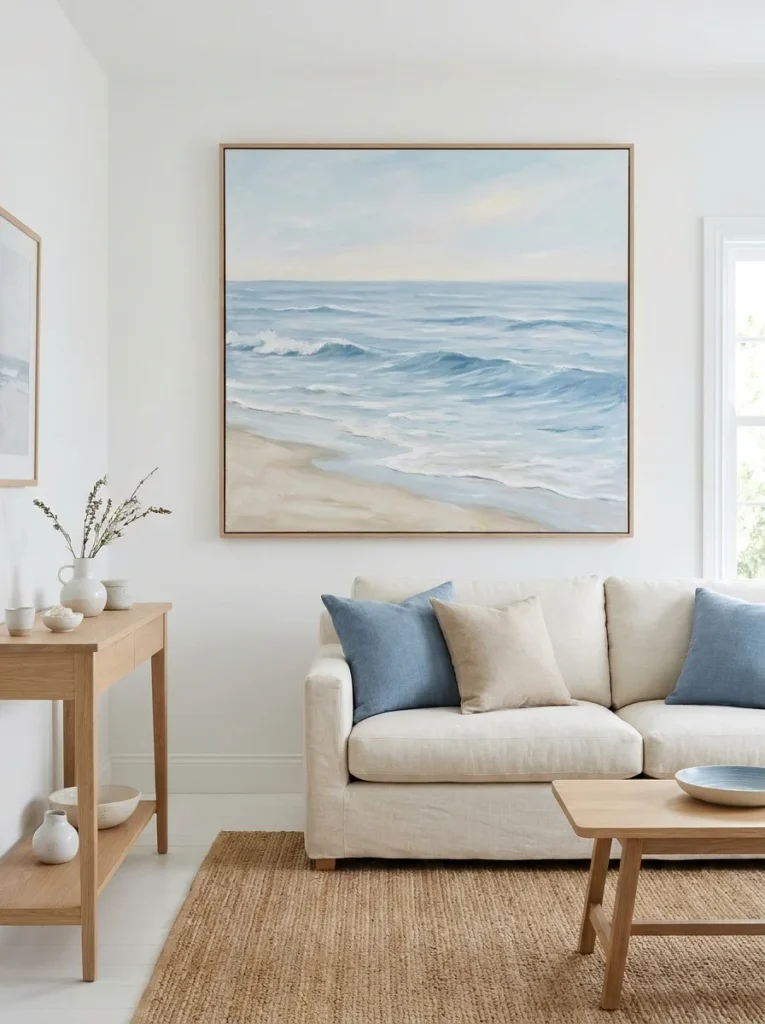
Room: Living room, sitting area, or open-plan lounge.
Best Placement: Above the sofa, behind a console table, or on a large empty wall.
Color Palette: Muted blue, sandy beige, soft white, and weathered gray.
Materials: Canvas, natural wood frames, and textured paper prints.
Budget: Low to moderate, depending on artwork size and framing.
Coastal wall art can introduce the feeling of the shoreline without making the room look like a themed vacation rental. Choose abstract ocean paintings, soft beach landscapes, watercolor waves, or minimalist coastal photography. A large horizontal artwork above the sofa creates a clear focal point, while a small collection of coordinated prints works nicely on narrower walls.
9. Try a Modern Coastal Living Room Design
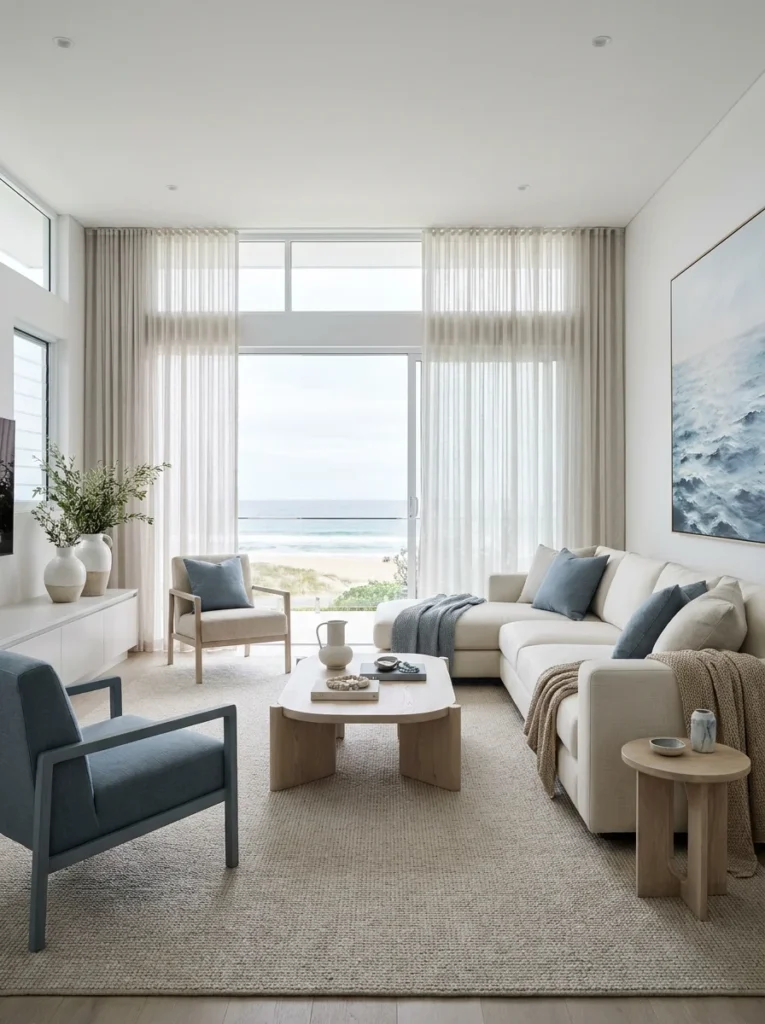
Modern coastal decorating combines the relaxed character of beach-inspired interiors with clean lines and carefully selected furniture. Think low-profile sofas, simple wooden coffee tables, subtle blue accents, and minimal accessories. Instead of filling the room with nautical objects, focus on beautiful materials and comfortable proportions.
For a balanced arrangement, choose a streamlined cream sofa, a sculptural accent chair, and a large neutral rug. Add one oversized artwork and a few ceramic accessories. Keep the furniture layout open so the room feels spacious and functional. This approach is particularly suitable for contemporary homes and apartments.
10. Add Sheer White Curtains
Quick Tip:
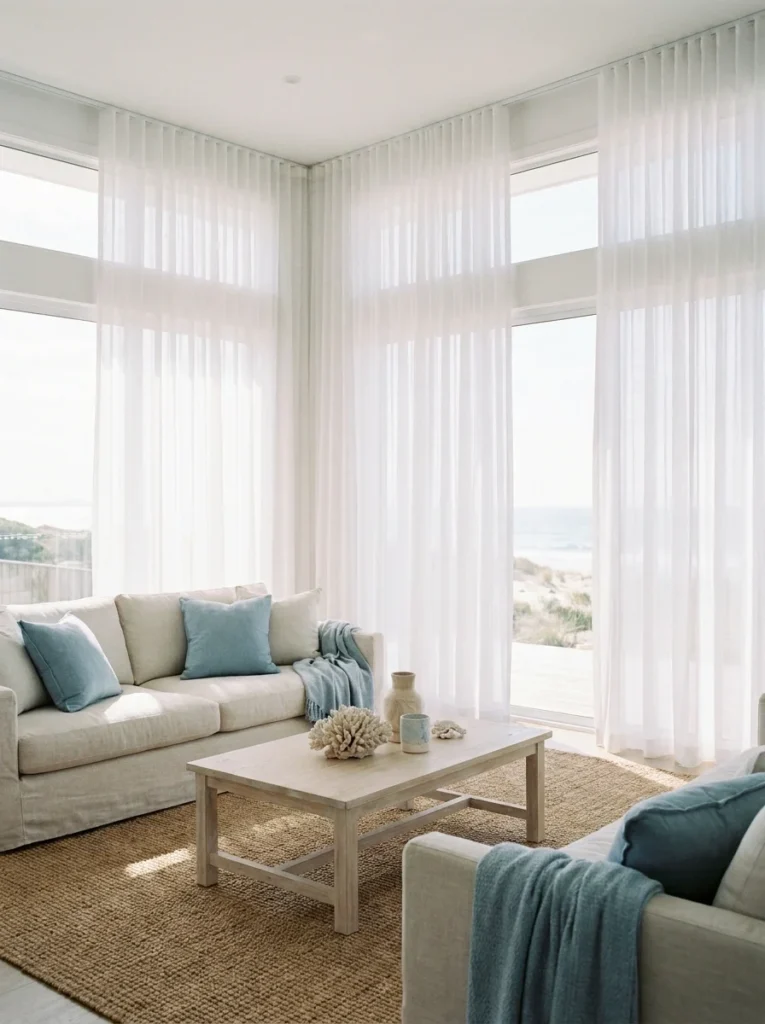
Hang curtain rods several inches above the window frame and extend them beyond the sides of the window when possible. This makes the windows appear larger and allows the curtains to frame the natural light rather than cover too much glass.
Sheer white curtains create a soft, breezy atmosphere that suits coastal interiors beautifully. Their lightweight fabric allows daylight to filter through while providing some privacy during the day. Pair them with pale walls, natural wood furniture, and neutral upholstery for a cohesive finish. If the room receives strong afternoon sunlight, consider adding a separate lined curtain or discreet roller shade for better light control.
11. Use Driftwood-Inspired Decor
BEFORE
A neutral living room can sometimes lack character when every accessory has the same smooth finish and color. Even attractive furniture may feel a little flat without contrasting materials.
AFTER
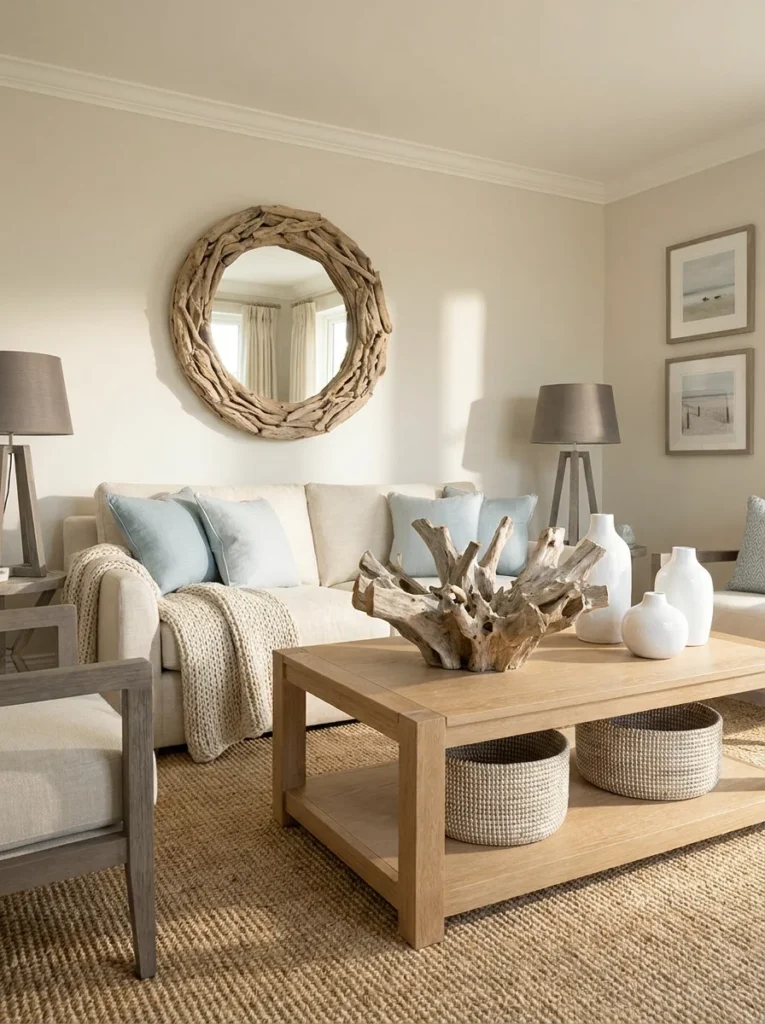
Driftwood-inspired accessories introduce natural variation through weathered finishes, irregular shapes, and soft gray-brown tones. A sculptural wooden centerpiece, decorative branch arrangement, or reclaimed wood accent adds character without overwhelming the room.
Use these details selectively. A driftwood-style mirror above a console or a weathered wooden bowl on the coffee table can become an interesting focal point. Choose well-finished, stable decorative pieces rather than untreated wood that may shed splinters or leave marks on furniture.
12. Create a Blue and White Living Room
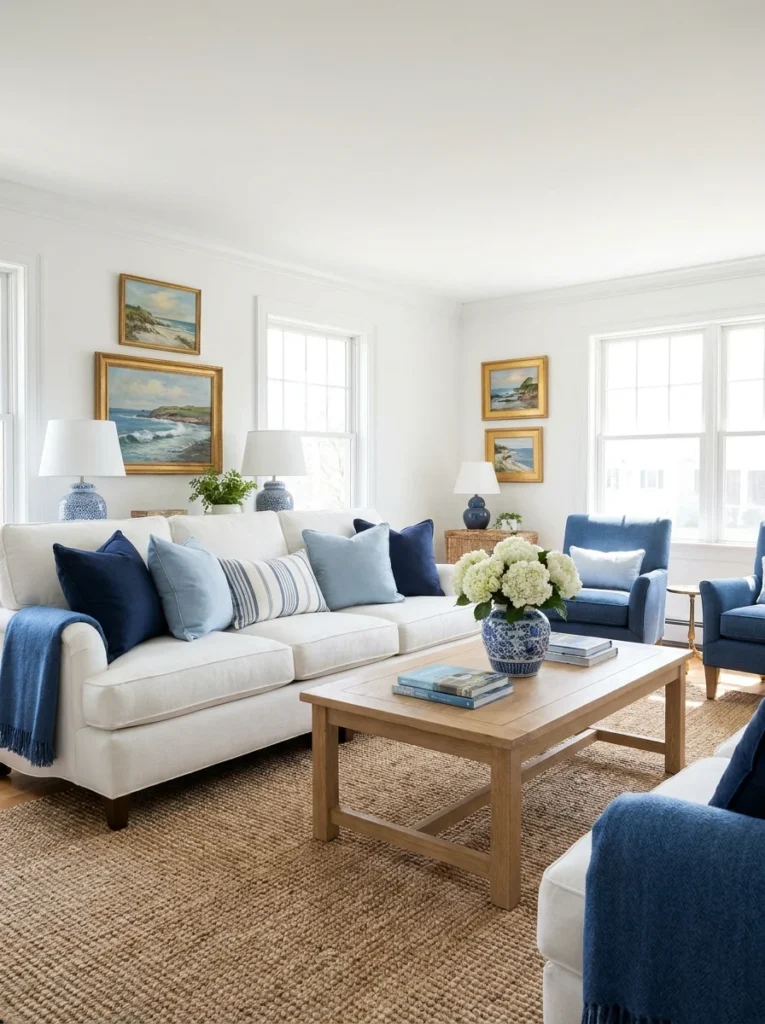
- Start with White: Use white walls or a large white sofa as the foundation.
- Choose Your Blue: Select one main shade, such as navy, powder blue, or muted ocean blue.
- Layer Patterns: Combine striped cushions, subtle geometric prints, and solid-colored fabrics.
- Introduce Natural Materials: Add a woven rug, light wooden table, or rattan basket.
- Finish with Accessories: Use blue-and-white ceramics and coastal artwork to connect the color scheme.
Blue and white is one of the most recognizable combinations in coastal decorating. The contrast feels fresh while allowing plenty of room for different decorating styles. For a softer appearance, use pale blue with ivory. If you prefer more definition, introduce navy through cushions or a statement accent chair rather than painting the entire room.
13. Add Woven Pendant Lighting
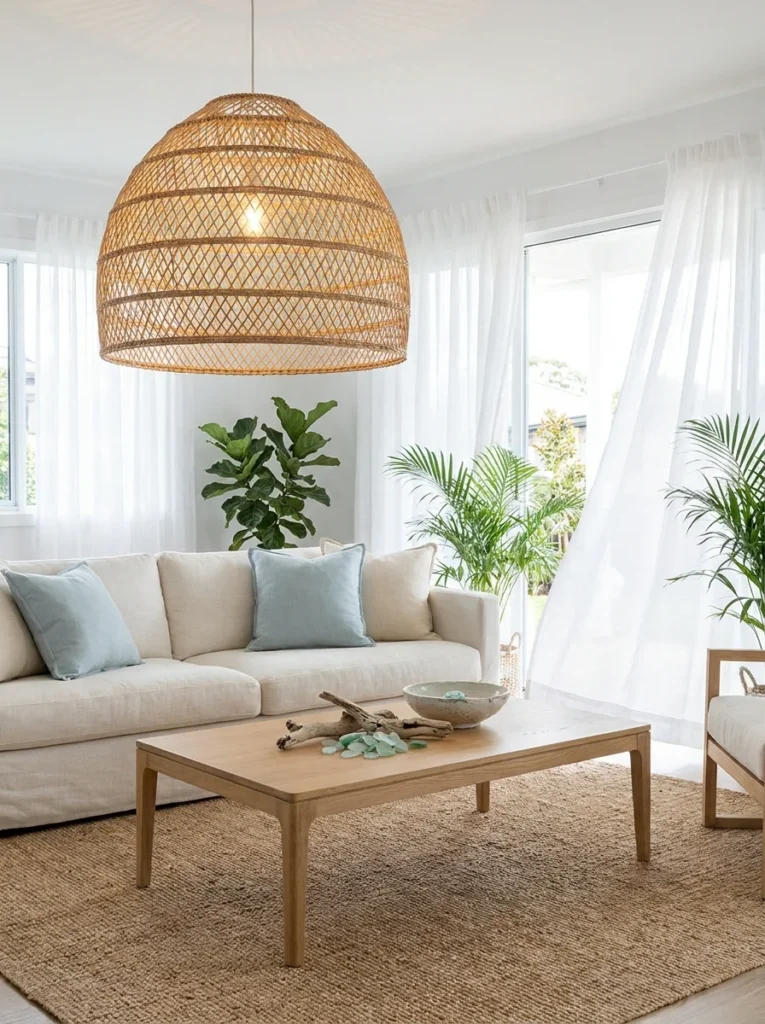
| Lighting Option | Visual Effect | Best Placement |
| Large Rattan Pendant | Strong natural focal point | Center of the seating area |
| Woven Dome Shade | Soft and understated | Over a reading corner |
| Seagrass Pendant | Organic beach-house texture | Open-plan living room |
| Woven Floor Lamp | Warm decorative detail | Beside a sofa or armchair |
Woven pendant lighting adds texture overhead and helps balance the larger furniture pieces below. Choose a shade that suits the room’s proportions rather than selecting the largest design available. A natural woven pendant looks particularly attractive with white ceilings, pale wood furniture, and linen upholstery. Use an appropriate bulb and diffuser to create comfortable ambient lighting without harsh glare.
14. Style Your Coffee Table with Coastal Decor
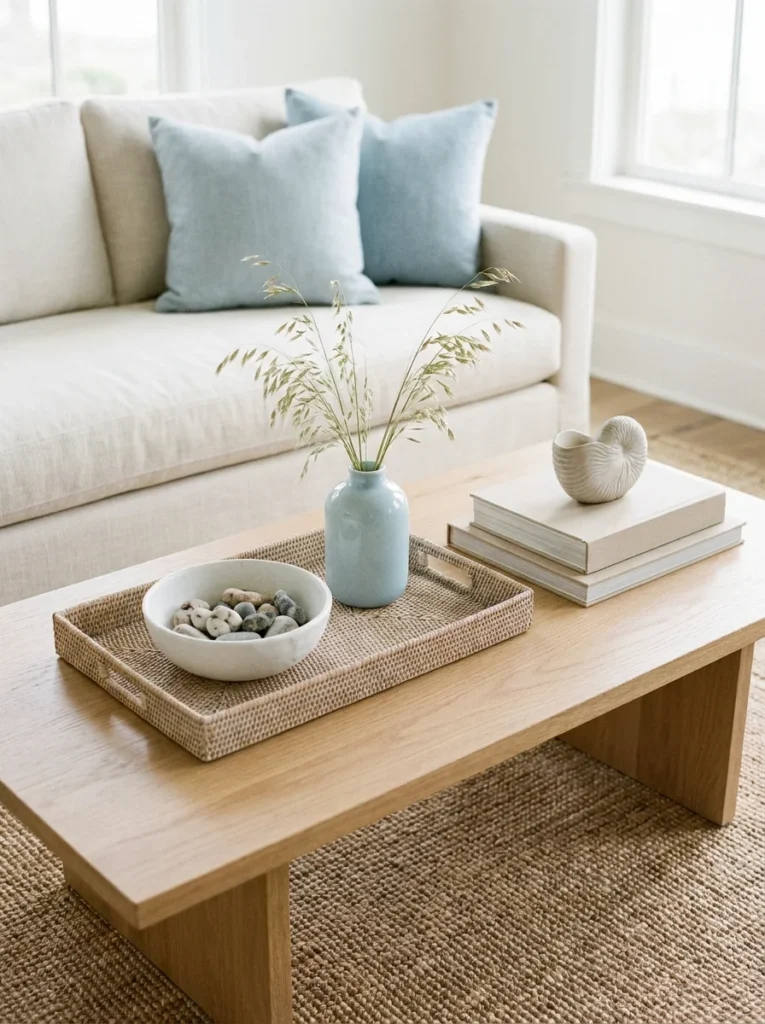
DO:
- Use a shallow wooden or ceramic tray to organize smaller accessories.
- Add one decorative bowl in a soft white or sandy finish.
- Include a small vase with fresh or dried greenery.
- Stack two or three books with attractive neutral covers.
- Leave enough empty space for drinks and everyday use.
DON’T:
- Cover the entire table with decorative objects.
- Mix too many bright colors and competing patterns.
- Use fragile accessories where children frequently play.
- Choose arrangements that block conversation across the seating area.
A thoughtfully styled coffee table adds personality without making the living room feel cluttered. The key is to combine objects of different heights and textures while keeping the overall arrangement compact. A round tray can help organize accessories on a rectangular table, while a long wooden tray works nicely on a larger square design.
15. Bring in Indoor Greenery
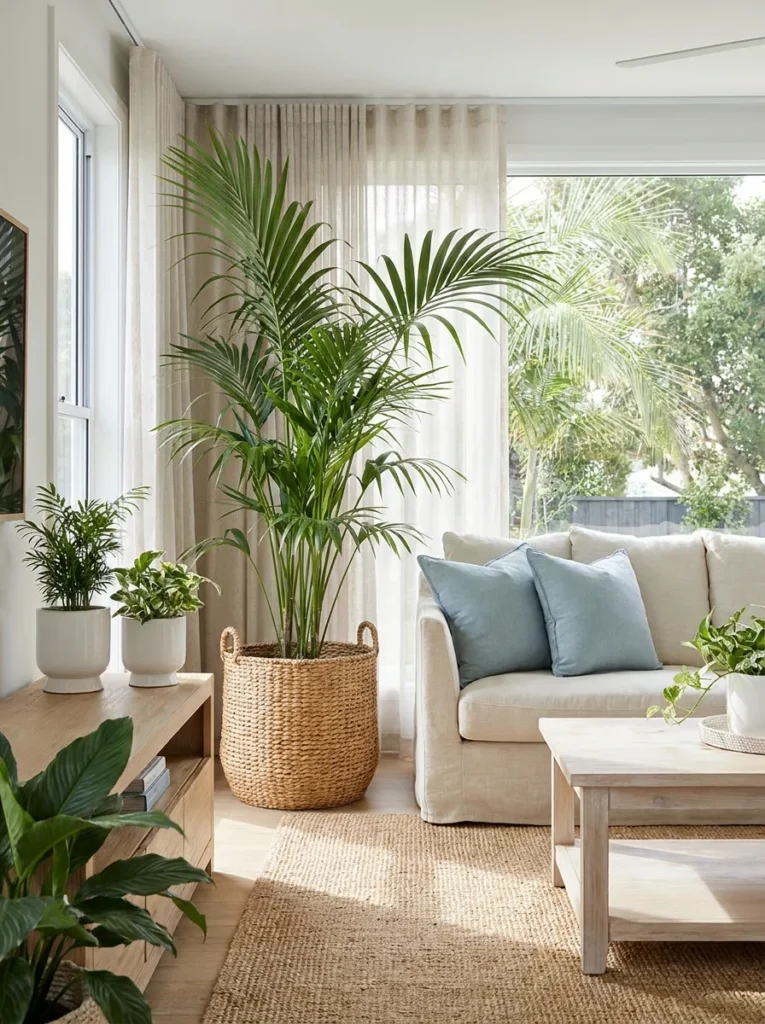
Room: Living room corners, beside windows, and near console tables.
Best Plants: Areca palm, bird of paradise, rubber plant, or indoor pothos, depending on available light.
Container Style: Woven baskets, matte ceramic pots, or simple white planters.
Budget: Low to moderate, depending on plant size.
Maintenance: Match plant varieties to your home’s natural light and watering conditions.
Greenery brings a fresh natural element into a beach-inspired room. A tall indoor plant beside a window can soften an empty corner, while smaller plants add interest to shelves and side tables. Choose containers in neutral colors so the leaves provide the main contrast. If your living room receives limited sunlight, select a suitable low-light plant rather than placing a sun-loving variety in a dark corner.
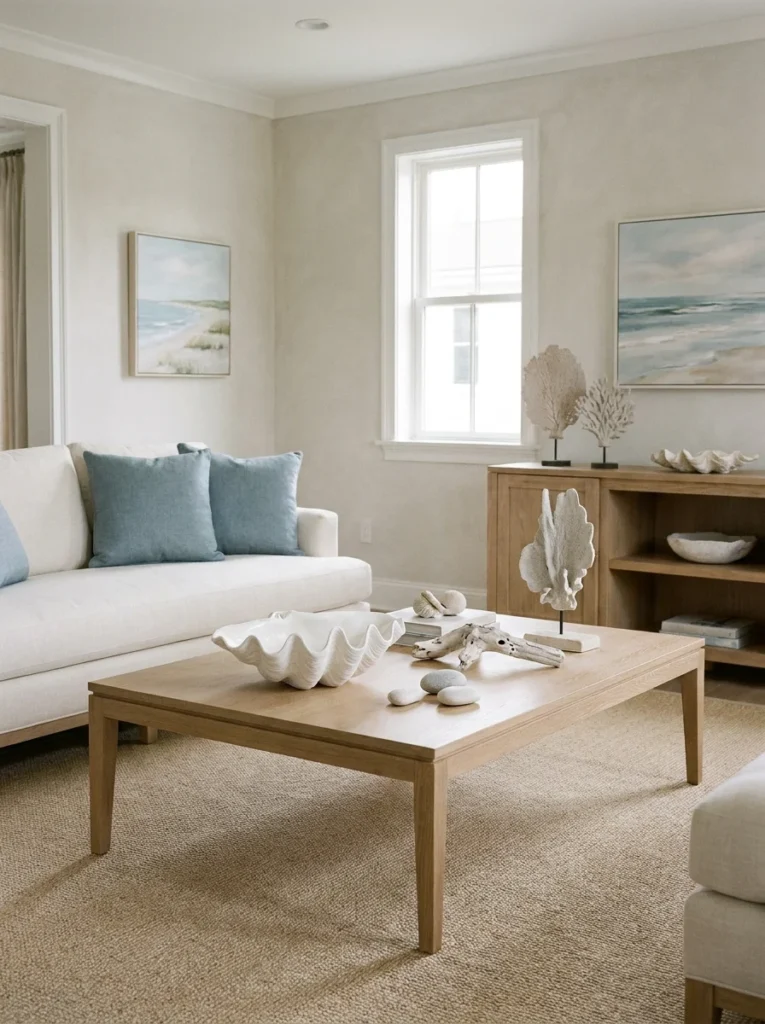
16. Decorate with Seashell-Inspired Accessories
Quick Tip:
Use seashell-inspired accessories as small decorative details rather than the main theme. A shell-shaped ceramic bowl, textured white sculpture, or subtle coral-inspired object is often enough to introduce a coastal reference.
These accessories look particularly attractive against natural wood, pale stone, and linen surfaces. Place a single statement piece on a console table or combine two smaller objects on a coffee table. Choose tasteful decorative reproductions or legally sourced materials rather than collecting protected shells, coral, or other marine items. Keeping the display simple makes it feel more refined.
17. Choose a Slipcovered Sofa
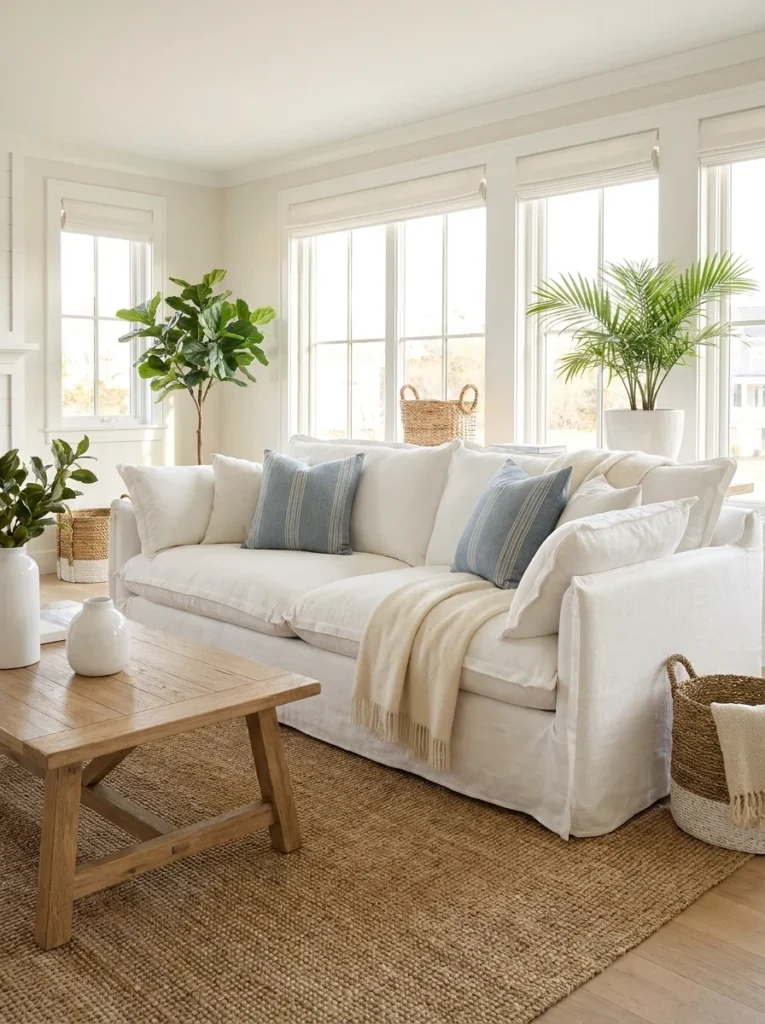
BEFORE
A formal sofa with dark upholstery and structured detailing can make a beach-inspired room feel more traditional than relaxed. It may also become difficult to coordinate with lighter seasonal accessories.
AFTER
A slipcovered sofa in ivory, oatmeal, or soft white creates a casual and welcoming seating area. Its loose fabric appearance complements woven furniture, natural rugs, and simple wooden tables.
Look for removable, washable covers if easy maintenance is important. Before buying, check the sofa’s actual dimensions, seat depth, and cushion construction. A well-fitted slipcover should look relaxed without dragging excessively on the floor or interfering with the sofa’s everyday use.
18. Add Striped Coastal Throw Pillows
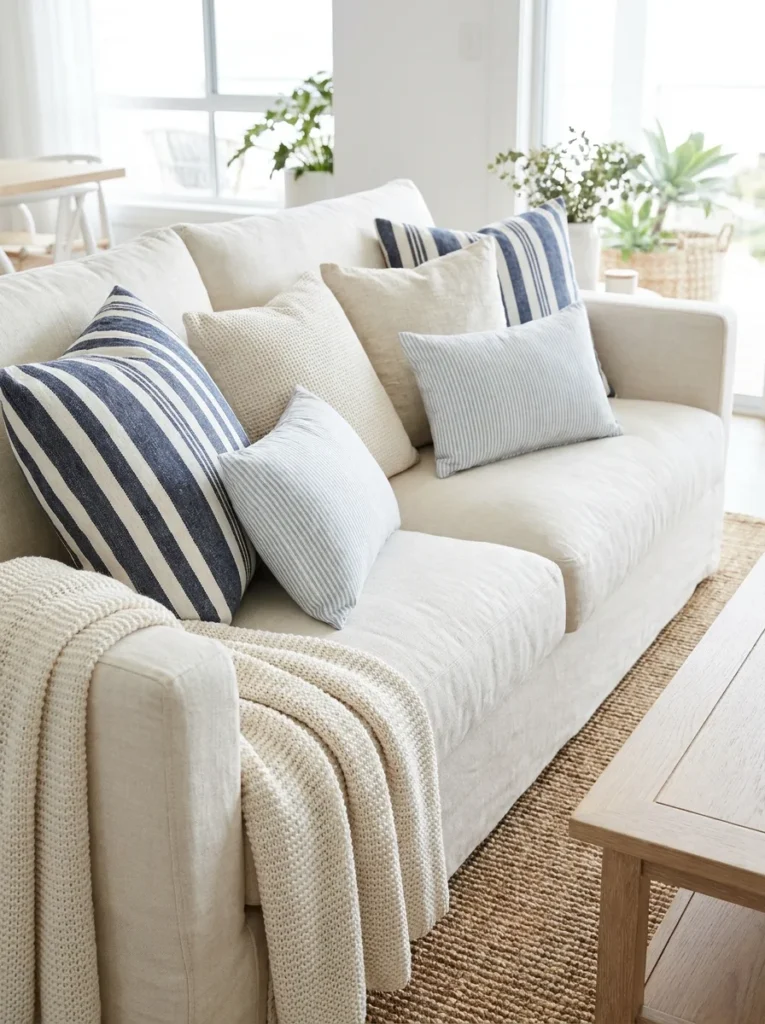
- Select a Base Color: Start with cream or white cushions.
- Introduce Stripes: Add blue-and-white striped pillows for a recognizable coastal detail.
- Mix Textures: Combine cotton, linen, and a slightly nubby woven fabric.
- Vary the Sizes: Use larger square cushions at the back and smaller accent pillows in front.
- Keep the Pattern Balanced: Include a few solid-colored cushions to prevent the arrangement from looking too busy.
Striped pillows are an easy way to introduce a classic beach-house detail without purchasing new furniture. They work particularly well on neutral sofas and can be switched out whenever you want a different seasonal look. Choose removable covers so they are easier to clean and store.
19. Create a Neutral Coastal Living Room
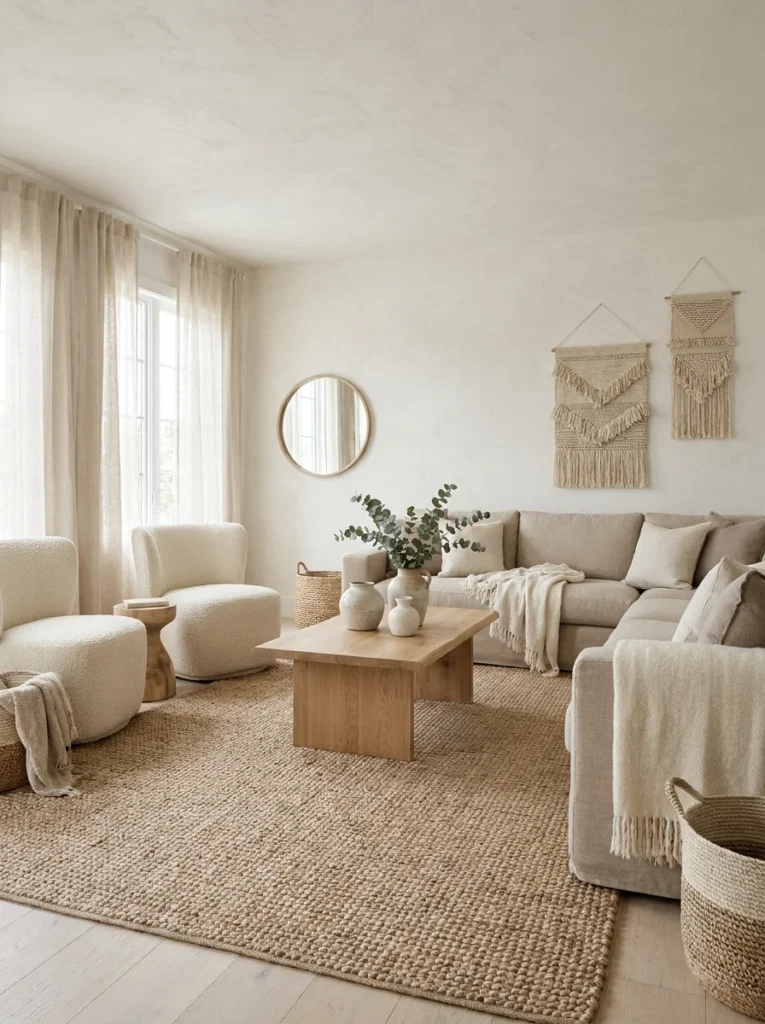
| Design Element | Soft Neutral Option | Textured Neutral Option |
| Walls | Warm white paint | Subtle limewash finish |
| Sofa | Cream linen | Oatmeal textured upholstery |
| Rug | Light beige cotton | Natural jute weave |
| Coffee Table | Pale oak | Weathered wood |
| Accessories | White ceramic | Woven baskets and stoneware |
A neutral coastal room relies on subtle differences rather than strong color contrasts. Layering ivory, sand, oatmeal, and warm gray creates a calm atmosphere while allowing textures to provide visual interest. If the room starts looking too monochromatic, add a small amount of muted blue or soft green through cushions, artwork, or greenery.
20. Incorporate Weathered Wood Details
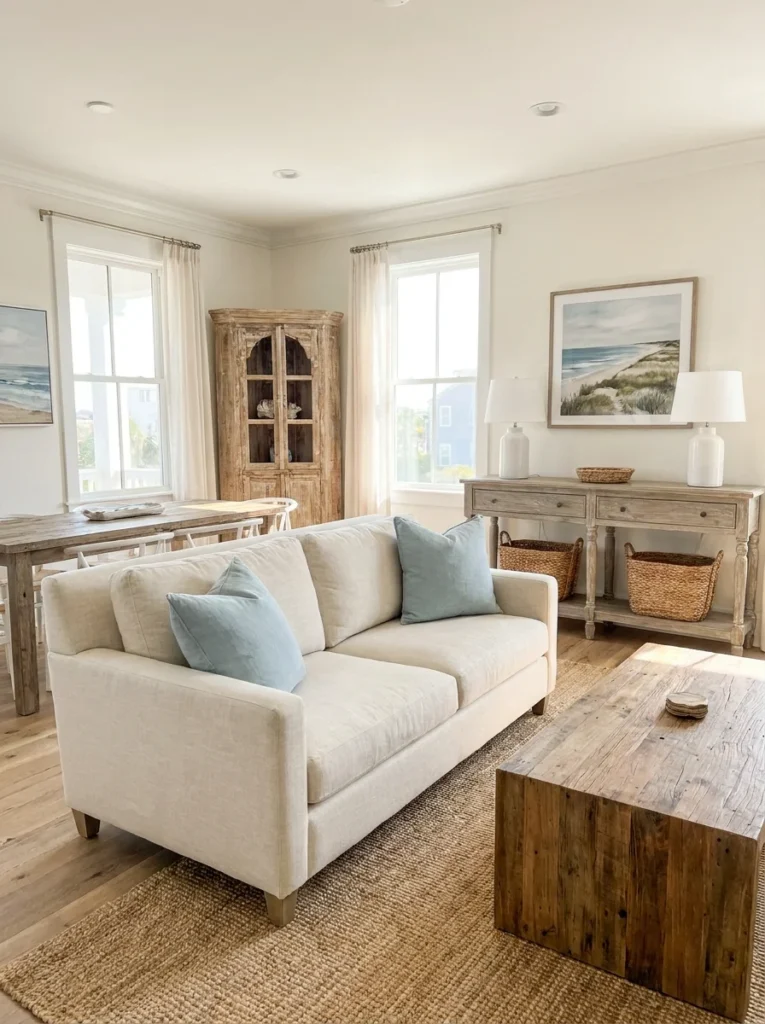
DO:
- Choose furniture with a naturally distressed or lightly aged finish.
- Add a weathered wood console behind the sofa.
- Use reclaimed-looking shelves for a relaxed decorative display.
- Balance rough wood grain with soft upholstery and smooth ceramics.
DON’T:
- Mix too many competing distressed finishes.
- Use rough or splintered wood on frequently touched surfaces.
- Choose overly dark furniture if the room already lacks natural light.
- Make every piece of furniture look artificially aged.
Weathered wood creates a sense of warmth and character that suits relaxed coastal interiors. It works particularly well in living rooms with white walls and light-colored upholstery. A single statement coffee table or console can provide enough contrast, while smaller wooden accessories help repeat the finish around the room.
21. Design a Small Coastal Living Room
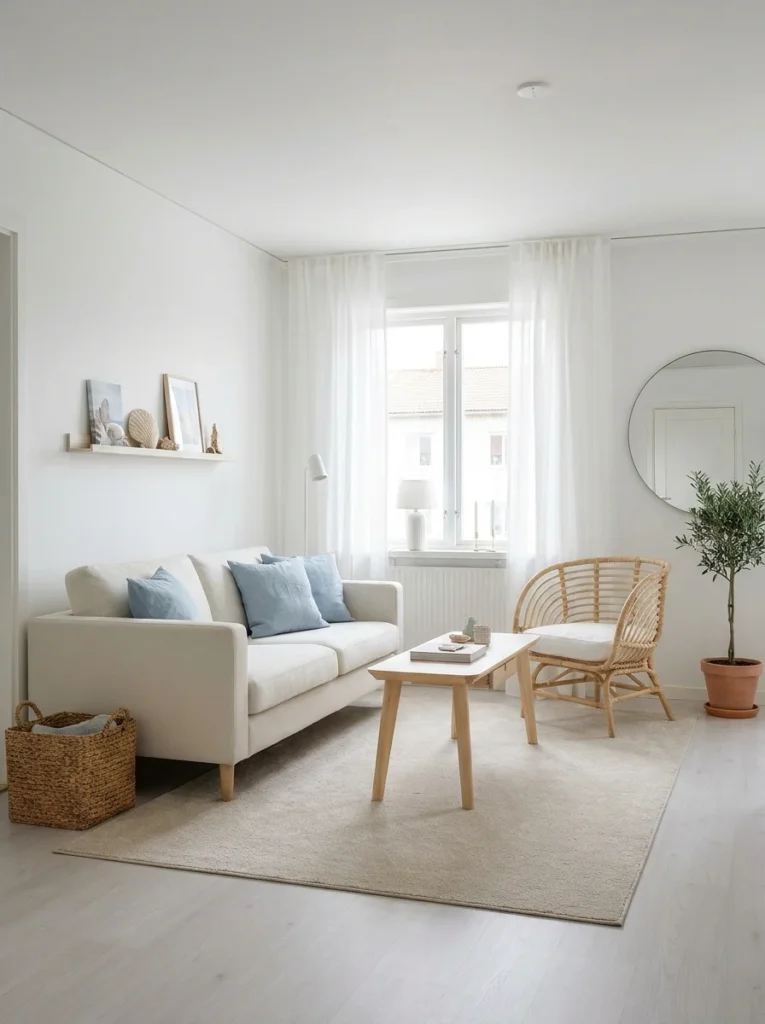
Room Size: Compact apartments, small family rooms, and narrow living areas.
Furniture: Slim-arm sofas, nesting tables, and compact accent chairs.
Color Palette: White, pale beige, soft blue, and light oak.
Storage: Woven baskets, wall-mounted shelves, and multifunctional furniture.
Layout: Keep the main walking route open and avoid blocking windows.
A smaller living room benefits from a lighter approach to coastal decorating. Choose furniture with visible legs and simple shapes to prevent the space from feeling crowded. A light-colored rug can visually connect the seating arrangement, while a wall-mounted shelf provides display space without taking up floor area. Instead of adding several small decorative objects, select a few larger accessories that make a clear visual statement.
22. Add a Natural Stone or Textured Fireplace
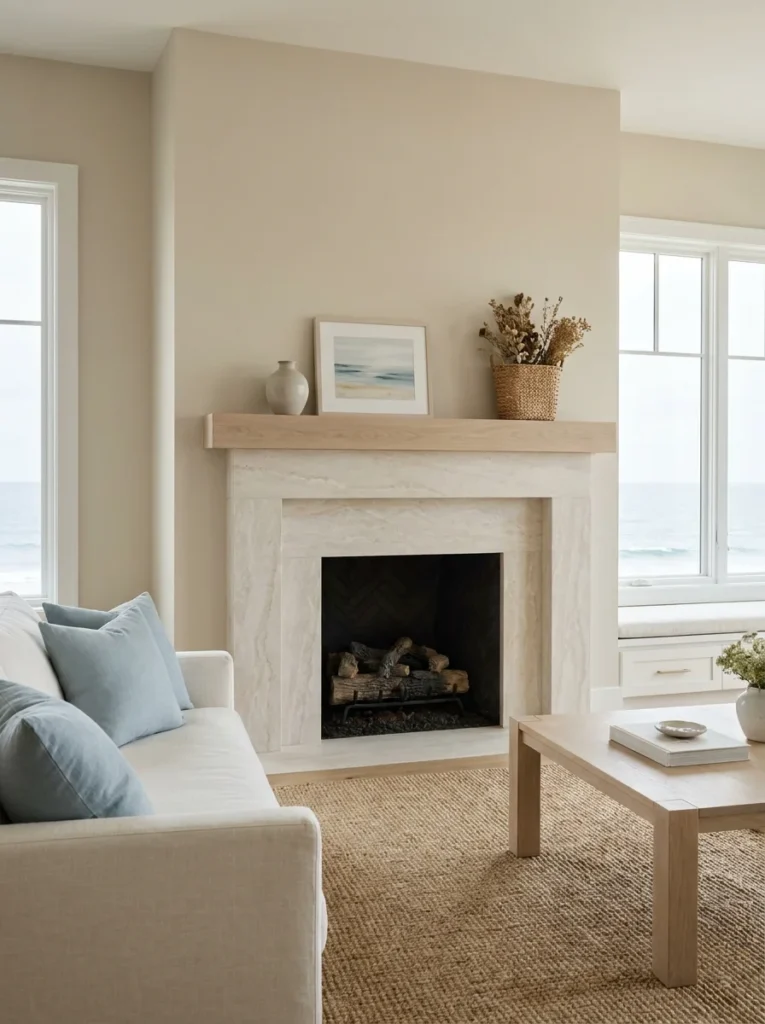
A fireplace can become the main architectural feature of a coastal living room, especially when finished in pale stone, whitewashed brick, or subtle textured plaster. The natural surface creates a beautiful contrast against smooth painted walls and soft upholstery.
For a relaxed look, keep the mantel styling simple with a ceramic vase, a small framed coastal print, and a few carefully selected accessories. If you are updating an existing fireplace, consider a suitable finish for the fireplace’s material and heat exposure. Always follow the manufacturer’s installation requirements and local fire-safety guidance. Renters can achieve a similar visual effect with removable decorative accents around an existing mantel.
23. Use Ocean-Inspired Decorative Colors
Quick Tip:
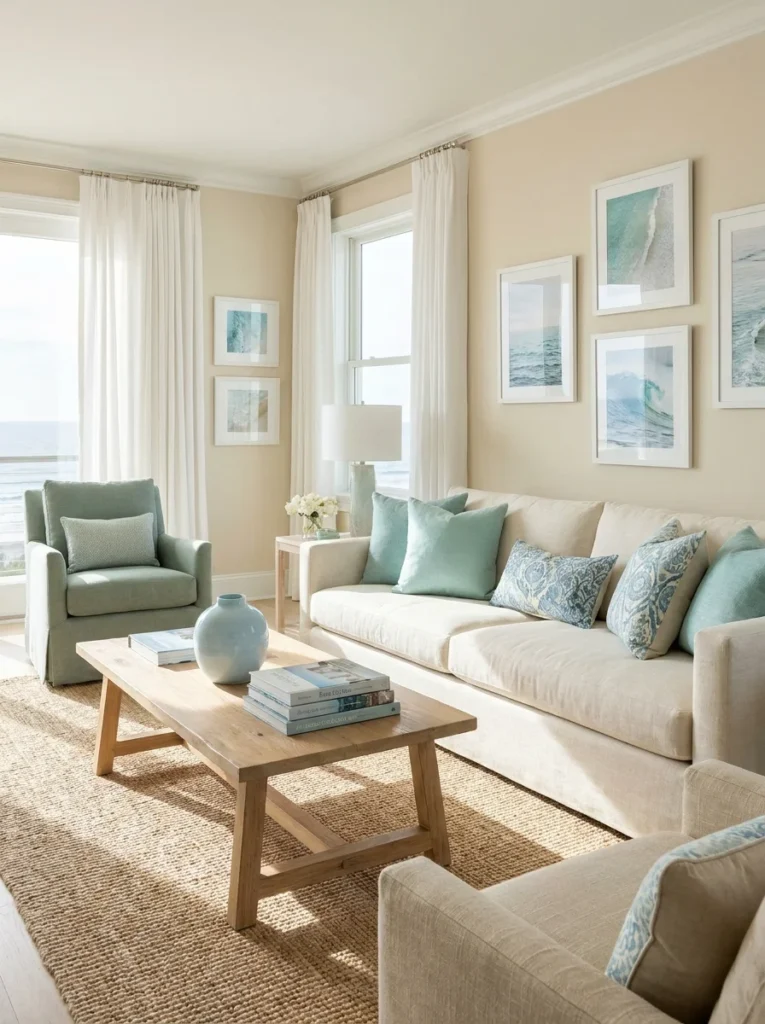
Choose a limited palette based on colors found along the shoreline. Combine soft aqua, muted sea glass green, sandy beige, and a touch of deeper ocean blue. Use the lightest shades on larger surfaces and reserve stronger colors for accessories.
This approach gives the living room a gentle connection to the ocean without relying on obvious nautical decorations. A pale aqua cushion, sage-green ceramic vase, and sandy-toned rug can work together beautifully. Repeat each accent color at least twice in different parts of the room to make the arrangement feel intentional rather than random.
24. Create a Coastal Living Room with Vintage Touches
BEFORE
A room filled entirely with new matching furniture can sometimes feel too coordinated and lack the character associated with a relaxed beach house. Smooth finishes and identical accessories may also make the space feel less personal.
AFTER
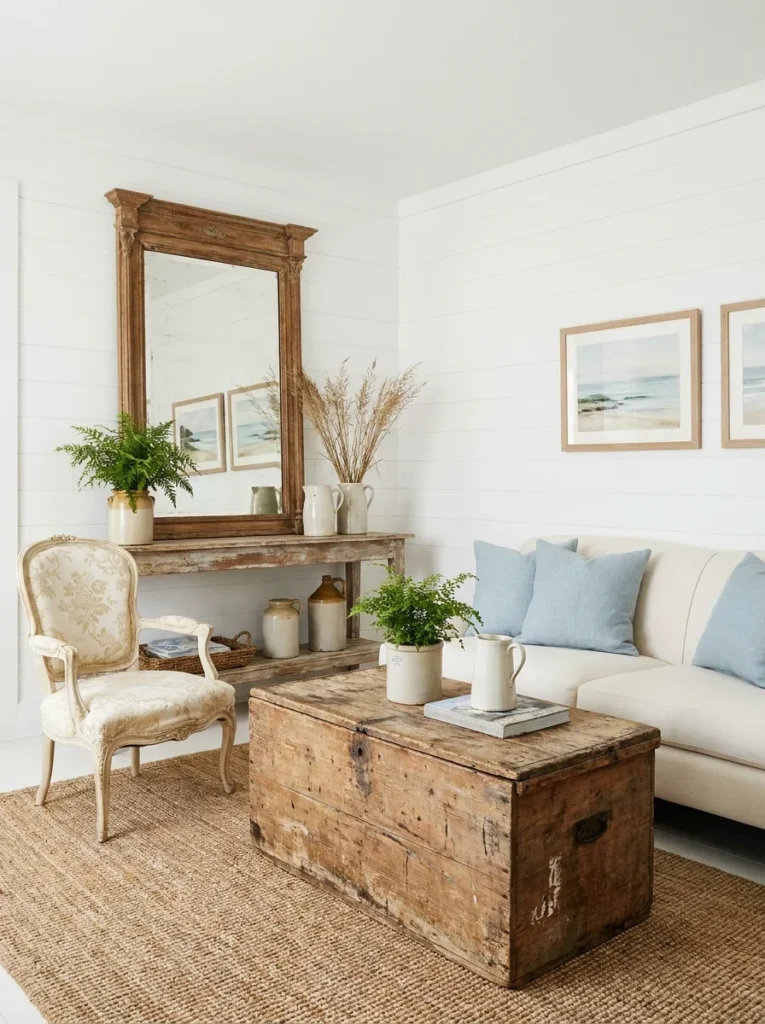
A vintage wooden chest, an aged mirror, or a traditional accent chair introduces history and individuality. Combined with white upholstery, light blue cushions, and woven accessories, these older pieces feel connected to the overall coastal palette.
Look for vintage items with interesting shapes and natural finishes. A secondhand wooden trunk can work as a coffee table or storage piece, provided it has a stable surface and suitable height. Mixing old and new furniture keeps the room from looking overly staged.
25. Add Layered Textures for a Cozy Beachy Feel
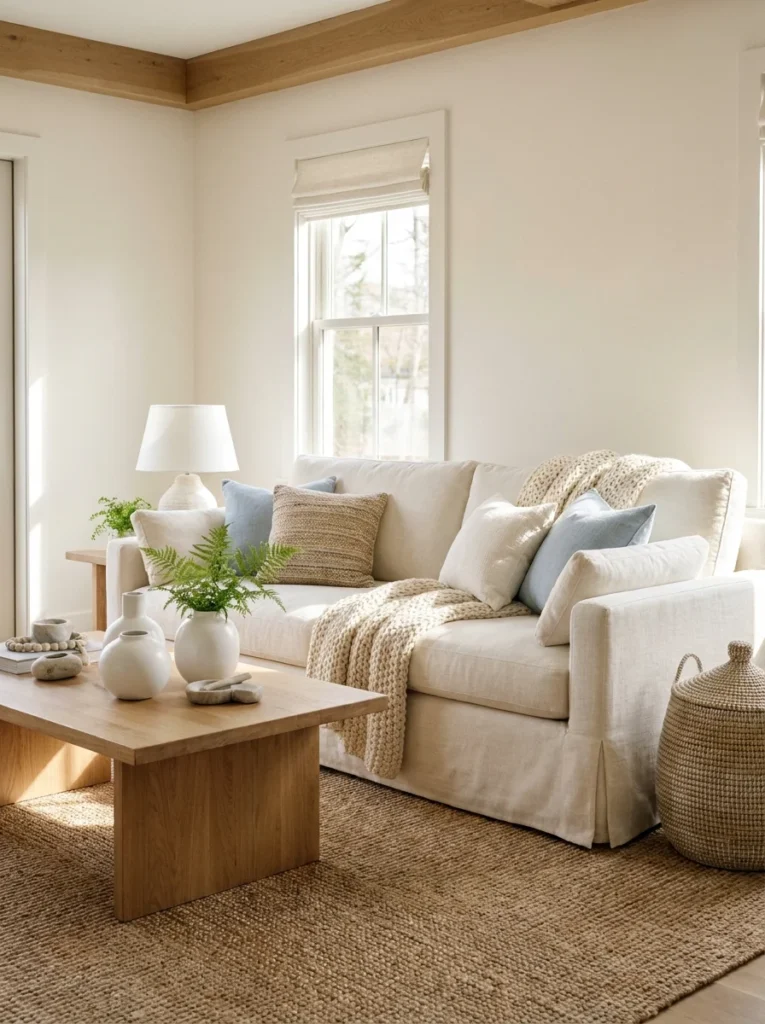
- Start with Soft Upholstery: Choose a comfortable linen or cotton sofa in a neutral shade.
- Layer the Rug: Use a natural woven rug to introduce texture under the seating arrangement.
- Mix Cushion Fabrics: Combine smooth cotton, textured linen, and subtle woven patterns.
- Add Natural Accessories: Include wooden bowls, ceramic vases, and woven baskets.
- Finish with Soft Lighting: Use table lamps and warm-toned bulbs to create a comfortable evening atmosphere.
Layering textures is especially useful when decorating with a limited color palette. Instead of introducing many different shades, combine materials that look and feel different. A smooth ceramic vase beside a rough woven basket creates contrast, while a knitted throw softens the appearance of a structured sofa. Keep the overall arrangement balanced so the room feels comfortable rather than visually crowded.
26. Design an Elegant Luxury Coastal Living Room
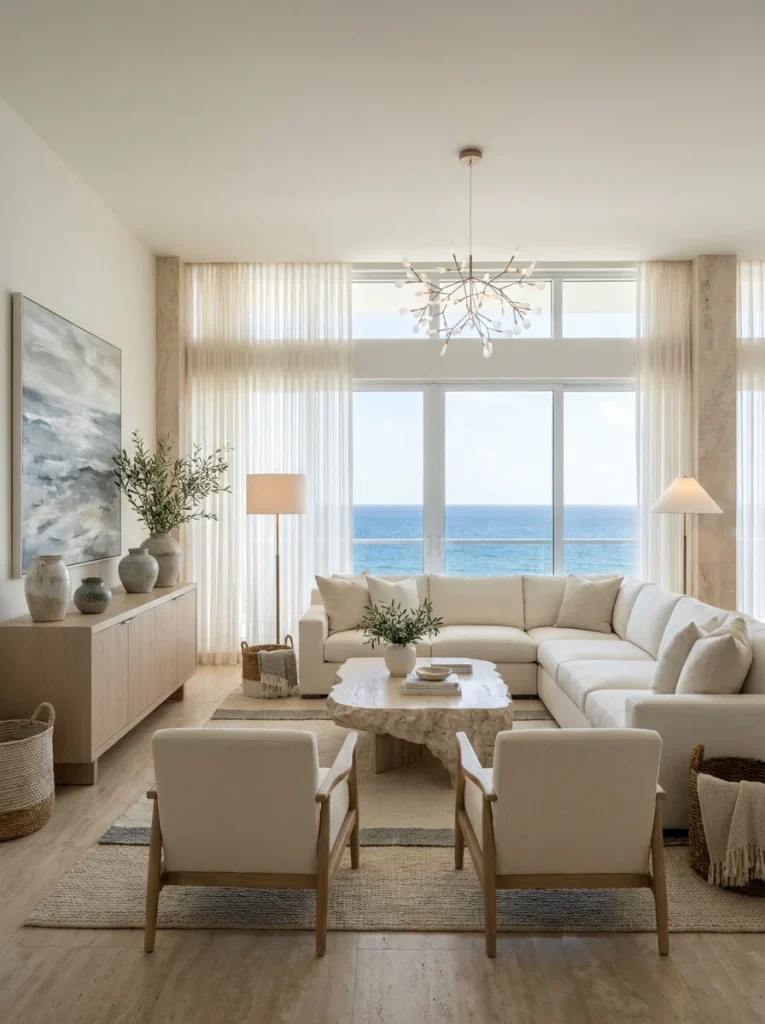
Room: Large living rooms, open-plan homes, and spacious beach-inspired interiors.
Furniture: Oversized cream sofas, sculptural lounge chairs, and refined natural wood tables.
Color Palette: Warm ivory, pale taupe, muted blue, and soft stone gray.
Materials: Linen, travertine, natural oak, marble, and woven accents.
Lighting: Statement chandeliers, layered floor lamps, and discreet accent lighting.
An elegant coastal living room combines generous proportions with carefully selected natural materials. A large sectional sofa can anchor the seating area, while a sculptural stone coffee table adds a sophisticated focal point. Floor-to-ceiling curtains and oversized ocean-inspired artwork create a polished backdrop.
Keep decorative accessories minimal and invest in quality upholstery, comfortable seating, and well-designed lighting. The result should feel luxurious but still relaxed enough for everyday family living.
Helpful Decorating Tips for a Coastal Living Room
Creating a comfortable beach-inspired living room is about finding the right balance between light colors, natural textures, and practical furniture. A few thoughtful decisions can help the entire space feel more connected.
- Keep the Palette Consistent: Choose two or three main colors and repeat them throughout the room. White, beige, and soft blue are an easy combination to work with.
- Prioritize Natural Light: Avoid placing bulky furniture in front of windows. Lightweight curtains help maintain a bright, open atmosphere.
- Measure Before Buying: Check sofa, rug, and coffee table dimensions before purchasing. Leave enough room for comfortable movement between furniture pieces.
- Mix Natural Materials: Combine wood, rattan, linen, jute, and ceramic finishes to create depth without relying on too many colors.
- Avoid Overdecorating: You do not need shells, anchors, or ocean artwork on every surface. A few carefully selected coastal details are more effective.
- Choose Durable Fabrics: For busy households, consider washable cushion covers, performance upholstery, and easy-to-clean surfaces.
- Layer Your Lighting: Combine ceiling fixtures, table lamps, and floor lamps so the living room feels comfortable during both daytime and evening hours.
- Make It Personal: Include family photographs, favorite books, vintage furniture, or meaningful accessories to give the room its own character.
Final Thoughts
Creating a relaxed beach-inspired home does not require an ocean view or a complete interior makeover. These 26 coastal living room ideas show how soft colors, natural wood, comfortable linen furniture, woven accents, and thoughtful lighting can bring a fresh atmosphere into almost any home.
Start with one or two changes that suit your existing furniture, available space, and budget. You can gradually introduce more textures and decorative details as your style develops. Save your favorite ideas for future decorating inspiration and share this article with someone who loves a relaxed coastal home.
Frequently Asked Questions
1. What colors work best for a coastal living room?
White, cream, beige, pale blue, soft aqua, and muted green are popular choices. These colors create a light and relaxed atmosphere. You can also introduce navy or deeper ocean-inspired shades through cushions, artwork, and smaller decorative accessories.
2. How can I make my living room look coastal on a budget?
Start by changing smaller details rather than replacing expensive furniture. Add light-colored cushion covers, a woven basket, simple coastal artwork, and lightweight curtains. Rearranging existing furniture and introducing natural textures can also make a noticeable difference without requiring a major investment.
3. What furniture is best for coastal living room decor?
Comfortable sofas with linen or linen-look upholstery, natural wood coffee tables, rattan accent chairs, and simple storage cabinets work particularly well. Choose furniture with relaxed silhouettes and finishes that complement your room’s color palette.
4. How do I create a modern coastal living room?
Combine clean-lined furniture with neutral upholstery, natural materials, and a few ocean-inspired accents. Choose simple wooden tables, understated artwork, and subtle woven details. Avoid excessive nautical decorations to maintain a contemporary appearance.
5. How can I make a small living room feel more coastal?
Use a light color palette, compact furniture, sheer curtains, and natural textures. Choose a rug that fits the seating arrangement, use vertical shelving for storage, and keep the floor as uncluttered as possible. Mirrors can also help reflect natural light and make the room feel more open.