18 Best Kitchen Flooring Ideas With Oak Cabinets
Choosing the right floor can make oak kitchen cabinets look more modern, balanced, and inviting. The best kitchen flooring ideas with oak cabinets complement the wood’s natural undertones while adding durability and style to your everyday cooking space.
From light hardwood and warm porcelain tile to bold checkerboard patterns and dark charcoal finishes, these flooring options suit different kitchen sizes, budgets, and decorating styles. Whether your cabinets are golden oak, honey oak, or light natural oak, these ideas will help you find a floor that looks cohesive and works for your household.
1. Light Oak Hardwood Flooring

Light oak hardwood creates a warm, natural kitchen with a cohesive wood-on-wood appearance. Choose flooring in a pale beige or soft natural oak shade, with subtle grain patterns that complement rather than compete with the cabinets. A matte or satin finish keeps the overall look relaxed, while wide planks create fewer visual interruptions across the floor.
This combination works particularly well in Scandinavian, contemporary, and organic modern kitchens. The key is to create enough contrast between the cabinets and flooring so they do not look like a mismatched wood set. If your cabinets are golden oak, choose a lighter, more neutral floor. Always confirm that the wood flooring is suitable for your kitchen’s moisture conditions.
2. Warm White Porcelain Tile

- Color: Soft ivory, warm white, or creamy off-white.
- Finish: Matte or lightly textured for a natural appearance.
- Cabinet pairing: Golden oak, honey oak, or medium natural oak.
- Design style: Traditional, farmhouse, transitional, and modern.
- Maintenance: Porcelain is generally easy to clean, although grout requires attention.
Warm white porcelain tiles brighten the kitchen while allowing the wood grain of oak cabinets to remain the main feature. Choose larger tiles if you prefer fewer grout lines and a more continuous appearance. A warm undertone is especially important if your cabinets have golden or amber tones.
For a cohesive finish, pair the floor with cream walls, brushed brass hardware, and light stone countertops. Avoid stark blue-white tiles if the cabinets already appear strongly yellow, as the cool contrast may make their undertones more noticeable.
3. Light Gray Luxury Vinyl Plank Flooring

Quick Tip: Choose a light gray vinyl plank with a subtle beige undertone instead of an icy blue-gray. This creates a softer transition between the floor and the warm wood tones of oak cabinetry.
Light gray luxury vinyl plank flooring offers a contemporary look without making the kitchen feel overly dark. Its understated grain adds texture, while the muted color gives honey oak cabinets a fresh contrast. It works particularly well with white countertops, stainless steel appliances, and simple cabinet hardware.
For open-plan homes, continue the same flooring into the adjoining living or dining area for visual continuity. Before purchasing, check the product’s water-resistance rating, wear layer, and installation requirements. Gray floors vary considerably in undertone, so compare samples beside your actual cabinets.
4. Natural Beige Stone Flooring
BEFORE
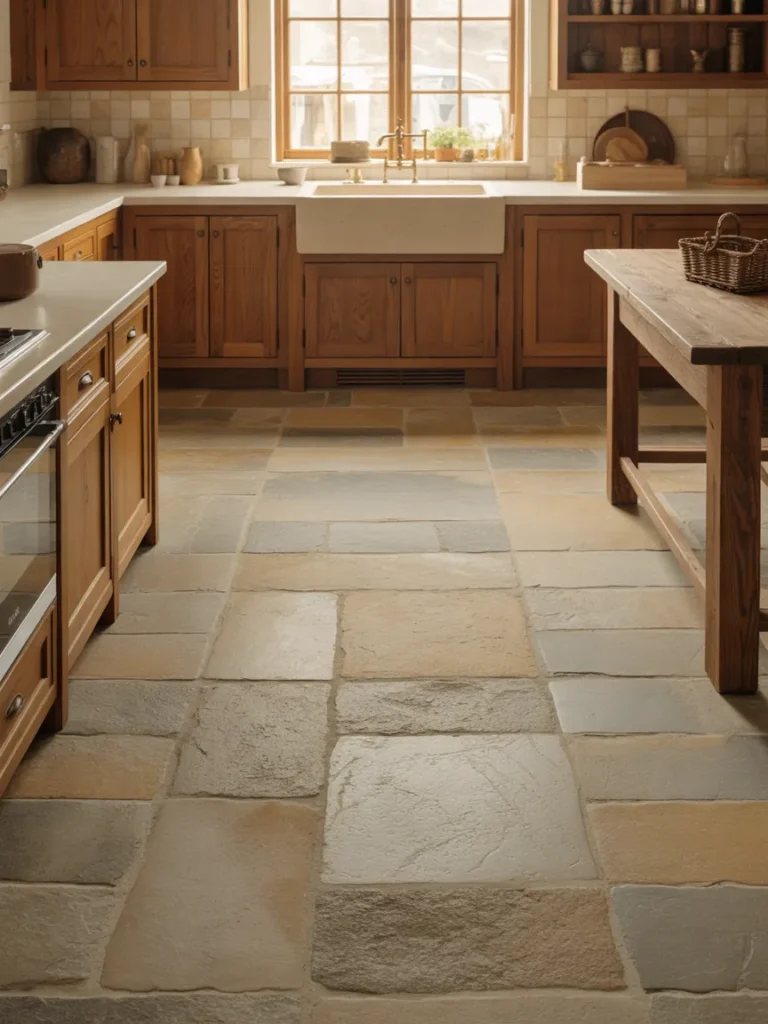
A kitchen with golden oak cabinets, cream walls, and a floor that feels too cool or visually disconnected can look unbalanced. Strongly patterned flooring may also compete with the natural grain of the cabinetry.
AFTER
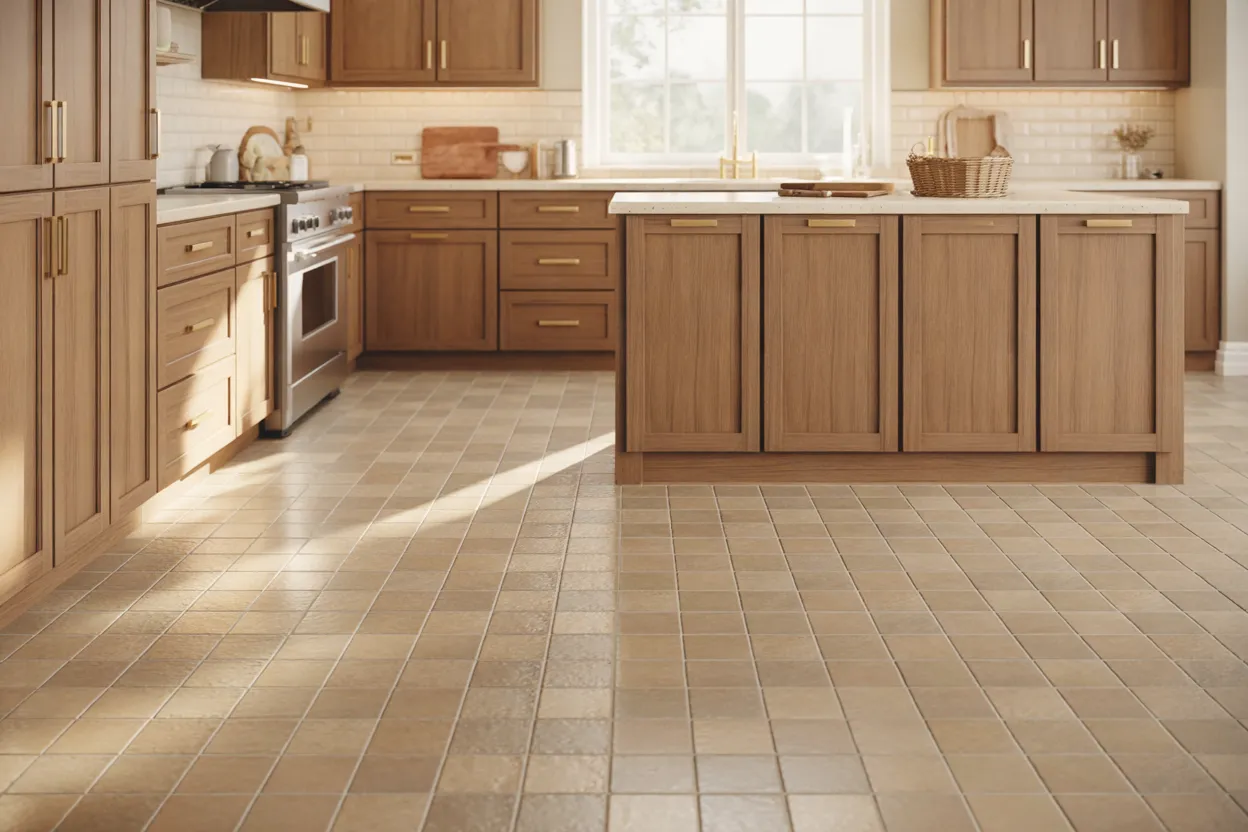
Natural beige stone flooring introduces soft, earthy tones that connect the cabinets with the rest of the room. Subtle variations in beige, sand, and taupe create depth without overwhelming the kitchen.
For this look, consider limestone or another suitable natural stone with a finish appropriate for kitchen use. Seal the stone when required and follow the manufacturer’s maintenance instructions. Natural stone can be more expensive to install and maintain than porcelain alternatives, so factor in sealing, cleaning products, and professional installation when planning your budget.
5. Dark Walnut Hardwood Flooring
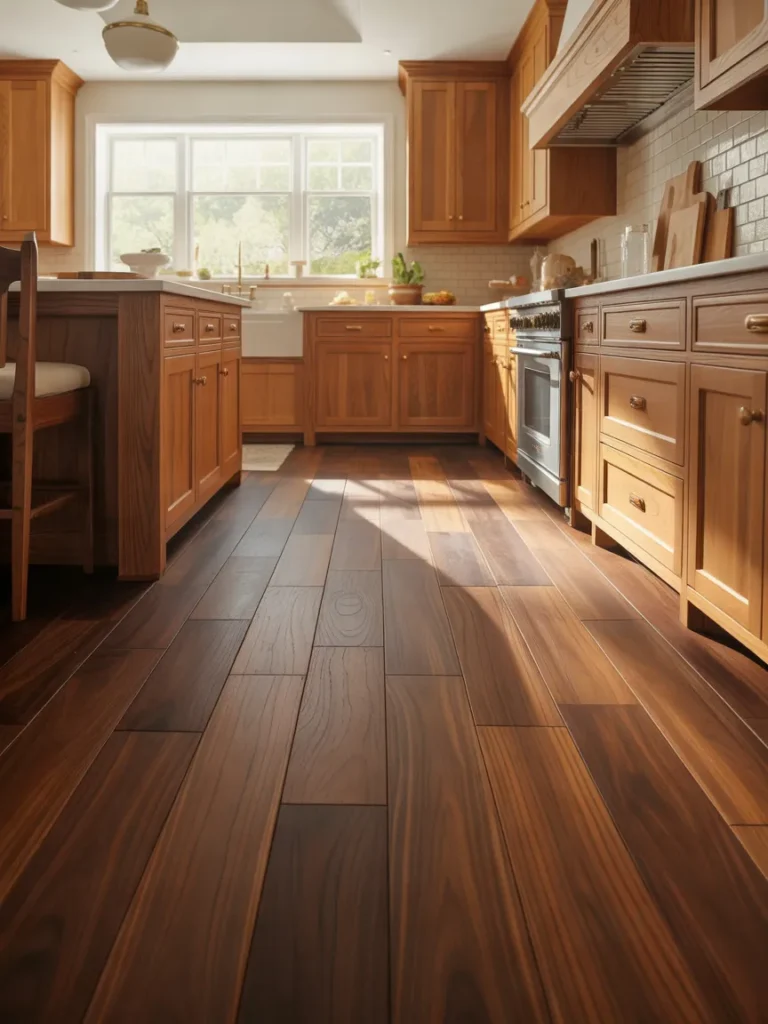
Create a rich contrast by pairing oak cabinets with dark walnut flooring in deep brown shades. The darker surface grounds the room, while the lighter cabinetry keeps the overall palette from feeling too heavy. This combination works especially well with cream countertops, warm white walls, and brass or black cabinet pulls.
How to Create the Look
- Check the cabinet undertones. Choose walnut flooring with brown undertones that complement your existing oak.
- Select a suitable finish. A matte or satin surface gives the wood a softer, less reflective appearance.
- Balance the darker floor. Use light countertops, pale walls, and adequate task lighting.
- Repeat the brown tones. Add a wooden dining table or a few brown accessories to connect the finishes.
Dark walnut flooring suits traditional, transitional, and modern kitchens. It does show dust and crumbs more readily in some finishes, so consider the amount of daily cleaning your household can manage.
6. White Marble-Look Porcelain Tiles
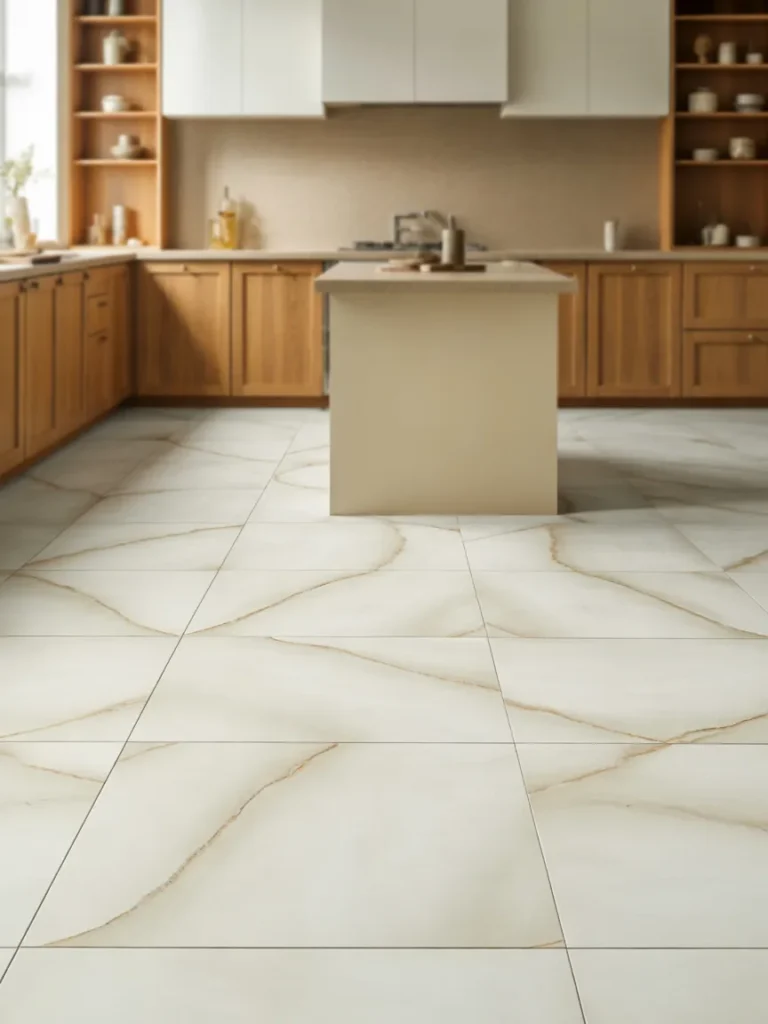
White marble-look porcelain tiles introduce a refined stone appearance without requiring natural marble throughout the kitchen. Soft gray or beige veining adds movement to the floor, while the pale background helps oak cabinets stand out.
| Feature | White Marble-Look Porcelain | Natural Marble |
| Appearance | Consistent printed veining | Naturally varied patterns |
| Maintenance | Generally straightforward | Requires more careful maintenance |
| Stain resistance | Generally good when properly installed | More vulnerable to certain stains and etching |
| Budget | Often more affordable | Can cost more depending on the stone |
| Best feature | Practical everyday finish | Distinctive natural variation |
For a balanced design, select porcelain with gentle veining rather than dramatic black streaks. Pair it with warm oak cabinets, simple cream walls, and restrained hardware. Both options can suit elegant kitchens, but porcelain is often the more practical choice for busy households.
7. Warm Gray Ceramic Tiles
DO
- Choose warm gray tiles with beige or taupe undertones.
- Use a grout shade that blends with the tile for a quieter appearance.
- Match the floor with cream walls or warm white countertops.
- Test samples under both natural and artificial kitchen lighting.
DON’T
- Choose blue-gray tiles without checking how they look beside the cabinets.
- Mix several competing gray shades in one small kitchen.
- Ignore the tile’s slip resistance and surface texture.
- Assume every gray floor will neutralize yellow-looking oak.
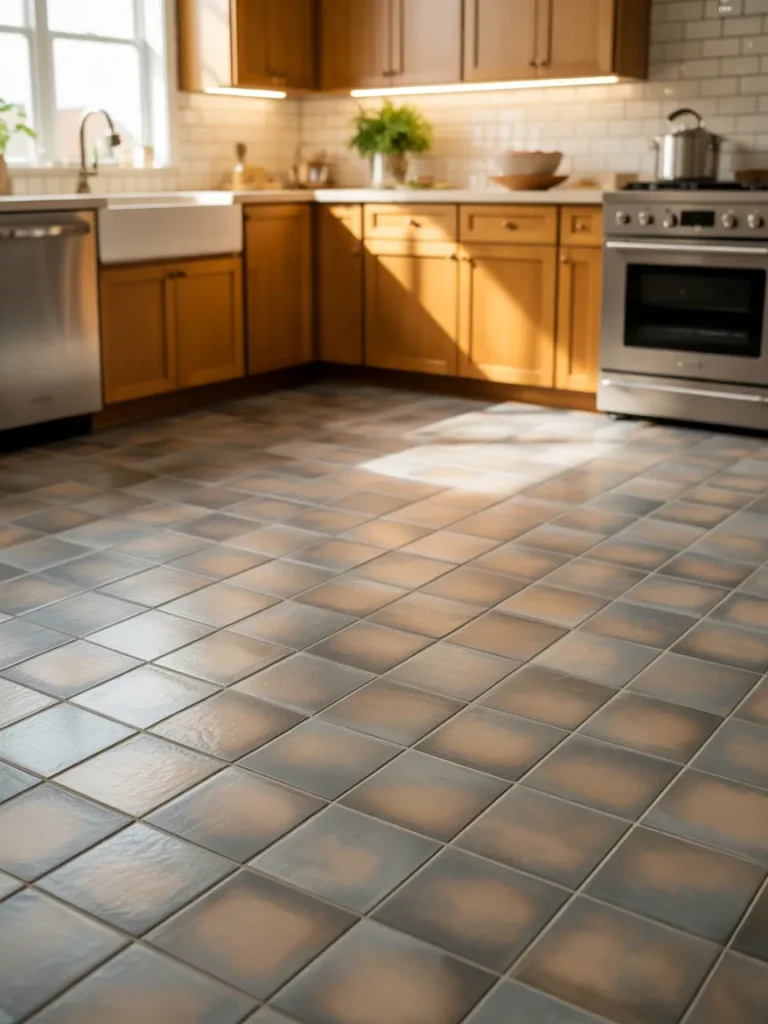
Warm gray ceramic flooring offers a subtle contemporary contrast without introducing the starkness of cooler gray finishes. It works particularly well with honey oak cabinets, stainless steel appliances, and neutral backsplashes. The most successful combinations connect the warm wood to the cooler floor through beige accessories, creamy paint, or lightly patterned countertops.
See Also : 17 Kitchen Counter Styling Ideas for a Beautiful Space
8. Natural Stone-Look Tile Flooring

Style: Rustic, organic, Mediterranean, or transitional.
Materials: Porcelain or ceramic tiles designed to resemble stone.
Color Palette: Sand, soft gray, warm beige, and muted brown.
Best Placement: Throughout the kitchen, including high-traffic paths near the sink and refrigerator.
Natural stone-look tiles bring the irregular color variations of stone into a kitchen without requiring every piece to be natural material. Their varied markings complement the grain of oak cabinets and create a relaxed, grounded atmosphere. Choose a pattern with moderate variation so the floor adds interest without competing with the cabinetry.
For a practical finish, select a tile rated for your intended application and follow the manufacturer’s guidance for slip resistance. Pair it with simple countertops and understated accessories to keep the room visually balanced.
9. Honey-Toned Wood Flooring
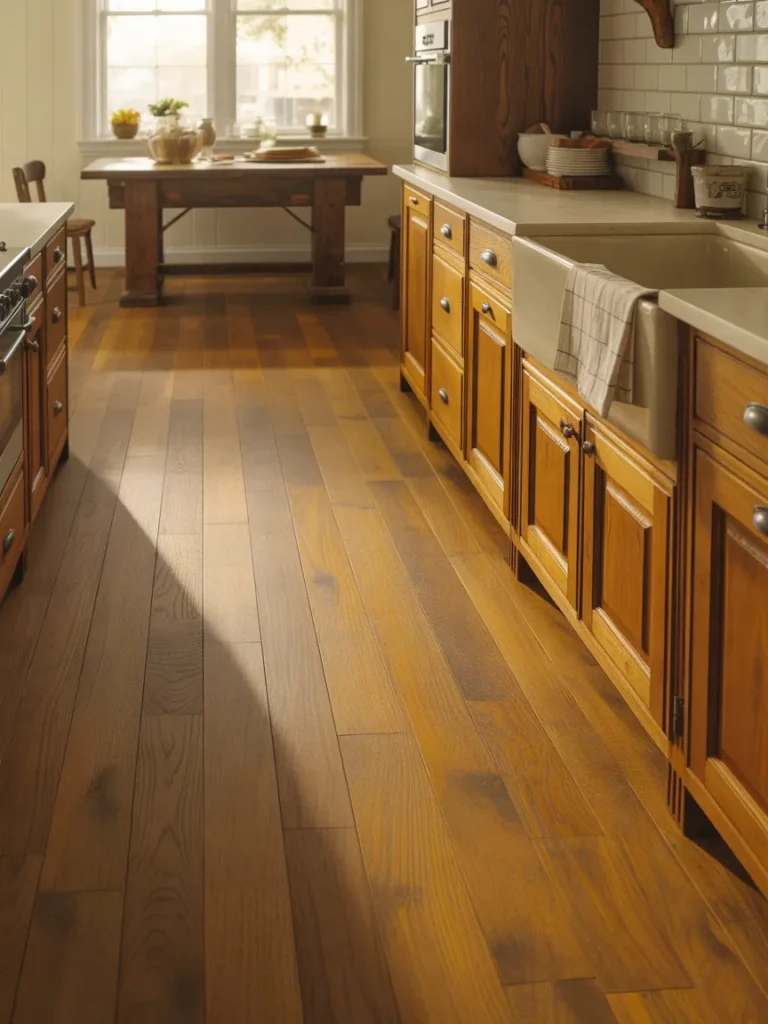
Honey-toned wood flooring can create a welcoming kitchen when its golden warmth is carefully balanced with the color of the cabinets. The floor may feature slightly deeper amber tones, visible grain, and a satin finish that reflects a little light without appearing glossy.
The main consideration is avoiding a floor and cabinetry combination that looks too uniform. If your oak cabinets are pale, a medium honey floor can provide definition. If the cabinets are already golden, choose flooring with a more neutral brown undertone. This style suits traditional and farmhouse kitchens, especially when paired with cream countertops, natural textiles, and simple black or bronze hardware. Compare samples in daylight before committing to a finish.
10. Cream Limestone-Look Flooring

- Appearance: Soft cream and beige tones with delicate stone-like movement.
- Cabinet match: Natural oak, golden oak, and honey oak.
- Room effect: A bright, warm, and understated foundation.
- Design pairing: Cream backsplashes, brushed brass fixtures, and neutral countertops.
- Practical consideration: Textured finishes and grout colors affect cleaning requirements.
Cream limestone-look porcelain creates a gentle transition between oak cabinets and lighter kitchen surfaces. Unlike a stark white floor, its warmer coloring connects naturally with the wood’s golden undertones. The result feels cohesive without requiring every finish to match exactly.
Large-format tiles can make the floor appear more continuous, especially in an open kitchen. For smaller rooms, consider a pale grout that closely matches the tile. Porcelain offers a practical alternative to natural limestone, which may require sealing and more specialized care.
11. Patterned Black and White Floor Tiles

Quick Tip: Let the floor be the main pattern in the room. If you choose geometric black and white tiles, keep the backsplash and countertops relatively simple so the oak cabinets and flooring do not compete for attention.
Patterned tiles add character to a kitchen with otherwise understated oak cabinetry. Geometric motifs, small repeating designs, and vintage-inspired patterns work particularly well in farmhouse, eclectic, and traditional interiors. The contrast creates a clear visual foundation, while the wood tones soften the black and white palette.
In a small kitchen, use a smaller-scale pattern or a restrained design to avoid overwhelming the floor. Repeat black through cabinet handles, pendant lights, or window hardware for consistency. Before installation, lay out a sample section to check how the pattern aligns with cabinet edges and doorways.
12. Greige Luxury Vinyl Plank Flooring

BEFORE
A kitchen with honey oak cabinets and cool gray flooring can sometimes feel disconnected, especially when the countertops and walls introduce several different undertones. The room may lack a consistent transition between its warm and cool finishes.
AFTER
Greige flooring brings together gray and beige, creating a middle ground that works with many oak finishes. The subtle wood-grain pattern adds texture while maintaining a neutral appearance.
Choose planks with a low-contrast grain for a clean, modern look. In an open-plan layout, greige flooring can also connect the kitchen to neutral furniture and living room finishes. Check samples under your kitchen’s actual lighting and compare the floor against the cabinets, countertops, and wall paint before installation.
13. Terracotta Kitchen Floor Tiles

Terracotta flooring introduces earthy red, rust, and clay tones that complement the natural warmth of oak cabinetry. It gives a kitchen a relaxed Mediterranean, rustic, or farmhouse character, particularly when combined with cream walls, natural wood shelves, and simple stone-look countertops.
How to Style Terracotta Flooring
- Choose the tone. Compare muted clay, dusty rust, and deeper terracotta shades against your cabinets.
- Keep surrounding colors calm. Cream, warm white, and soft beige help balance the reddish floor.
- Repeat natural textures. Consider linen curtains, woven baskets, and understated wooden accessories.
- Check the material. Traditional terracotta may need sealing, while terracotta-look porcelain is often easier to maintain.
Terracotta is a distinctive option for kitchens that need warmth and personality. Use it selectively if your oak cabinets already have strong orange or red undertones, and test the combination before installing the entire floor.
See Also 20 Breakfast Bar Ideas for Small Kitchens to Try
14. Slate Gray Porcelain Flooring

Slate gray porcelain flooring gives oak cabinets a deeper, more defined contrast. Its dark gray color and stone-inspired texture work well in contemporary, industrial, and transitional kitchens. Unlike a very pale floor, slate gray creates a grounded appearance that can help lighter oak cabinetry stand out.
| Feature | Slate Gray Porcelain | Natural Slate |
| Color variation | Controlled and relatively consistent | Naturally varied |
| Maintenance | Generally easier to manage | May require sealing and specialized care |
| Appearance | Uniform stone-inspired finish | Distinctive natural texture |
| Installation | Requires a suitable tile substrate | Depends on stone thickness and installation needs |
For the best balance, pair slate gray with light oak cabinets, a pale backsplash, and warm lighting. Check the surface texture and slip rating, especially near the sink. Natural slate offers authentic variation, while porcelain can provide a more predictable finish.
15. Wide-Plank White Oak Flooring

DO
- Select wide planks with subtle, natural grain.
- Choose a neutral or lightly warm finish that complements the cabinetry.
- Use a matte finish to maintain a relaxed, natural appearance.
- Coordinate the floor with simple countertops and restrained hardware.
DON’T
- Match the floor and cabinets so closely that the wood tones blend together.
- Combine too many different wood finishes without a connecting color.
- Ignore moisture protection and the flooring manufacturer’s installation requirements.
- Choose plank widths without considering the size and proportions of the kitchen.
Wide-plank white oak flooring creates a spacious, streamlined look through longer visual lines and fewer plank joints. It works particularly well with modern, Scandinavian, and organic contemporary interiors. If your cabinets are traditional golden oak, choose a more neutral white oak floor for contrast. Engineered wood may be worth considering where its construction and specifications better suit the kitchen environment.
16. Checkerboard Kitchen Floor Tiles
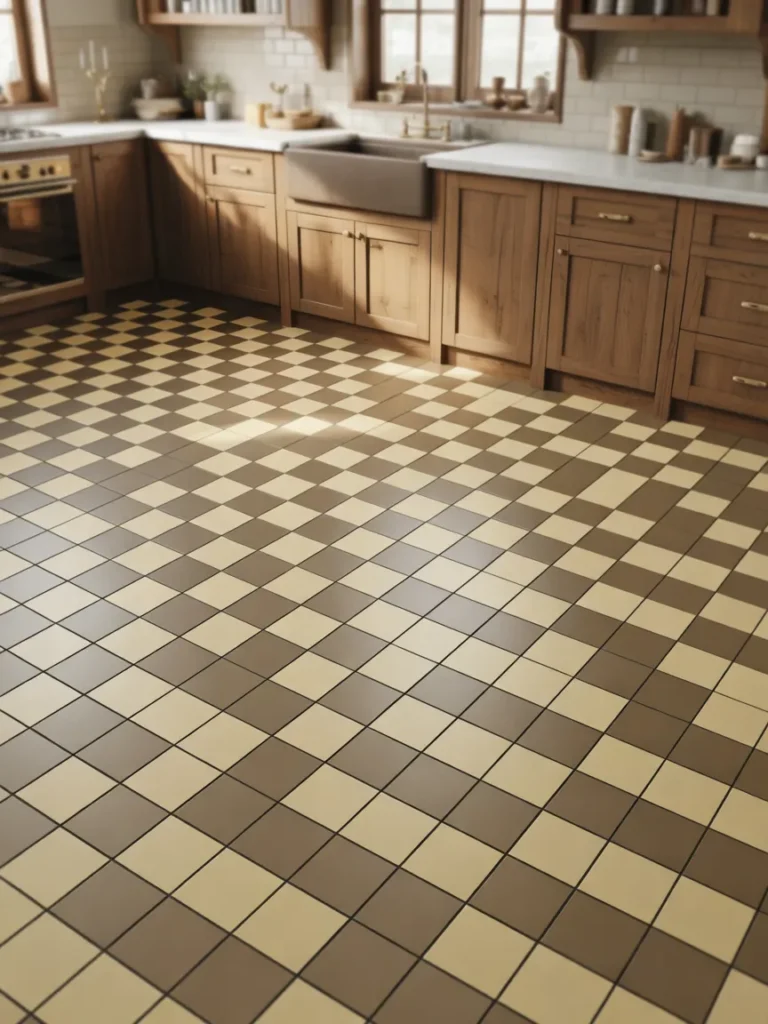
Room Style: Vintage, traditional, farmhouse, or modern eclectic.
Pattern: Alternating squares in black and white, cream and taupe, or two shades of gray.
Budget: Varies with tile size, material, preparation, and installation complexity.
Visual Effect: Strong geometric contrast that makes the floor a defining feature.
Checkerboard flooring brings structure and personality to an oak kitchen. Classic black and white feels bold, while cream and taupe create a softer, more traditional appearance. Smaller squares can introduce a vintage feel, whereas larger squares tend to look cleaner and more contemporary.
For a balanced result, keep cabinet finishes and countertops relatively simple. Plan the layout carefully around islands, doorways, and cabinet edges so the pattern looks intentional. Porcelain or ceramic tiles are practical choices, provided the product is suitable for kitchen floors and installed over an appropriate base.
17. Warm Taupe Stone-Look Tiles
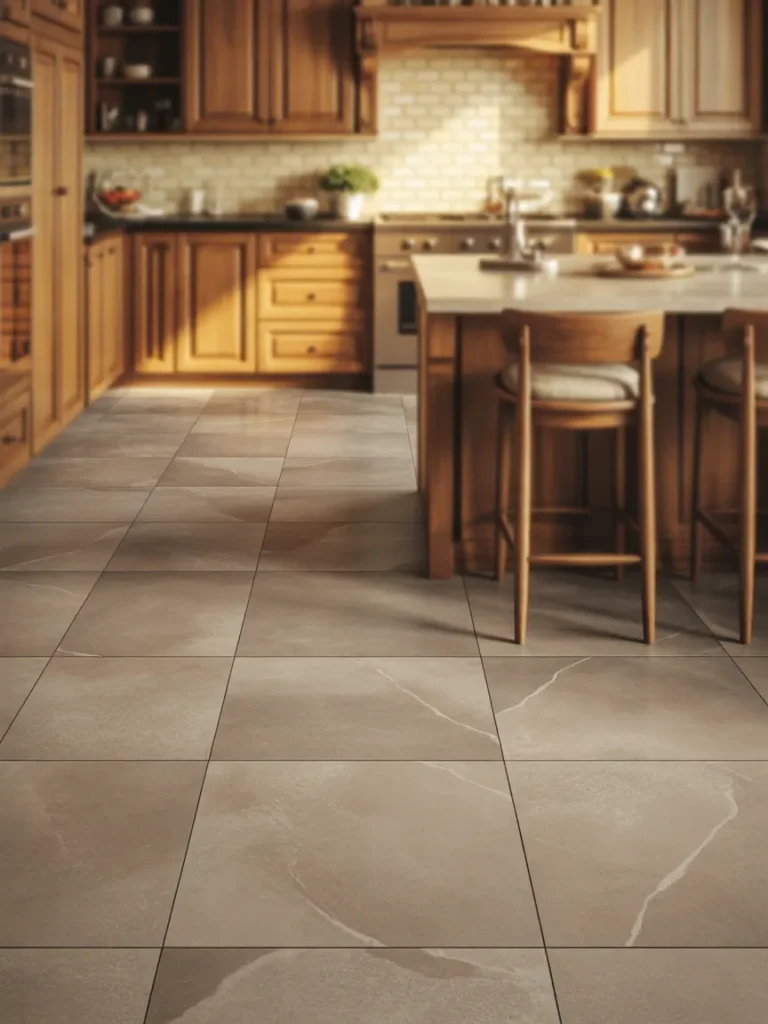
Warm taupe flooring combines beige, gray, and brown undertones to create a flexible neutral foundation for oak cabinetry. The stone-inspired surface adds subtle texture without the high contrast of black flooring or the brightness of white tile. This makes it a useful choice for kitchens that already contain several natural finishes.
Taupe tiles work with light, medium, and many golden oak cabinets, although the exact undertone matters. Choose a warmer taupe for cabinets with amber coloring and a more neutral shade for pale oak. Pair the floor with cream countertops, muted green accents, or brushed bronze hardware. A medium-value tile can also be practical for disguising everyday dust and minor marks, depending on its pattern and finish.
18. Dark Charcoal Kitchen Flooring

- Color: Deep charcoal, graphite, or near-black gray.
- Best cabinet pairing: Light oak or medium oak with clear contrast.
- Material options: Porcelain tile or suitable luxury vinyl flooring.
- Lighting: Under-cabinet lights and well-placed ceiling fixtures help prevent a gloomy appearance.
- Styling: Pale countertops, warm white walls, and natural wood accents soften the dark finish.
Dark charcoal flooring creates a strong contemporary foundation beneath oak cabinets. The deep color emphasizes the cabinetry’s natural grain and can make lighter wood finishes appear more prominent. It is particularly effective in kitchens with generous natural light, although smaller rooms can also use it successfully with light walls and reflective surfaces.
Choose a finish that is practical for your household. Very dark, smooth floors may show dust, crumbs, and water marks, so consider a subtly textured surface with some tonal variation. Keep the surrounding palette balanced rather than making every major surface dark.
How to Choose the Best Kitchen Flooring for Oak Cabinets
The right floor should complement the cabinet color, suit your kitchen’s lighting, and handle everyday activity. Before selecting a material, compare samples in the room rather than relying on showroom lighting alone.
- Identify the oak undertone. Honey and golden oak usually pair well with warm beige, cream, taupe, and carefully selected neutral gray. Pale oak often accommodates a wider range of colors.
- Create deliberate contrast. A floor that is noticeably lighter or darker than the cabinets can define each surface. Similar wood tones can also work when their undertones and grain patterns are coordinated.
- Consider the room’s light. Dark flooring may feel heavier in a kitchen with limited daylight. Pale floors reflect more light, but their grout and surface finishes still affect the overall appearance.
- Choose a practical material. Porcelain is generally durable and easy to clean. Luxury vinyl varies by product, and wood requires attention to moisture and maintenance.
- Think about adjoining rooms. In an open-plan home, flooring should relate to the dining or living area without necessarily matching every finish.
- Check the total cost. Include subfloor preparation, underlayment where required, installation, grout, trims, and future maintenance rather than comparing material prices alone.
Best Kitchen Floor Colors for Oak Cabinets
| Floor Color | Overall Look | Best Pairing |
| Warm white | Bright and airy | Golden or medium oak |
| Beige and cream | Soft and cohesive | Honey oak |
| Light gray | Fresh and contemporary | Medium or golden oak, depending on undertones |
| Greige | Balanced and versatile | Many natural oak finishes |
| Dark walnut brown | Rich and traditional | Light oak |
| Slate gray | Grounded and modern | Light to medium oak |
| Terracotta | Earthy and rustic | Natural oak with compatible undertones |
| Dark charcoal | Bold and contemporary | Light oak |
Always check the colors together before making a final decision. The same floor can look different under daylight, warm LED lighting, and cool overhead lights.
Conclusion
The best kitchen flooring ideas with oak cabinets balance the natural warmth of the wood with a floor color, texture, and material that suits your home. Light porcelain and beige stone-look tiles create a bright, cohesive look, while walnut, slate gray, and charcoal offer stronger contrast. Greige and taupe provide flexible middle-ground options, and patterned or terracotta tiles introduce more personality.
Before choosing, compare samples beside your cabinets and countertops, consider the kitchen’s natural light, and set a realistic installation budget. Save your favorite ideas for reference, then choose a flooring style that fits your household, decorating preferences, and daily cleaning routine.
Frequently Asked Questions
1. What color flooring looks best with oak cabinets?
Warm beige, cream, greige, and natural wood tones are reliable choices because they complement oak’s warmth. Light gray can also work when it has a balanced undertone. Dark walnut or charcoal flooring creates stronger contrast, particularly with lighter oak cabinets.
2. Should kitchen floors be lighter or darker than oak cabinets?
Either can work. Lighter flooring creates an airy appearance, while darker flooring adds definition and visual weight. The best choice depends on cabinet color, room size, lighting, and the contrast you want. Compare actual samples to avoid finishes that clash.
3. Does gray flooring go with oak kitchen cabinets?
Yes. Gray flooring can complement oak cabinets, especially when the gray has beige or taupe undertones. Warm gray and greige often coordinate well with golden oak. Very cool gray can make yellow or orange undertones in the wood more noticeable, so test the combination before installation.
4. Can you use wood flooring with oak cabinets?
Yes. Wood flooring can create a natural, cohesive kitchen, provided the floor and cabinets have enough visual distinction. Choose different tones, grain patterns, or plank widths to avoid a matchy appearance. Consider engineered wood or another suitable flooring system and follow the manufacturer’s guidance for moisture protection.
5. What is the most durable kitchen flooring for oak cabinets?
Porcelain tile is a strong option because it is generally hard-wearing, moisture-resistant, and easy to maintain when installed correctly. Quality luxury vinyl can also suit busy kitchens, depending on its specifications. The best choice depends on installation, slip resistance, maintenance needs, and your household’s daily use.