17 Kitchen Counter Styling Ideas for a Beautiful Space
Kitchen Counter Styling Ideas can make an ordinary kitchen feel more finished without requiring a renovation. The right mix of decorative pieces and everyday essentials can add warmth, color, texture, and personality while keeping the counter practical.
From wooden cutting boards and fresh fruit to coffee stations, cookbooks, herbs, and simple ceramic accents, these ideas suit homeowners, renters, and apartment dwellers alike. You will find options for large kitchens, compact counters, busy family spaces, and minimalist rooms, with practical ways to keep everything useful, balanced, and easy to maintain.
1. Wooden Cutting Board Display
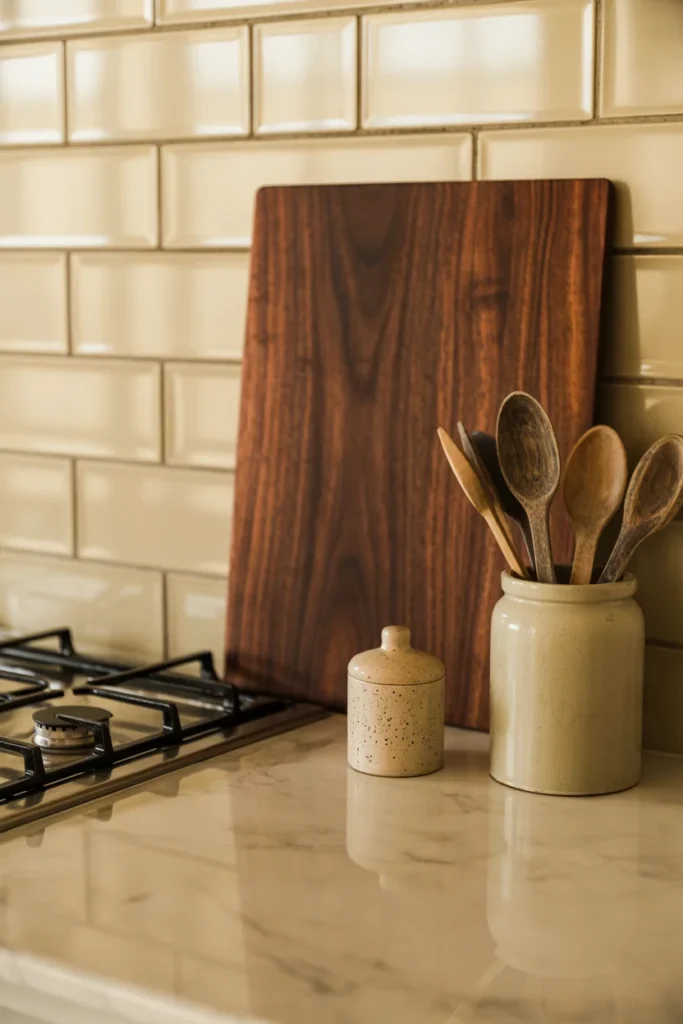
A few wooden cutting boards can give an otherwise plain counter a warm, collected look. Lean two or three boards of different sizes against the backsplash, placing the largest at the back and a smaller board slightly forward. Choose natural oak, walnut, or light beech depending on the kitchen’s existing cabinetry and flooring.
This arrangement works particularly well beside the stove or near a food-preparation area because the boards remain useful rather than becoming purely decorative. Leave enough counter space in front for chopping, and avoid placing untreated wood directly beside a sink where it may stay damp. A small ceramic bowl or folded linen towel can complete the setup.
2. Everyday Essentials Tray
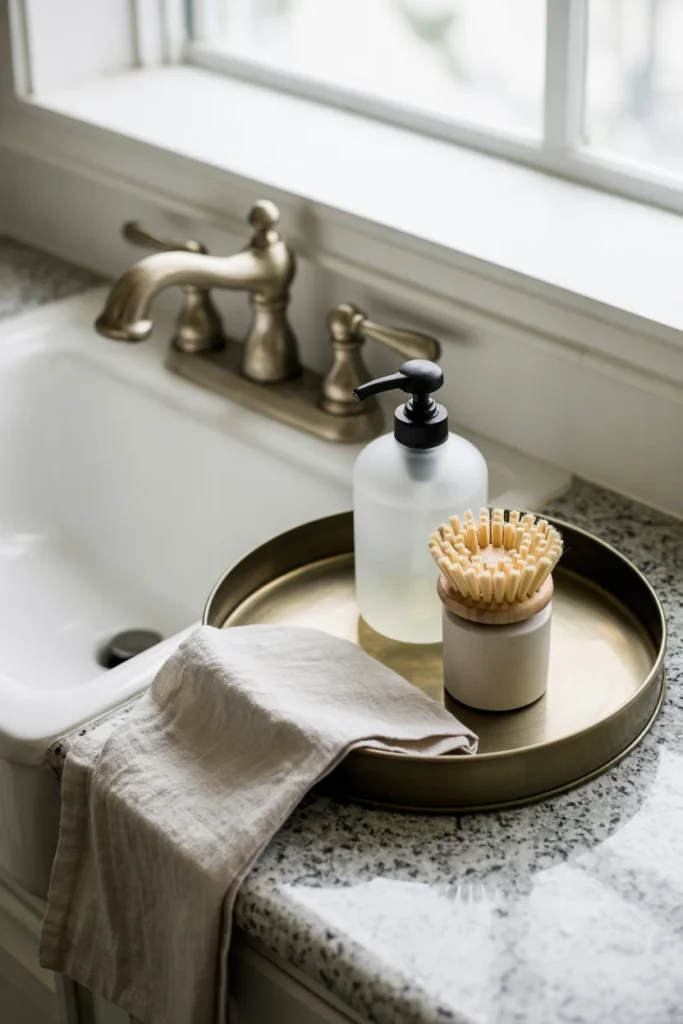
- Best placement: Use a small tray near the coffee maker, sink, or most frequently used preparation area.
- Materials: Wood, marble, stone, metal, and ceramic trays can all work, depending on the kitchen style.
- Color palette: Keep the tray and accessories within two or three complementary shades.
- Useful pieces: Group olive oil, salt, pepper, a small utensil holder, or hand soap instead of scattering them across the counter.
- Scale: Choose a tray that leaves several inches of visible counter around it so the arrangement does not feel cramped.
A tray creates a visual boundary for small everyday objects and makes cleaning around them easier. For a narrow counter, choose a rectangular tray that follows the counter’s depth rather than a wide round one. Keeping the collection limited to frequently used items will make the display feel intentional.
3. Coffee Station

Quick Tip: Keep the coffee station compact by grouping the machine, cups, and one or two accessories together. A small shelf or wall-mounted mug rack can move cups upward when counter space is limited. Choose containers that match the kitchen hardware for a more unified appearance.
A coffee station works best in a corner that already has access to an electrical outlet. Place the machine toward the back and keep mugs or coffee supplies beside it rather than in front. A wooden board beneath the setup can visually separate the station from the rest of the counter while catching small spills.
4. Fresh Fruit Bowl
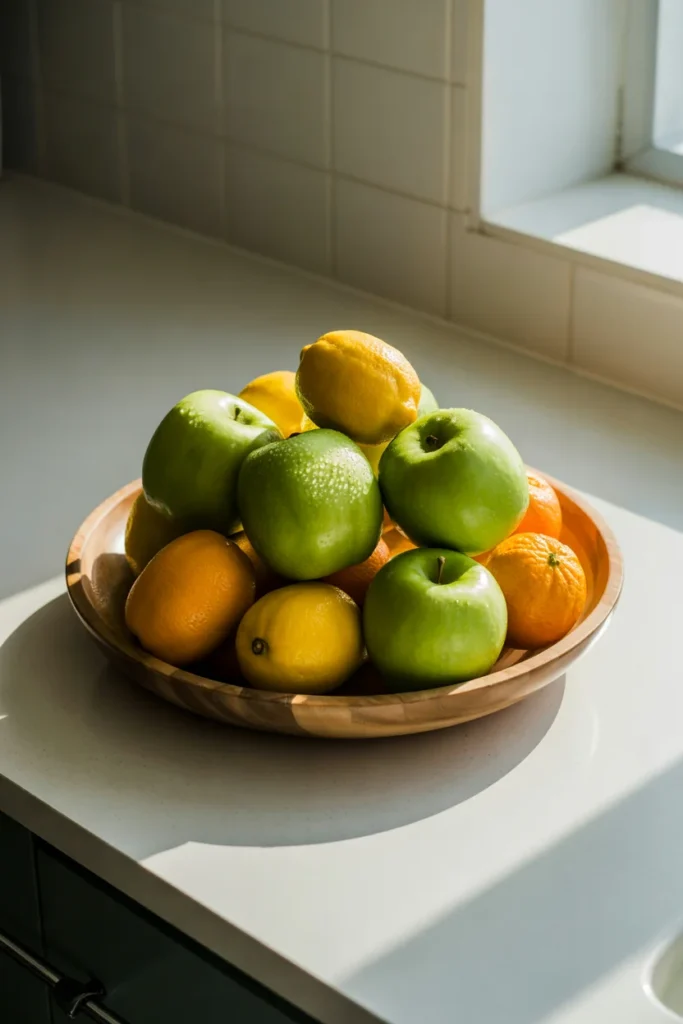
BEFORE
A large section of counter can feel empty when there is little color or texture, yet filling it with several small decorations can quickly make the surface look crowded. A bare counter also misses an opportunity to keep frequently eaten fruit within easy reach.
AFTER
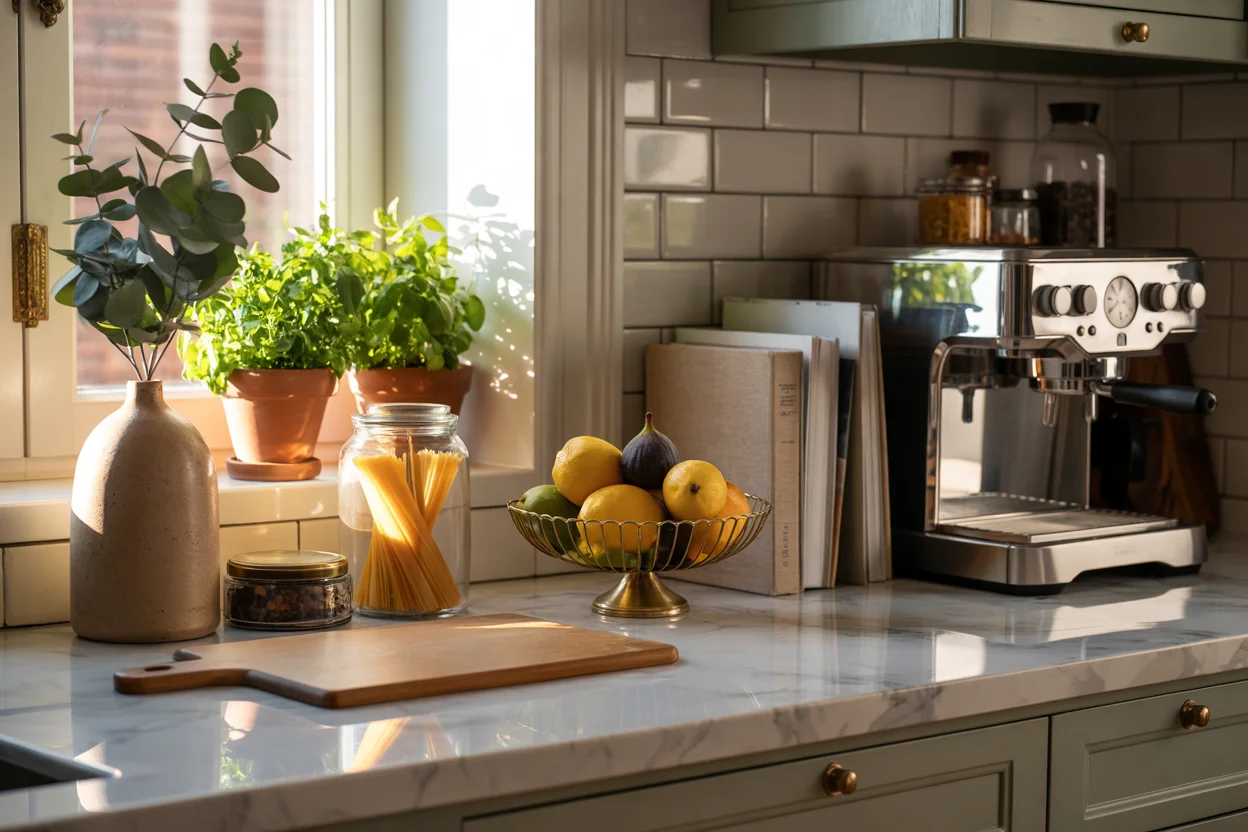
Place one generously sized bowl in an open section of the counter and fill it with seasonal fruit. Apples, lemons, oranges, pears, or bananas can introduce natural color without adding lots of separate objects. The result is useful, simple, and easy to refresh.
Choose a bowl with enough capacity to hold fruit without overflowing. Ceramic works well for traditional kitchens, while wood adds warmth to modern spaces. Keep the bowl away from direct heat and wipe the counter underneath regularly to prevent moisture or crumbs from accumulating.
5. Fresh or Dried Flowers

- Choose the location. Find a corner away from the main chopping area and keep the arrangement clear of cabinet doors and frequently used appliances.
- Select the vessel. Use a narrow ceramic pitcher, glass vase, or small stoneware container that suits the kitchen’s finishes.
- Keep the arrangement proportional. A medium-height bouquet usually adds interest without blocking sightlines across the counter.
- Coordinate the color. Repeat one flower or foliage color already present in the kitchen, such as green, cream, terracotta, or soft yellow.
- Maintain it regularly. Replace water every few days for fresh flowers and dust dried stems occasionally.
This approach works particularly well on a kitchen island, breakfast counter, or unused corner where a little height is needed. For a low-maintenance option, dried eucalyptus, grasses, or preserved stems can provide texture without regular watering. Keep delicate arrangements away from cooking splashes and strong heat.
6. Decorative Cutting Board Backdrop

| Feature | Large Board | Small Board |
| Visual Feel | Strong focal point | Light and understated |
| Best Placement | Behind bowls or canisters | Beside small accessories |
| Counter Space | Uses more vertical presence | Easier on narrow counters |
| Style | Rustic or substantial | Casual and minimalist |
A larger decorative board can act almost like a small piece of wall decor when leaned against the backsplash, while a smaller board keeps the arrangement more subtle. Choose the size according to the width of the counter and the height of nearby cabinets. The board can also hide cords or visually anchor smaller accessories.
See Also 20 Breakfast Bar Ideas for Small Kitchens to Try
7. Cookbook Corner

DO:
- Choose three to five cookbooks with attractive spines or neutral covers.
- Lean the tallest book against the backsplash and stack smaller books horizontally.
- Add a small bowl or ceramic object on top of the stack.
- Leave enough space beside the books to remove one without disturbing the whole arrangement.
DON’T:
- Stack so many books that the pile becomes unstable.
- Place paper directly beside a sink where it can absorb splashes.
- Mix too many bright cover colors if the kitchen already has strong accents.
- Let the display interfere with cabinet or appliance doors.
Cookbooks add height and personality while remaining genuinely useful. A small stack can also fill an awkward counter corner without requiring permanent installation. Rotate the books occasionally if you enjoy seasonal recipes, and use a washable tray underneath when the stack sits near food-preparation areas.
8. Potted Herbs

Room: Kitchen counters near a bright window
Space Needed: A narrow strip or small corner
Best For: Cooks who use fresh herbs regularly
Materials: Terracotta, ceramic, or simple metal pots
Maintenance: Regular watering and occasional trimming
Fresh herbs such as basil, rosemary, thyme, mint, and parsley bring greenery into the kitchen while serving a practical purpose. Keep the pots together on a shallow tray so water and loose soil stay contained. If the counter receives limited natural light, consider placing the herbs near the brightest available window instead of keeping them in a darker decorative corner.
9. Oil and Spice Station
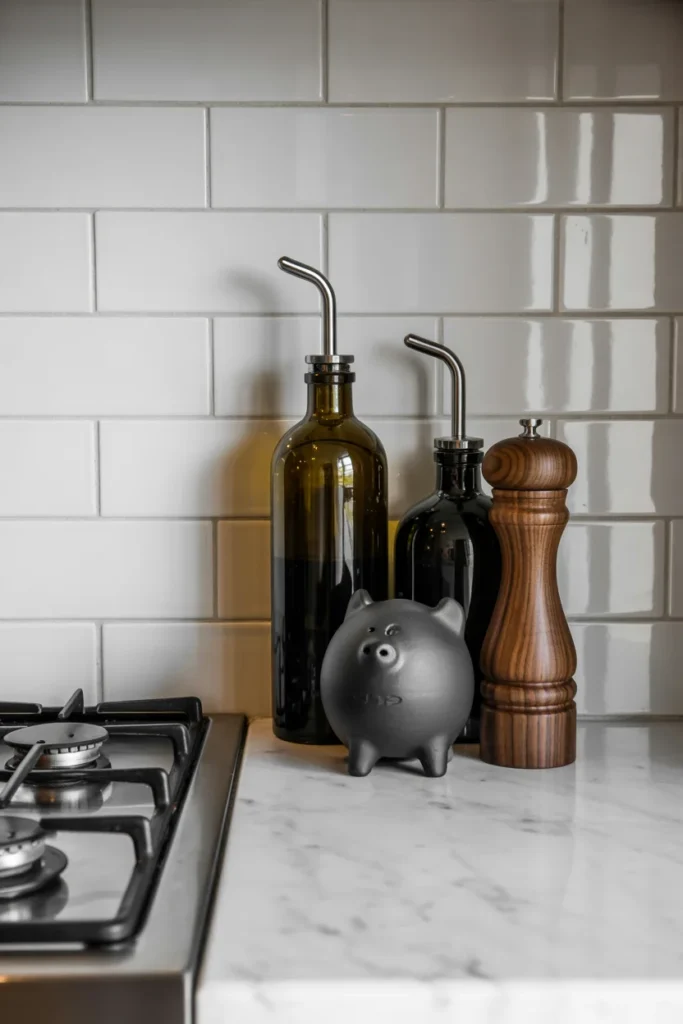
A minimalist oil and spice station keeps frequently used ingredients visible without making the counter look like a collection of bottles. Use matching glass bottles for cooking oils and a few small containers for salt, pepper, or favorite seasonings. A compact tray underneath creates order and makes the group easier to move when cleaning.
For the most polished result, limit the display to ingredients used daily. Place taller oil bottles toward the back and shorter spice containers in front so everything remains accessible. Amber or clear glass can complement different kitchen styles, while labels in a consistent font help the arrangement look organized rather than improvised.
10. Decorative Canisters
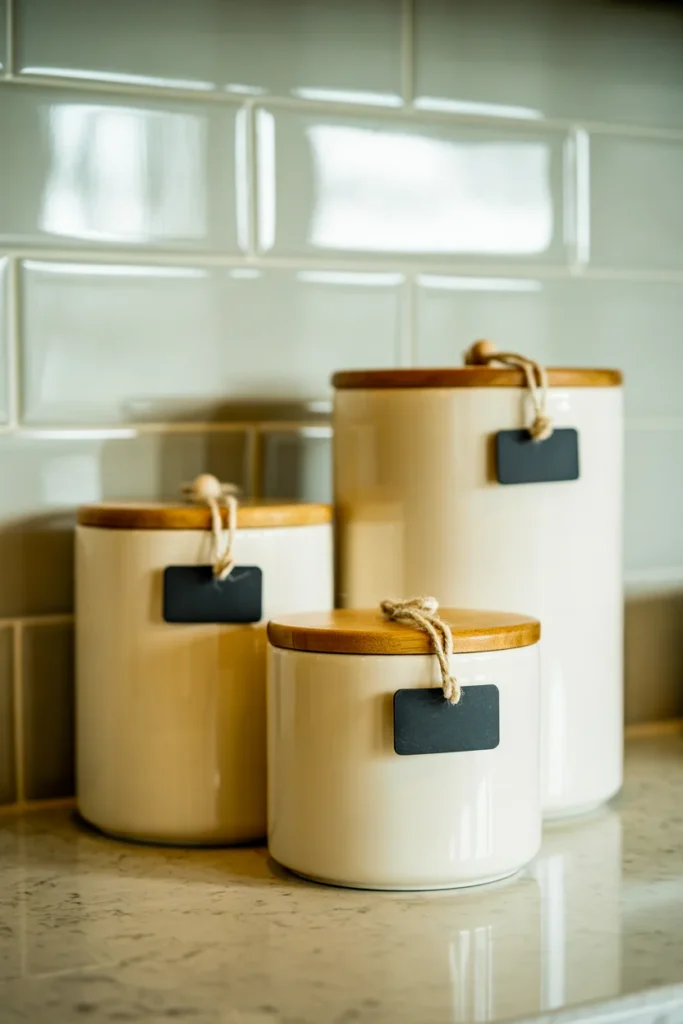
- Cabinet Style: White, cream, or muted ceramic canisters suit classic and transitional kitchens.
- Modern Kitchens: Matte black, stainless steel, or simple glass canisters create a cleaner appearance.
- Contents: Store flour, sugar, coffee, tea, or frequently used dry goods where practical.
- Placement: Keep the tallest container toward the back and smaller ones in front.
- Maintenance: Choose easy-clean surfaces and wipe lids regularly, especially near the stove.
Decorative canisters are most effective when they replace packaging rather than simply adding more objects. Three coordinated containers usually provide enough visual repetition without overcrowding the counter. If you do not need extra countertop storage, use one or two empty decorative vessels instead of filling the space with unnecessary containers.
11. Layered Kitchen Essentials

Quick Tip: Start with the largest item, such as a wooden board or tray, and build forward with smaller pieces. Keep the tallest objects toward the backsplash and the lowest items toward the front so the arrangement has a clear visual hierarchy.
Layering can combine a cutting board, small bowl, utensil crock, and folded towel without making each piece look isolated. This approach is especially useful along a backsplash where several practical items already need to live. Repeat one material, such as wood or ceramic, to connect the pieces and keep the arrangement visually calm.
12. Statement Ceramic Piece
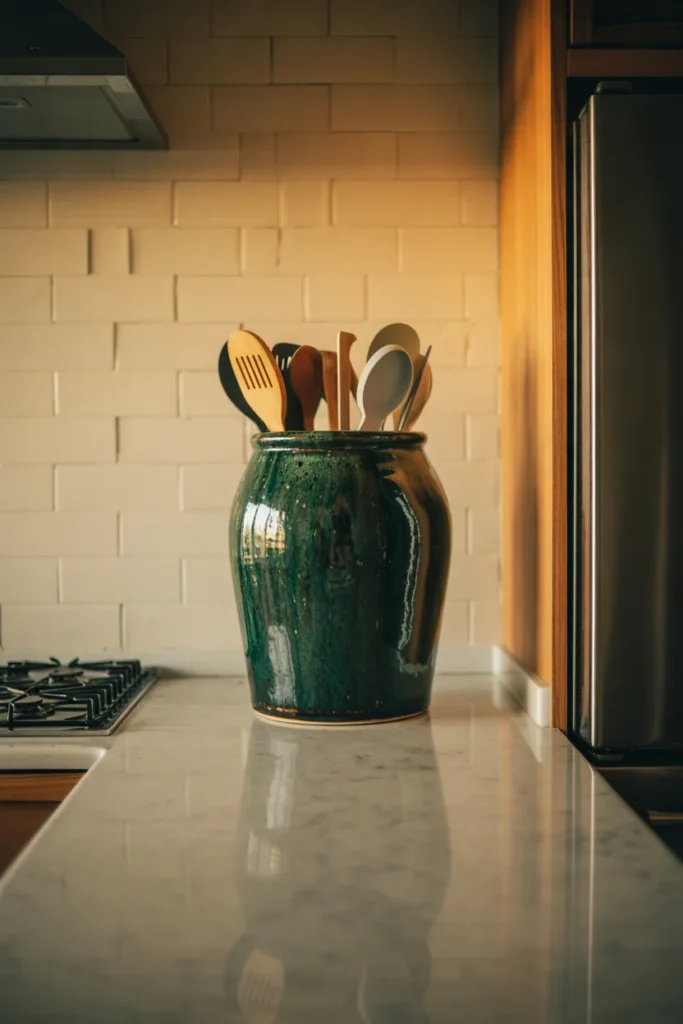
BEFORE
A wide counter with no focal point can look unfinished, particularly when the cabinets, backsplash, and worktops all have similar neutral tones. Adding several tiny decorations may fill the space but can create unnecessary visual noise.
AFTER
Place one sculptural ceramic vase, pitcher, bowl, or handmade vessel in the open area. Its shape and texture become the focal point without requiring a collection of accessories. Choose a piece with a finish that contrasts gently with the countertop rather than competing with it.
One substantial object can have more visual impact than several small ones. On a stone counter, textured ceramic adds softness, while a smooth white vessel can balance darker cabinetry. Leave generous empty space around the piece so its shape remains noticeable rather than getting lost among other decorations.
13. Stand Mixer Styling
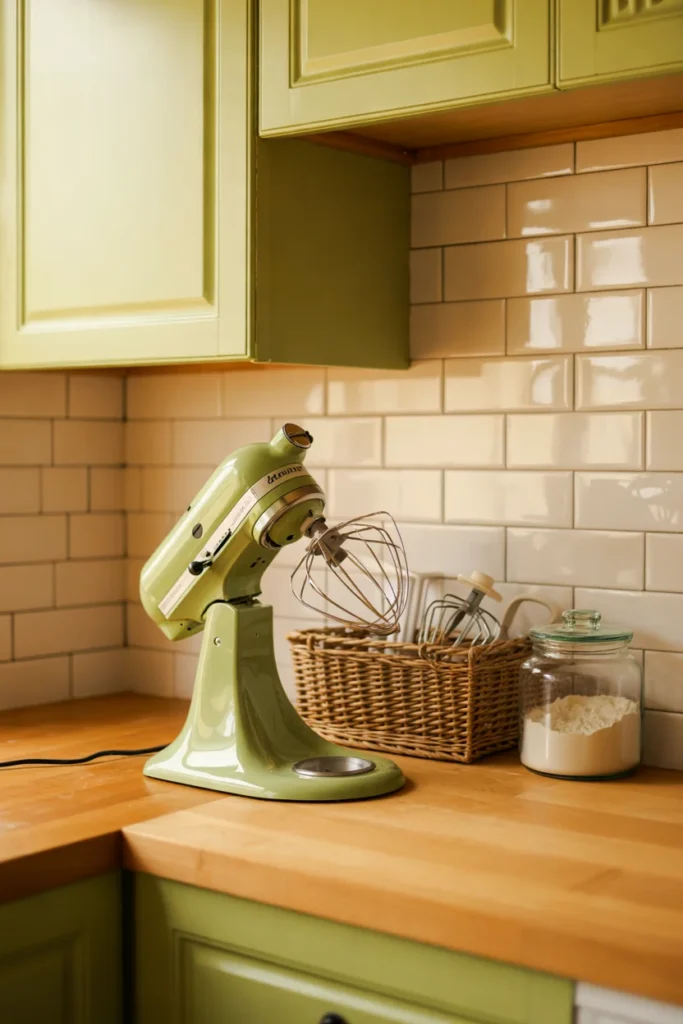
- Measure first. Check the available counter width and the mixer’s height before deciding where it should live.
- Choose the visual anchor. Place the stand mixer against the backsplash or beneath open shelving where it feels integrated into the kitchen.
- Add one supporting element. A wooden board, recipe book, or small utensil container can connect the appliance with nearby decor.
- Keep working space clear. Leave enough room around the mixer to move the bowl, attach accessories, and prepare ingredients.
- Coordinate finishes. Repeat its color or metal finish elsewhere in the kitchen for a more connected look.
A stand mixer can become part of the countertop styling when it is already used frequently and does not need to be stored away. This works especially well in baking-focused kitchens. Avoid surrounding the appliance with too many decorative pieces, since its size already gives the counter visual weight.
14. Warm Breakfast Station

| Feature | Breakfast Nook Setup | Countertop Setup |
| Main Items | Toaster, plates, baskets | Toaster, cereal, mugs |
| Storage | Nearby cabinet or shelf | Canisters and small tray |
| Best For | Larger kitchens | Compact kitchens |
| Visual Feel | Casual and family-friendly | Organized and efficient |
A breakfast station can be tailored to the way your household actually starts the day. In a larger kitchen, a dedicated section can hold a toaster, plates, fruit, and serving pieces. In a smaller kitchen, a compact tray with mugs and a cereal container may be enough. Keep the setup close to the refrigerator or pantry when possible.
15. Leaning Kitchen Art
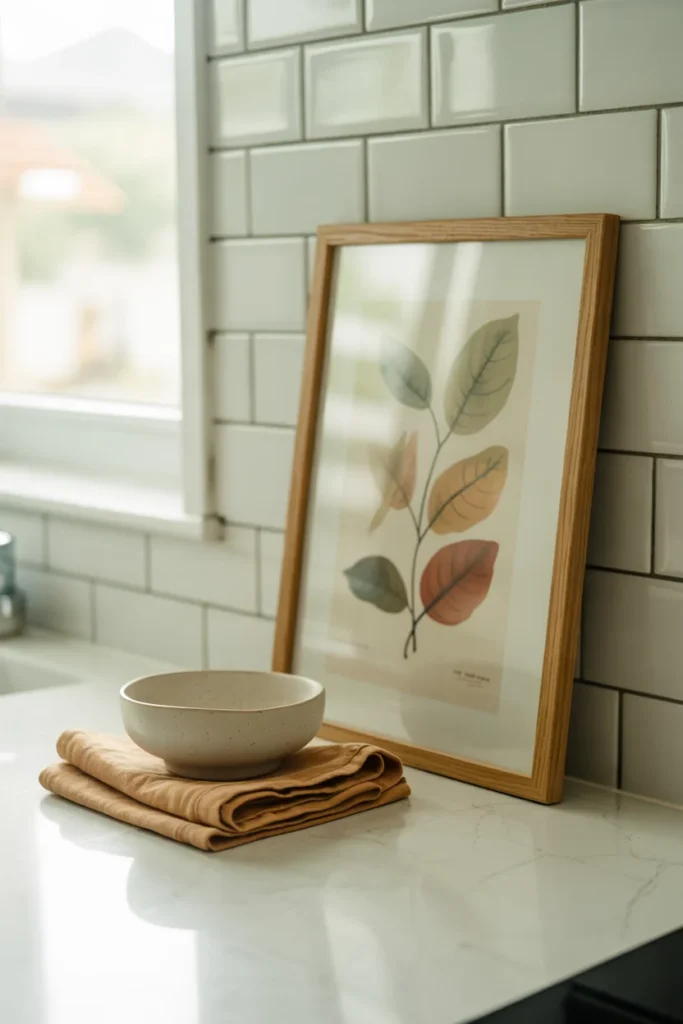
DO:
- Choose a framed print, botanical illustration, food sketch, or simple kitchen sign that complements the room.
- Lean it securely against the backsplash rather than drilling into the wall if you rent.
- Keep the artwork proportional to the counter width.
- Pair it with one low accessory, such as a small bowl or candle-free ceramic object.
DON’T:
- Use oversized artwork that blocks outlets or cabinet access.
- Place unprotected paper where cooking splashes frequently reach.
- Cover the entire backsplash with multiple leaning pieces.
- Choose artwork that clashes with the kitchen’s established color palette.
A leaning print gives the counter a softer, more personal feel and is easy to change with the seasons. For a durable setup, use a framed print behind glass or acrylic and position it away from the stove. Neutral botanical artwork can remain in place year-round while smaller accessories provide seasonal changes.
16. Mixed Natural Textures
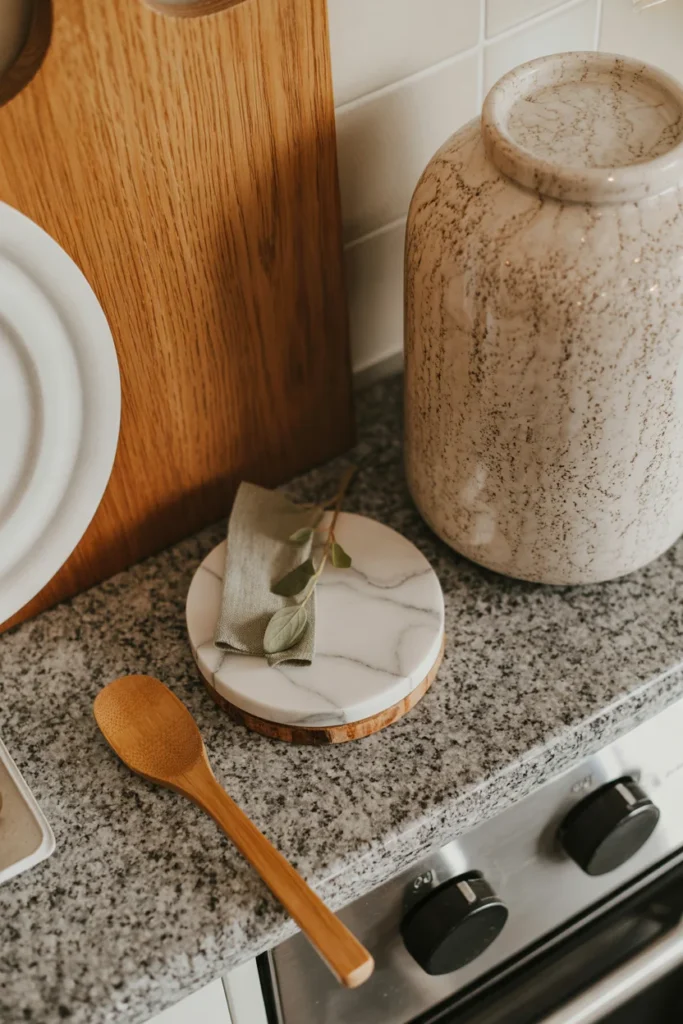
Materials: Wood cutting boards, textured ceramic, stone trays
Color Palette: Warm white, beige, natural brown, muted green
Best Placement: Open counter sections or kitchen islands
Style: Organic, modern, transitional, or rustic
Budget: Low to moderate, depending on materials
Mixing wood, ceramic, and stone gives a countertop depth without relying on lots of color. A rough wooden board can soften a polished stone surface, while a matte ceramic vessel adds another layer of texture. Keep the palette restrained so the materials provide the visual interest.
This combination is particularly effective in neutral kitchens because subtle differences in surface finish prevent the room from feeling flat. Rather than buying everything at once, build the arrangement gradually using pieces you already own. Repeating one material twice can also help separate textures feel connected.
17. Minimal Countertop Arrangement

A minimal countertop arrangement relies on restraint rather than a large collection of accessories. Choose one functional anchor, such as a wooden board or coffee maker, then add one decorative piece and leave the surrounding counter open. The empty space becomes part of the styling and helps the kitchen feel orderly.
For a small apartment kitchen, this approach can make everyday movement easier because fewer objects need to be moved during food preparation. Use a consistent palette, keep appliances grouped logically, and store rarely used items in cabinets. The goal is not to make the counter completely bare, but to give every visible item a clear purpose.
Kitchen Counter Styling Tips
The best countertop arrangements balance decoration with everyday function. Before buying new accessories, look at what already lives on the counter and decide which items genuinely need to remain visible.
- Start with the largest item. A cutting board, coffee maker, fruit bowl, or stand mixer can establish the scale of the arrangement.
- Keep decorative groups limited. Three related objects often create enough visual interest without making a busy kitchen feel crowded.
- Repeat existing finishes. If the kitchen has brass hardware, warm wood, or black fixtures, echoing one of those finishes can make new decor feel intentional.
- Protect working areas. Keep the main food-preparation zone open, particularly beside the sink, stove, or refrigerator.
- Think vertically. Leaning boards, cookbooks, and framed art can add height without using much horizontal space.
- Use trays strategically. A tray groups loose objects together and makes it easier to clear the counter when deeper cleaning is needed.
- Consider maintenance. Avoid delicate textiles, untreated paper, or porous decorative pieces in areas exposed to frequent splashes and cooking residue.
- Leave breathing room. Empty counter space is useful and visually calming, especially in compact kitchens.
Common Kitchen Counter Styling Mistakes to Avoid
One common mistake is decorating every available section of the counter. A kitchen needs clear working areas, so leaving some surfaces open is just as important as choosing attractive accessories.
Another issue is poor scale. Tiny objects can disappear on a large island, while oversized decor can overwhelm a narrow counter. Use the size of your countertop, cabinets, and appliances as a guide.
It is also easy to mix too many colors or materials. Instead, choose a simple palette and repeat a few finishes. Finally, avoid placing decorative objects where they interfere with cooking, cleaning, outlets, cabinet doors, or frequently used appliances.
Final Thoughts
The best Kitchen Counter Styling Ideas combine visual interest with the way your kitchen is actually used. Wooden boards, fruit bowls, herbs, cookbooks, ceramic pieces, trays, and coffee stations can all add personality without sacrificing useful workspace. The key is to consider scale, placement, materials, and maintenance before adding anything new.
Whether your kitchen is spacious or compact, start with one area that feels unfinished and build from there. Work with your existing colors and finishes, keep frequently used items accessible, and leave enough open counter for everyday tasks. Save these ideas for later and adapt the ones that suit your home’s layout, budget, and personal style.
Frequently Asked Questions
What should I put on my kitchen counters for decoration?
Useful decorative pieces include wooden cutting boards, ceramic bowls, small vases, cookbooks, potted herbs, trays, framed art, and attractive canisters. Choose items that complement your kitchen’s existing colors and finishes while leaving enough space for food preparation.
How do I style kitchen counters without making them look cluttered?
Group related objects together instead of scattering individual pieces across the counter. Trays are especially useful for creating boundaries. Keep the tallest objects toward the backsplash, limit the number of decorative items, and leave some counter space completely open.
How can I make my kitchen counters look more expensive?
Focus on quality-looking materials and consistent finishes rather than filling the counter with accessories. Natural wood, textured ceramic, stone, glass, and coordinated metal finishes can create a more refined appearance. Good proportions and plenty of breathing room also make a noticeable difference.
What are the best decorative items for kitchen countertops?
The best choices depend on how you use the kitchen, but wooden boards, fruit bowls, ceramic vessels, cookbooks, herbs, trays, and decorative canisters are versatile options. Functional items usually work best because they contribute to both the appearance and everyday use of the room.
How often should kitchen counter decor be changed?
There is no fixed schedule. Permanent pieces can remain year-round, while smaller accessories can be changed seasonally or whenever the kitchen starts to feel repetitive. Fresh flowers, seasonal fruit, towels, and small ceramic pieces are easy ways to refresh the look without replacing the main decor.