24 Neutral Dining Table Centerpieces for a Timeless Look
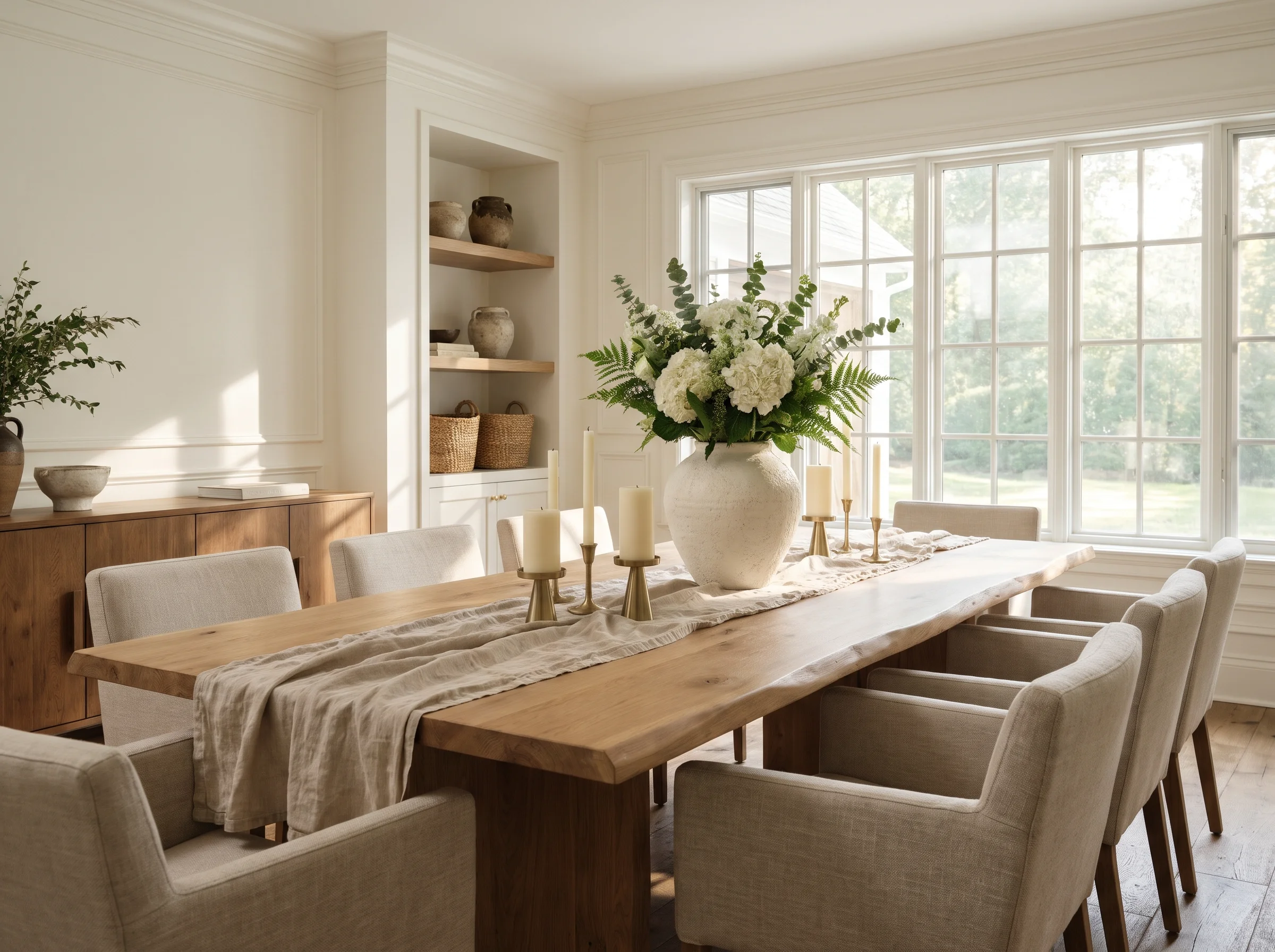
Neutral dining table centerpieces bring warmth, texture, and understated elegance to your dining space without making the table feel overcrowded. From simple ceramic vases and fresh white flowers to rustic wooden trays and soft candle arrangements, there are plenty of ways to create a timeless look.
Whether you have a large farmhouse dining table, a modern apartment setup, or a cozy breakfast nook, these ideas offer practical inspiration for different styles and budgets. Each arrangement is easy to adapt for everyday meals, family gatherings, and special occasions.
1. Minimalist Ceramic Vase with White Flowers
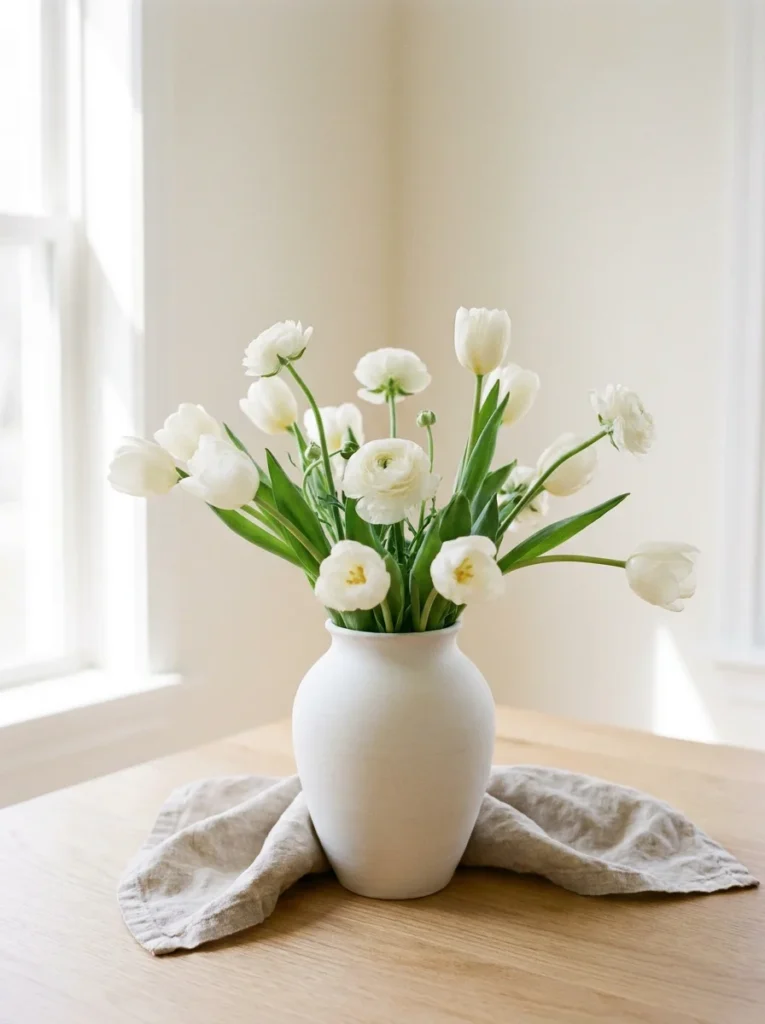
A simple ceramic vase filled with white flowers creates a clean and peaceful focal point for your dining table. Choose a matte white, ivory, or warm beige vase with a slightly irregular shape for added character. Fill it with white tulips, roses, or seasonal blossoms, keeping the arrangement loose rather than overly structured. The combination of soft petals and subtle ceramic texture adds interest without introducing too many colors.
This arrangement looks especially lovely on natural wood, white, or marble dining tables. Choose a medium-height vase that allows guests to see across the table comfortably. For everyday styling, a single arrangement is usually enough, particularly when paired with simple linen placemats and neutral dinnerware.
2. Neutral Dried Pampas Grass Arrangement
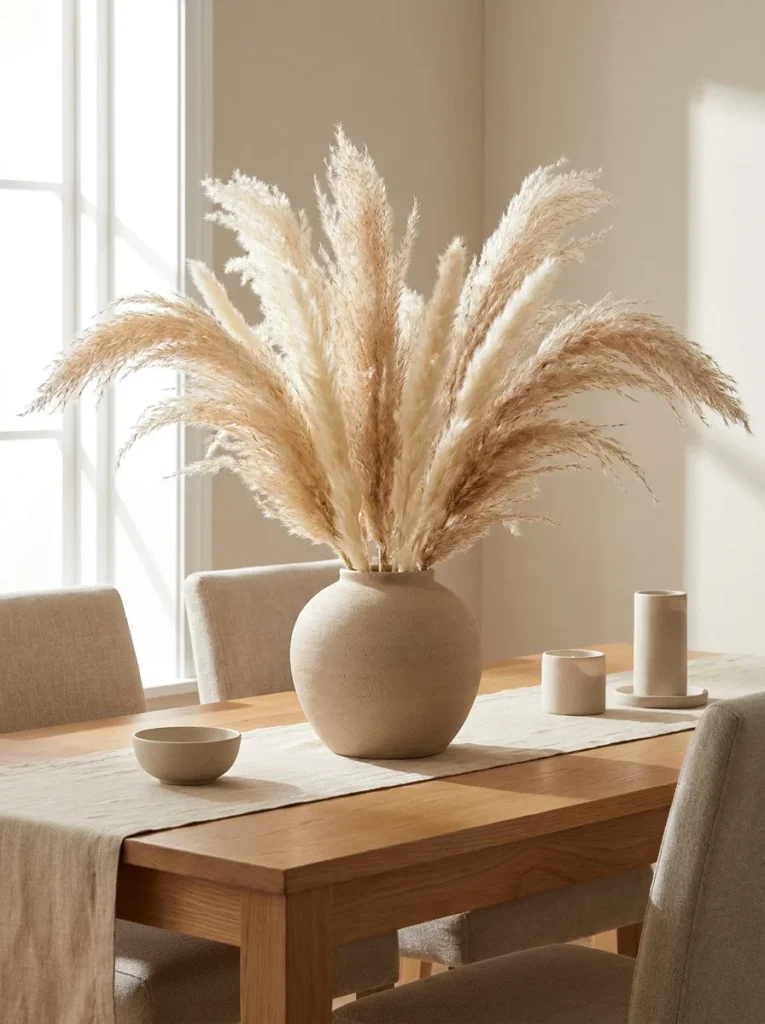
Decor Details:
- Color Palette: Cream, sand, beige, and warm white.
- Materials: Dried pampas grass, ceramic vase, and natural fibers.
- Best Placement: Center of a rectangular or round dining table.
- Style: Modern organic, bohemian, or minimalist.
- Maintenance: Gently dust the stems and keep them away from moisture.
Pampas grass adds height and movement while keeping the overall color scheme soft. Place several stems in a wide-necked ceramic vase, allowing the feathery plumes to spread naturally. Avoid using too many stems in a small vase because the arrangement can look bulky. A restrained display creates a relaxed, airy atmosphere that works particularly well with wooden furniture and linen table accessories.
3. Rustic Wooden Tray with Candles
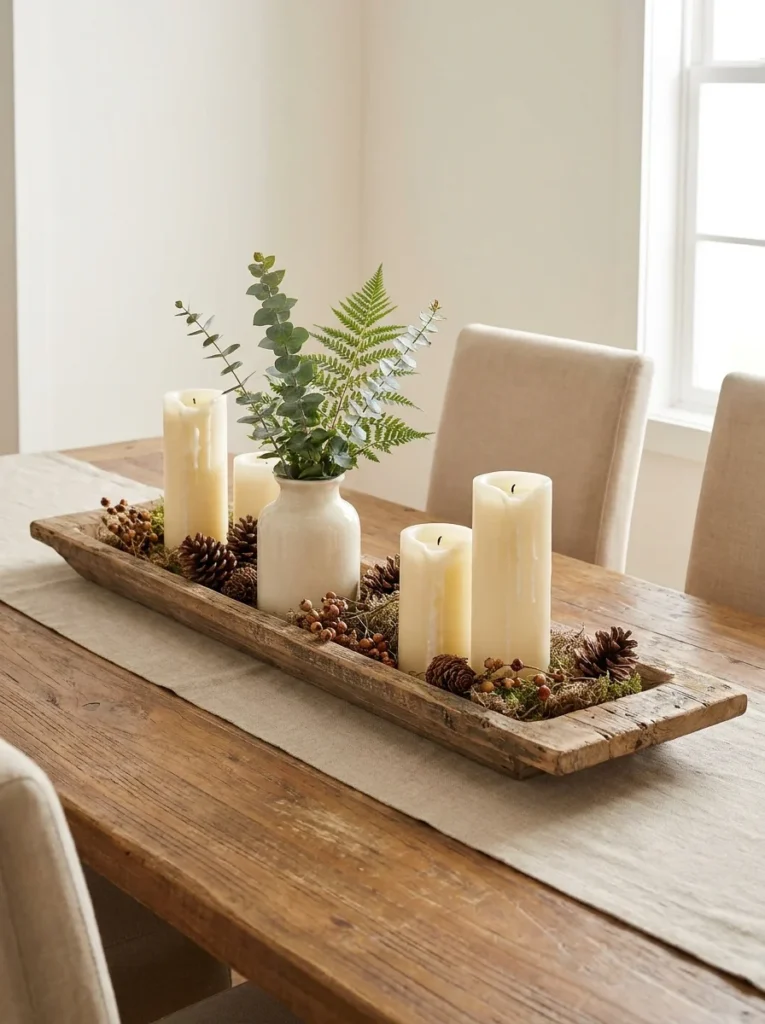
Quick Tip:
Choose a wooden tray that leaves enough empty space around its edges rather than filling the entire surface with decorations. Combine candles in different heights, but keep their colors within the same warm neutral palette.
A rustic tray creates a defined centerpiece that is easy to move whenever you need the table for meals. Add two or three ivory pillar candles, a small ceramic vessel, and a few natural decorative accents. Reclaimed wood gives the arrangement a farmhouse character, while a smooth oak tray feels more contemporary. Use flameless candles if you prefer a worry-free everyday display.
4. White Hydrangea Centerpiece
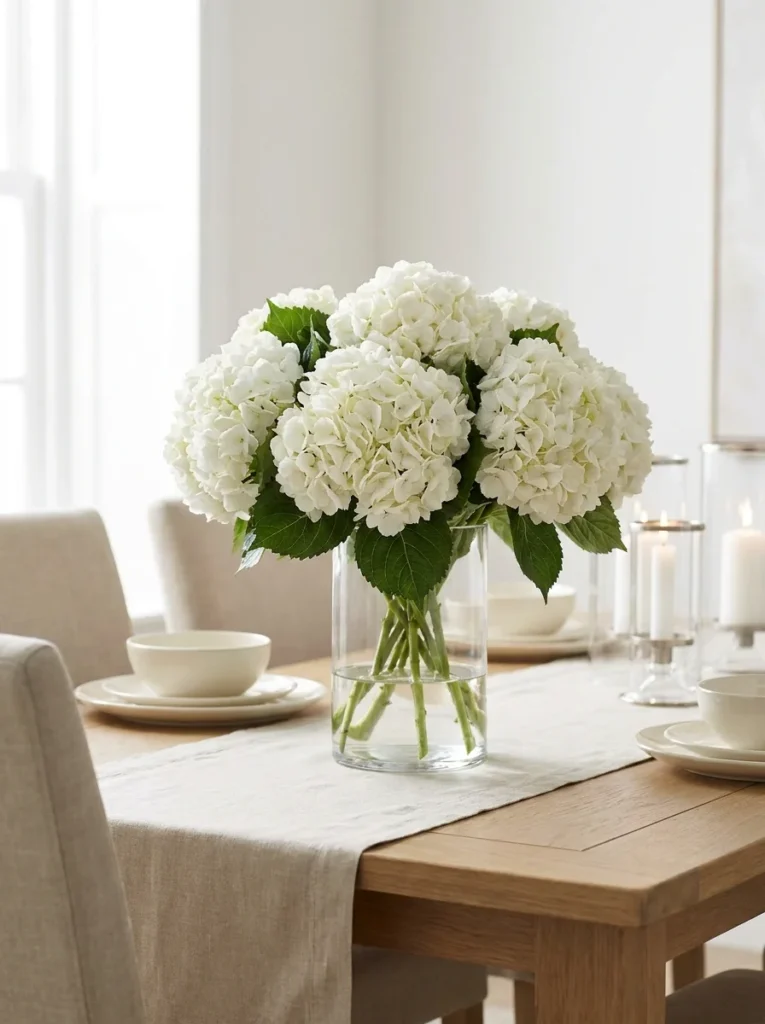
BEFORE
A large dining table can sometimes feel unfinished when the middle is completely empty. Small decorative accessories may also look scattered rather than creating one cohesive focal point.
AFTER
A full arrangement of white hydrangeas brings softness and visual balance to the table. Their rounded flower heads create a generous display without requiring several different types of flowers.
Choose a low ceramic or glass vase that supports the weight of the blooms. Fresh hydrangeas need regular water changes and clean stems to stay attractive. For a more affordable alternative, use realistic artificial flowers in a beautiful ceramic container.
5. Beige Linen Runner with Simple Decor
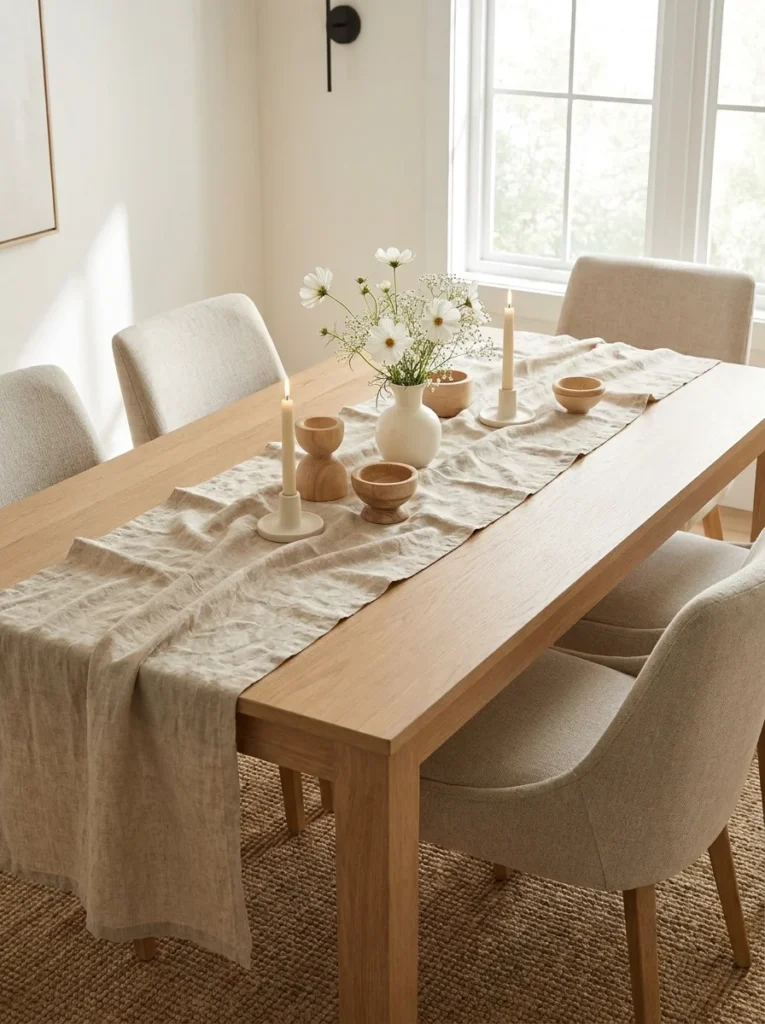
How to Style It:
- Start with a beige, oatmeal, or natural linen runner that complements your dining table.
- Place a low ceramic vase near the middle of the runner.
- Add two small candle holders on either side for gentle visual balance.
- Finish with a few wooden or stone decorative pieces.
This arrangement works especially well on long rectangular dining tables where a single centerpiece might look too small. Linen introduces a soft texture that balances harder surfaces such as glass, marble, or polished wood. Keep the decorations relatively low so the runner remains visible and the table stays practical for daily dining.
6. Large Glass Vase with Greenery
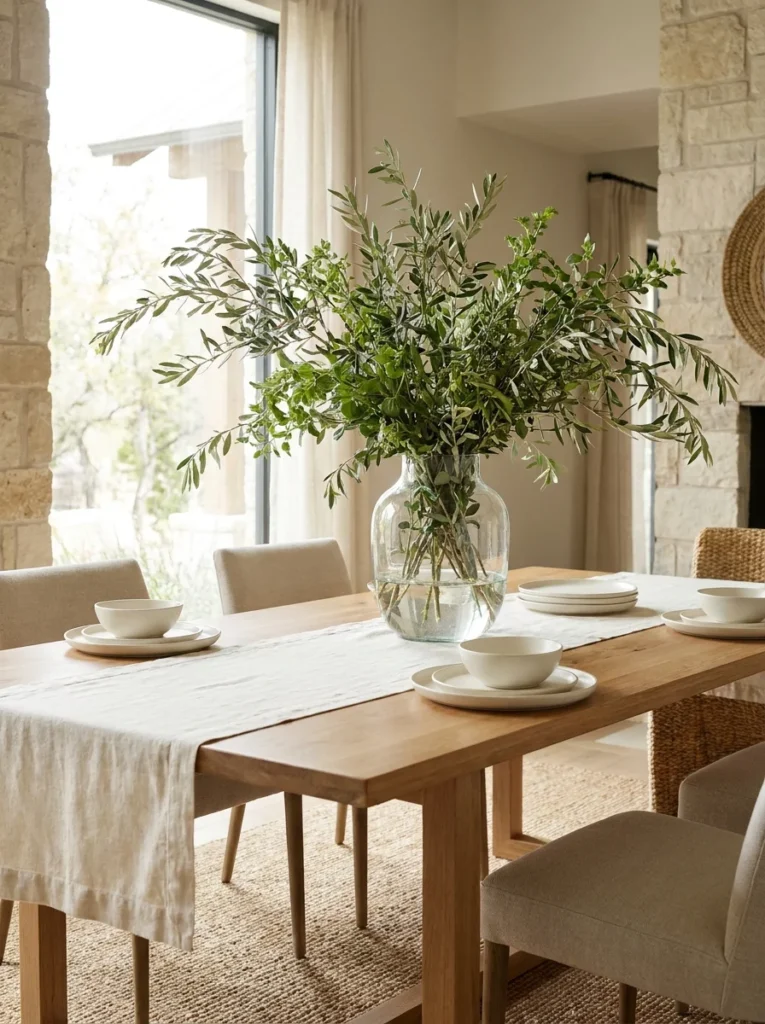
| Feature | Clear Glass Vase | Tinted Glass Vase |
| Visual Feel | Light and airy | Soft and decorative |
| Color | Completely transparent | Smoky beige or muted green |
| Best Greenery | Eucalyptus and olive branches | Seasonal foliage |
| Styling | Modern and minimalist | Organic and traditional |
Both options can create a beautiful natural centerpiece. A clear glass vase is ideal when you want the greenery to remain the main attraction, while a lightly tinted version adds subtle color. Choose branches with enough height to create movement, but trim them so they do not block conversation across the table.
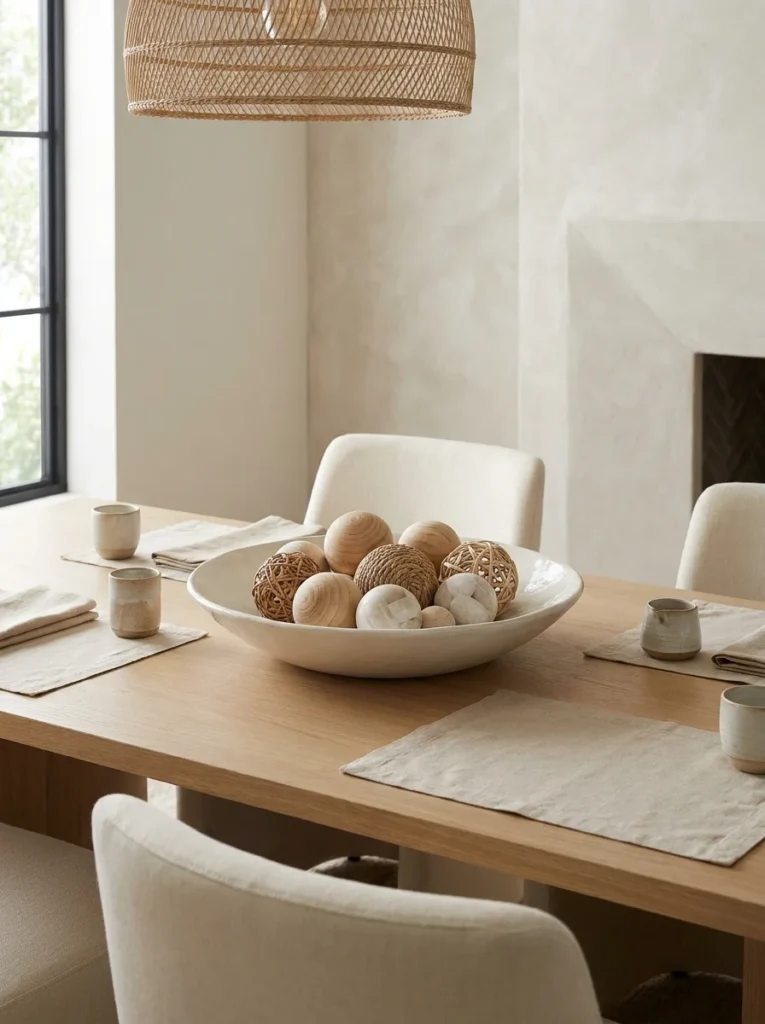
7. Neutral Ceramic Bowl with Decorative Orbs
DO:
- Choose a shallow ceramic bowl with a matte or textured finish.
- Combine decorative wooden, stone, or woven orbs.
- Keep the colors within cream, beige, taupe, and light brown.
- Leave some empty space between the decorative pieces.
DON’T:
- Fill the bowl until the individual objects become difficult to distinguish.
- Mix too many contrasting materials.
- Choose an oversized bowl for a small dining table.
- Use shiny accessories that compete with the natural finish.
A decorative bowl offers a simple way to introduce texture without adding height. It works particularly well on round dining tables and compact breakfast tables. Choose a bowl with an interesting shape and let the materials provide the visual interest rather than relying on bright colors or excessive decoration.
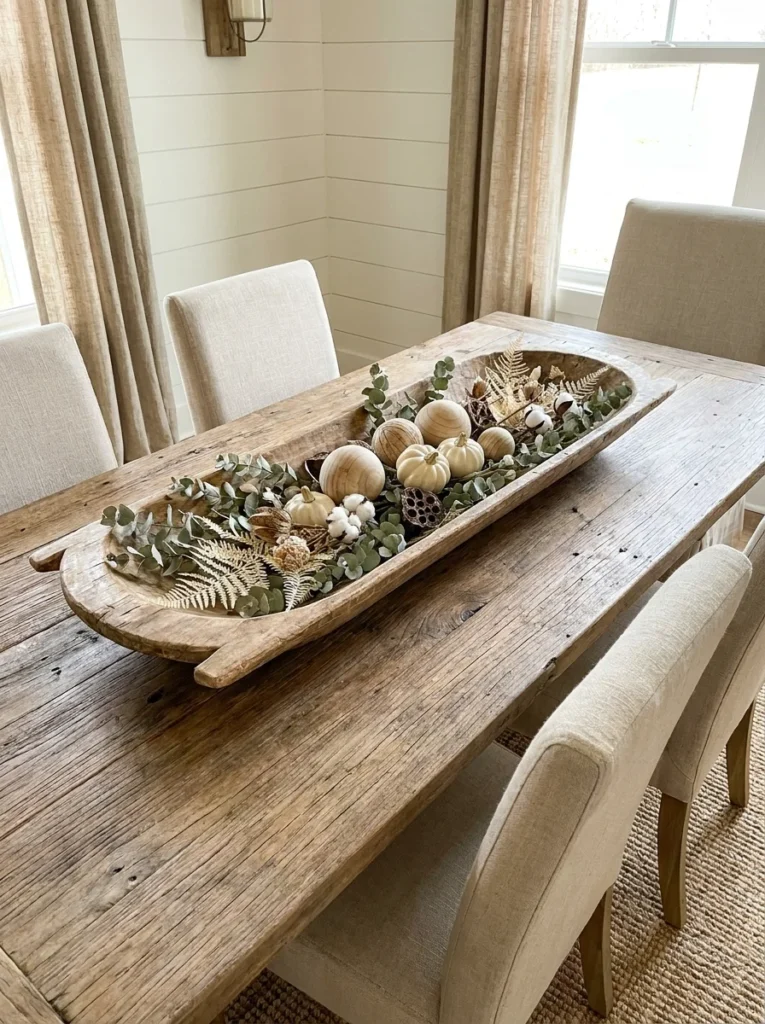
8. Wooden Dough Bowl with Natural Accents
Quick Facts:
- Material: Carved wood with a natural or lightly distressed finish.
- Color Palette: Honey oak, beige, cream, and muted brown.
- Best Table: Farmhouse, rustic, or large rectangular dining tables.
- Decor Options: Moss, wooden beads, dried botanicals, and small ceramic objects.
- Difficulty: Beginner-friendly.
A wooden dough bowl brings an organic, collected look to your dining area. Its elongated shape makes it especially suitable for long tables. Fill it with a small amount of preserved greenery, decorative wooden spheres, or dried botanical accents. Keep the arrangement low enough to leave plenty of room for serving dishes, particularly when the dining table is used for family meals.
9. Elegant White Candle Arrangements
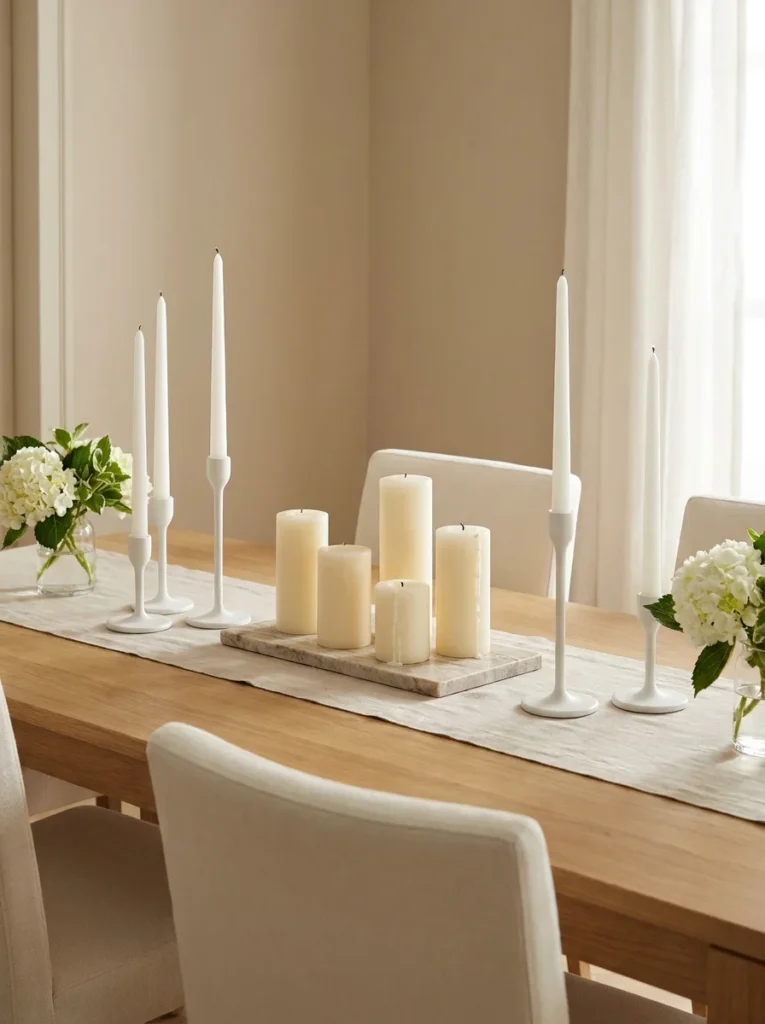
White candles are an easy way to make a dining table feel more refined without relying on elaborate decorations. Arrange three or five candles in different heights using simple ceramic, glass, or metal holders in muted finishes. The repeated white tones create a coordinated display, while the varying heights prevent the arrangement from looking flat.
For a formal dining room, combine slim taper candles with small pillar candles. In a casual space, a few chunky candles on a low tray feel more relaxed. Keep candles away from curtains, dried flowers, and other flammable decorations. Never leave burning candles unattended.
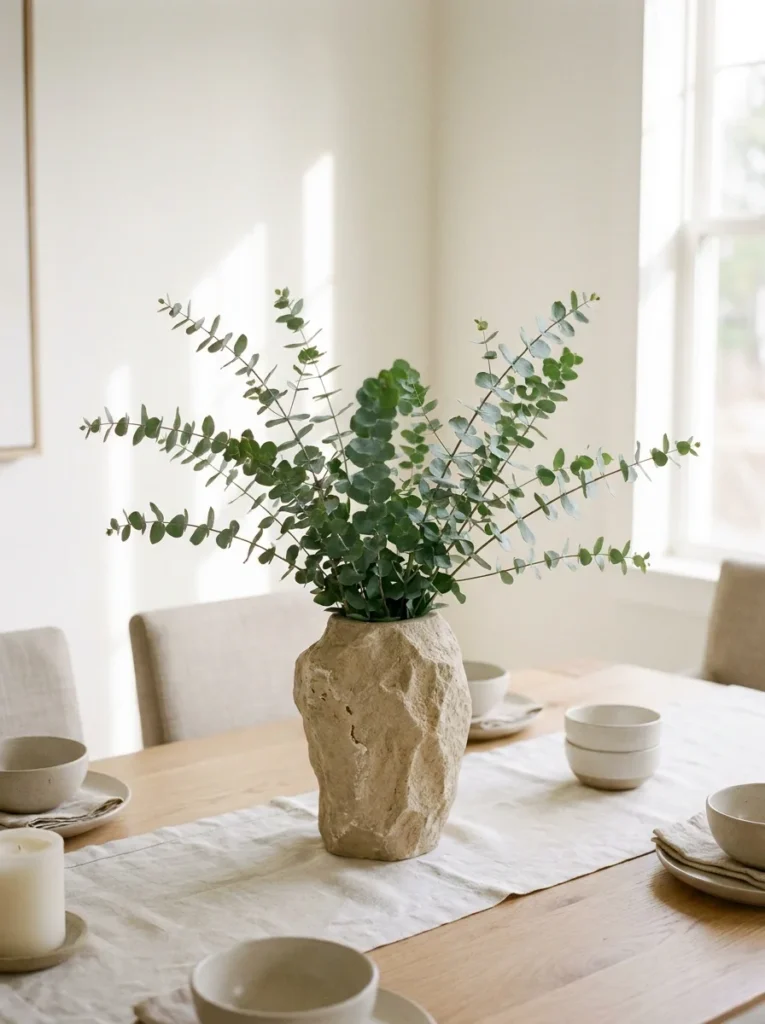
10. Eucalyptus Branches in a Stone Vase
Decorating Tip:
Choose a stone-look vase with a slightly rough surface to complement the soft, muted green of eucalyptus branches. Arrange the stems at different angles instead of placing them all upright in the same direction.
Eucalyptus introduces a natural color that pairs beautifully with cream, beige, and light wood. A sculptural stone vase gives the arrangement enough visual weight to stand out without needing additional decorations. This style suits modern organic dining rooms, especially those with neutral walls and natural wood furniture. Trim the branches regularly to maintain a balanced silhouette.
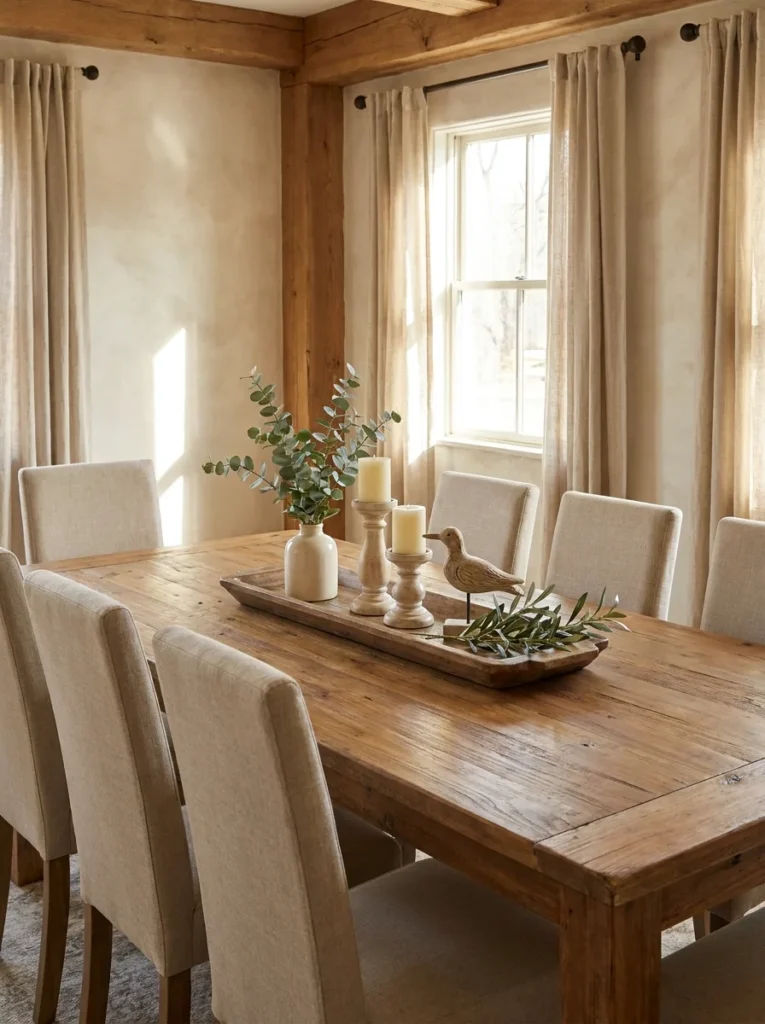
11. Farmhouse Tray with Neutral Accessories
BEFORE
A farmhouse dining table may have beautiful natural wood grain, but the center can look empty or unfinished when there is no decorative arrangement.
AFTER
A wooden or whitewashed tray brings several small accessories together into one organized display. Add a miniature ceramic vase, a pair of neutral candle holders, and a small decorative object to create a balanced farmhouse arrangement.
Choose accessories with different heights and textures so they remain visually interesting. A tray with handles is especially useful because you can move the entire display when setting the table for dinner. Avoid adding too many small pieces, as they can make the centerpiece feel cluttered.
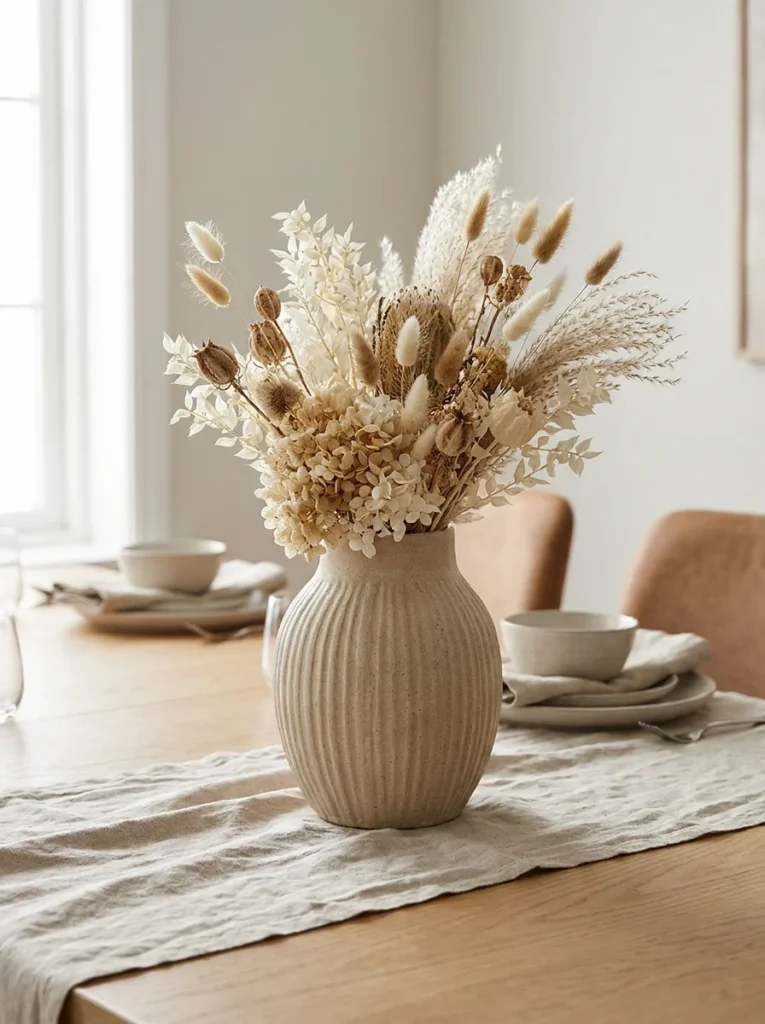
12. Textured Beige Vase with Dried Flowers
How to Create the Look:
- Select a beige vase with a ribbed, speckled, or handmade finish.
- Choose dried flowers in muted cream, tan, and soft brown.
- Trim the stems so the arrangement has a natural, slightly asymmetrical shape.
- Place the vase on a linen runner or directly on the dining table.
The textured vase becomes an important part of the display, even when the flowers are relatively simple. This combination suits contemporary, rustic, and Scandinavian-inspired interiors. Dried flowers are convenient because they do not require fresh water, although occasional gentle dusting helps maintain their appearance.
13. Modern Sculptural Centerpiece
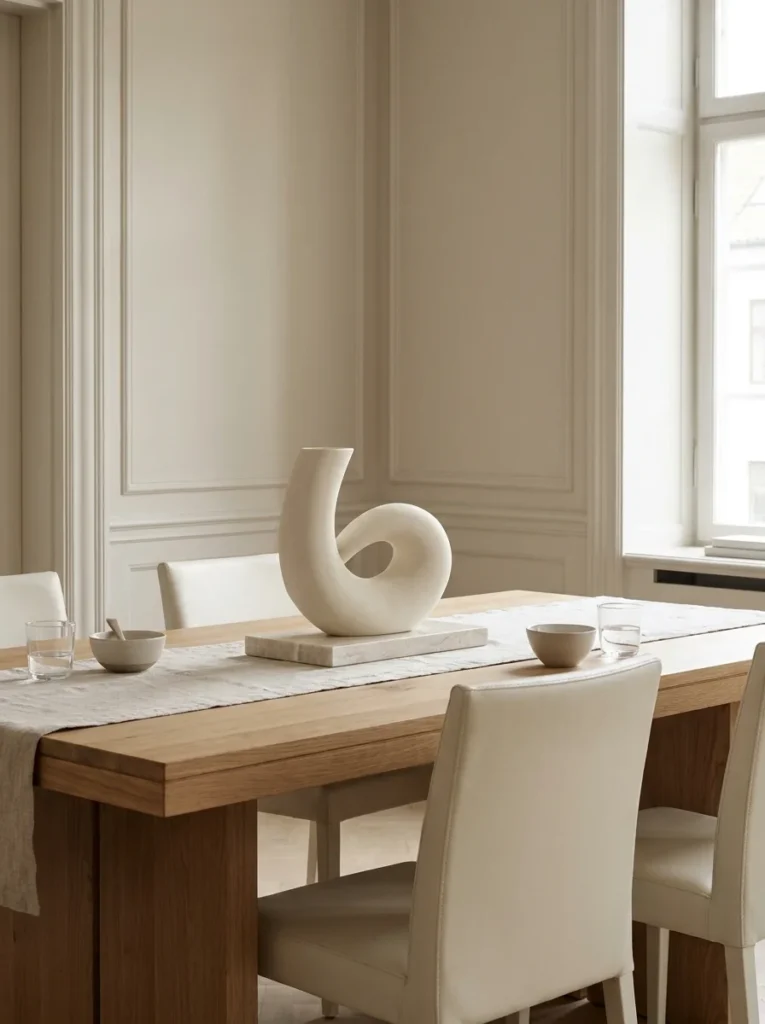
A sculptural centerpiece offers a more artistic alternative to traditional flower arrangements. Look for an abstract ceramic knot, curved stone object, or organic-shaped decorative sculpture in ivory, chalk white, or warm beige. Its unusual silhouette creates visual interest without introducing multiple colors.
| Style | Recommended Material | Overall Look |
| Organic | Natural stone | Soft and earthy |
| Contemporary | Matte ceramic | Clean and sculptural |
| Minimalist | Plaster finish | Subtle and understated |
Place the object directly on a dining table or on a slim stone tray. This approach is especially effective when the surrounding decor is simple, allowing the centerpiece to stand out without competing with other accessories.
14. Woven Basket with Seasonal Greenery
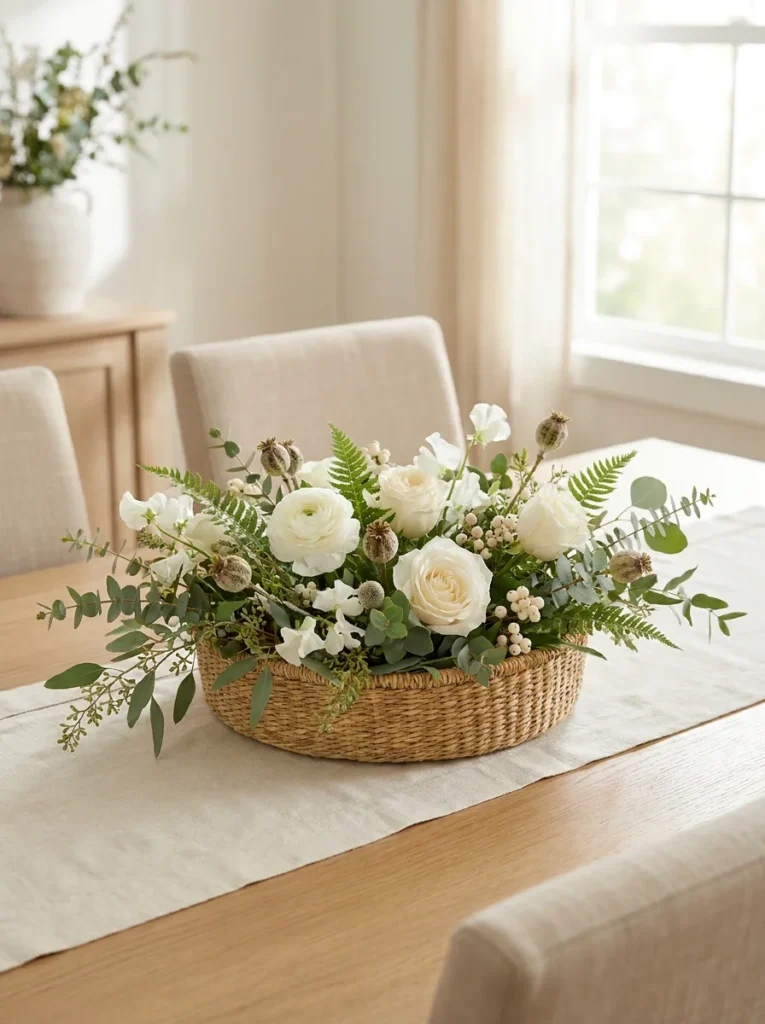
DO:
- Select a shallow woven basket with a natural straw or seagrass finish.
- Add preserved greenery or seasonal foliage.
- Include a few small white flowers for softness.
- Keep the arrangement low and loosely shaped.
DON’T:
- Choose a basket that is too deep or oversized.
- Mix several unrelated seasonal colors.
- Overfill the basket with bulky foliage.
- Use damp natural materials that could damage an untreated wooden table.
The woven texture gives a relaxed, natural feel to farmhouse and cottage-style dining rooms. You can also change the greenery throughout the year while keeping the same basket. This makes the centerpiece more versatile and reduces the need to purchase completely new decorations for every season.
15. White Pitcher Filled with Fresh Flowers
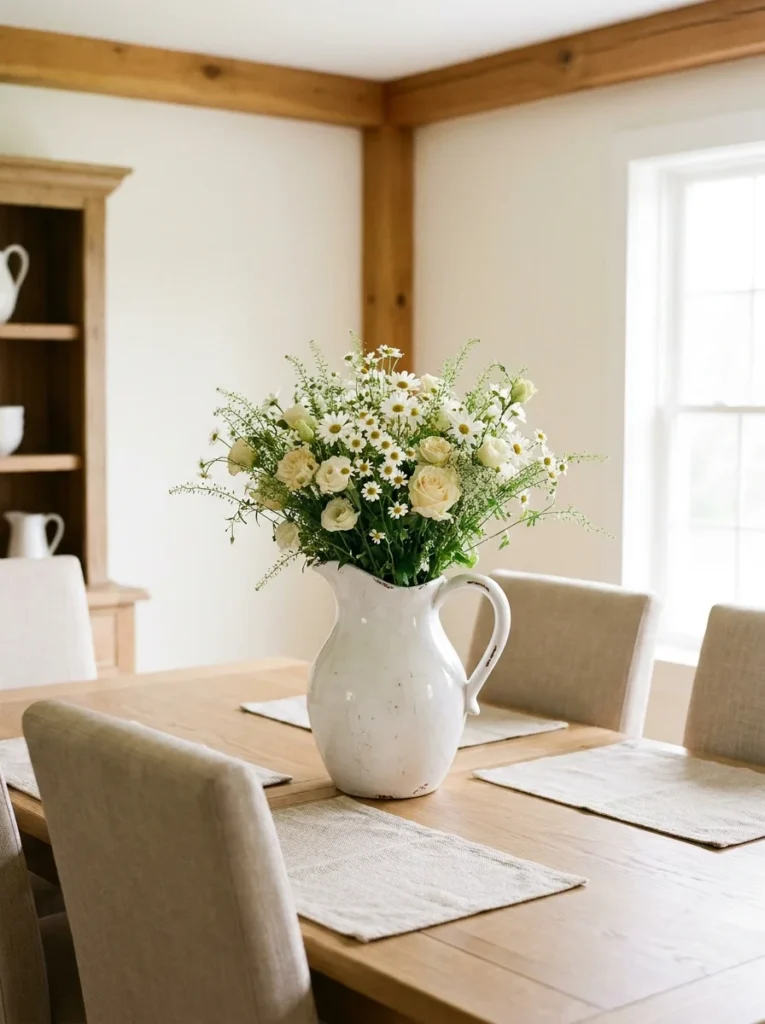
Quick Facts:
- Main Piece: White ceramic or enamel pitcher.
- Flowers: White roses, tulips, daisies, or seasonal blossoms.
- Best Placement: Middle of a farmhouse or cottage-style dining table.
- Color Scheme: White, cream, soft green, and natural wood.
- Maintenance: Replace water regularly and remove wilted stems.
A white pitcher creates a charming centerpiece with a slightly relaxed farmhouse character. Its handle and curved shape make it more interesting than an ordinary cylindrical vase. Choose a pitcher with enough width to support the flowers without making the arrangement look crowded. A few loose stems often create a more natural result than a tightly packed bouquet.
16. Marble Tray with Minimalist Decor
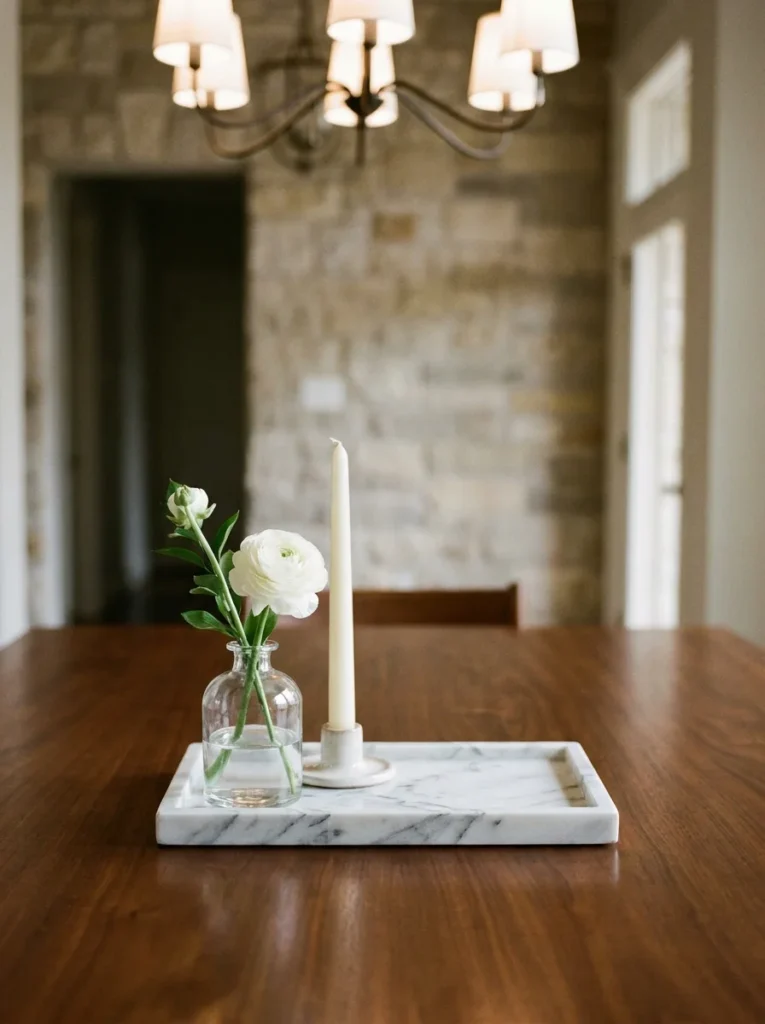
| Feature | White Marble Tray | Beige Stone Tray |
| Appearance | Crisp and refined | Warm and organic |
| Best Pairing | White ceramics and glass | Wood and linen |
| Color Palette | White, gray, ivory | Sand, cream, taupe |
| Overall Style | Modern classic | Organic minimalist |
A marble or stone tray gives your centerpiece a neat foundation. Add a small ceramic vase, a candle, and one understated decorative accessory. Choose the tray according to the existing finishes in your dining room. A white marble version works beautifully with contemporary furniture, while a warmer stone finish complements natural wood and earthy color palettes.
17. Natural Wood Bead Garland Centerpiece
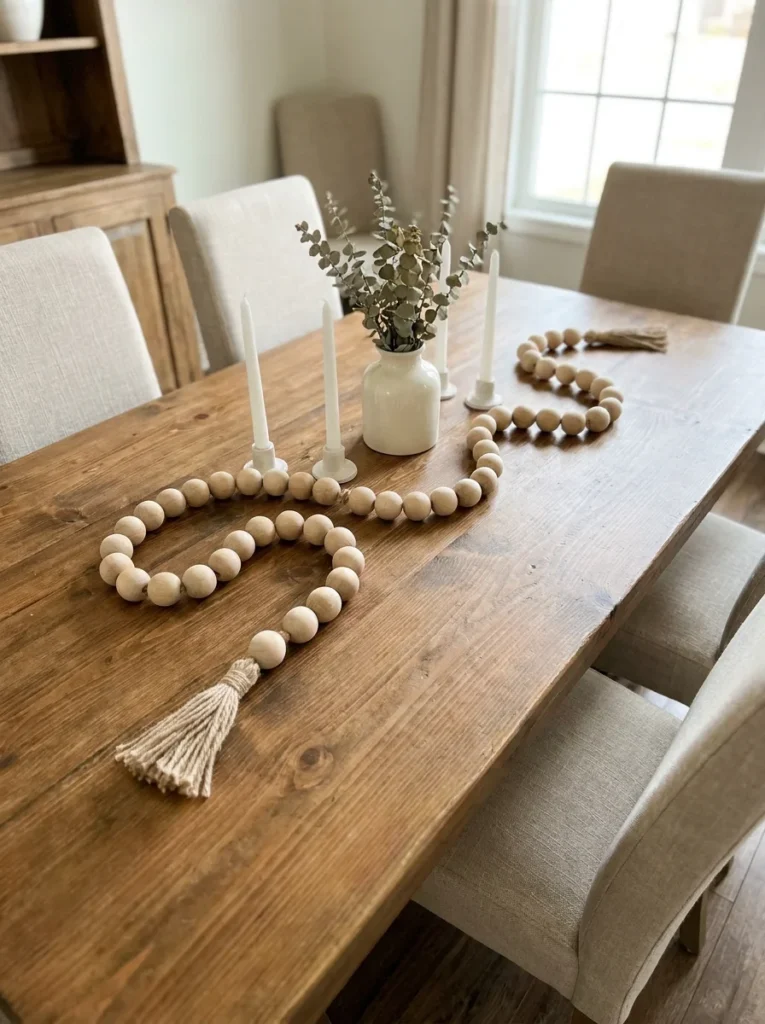
Wooden bead garlands add a casual decorative layer to dining tables, particularly those with farmhouse or rustic styling. Choose unfinished or lightly stained beads in natural oak, beige, or soft brown. Arrange the garland loosely along the middle of the table, allowing a few gentle curves rather than stretching it into a straight line.
You can pair it with a small ceramic vase or a simple candle arrangement. Avoid using an overly long garland that hangs into the seating area or interferes with serving dishes. The beads should complement the table rather than cover its natural surface.
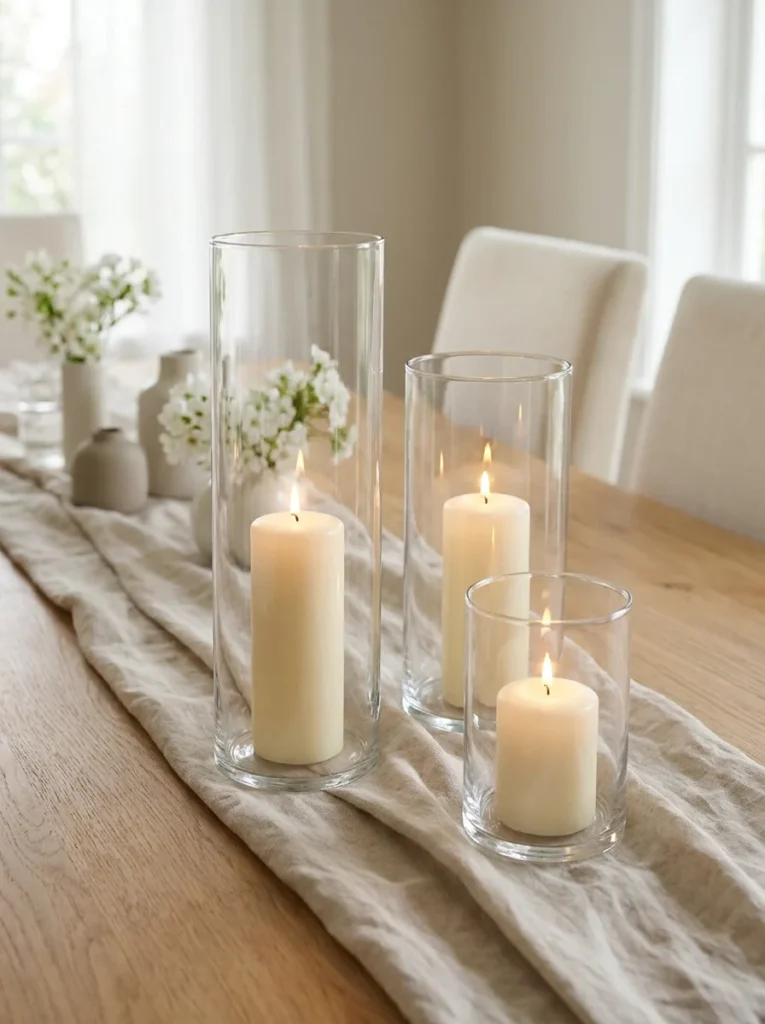
18. Clear Glass Hurricane Candle Holders
Quick Tip:
Choose hurricane holders with enough glass height to protect the candle flame from light drafts. Use different sizes in the same design family to create variation while maintaining a consistent appearance.
Clear glass holders make candlelight feel soft and elegant, especially during evening meals. Place ivory pillar candles inside and arrange the holders in a small group along a neutral runner. The transparent glass keeps the display visually light, making it suitable for both contemporary and traditional dining rooms. Keep enough distance between holders and other decorations to use them safely.
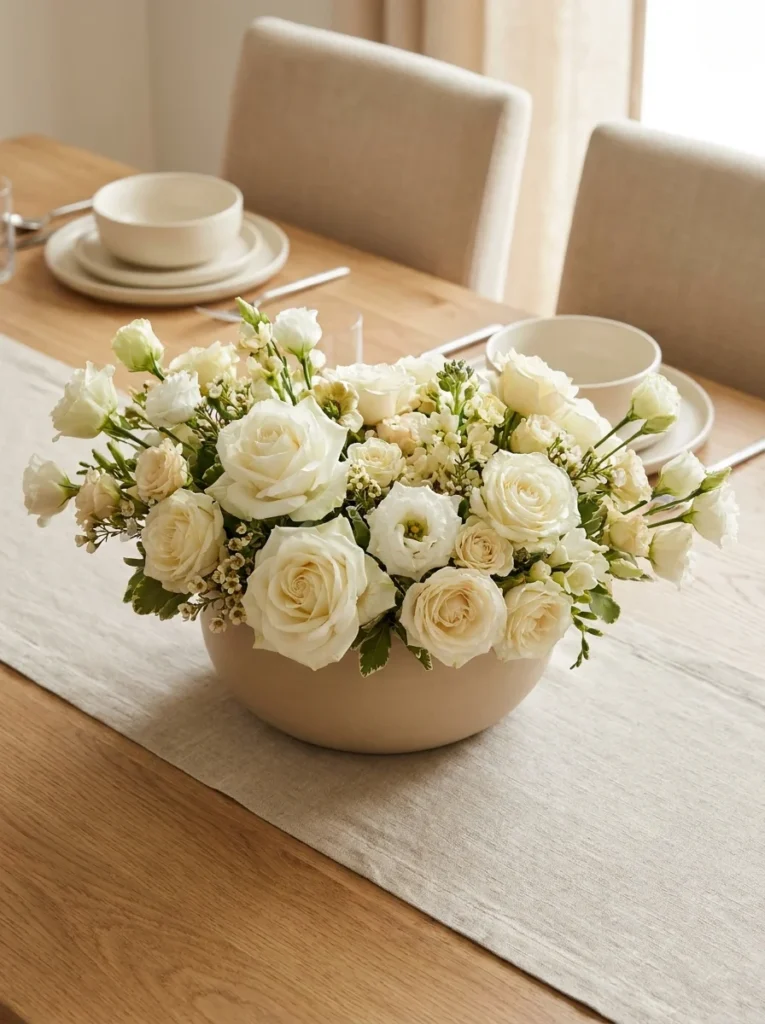
19. Neutral Floral Arrangement in a Ceramic Pot
BEFORE
A conventional bouquet can sometimes feel too formal for an everyday dining area, especially when the rest of the room has relaxed farmhouse or organic styling.
AFTER
A low ceramic pot filled with white and cream flowers creates a softer, more grounded arrangement. The wider container gives the flowers a fuller appearance while keeping the overall height manageable.
Choose a pot in warm white, sand, or pale gray. You can use fresh flowers with a waterproof inner container or arrange realistic artificial blooms directly inside. Place it on a rectangular dining table with enough surrounding space for plates and serving dishes.
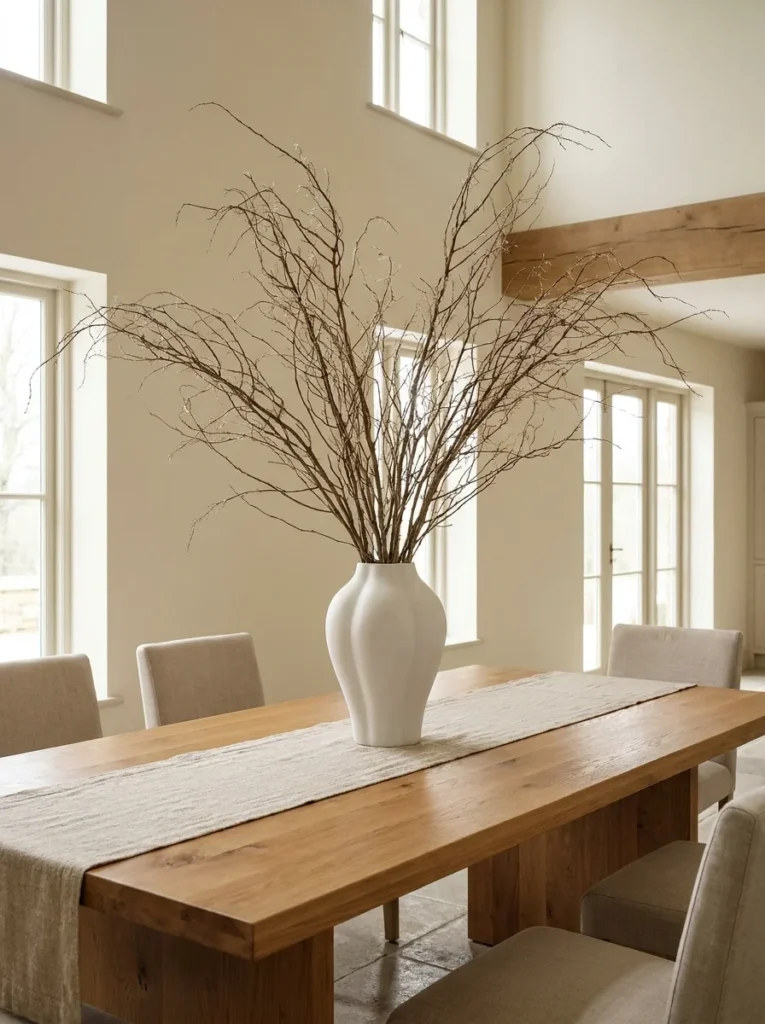
20. Rustic Branches in a Tall White Vase
How to Style It:
- Choose a tall white vase with a stable, weighted base.
- Select a few decorative branches with interesting natural shapes.
- Trim the branches to create a balanced arrangement.
- Position the vase where it does not interfere with sightlines or table use.
This centerpiece introduces height and a subtle architectural quality to the dining room. Natural branches look especially effective against neutral walls and simple furniture. For a large dining table, a taller arrangement can provide visual balance, but avoid placing it directly between seated guests. A stable vase is important because branches can shift if the base is too narrow.
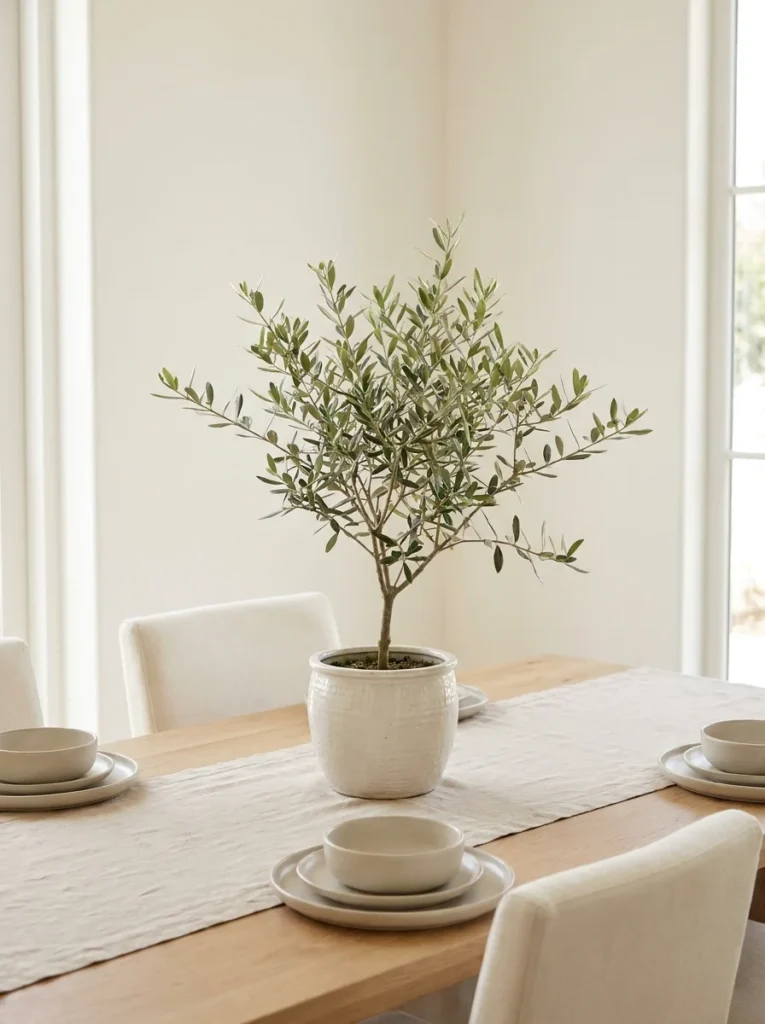
21. Small Potted Olive Tree Centerpiece
Quick Facts:
- Plant: Compact olive tree, preferably a tabletop-sized variety.
- Planter: Cream ceramic, stone, or textured beige pot.
- Placement: Center of a spacious dining table or on a sideboard nearby.
- Style: Mediterranean, modern organic, and minimalist.
- Care: Follow the plant’s light and watering requirements.
A small olive tree brings soft greenery and a Mediterranean character to neutral dining spaces. Its delicate leaves provide more height and structure than a typical tabletop plant. Select a compact specimen rather than a large floor-sized tree. If the dining area does not receive suitable natural light, a realistic artificial olive tree can provide a similar decorative effect without ongoing plant care.
22. Layered Candles with Wooden Accents
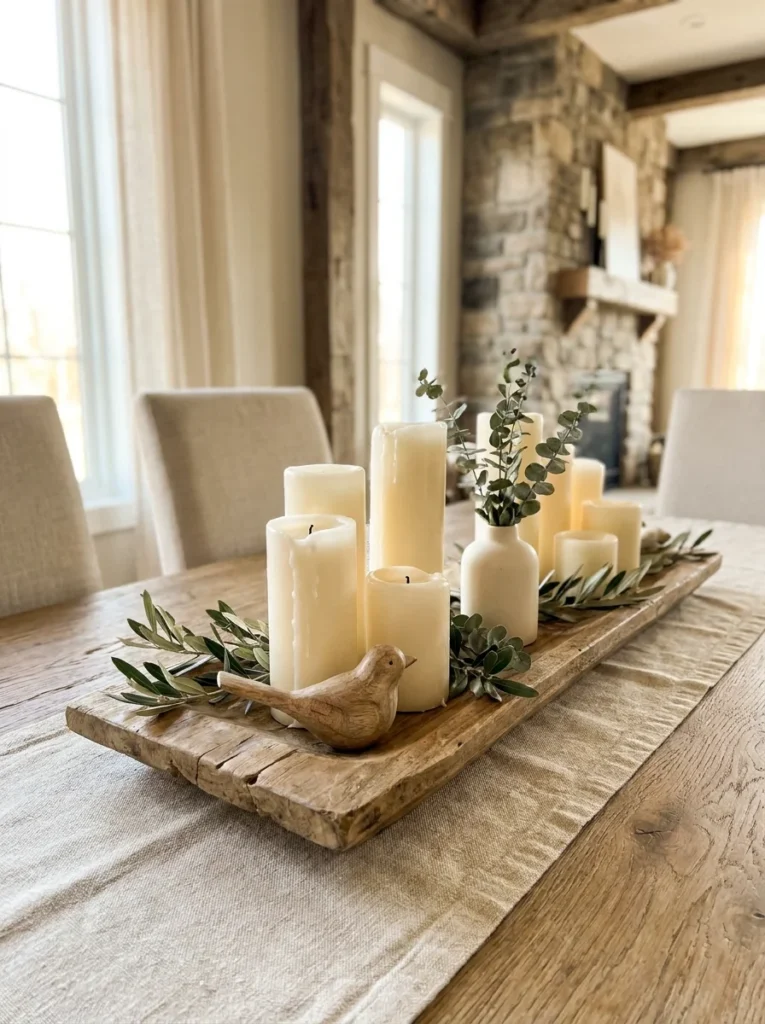
Layering candles with wooden accessories creates a warm centerpiece that feels both simple and thoughtfully arranged. Start with a low wooden tray, then add two or three ivory candles in varying heights. A small wooden object or ceramic accessory can fill the remaining space without making the arrangement crowded.
| Styling Element | Recommended Choice | Purpose |
| Base | Natural wood tray | Defines the display |
| Tall Element | Ivory pillar candle | Adds height |
| Medium Element | Smaller candle | Creates variation |
| Accent | Wooden ornament | Introduces texture |
This combination works particularly well in dining rooms with warm wood furniture and beige upholstery. Keep the overall display compact enough to leave space for everyday table settings.
23. Neutral Seasonal Centerpiece with Pinecones
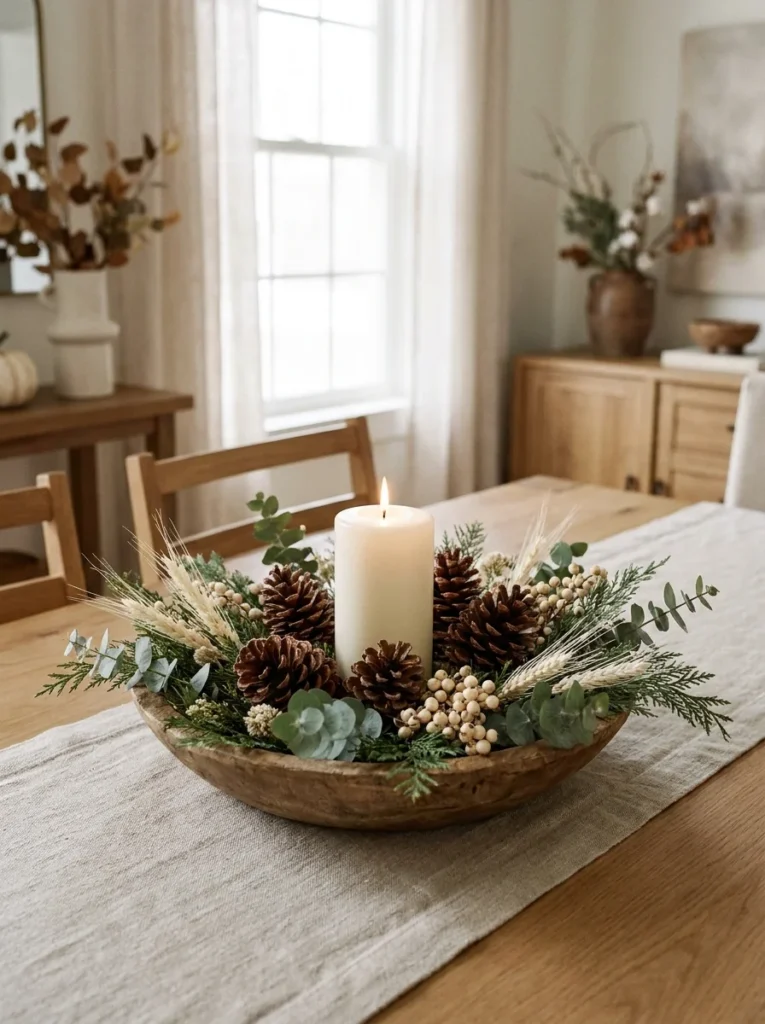
DO:
- Use natural pinecones in different sizes.
- Combine them with cream candles and muted greenery.
- Choose a wooden or woven tray as the base.
- Keep the arrangement within earthy neutral tones.
DON’T:
- Add too many brightly colored seasonal accessories.
- Overcrowd the tray with large decorative objects.
- Use damp or dirty outdoor pinecones without cleaning and drying them first.
- Place natural materials too close to open candle flames.
Pinecones bring a subtle seasonal touch without requiring a traditional holiday color scheme. Their natural brown tones pair beautifully with cream, beige, and soft green. This centerpiece is particularly suitable for autumn and winter dining tables, but you can keep it in place longer by using understated accessories that do not feel overly festive.
24. Elegant White and Beige Table Arrangement
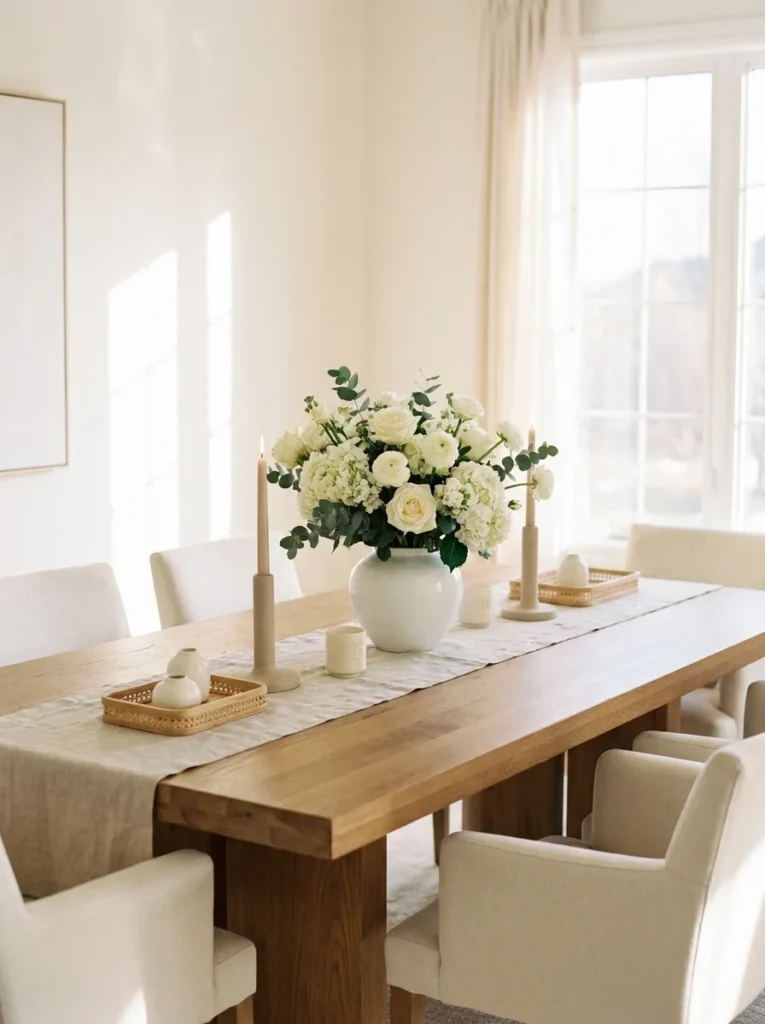
Quick Facts:
- Color Palette: Ivory, warm white, beige, and soft taupe.
- Materials: Ceramic, linen, glass, and natural wood.
- Main Pieces: A white vase, neutral flowers, and understated candle holders.
- Best Table: Large rectangular or round dining tables.
- Style: Modern classic, transitional, and understated luxury.
Combining white and beige creates a layered look that feels sophisticated without being overly decorative. Start with a natural linen runner, then position a white floral arrangement in the center. Add two small candle holders in a warm beige finish to create balance. Varying the materials is important because using only smooth white accessories can make the arrangement feel flat. A little texture adds depth while keeping the palette consistent.
Tips for Styling Neutral Dining Table Centerpieces
Creating a beautiful dining table arrangement is not just about choosing attractive accessories. The proportions, materials, and placement all influence how the finished display looks and functions.
Here are some practical tips to help you get the balance right.
1. Choose the Right Centerpiece Size
Your centerpiece should complement the dimensions of your dining table rather than dominate it. A small ceramic vase works well on a compact round table, while a long wooden tray or layered arrangement suits a larger rectangular surface.
Leave enough room around the centerpiece for plates, glasses, and serving dishes.
2. Combine Different Textures
Neutral decorations can look flat when every accessory has the same finish. Introduce a combination of materials such as:
- Matte ceramic and natural wood.
- Soft linen and clear glass.
- Woven baskets and stone accessories.
- Smooth marble and textured pottery.
These combinations create depth without relying on bold colors.
3. Keep the Color Palette Consistent
Choose two or three main neutral shades and repeat them throughout the arrangement. Warm white, beige, taupe, cream, and light brown work particularly well together.
You can introduce muted greenery as a natural accent without losing the calm appearance of the overall display.
4. Consider Height and Visibility
Tall arrangements can create a dramatic focal point, but they may block the view between people sitting across the table.
For everyday dining, low arrangements are usually more practical. If you prefer tall branches or flowers, choose an open shape that allows guests to see around them.
5. Make the Arrangement Easy to Move
Dining tables need to remain functional. A tray-based centerpiece allows you to move several decorative pieces at once when serving food or preparing the table for guests.
This is particularly helpful for families who use their dining table throughout the day.
6. Change Small Details Seasonally
You do not need to replace your entire centerpiece every season. Keep the main vase, tray, or ceramic bowl and change smaller accessories.
For example, use fresh greenery in spring, dried flowers in summer, pinecones in autumn, and simple white branches during winter.
Conclusion
The best neutral dining table centerpieces combine simple colors, natural materials, and thoughtful proportions. Whether you prefer white flowers, rustic wooden trays, sculptural ceramics, or elegant candle arrangements, the right combination can make your dining area feel more inviting without adding unnecessary clutter.
Consider your table size, existing furniture, and everyday needs before choosing a design. Save your favorite ideas to revisit when refreshing your dining space, and adapt the materials and accessories to suit your personal style and budget. Even a small decorative change can make everyday dining feel a little more special.
Frequently Asked Questions
1. What are the best neutral colors for dining table centerpieces?
The best neutral colors include ivory, cream, beige, taupe, warm white, and soft brown. These shades work beautifully together and complement a wide range of dining room styles. You can also introduce muted green through fresh or preserved foliage for a natural touch.
2. How do you decorate a dining table with a neutral centerpiece?
Start with one main decorative piece, such as a ceramic vase, wooden tray, or decorative bowl. Add one or two complementary accessories, such as candles or small natural accents. Keep the colors coordinated and avoid overcrowding the table. Different textures can make the arrangement more interesting without adding visual clutter.
3. What can I use as a simple everyday dining table centerpiece?
A small ceramic vase with fresh flowers, a shallow wooden bowl, a compact potted plant, or a simple candle arrangement can all work beautifully. Choose something that is easy to maintain and move whenever you need extra table space.
4. How do I make a neutral dining table look elegant?
Focus on quality-looking materials, balanced proportions, and a consistent color palette. Combine linen, ceramic, glass, stone, and natural wood to create subtle contrast. A thoughtfully arranged vase and a few understated accessories often look more refined than a table covered with decorations.
5. Should a dining table centerpiece be tall or short?
It depends on the table size and how you use the dining area. Short centerpieces are generally better for everyday dining because they keep sightlines open and leave room for conversation. Taller arrangements work well as decorative focal points, provided they do not obstruct guests or interfere with serving food.