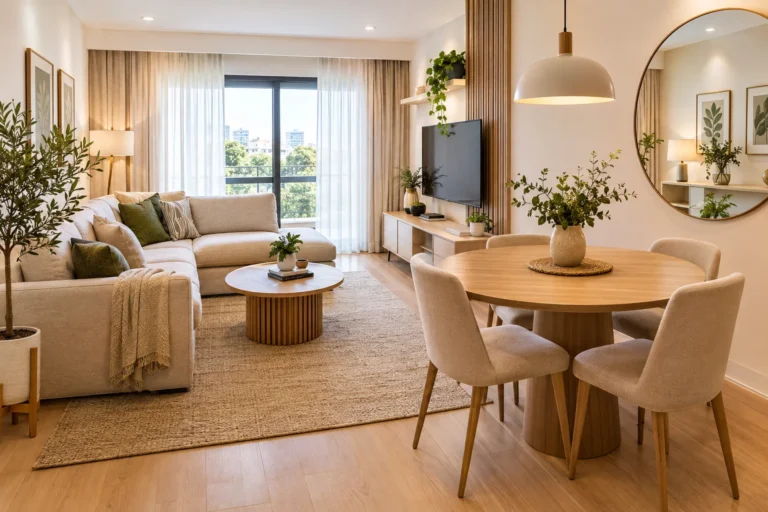
25 Small Balcony Decor Ideas to Turn Your Space Into a Mini Oasis
Small Balcony Decor Ideas can help you turn even the tiniest outdoor area into a comfortable, inviting retreat. Whether you have a narrow apartment balcony, a compact rental terrace, or a small space outside your bedroom, thoughtful decorating can make it feel more functional and relaxing.
From cozy seating and vertical gardens to warm string lights and clever storage, these ideas offer inspiration for different budgets and decorating styles. You will find practical ways to use limited floor space, introduce greenery, improve privacy, and create a mini oasis you can enjoy throughout the year.
1. Add Cozy Outdoor Seating
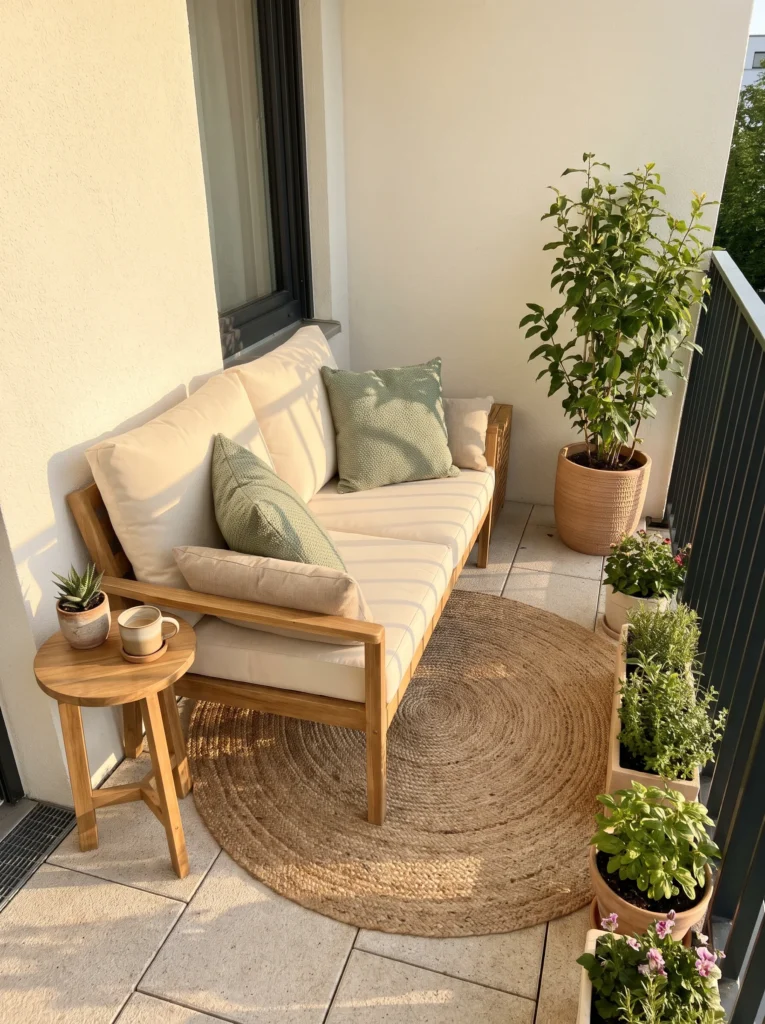
A comfortable seating area makes a balcony feel like an extension of your living room. Choose a compact outdoor loveseat, a pair of slim chairs, or a cushioned floor bench that fits the available space without blocking the doorway. Natural wood, woven textures, and soft neutral cushions create a relaxed atmosphere.
Layer two or three cushions in complementary shades, such as cream, sage green, and warm beige. A small side table gives you a convenient place for coffee or a book. For narrow balconies, measure the seating depth before buying and leave enough room to move comfortably. Weather-resistant fabrics help cushions stay attractive for longer.
2. Create a Vertical Garden
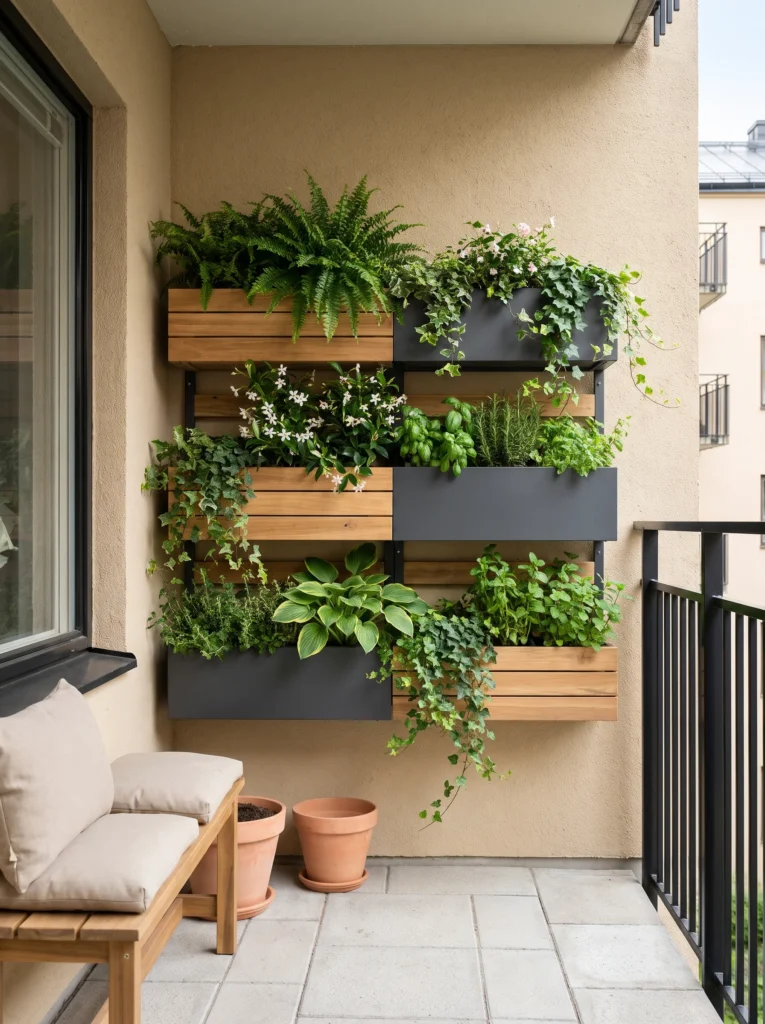
- Best location: An empty wall or sturdy railing area that receives suitable sunlight.
- Plant choices: Combine trailing foliage, compact ferns, and flowering plants according to your balcony’s light conditions.
- Materials: Use weather-resistant vertical planters, wall-mounted pockets, or a freestanding plant ladder.
- Budget: Start with a few inexpensive pots and expand gradually.
- Maintenance: Check drainage and water access, especially for plants positioned above eye level.
A vertical garden brings greenery into your outdoor space without using much floor area. Arrange plants at different heights to create a layered appearance, keeping heavier containers low and securely supported. Before installing anything, check the wall material, mounting requirements, and any building restrictions.
3. Decorate With Hanging Plants

Quick Tip:
Hang planters at different heights to create depth without making the balcony feel crowded. Keep the lowest pots clear of walking paths and choose lightweight containers with secure hooks. Make sure each plant receives the amount of sunlight it needs.
Trailing pothos, spider plants, and suitable pet-safe varieties can soften bare walls and balcony corners. Macrame hangers add a bohemian touch, while simple black or natural-fiber holders suit modern spaces. Use outdoor-rated hanging hardware and consider how watering will affect the floor below. A small group of well-placed planters usually looks more intentional than covering every available overhead point.
4. Use a Small Bistro Table
BEFORE
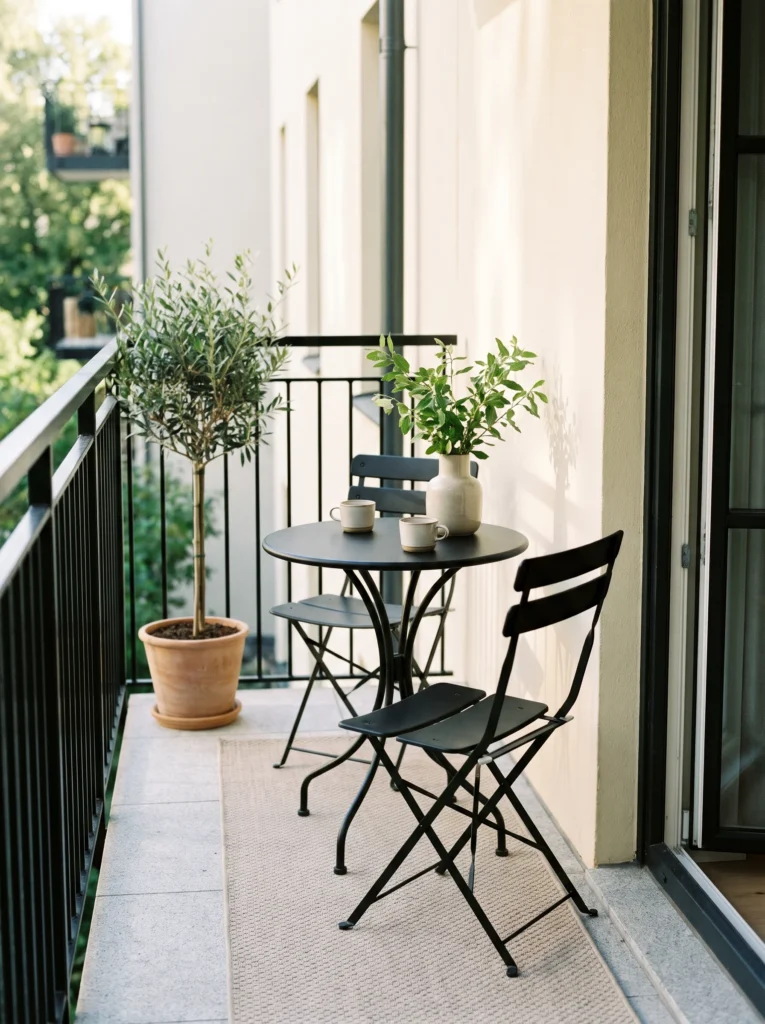
An empty balcony may have enough room for coffee or breakfast, but the lack of a dedicated surface makes it less useful. A full-size dining set can take up too much floor space.
AFTER
A compact round bistro table with two slim chairs creates a practical spot for morning coffee or an evening snack. A black metal set feels classic, while light wood or white finishes create a softer look.
Choose a table that leaves a clear route to the balcony door. Foldable chairs are useful when the table is not in use, and a small potted plant can provide decoration without taking over the tabletop.
5. Layer an Outdoor Rug

- Measure the floor: Check the usable area and keep the rug away from door tracks and drainage points.
- Choose a material: Look for an outdoor rug designed to handle moisture, sunlight, and regular foot traffic.
- Pick a pattern: Stripes can emphasize length, while a subtle geometric print adds interest without overwhelming the space.
- Add soft furnishings: Coordinate the rug with cushions or a throw for a connected color scheme.
- Maintain the surface: Lift and dry the rug regularly to help prevent trapped moisture and mildew.
A rug visually defines the seating area and makes hard balcony flooring feel more welcoming. This approach suits concrete, tile, and other plain surfaces that need extra texture. Choose a proportion that leaves some floor visible around the edges, particularly on narrow balconies.
6. Add Warm String Lights
| Feature | Solar String Lights | Plug-In Outdoor Lights |
| Power source | Sunlight and rechargeable batteries | Suitable outdoor electrical outlet |
| Installation | Usually simple, with secure clips or hooks | Requires access to a safe power source |
| Lighting | Depends on sunlight and battery capacity | More consistent when properly powered |
| Best for | Balconies with adequate daylight | Areas needing reliable evening lighting |
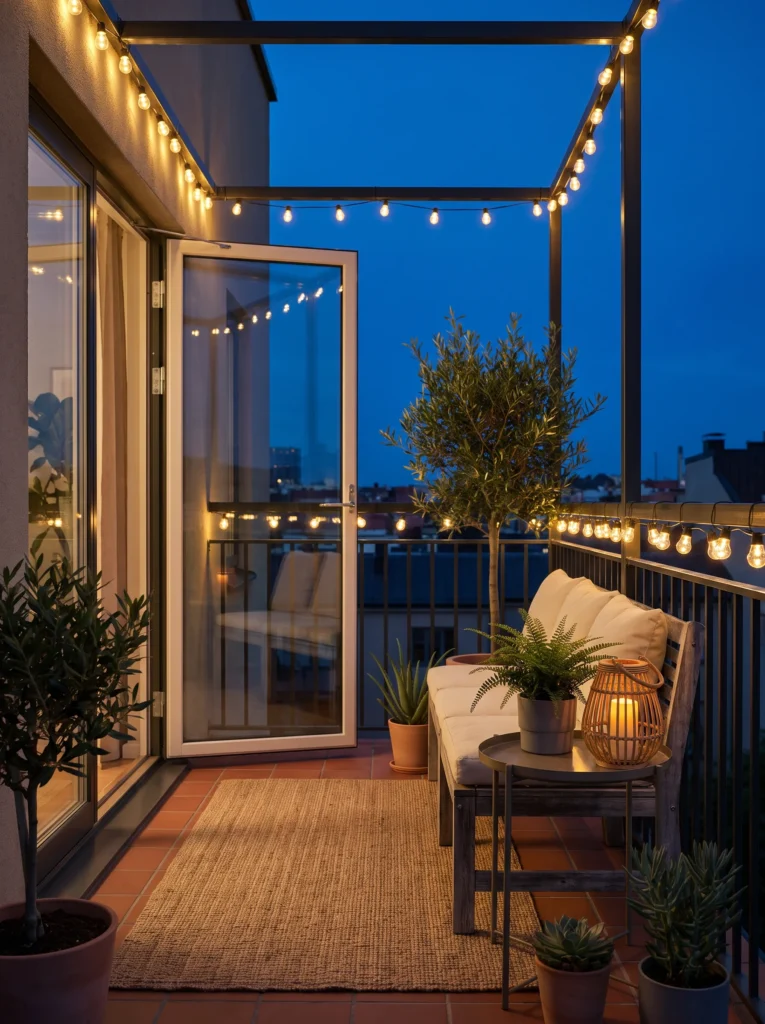
Warm-white string lights create a gentle glow that makes a small balcony feel more inviting after sunset. Drape them along a railing or attach them around a suitable overhead frame, keeping cables neat and secure. Select outdoor-rated lights and follow the manufacturer’s installation guidance. Avoid blocking access routes or placing electrical connections where rain can reach them.
7. Create a Boho Balcony Retreat
DO
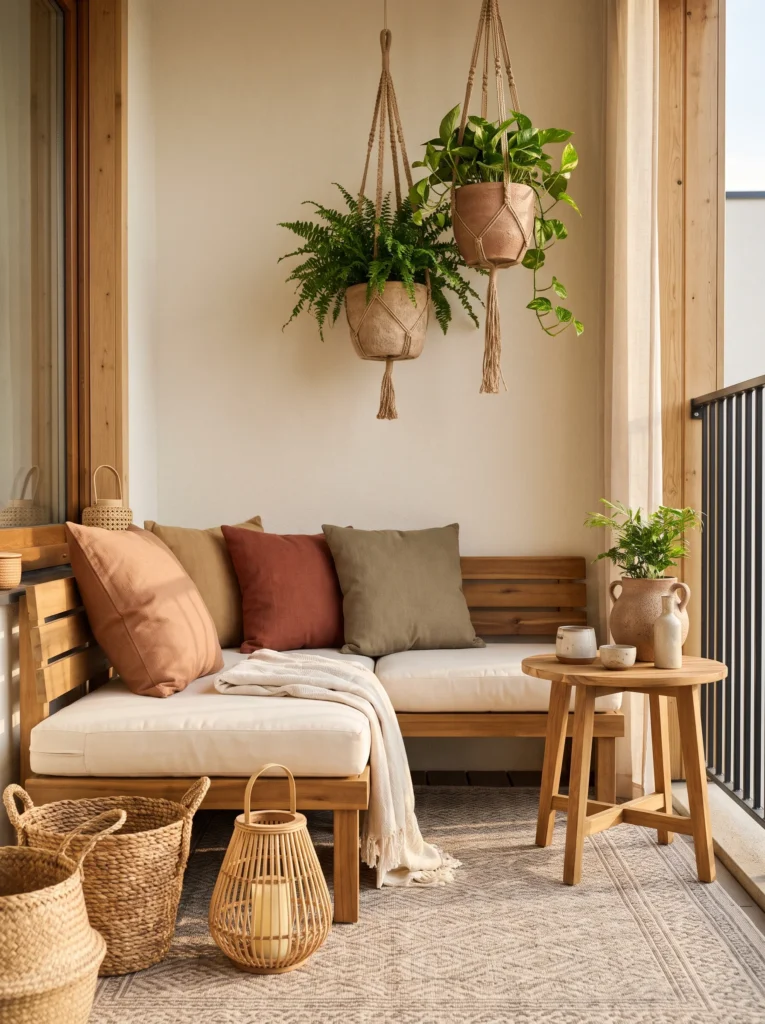
- Combine natural wood, woven baskets, and textured outdoor cushions.
- Use cream, terracotta, muted green, and warm brown as the main palette.
- Layer a weather-resistant rug with a few coordinated pillows.
- Add leafy plants to soften corners and railings.
DON’T
- Fill every corner with furniture and accessories.
- Leave indoor textiles exposed to rain and strong sunlight.
- Mix too many unrelated patterns and bright colors.
- Hang heavy decor from railings without checking the installation.
A bohemian balcony feels relaxed because it mixes texture, greenery, and warm natural tones. Start with one main seating piece, then introduce smaller accessories in similar colors. Keeping the largest items neutral allows patterned cushions and handmade-looking details to stand out without creating visual clutter.
8. Use Foldable Furniture
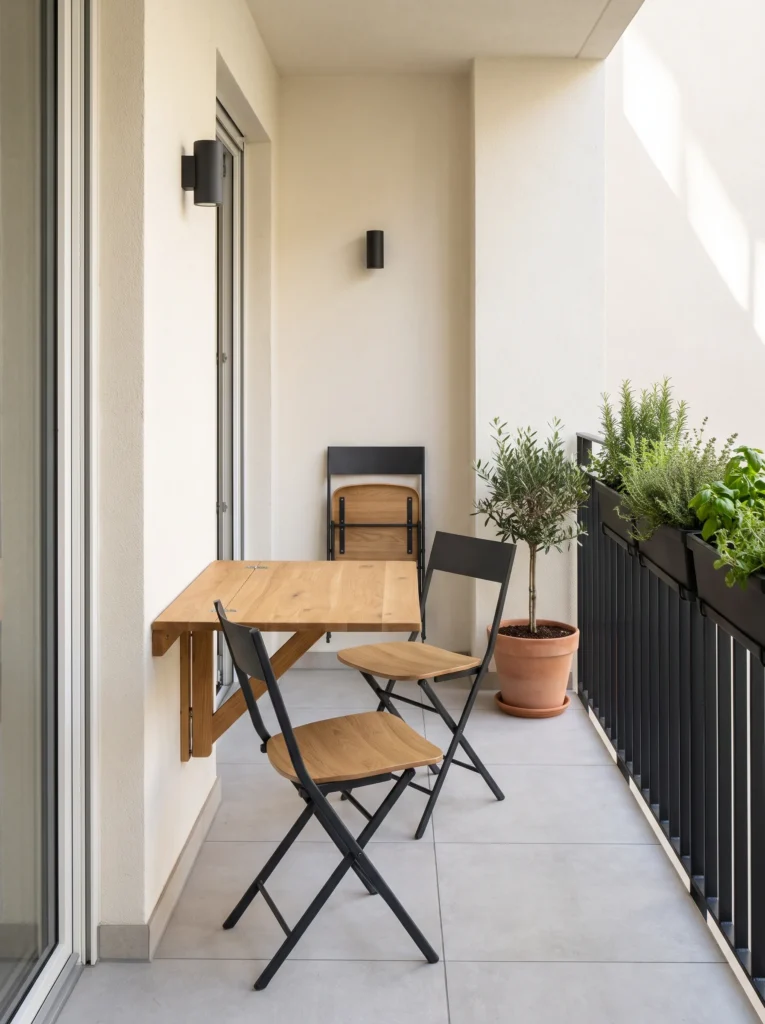
Space needed: Ideal for narrow balconies and compact apartment terraces.
Furniture options: Folding bistro tables, stackable chairs, and wall-mounted drop-leaf tables.
Material choices: Powder-coated metal, treated wood, or outdoor-rated composite materials.
Budget: Low to moderate, depending on materials and construction.
Best feature: Furniture can be folded away when you need more open floor space.
Foldable furniture gives you flexibility throughout the day. Open the table for breakfast or working outdoors, then fold it away when you want space for stretching or watering plants. Check the folded dimensions before purchasing and make sure wall-mounted furniture is secured to an appropriate structure. Smooth hinges and manageable weight make everyday use easier.
9. Decorate With Colorful Outdoor Cushions
Quick Tip:
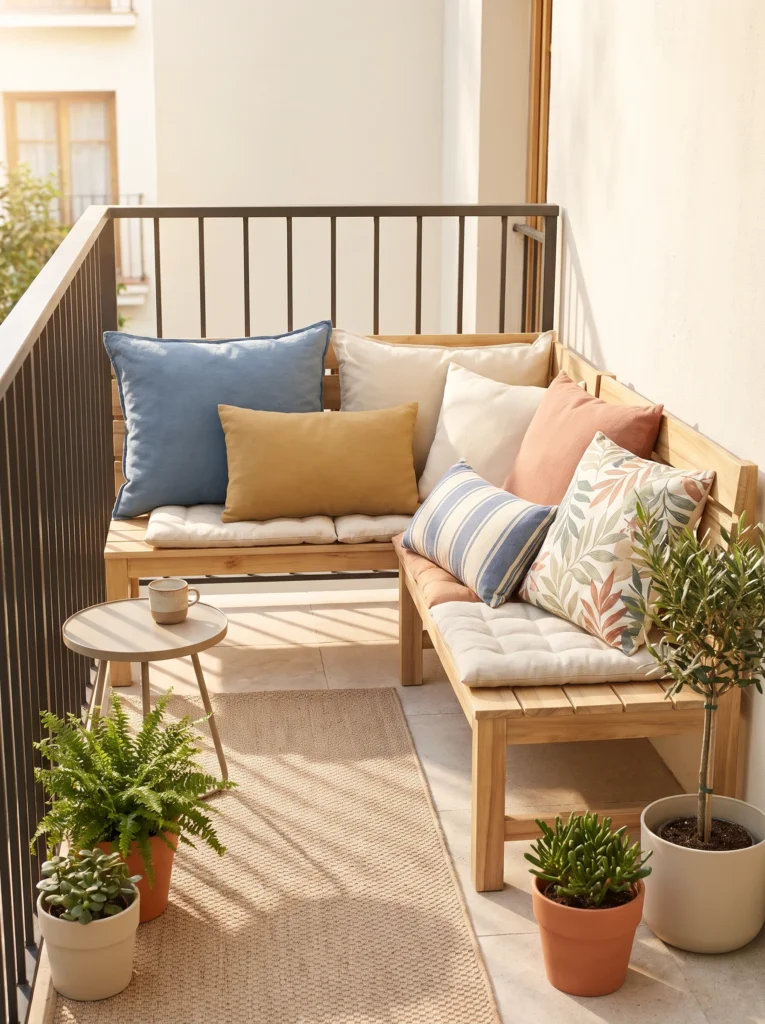
Choose one main color and repeat it across two or three cushions. For example, combine dusty blue with cream and a small amount of mustard, or pair terracotta with beige and olive green. This creates a coordinated look without requiring matching furniture.
Colorful cushions can brighten a plain wooden bench or simple metal chairs. Mix a solid fabric with one subtle stripe or botanical pattern to create variety. Select outdoor-rated covers that can be removed for washing, and store the cushions during prolonged wet weather. If your balcony receives strong afternoon sun, look for fabrics designed to resist fading.
See Also 19 DIY Small Backyard Fire Pit Ideas on a Budget
10. Add a Wooden Bench With Storage

BEFORE
Outdoor cushions, gardening tools, and small accessories can quickly clutter a compact balcony. Leaving everything on the floor reduces usable space and makes the area feel less organized.
AFTER
A slim wooden storage bench provides seating and a place to keep everyday balcony essentials. Add a neutral seat cushion, place a small planter at one end, and keep frequently used items inside the storage compartment.
Choose a bench with dimensions that suit the wall or railing beside it. Weather-resistant construction, ventilation, and a suitable protective finish can help preserve the wood. Keep stored textiles dry and avoid placing the bench where it blocks drainage or access.
11. Create a Mini Herb Garden
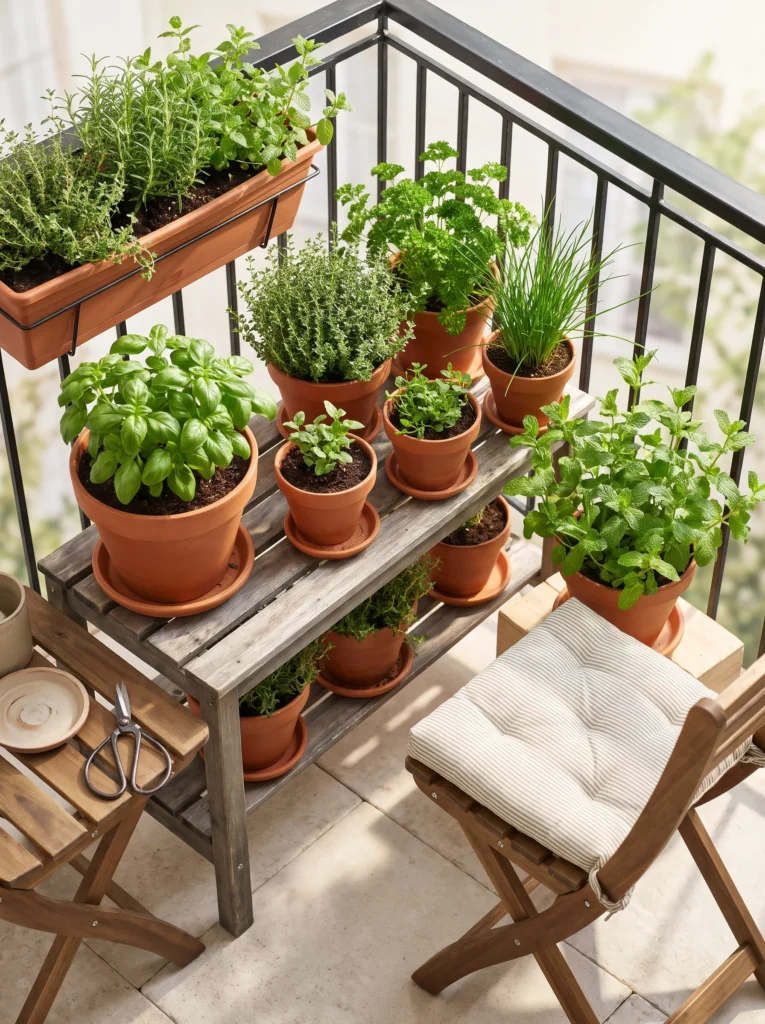
- Choose the location: Find a sunny spot that provides the light your chosen herbs require.
- Select suitable herbs: Basil, thyme, chives, mint, and parsley can work well, depending on local conditions.
- Choose containers: Use pots with drainage holes and trays that can be emptied after watering.
- Arrange by need: Group herbs with similar sunlight and watering requirements.
- Harvest regularly: Trim suitable growth to encourage continued use and prevent overcrowding.
A small herb garden combines decoration with everyday usefulness. Line a railing planter with compact herbs or arrange several pots on a narrow plant stand near the kitchen door. Mint is best kept in its own container because it spreads readily. Check the soil before watering, and make sure the pots receive enough light and airflow.
12. Use Artificial Grass for a Green Look

| Feature | Artificial Grass | Outdoor Floor Tiles |
| Appearance | Soft, lawn-like surface | Clean, structured finish |
| Installation | Loose-laid or fitted, depending on product | Interlocking or fixed systems |
| Maintenance | Needs cleaning and drying | Requires regular sweeping and cleaning |
| Best for | A garden-inspired atmosphere | A modern, defined balcony floor |
Artificial grass can give a concrete balcony a greener appearance without the daily care required by a natural lawn. Choose a product intended for outdoor use and check that water can still drain freely underneath it. Avoid covering drains or creating a surface that stays damp. A small rug or a few planters can break up the green area and make the overall design feel more natural.
13. Add Privacy With Tall Plants
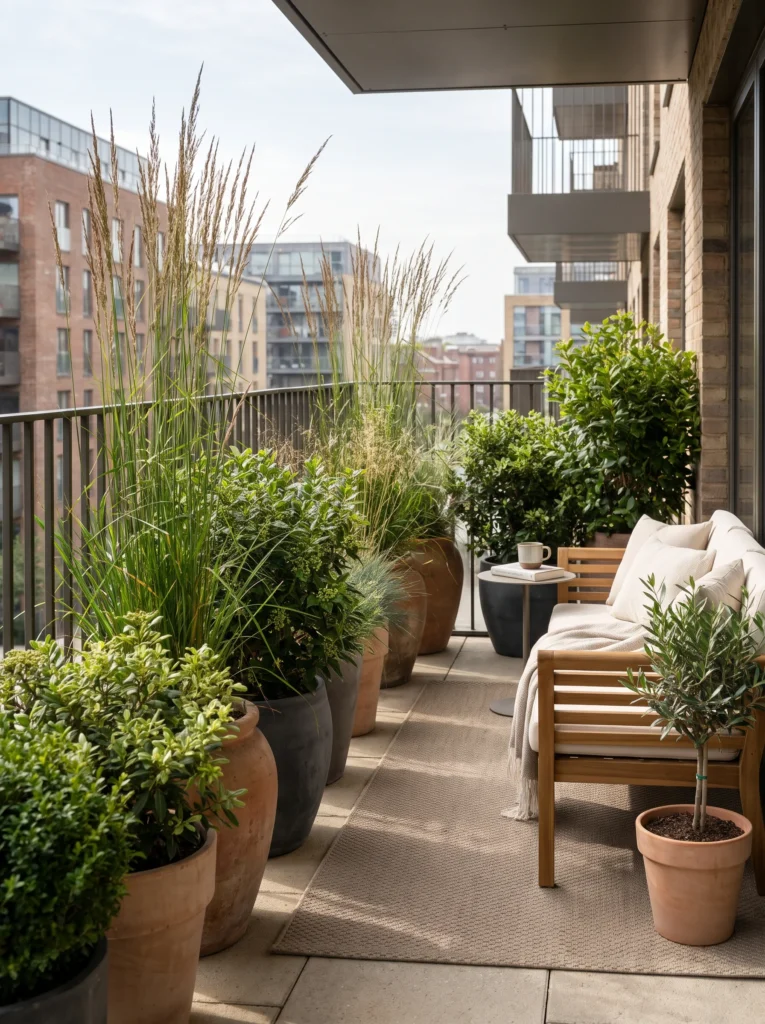
DO
- Arrange tall, container-grown plants along the exposed side of the balcony.
- Choose varieties suited to your sunlight, climate, and available pot depth.
- Use stable planters and secure supports where needed.
- Leave room to water and maintain the plants.
DON’T
- Place oversized pots where they narrow the walking path.
- Use top-heavy containers that could become unstable in strong wind.
- Allow foliage to obstruct doors, drains, or neighboring access.
- Install heavy planters on railings without confirming their load capacity.
Tall plants can soften the view from neighboring buildings and give a balcony a more sheltered feeling. Bamboo varieties suitable for containers, ornamental grasses, and upright shrubs may work depending on local growing conditions. Arrange them in a consistent row for a simple screen, or stagger the heights for a more natural look. Check wind exposure before choosing large containers.
14. Decorate With Lanterns and Candles
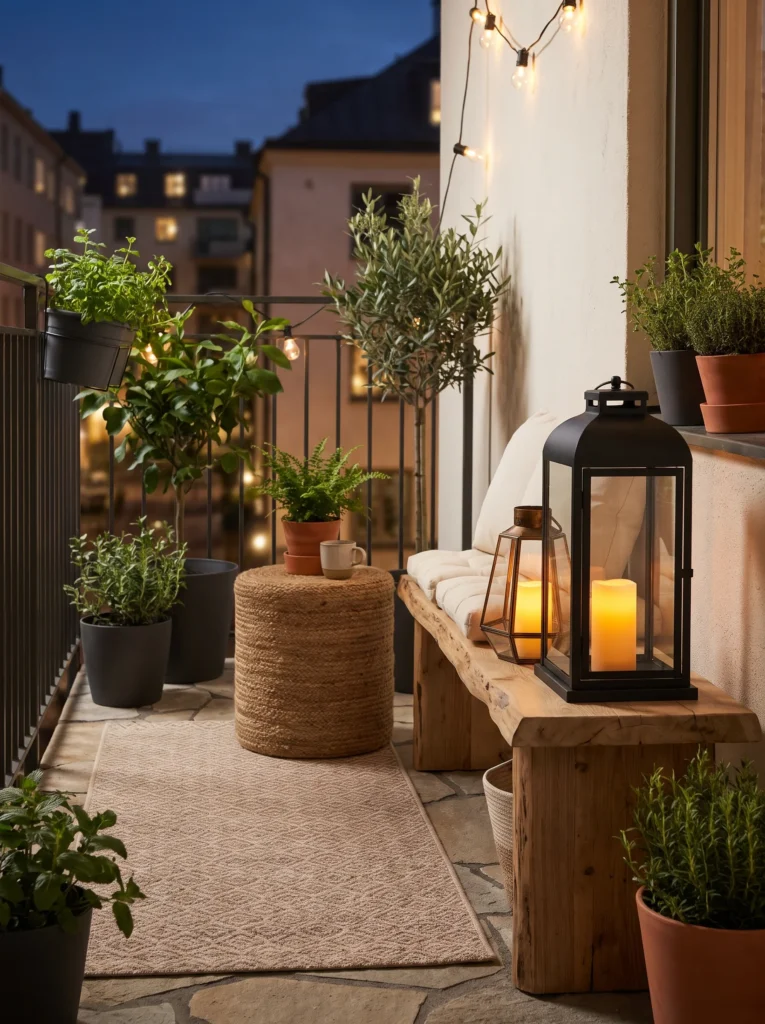
Style: Warm, intimate, and relaxed.
Best placement: Floor corners, a sturdy side table, or a protected shelf.
Materials: Weather-resistant metal, glass, ceramic, or outdoor-rated resin.
Lighting choice: Battery-operated candles provide a flame-free alternative.
Maintenance: Bring delicate lanterns indoors during bad weather and clean away dust and moisture.
Lanterns create a soft focal point without requiring much space. Use one larger lantern beside a bench or group two smaller ones near a corner planter. Black metal looks modern, while brass tones and natural textures suit a warmer style. For apartment balconies, flameless candles are often the more practical choice. Secure lightweight decorations so they cannot blow over in strong winds.
15. Create a Minimalist Balcony

A minimalist balcony relies on a few well-chosen pieces rather than lots of decoration. Start with a compact chair or bench, a simple side table, and one or two planters. White, charcoal, beige, and natural wood create a calm palette that lets the shapes and materials stand out.
Keep the floor mostly clear and avoid filling every wall with accessories. A single sculptural plant or a neatly arranged pair of pots can provide enough visual interest. Choose furniture with slim frames and simple lines, and prioritize pieces that serve a clear purpose. This style is especially useful when you want an outdoor area that is easy to clean and maintain.
16. Add a Small Outdoor Sofa

Quick Tip:
Measure the sofa’s full depth, including cushions, and check how much room remains for entering and leaving the balcony. A compact two-seater with raised legs can appear lighter than a bulky design with a solid base.
A small outdoor sofa creates a comfortable place to read, relax, or chat with a friend. Choose weather-resistant upholstery in a neutral shade, then add a couple of cushions for contrast. A slim side table can replace a large coffee table and preserve the walking area. Before buying, check the balcony’s access route and the sofa’s weight, particularly if it must pass through a narrow doorway.
17. Use Wall-Mounted Planters

BEFORE
Floor-standing pots can occupy much of a narrow balcony, leaving little space for a chair or small table. A collection of containers may also make the floor difficult to sweep.
AFTER
Wall-mounted planters move greenery upward and create a living display along an otherwise empty wall. A simple arrangement of matching containers looks orderly, while different foliage shapes add natural variety.
Choose a mounting system suited to the wall and the weight of the containers when filled with wet soil. If you rent, consider a freestanding vertical planter or an approved railing attachment instead of drilling. Leave space between containers for plant growth and airflow.
18. Decorate With Natural Wood Accents

- Choose a base piece: Start with a wooden bench, a slim side table, or a small plant stand.
- Coordinate the finish: Match warm wood with cream and terracotta, or pair pale wood with soft gray and green.
- Introduce texture: Add woven planters, a natural-looking outdoor rug, or cushions in a subtle fabric.
- Balance the materials: Combine wood with metal or ceramic so the arrangement does not look too uniform.
- Protect the finish: Use a suitable outdoor wood treatment and follow the product’s maintenance instructions.
Natural wood adds warmth to concrete floors, painted walls, and metal furniture. Even a single wooden stool can make a balcony feel more welcoming. Choose materials suitable for outdoor exposure, since untreated wood may weather or deteriorate more quickly. Keep the arrangement simple, allowing the grain and natural color to provide much of the decoration.
19. Create a Romantic Balcony With Fairy Lights
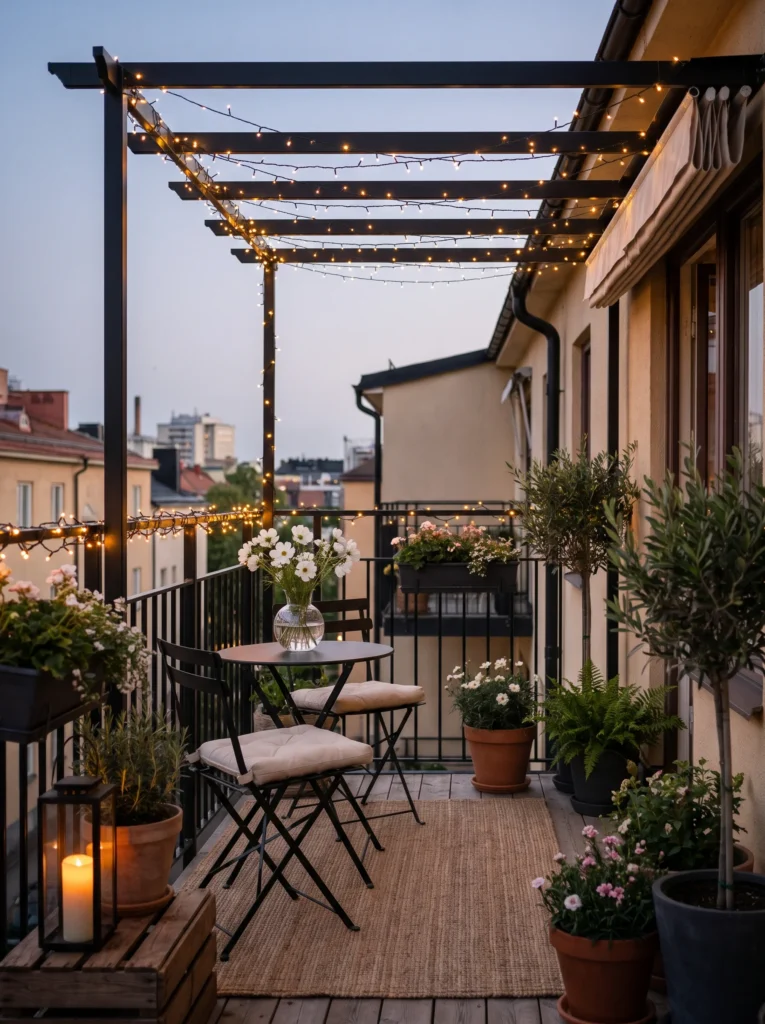
| Feature | Fairy Lights | Lantern Lighting |
| Visual effect | Delicate points of light | Focused pools of light |
| Best placement | Along a railing or overhead frame | Beside seating or in corners |
| Space required | Very little floor space | Requires a stable surface |
| Styling | Soft and delicate | Rustic, classic, or contemporary |
Fairy lights create a gentle evening atmosphere, especially when paired with light cushions and a few leafy plants. Use warm-white outdoor-rated lights rather than a mix of competing colors. Secure them along a suitable railing or frame, and keep the arrangement away from doors and moving parts. If the balcony is exposed to rain, use products rated for the conditions and follow their installation instructions.
20. Add a Hammock Chair
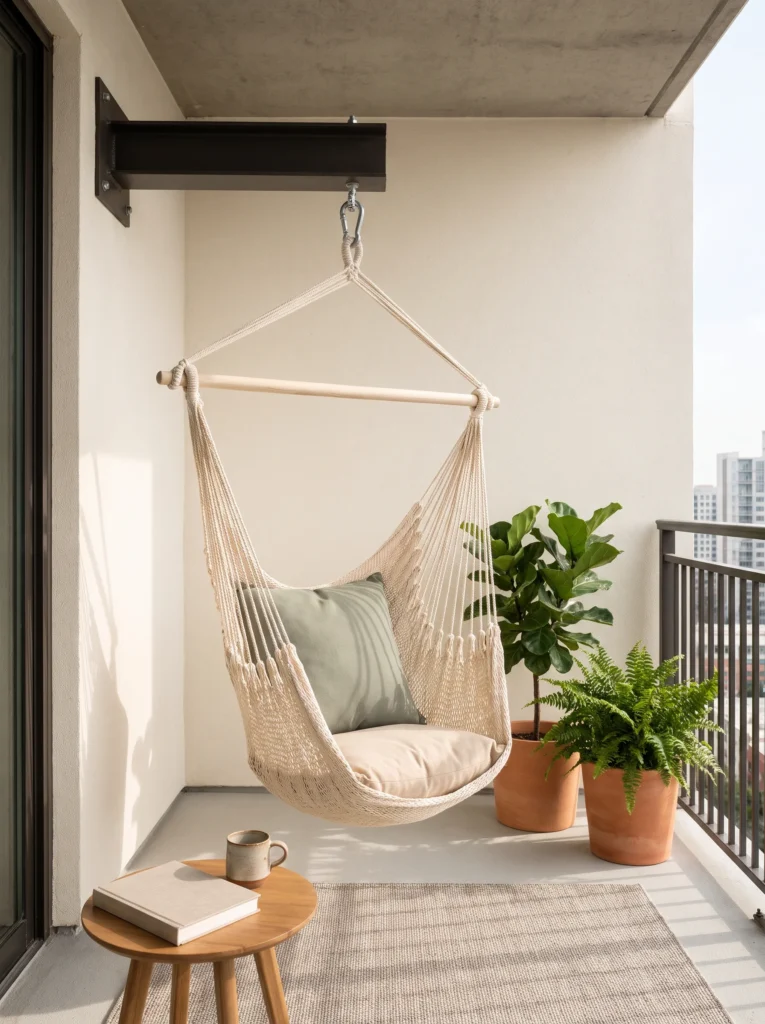
DO
- Check the ceiling or support structure and confirm that it can safely carry the intended load.
- Choose a compact chair with dimensions suitable for the available space.
- Use the specified mounting hardware and installation method.
- Leave enough clearance for gentle movement.
DON’T
- Attach a hammock chair to an unverified ceiling hook or railing.
- Allow the chair to swing into glass doors, walls, or neighboring furniture.
- Choose a design that blocks the main walking route.
- Leave unsuitable fabric exposed to prolonged rain.
A hammock chair creates a relaxed reading or resting spot while giving the balcony a distinctive focal point. Neutral cotton-style fabric and a soft cushion suit bohemian decor, while darker woven designs work with contemporary furniture. Where a secure overhead installation is not possible, consider a freestanding hammock chair with a suitable base, provided there is enough room for it.
21. Use a Slim Storage Cabinet

Space needed: A narrow wall or corner that does not interfere with access.
Best contents: Gardening gloves, small tools, watering accessories, and weather-resistant supplies.
Materials: Outdoor-rated resin, treated wood, or appropriately finished metal.
Key feature: Doors conceal everyday items and reduce visual clutter.
Maintenance: Keep the cabinet dry inside and check for moisture, rust, or damage.
A slim storage cabinet helps keep a balcony organized without turning it into a storage room. Choose a design with a small footprint and enough internal space for the items you actually use. A neutral finish blends with most decor styles, while a wooden cabinet adds warmth. Keep the cabinet stable, secure it where appropriate, and avoid storing items that could leak or attract pests.
22. Create a Tropical Balcony Oasis

BEFORE
A plain balcony with hard flooring and a few scattered pots may feel disconnected from nature. The space can lack the layered greenery and relaxed atmosphere associated with a tropical garden.
AFTER
Large-leaf plants, woven furniture, and warm natural colors create a lush, vacation-inspired look. Add a compact chair with a textured cushion, a few varied-height planters, and a natural-looking outdoor rug.
Choose plants according to your local climate and the amount of light the balcony receives. If sunlight is limited, select shade-tolerant varieties rather than forcing sun-loving plants to grow in unsuitable conditions. Keep the palette consistent and leave breathing room around the largest leaves.
23. Decorate With Neutral Colors

- Choose a base: Start with cream, beige, warm white, or soft gray for your main furniture and rug.
- Add natural texture: Introduce wood, woven details, and textured outdoor fabrics.
- Include greenery: Use plants to bring color and contrast to the neutral setting.
- Create depth: Combine lighter cushions with slightly darker accessories in related shades.
- Keep the palette consistent: Repeat the same two or three colors across furniture and decor.
Neutral colors can make a compact balcony feel visually calm and connected. They also allow greenery and natural materials to stand out without competing for attention. To prevent the space from looking flat, mix smooth surfaces with woven textures and soft upholstery. Choose washable cushion covers and outdoor-friendly finishes to keep the understated look practical.
24. Add a Small Water Feature
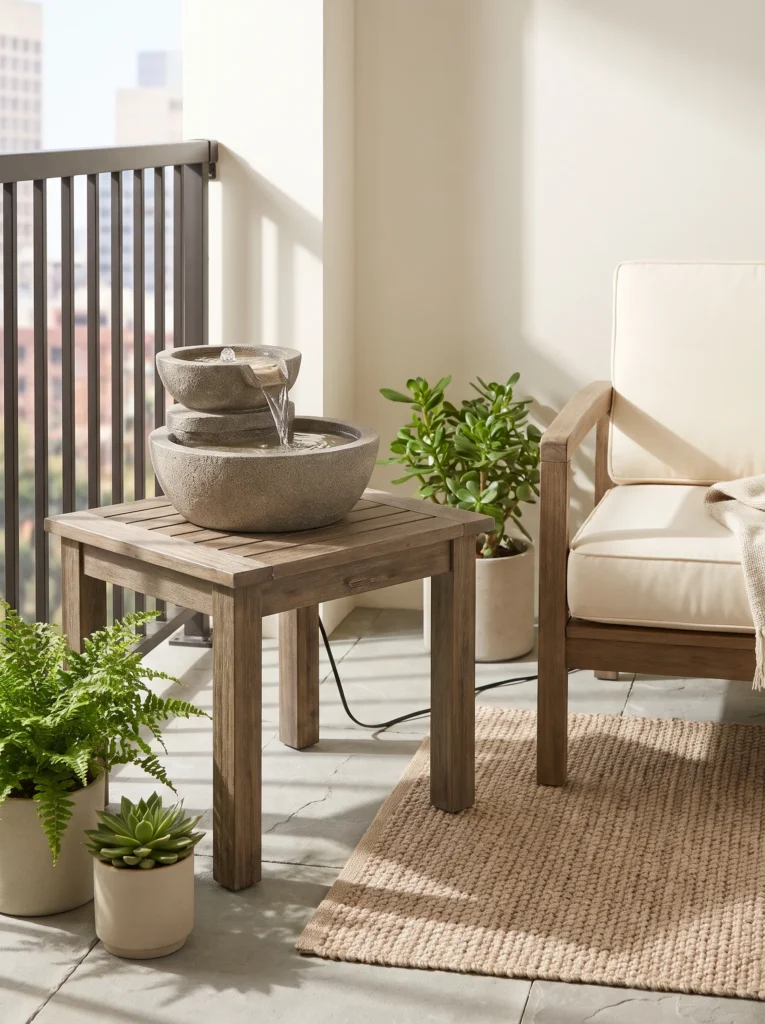
| Feature | Tabletop Fountain | Compact Freestanding Fountain |
| Footprint | Small surface area | Requires floor space |
| Visual impact | Subtle decorative accent | More noticeable focal point |
| Maintenance | Regular water changes and cleaning | May require more cleaning and care |
| Best for | A small side table or sturdy stand | A balcony with a suitable open corner |
A small water feature can add gentle movement and a relaxing atmosphere to an outdoor retreat. Choose a stable, weather-suitable design and place it on a surface that can support its filled weight. Keep water away from electrical connections and protect the surrounding floor from splashes. If the balcony is very narrow, a tabletop fountain may be easier to accommodate than a freestanding model.
25. Make a Cozy Reading Nook
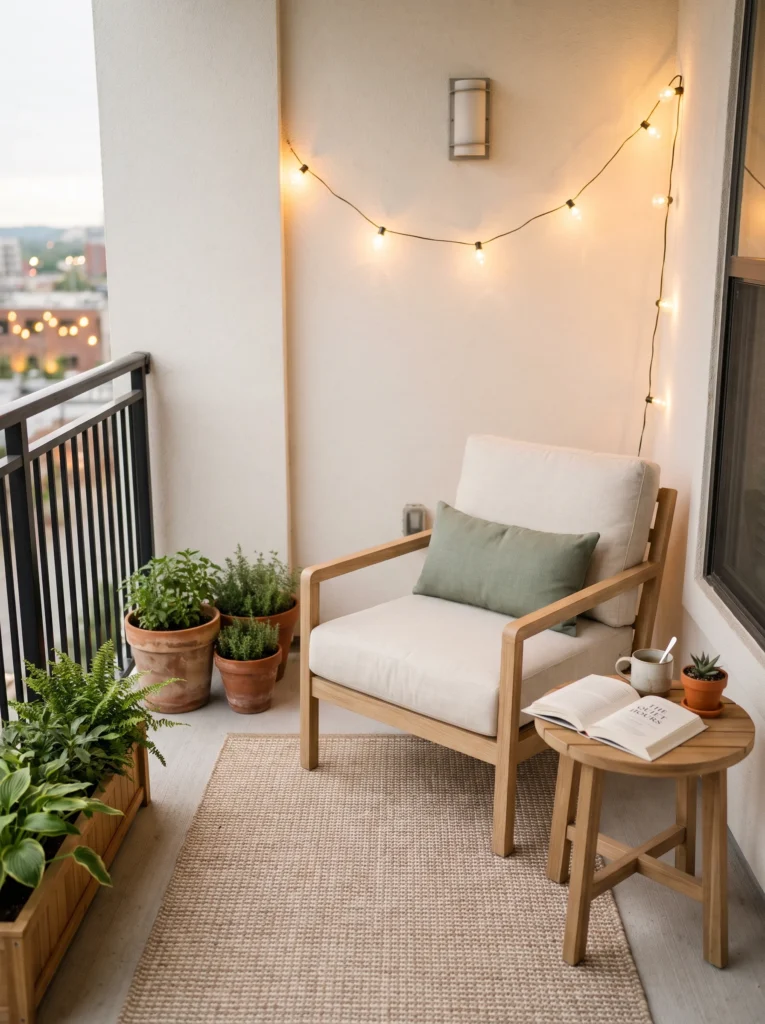
Room: Apartment balcony, enclosed balcony, or sheltered terrace.
Furniture: A comfortable compact chair, floor cushion, or narrow bench.
Color palette: Warm beige, muted green, cream, and soft brown.
Essentials: A small side table, a comfortable cushion, and a place to keep your current book.
Lighting: A suitable outdoor lamp or warm string lights for evening use.
A reading nook gives your balcony a clear purpose and encourages you to use it more often. Position the seat where you can enjoy the best available light without blocking the doorway. Add a weather-resistant cushion and a compact table for your book or drink. Keep blankets indoors when not in use, and consider shade or a suitable cover if the balcony receives strong direct sunlight.
Practical Tips for Decorating a Small Balcony
A few thoughtful decisions can help your balcony look more organized and feel more comfortable, even when space is limited.
- Measure before shopping. Record the usable floor area, doorway width, and furniture depth. Include enough room to enter, leave, and reach plants.
- Use vertical space carefully. Wall planters, hanging baskets, and tall plant stands can free up the floor, provided they are securely installed.
- Choose outdoor-friendly materials. Furniture, rugs, cushions, and lighting should suit the amount of sun, rain, and wind your balcony receives.
- Keep a consistent palette. Two or three main colors can help different furniture pieces and accessories feel connected.
- Prioritize useful furniture. Folding tables, storage benches, and compact side tables often offer more value than oversized decorative pieces.
- Plan for drainage. Keep drains accessible and prevent rugs or planters from trapping water against the floor.
- Consider privacy and building rules. Check restrictions before drilling into walls, attaching items to railings, or installing screens.
- Secure lightweight decor. Wind can move cushions, lanterns, and planters, so store or fasten items when necessary.
- Match plants to the conditions. Check sunlight, wind exposure, container size, and watering needs before choosing greenery.
- Decorate in stages. Begin with seating, then add lighting, plants, and accessories as your budget allows.
Conclusion
A small outdoor area can become a comfortable retreat with the right balance of seating, greenery, lighting, and practical storage. These 25 Small Balcony Decor Ideas offer options for different styles, from minimalist arrangements and neutral palettes to lush tropical corners and cozy reading nooks.
Start by measuring your balcony and deciding how you want to use it. Then choose one or two ideas that fit your space, budget, and maintenance preferences. Add more details gradually rather than overcrowding the floor. Save this guide on Pinterest for future inspiration, try the ideas that suit your home, and share it with someone who wants to make better use of a small balcony.
Frequently Asked Questions
1. How can I decorate a small balcony on a budget?
Start with items that make the biggest difference, such as a comfortable chair, a few plants, and warm string lights. Refresh existing furniture with outdoor cushion covers or a suitable protective finish. You can also create a vertical garden using affordable containers or repurpose a sturdy stool as a plant stand. Add accessories gradually instead of buying everything at once.
2. How do I make a small balcony feel cozy?
Use soft outdoor cushions, warm lighting, and a rug that suits the available floor area. Add a few plants to soften hard surfaces, then include a small table or bench to make the space useful. Stick to a coordinated color palette and keep the walking route clear so the balcony feels comfortable rather than crowded.
3. Which plants are best for a small balcony?
The best plants depend on sunlight, wind, climate, and the space available for containers. Herbs such as thyme and chives can suit sunny balconies, while certain ferns and other shade-tolerant plants may work in lower light. Trailing plants can add greenery without using much floor space. Always check each plant’s growing requirements before purchasing it.
4. How can I make my small balcony look bigger?
Choose furniture with slim frames, use light or coordinated colors, and keep the center of the floor as open as possible. Vertical planters can draw the eye upward, while a properly sized outdoor rug helps define the seating area. Avoid oversized furniture and too many small accessories, which can make the space feel busy.
5. What furniture works best for a narrow balcony?
Foldable chairs, wall-mounted drop-leaf tables, slim benches, and compact bistro sets are useful choices. Measure each piece before purchasing and check how much walking space remains when it is in use. A bench with storage can serve two purposes, while stackable or folding furniture makes it easier to clear the floor when needed.