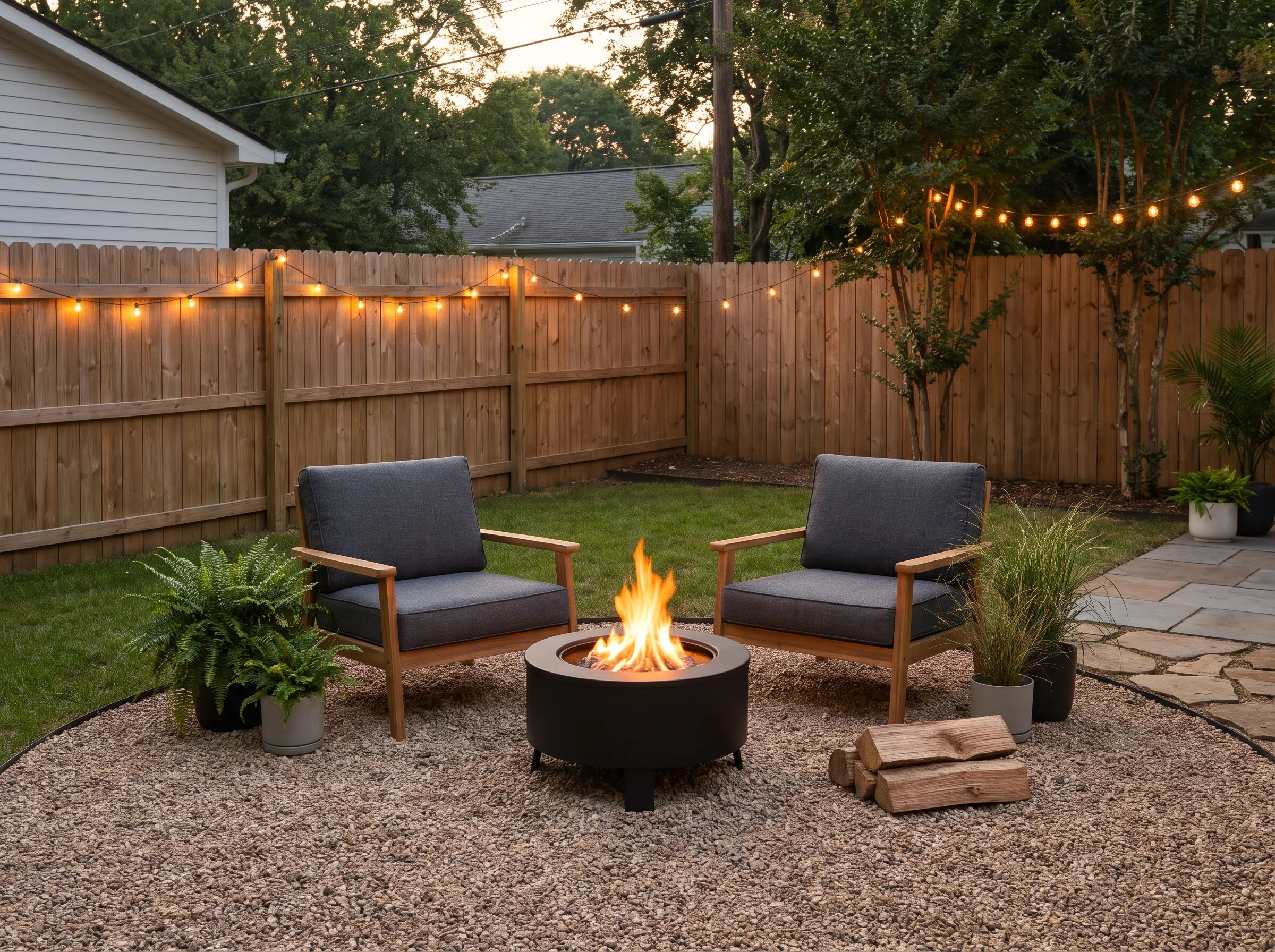
19 DIY Small Backyard Fire Pit Ideas on a Budget
Creating a cozy outdoor gathering spot does not require a large backyard or an expensive landscaping project. These DIY Small Backyard Fire Pit Ideas offer affordable ways to make a compact outdoor area feel warm, inviting, and functional.
From simple gravel surrounds and brick designs to portable fire bowls and comfortable seating, there are options for different budgets and decorating styles. Whether you have a small lawn, a narrow patio, or a modest rental-friendly outdoor space, these ideas can help you plan a welcoming fire pit area without unnecessary spending.
1. Simple Gravel Fire Pit
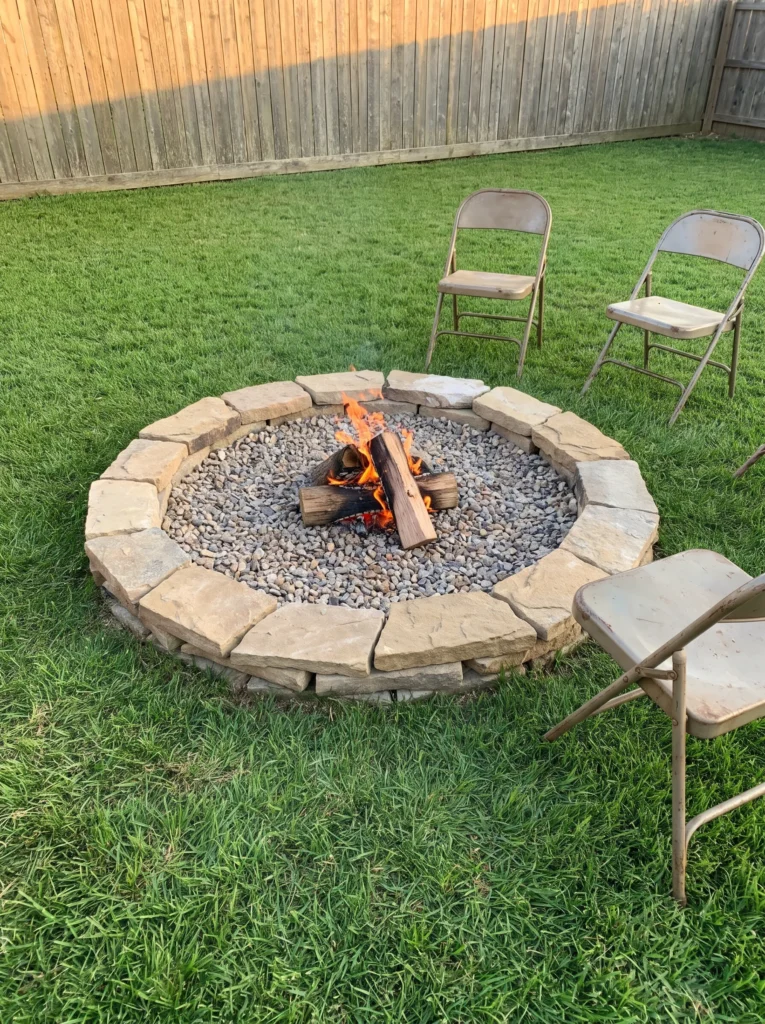
A simple gravel fire pit creates a relaxed, natural-looking gathering space without requiring an elaborate patio installation. Start with a compact, level area filled with decorative gravel in warm gray, beige, or soft cream. Place a suitable, commercially designed fire pit in the center, then arrange a few sturdy outdoor chairs around it. The combination of loose stone, natural textures, and a small flame gives the backyard a casual campfire atmosphere.
Keep the layout uncomplicated to control costs. A modest circular area can be enough for two to four people, depending on the size of your furniture and the required safety clearances. Choose gravel that drains well, and prepare the ground properly before installation. The fire pit itself should be designed for its intended fuel type and placed on a surface approved by its manufacturer. This setup is especially suitable for homeowners who want an affordable outdoor feature that is relatively easy to maintain.
2. DIY Brick Fire Pit
Decorating details:
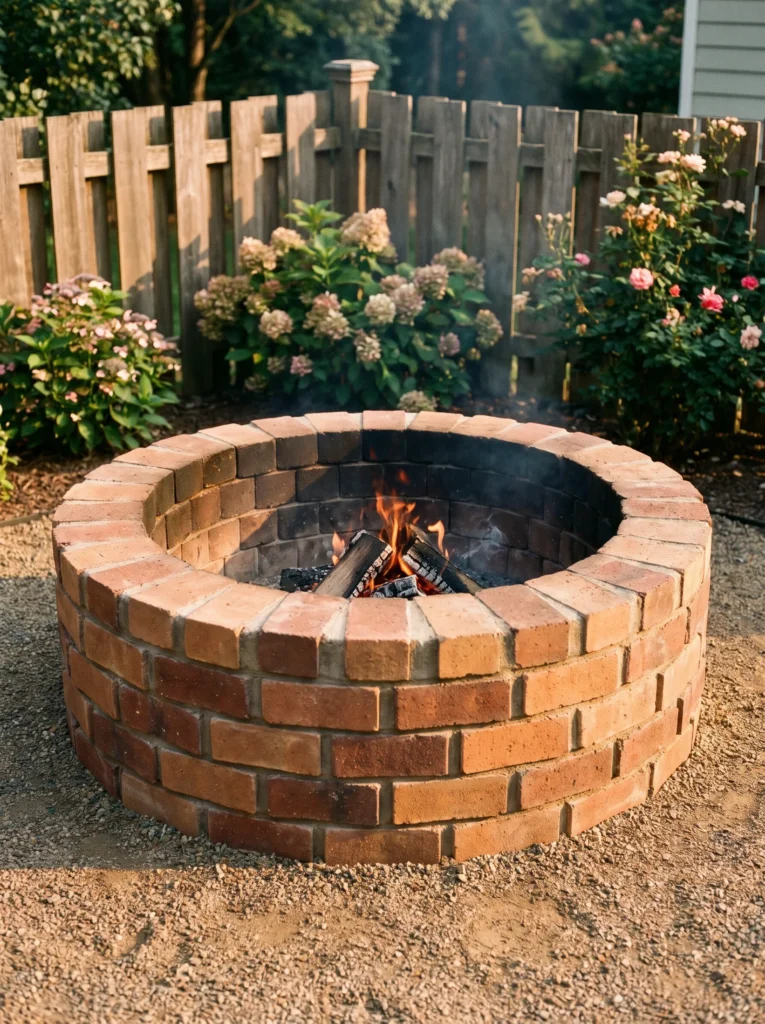
- Materials: Fire-rated firebricks or a purpose-built fire pit liner, with suitable exterior masonry around the outside.
- Color palette: Traditional red brick, charcoal gray, or muted brown.
- Shape: A compact circle keeps the design classic, while a square creates a more structured appearance.
- Budget tip: Check local building-material salvage yards for suitable exterior bricks, but never assume ordinary reclaimed bricks are safe for direct flame exposure.
- DIY difficulty: Moderate, especially if you need to prepare a stable base and fit a liner.
A brick fire pit brings a timeless look to a small backyard. The warm brick tones work particularly well with timber fencing, simple garden beds, and neutral outdoor furniture. Keep the overall footprint modest so the structure does not dominate the yard. For a safer build, follow a tested fire pit design, use materials rated for the heat they will encounter, and confirm local rules before construction.
3. Small Round Stone Fire Pit
Quick Tip:
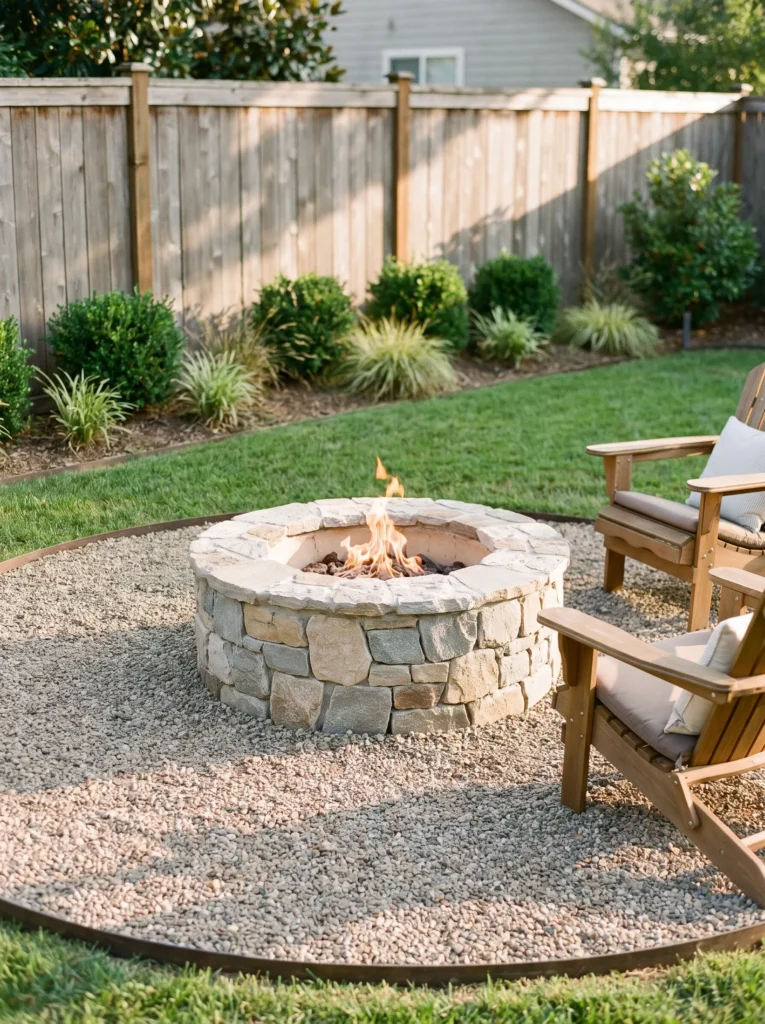
Choose stones or masonry units specifically approved for fire pit construction rather than collecting random stones from a garden or riverbank. Some stones can crack or fracture when heated. A purpose-built fire ring or liner also helps separate the flame from the decorative exterior materials.
A small round stone fire pit looks natural beside a lawn, a gravel path, or a simple planting bed. Choose one main stone color and repeat it in nearby edging or planters to make the area feel connected. Leave enough room for people to sit comfortably without crowding the fire, and keep plants, cushions, and other combustible materials outside the required clearance zone. A compact circular design can provide a welcoming focal point without using up the entire backyard.
4. Budget-Friendly Concrete Block Fire Pit
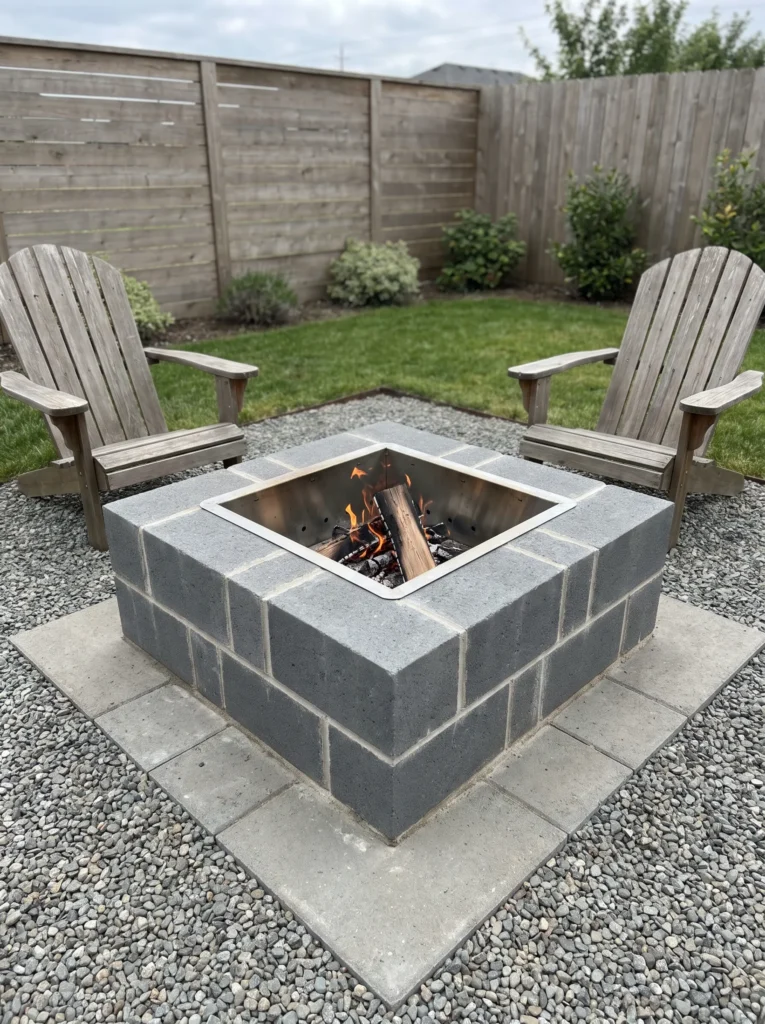
BEFORE
A small backyard may have an empty patch of grass or an awkward corner that feels disconnected from the rest of the outdoor space. Adding a fire feature without planning its footprint can make that area feel cramped.
AFTER
A compact fire pit with a neat, geometric exterior gives the corner a clear purpose. Neutral gray masonry creates a clean visual outline, while a few outdoor chairs and a simple gravel surround make the area feel intentional.
Concrete masonry can be affordable, but ordinary concrete blocks are not automatically suitable for direct flame or repeated high heat. Use a tested design with a compatible fire-rated liner and approved surrounding materials. Check that the installation has a stable, noncombustible base, and keep the structure away from fences, sheds, overhanging branches, and other combustible surfaces as required by local rules and the manufacturer’s instructions.
5. DIY Metal Bowl Fire Pit

How to create the look:
- Choose the bowl: Select a purpose-built metal fire bowl rated for wood or gas, depending on the fuel you intend to use.
- Plan the placement: Set it on a level, approved noncombustible surface with all required clearances.
- Create a simple surround: Use gravel or suitable patio paving to define the area without placing decorative materials where they could obstruct ventilation.
- Add seating: Arrange two or three weather-resistant chairs at a comfortable distance.
- Finish with accessories: Keep a fire extinguisher or other appropriate fire-control equipment readily accessible, following local fire guidance.
A metal bowl is a practical choice for a smaller outdoor area because its design can be simple and visually lightweight. Black steel creates a modern look, while weathered finishes suit rustic gardens. Check the bowl’s condition regularly for corrosion, damaged supports, or worn components, and follow the manufacturer’s instructions for use, cooling, cleaning, and storage.
6. Sunken Backyard Fire Pit
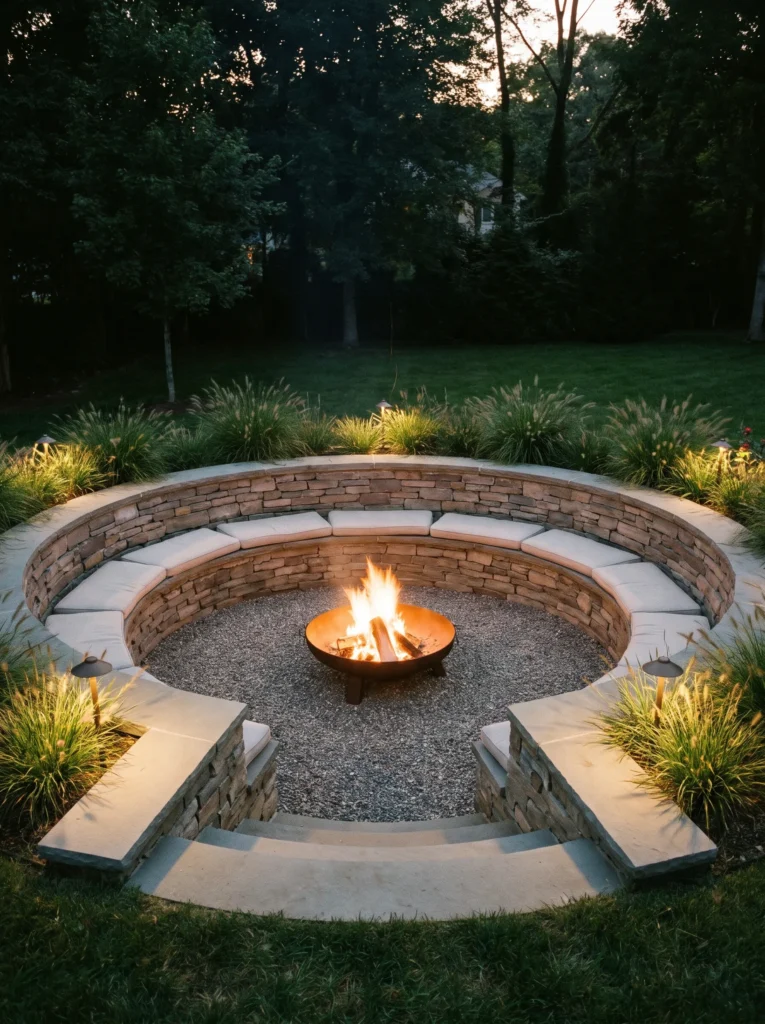
| Feature | Sunken Fire Pit | Ground-Level Fire Pit |
| Visual effect | Recessed, built-in appearance | Open and straightforward |
| Construction | More excavation and planning | Usually simpler site preparation |
| Drainage | Requires careful water management | Depends on the surface and base |
| Best suited to | Yards with suitable ground conditions | Most compact outdoor layouts |
| Budget considerations | Potentially higher due to excavation | Often more affordable |
A sunken fire pit can create a sheltered-looking outdoor lounge, especially when surrounded by built-in seating. However, excavation, retaining structures, drainage, and ventilation can make this project considerably more complicated than a surface-level design. Water can collect in a recessed area, and smoke may linger depending on the layout and wind conditions.
For a budget-conscious backyard, consider the recessed appearance without digging a deep pit. A professionally planned, slightly lowered seating area may be possible where site conditions permit, but the fire feature must still meet applicable safety requirements. Consult a qualified local professional before excavation or construction, particularly where retaining walls, underground utilities, or drainage are involved.
7. Rustic Fire Pit With Reclaimed Bricks
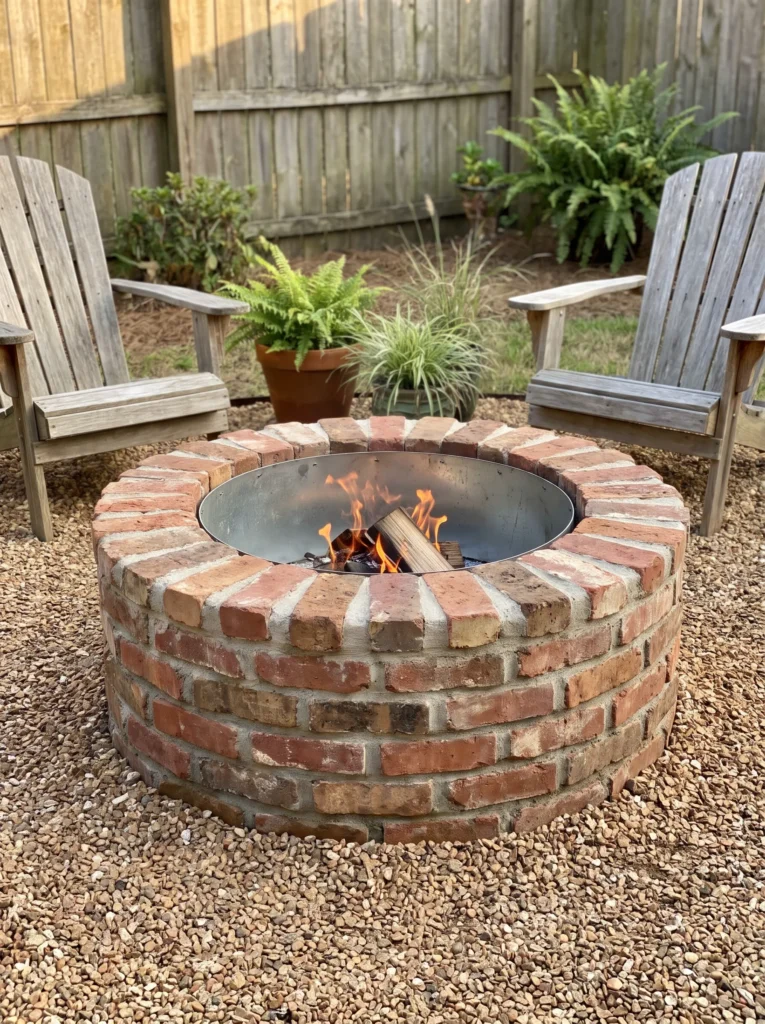
DO:
- Look for reclaimed bricks with a consistent size and a condition suitable for exterior masonry.
- Combine warm brick tones with gravel, simple timber seating, and understated planting.
- Use a fire-rated liner or approved firebox designed to handle direct heat.
- Keep the surrounding decor restrained so the brickwork remains the main feature.
DON’T:
- Put unknown reclaimed bricks directly in contact with flames.
- Use bricks that are crumbling, visibly damaged, or unsuitable for outdoor exposure.
- Assume old mortar or leftover construction materials are heat-resistant.
- Crowd the fire pit with wooden planters, dry leaves, or fabric cushions.
Reclaimed brick can give a backyard a lived-in, cottage-inspired character while helping reduce the cost of decorative masonry. Varying brick shades add visual depth, but a consistent shape and carefully planned outline keep the structure tidy. If you source secondhand materials, verify their suitability before building and use a tested construction method rather than relying on appearance alone.
8. Small Square Paver Fire Pit
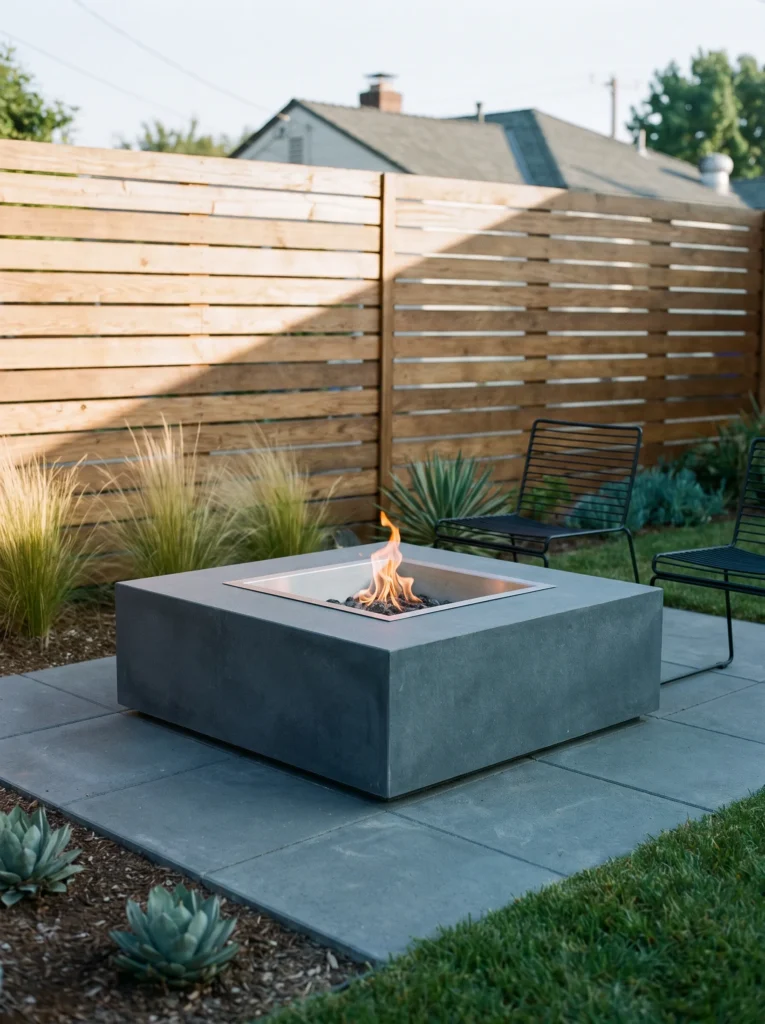
Quick Facts
- Best placement: A defined patio corner or a level section of the yard.
- Color palette: Charcoal, pale gray, sand, or a combination of neutral pavers.
- Materials: Exterior-rated pavers around a separately approved fire pit.
- Style: Modern, orderly, and easy to coordinate with straight-edged garden beds.
- Maintenance: Sweep away leaves and debris, and check for uneven or loose paving.
A square paver layout gives a small backyard a more architectural appearance. Arrange the paving in a neat grid around a suitable fire pit, allowing the surrounding surface to extend far enough for safe access and seating. Choose pavers rated for the intended application, and follow the fire pit manufacturer’s requirements for the base and surrounding materials. A simple square layout can also make measuring and estimating material quantities easier before you start shopping.
9. DIY Fire Pit With Retaining Wall Blocks
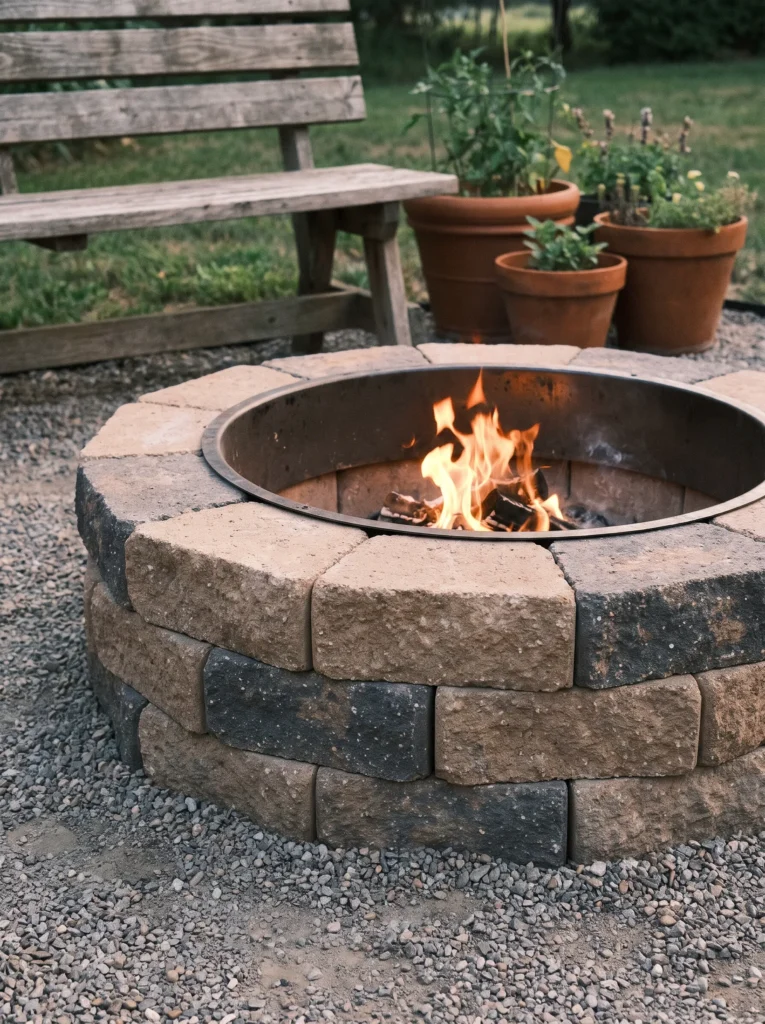
Quick Tip:
Before buying retaining wall blocks, check whether the manufacturer approves them for use in a fire pit. Blocks intended for garden edging or soil retention may not tolerate direct heat. A compatible fire ring or liner, along with the correct base and assembly method, is essential for a safe installation.
Retaining wall blocks can provide a substantial, layered exterior that looks polished in a small backyard. Their shape makes them useful for creating a defined outline, while gray, tan, and charcoal finishes work with many garden styles. Keep the structure proportionate to the yard and avoid unnecessary height. A tested design is the best starting point because the block dimensions, wall stability, and heat protection all affect how the fire pit should be assembled.
10. Portable Fire Pit for Tiny Backyards
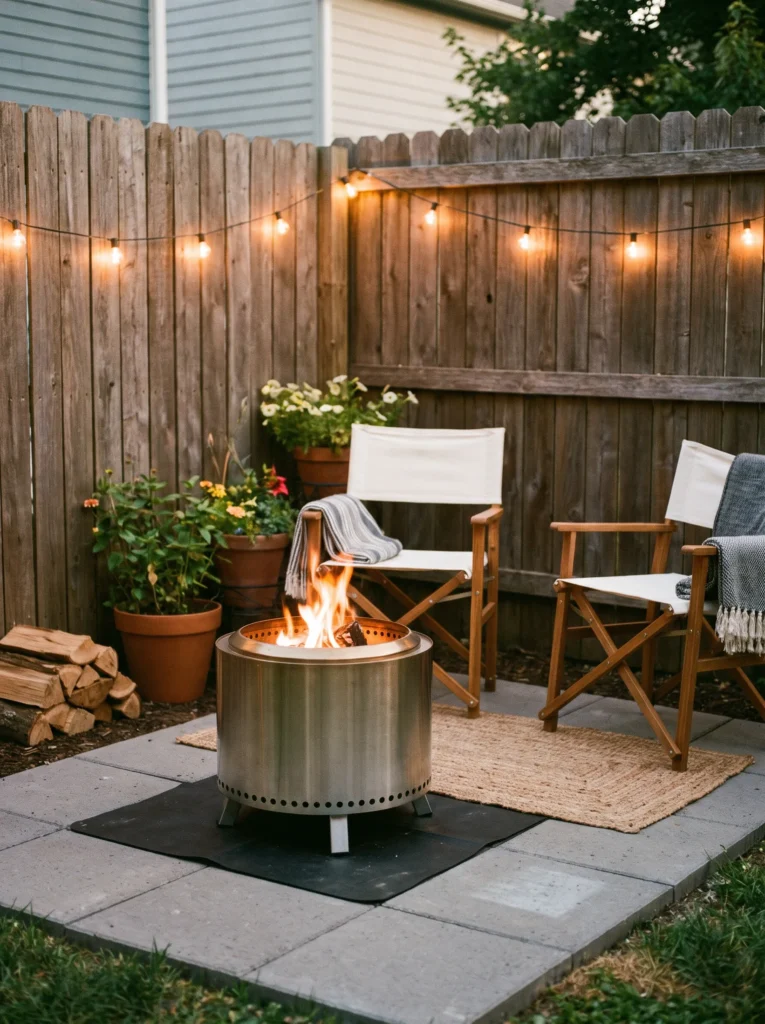
BEFORE
A permanent masonry structure can consume valuable floor space in a tiny backyard. It may also be difficult to accommodate if you rent your home or want to rearrange your outdoor furniture.
AFTER
A portable, purpose-built fire pit creates a flexible gathering point without permanently defining the entire yard. When the fire feature is not in use, the surrounding area can serve as an everyday seating or relaxation space.
Choose a model with a stable base and a fuel type permitted in your location. Portable does not mean safe to use anywhere, and a hot fire pit must never be moved. Follow the manufacturer’s clearance, surface, ventilation, and cooling instructions. If you live in a rental property, confirm that outdoor fires are allowed before purchasing a unit.
11. Pea Gravel Fire Pit Seating Area
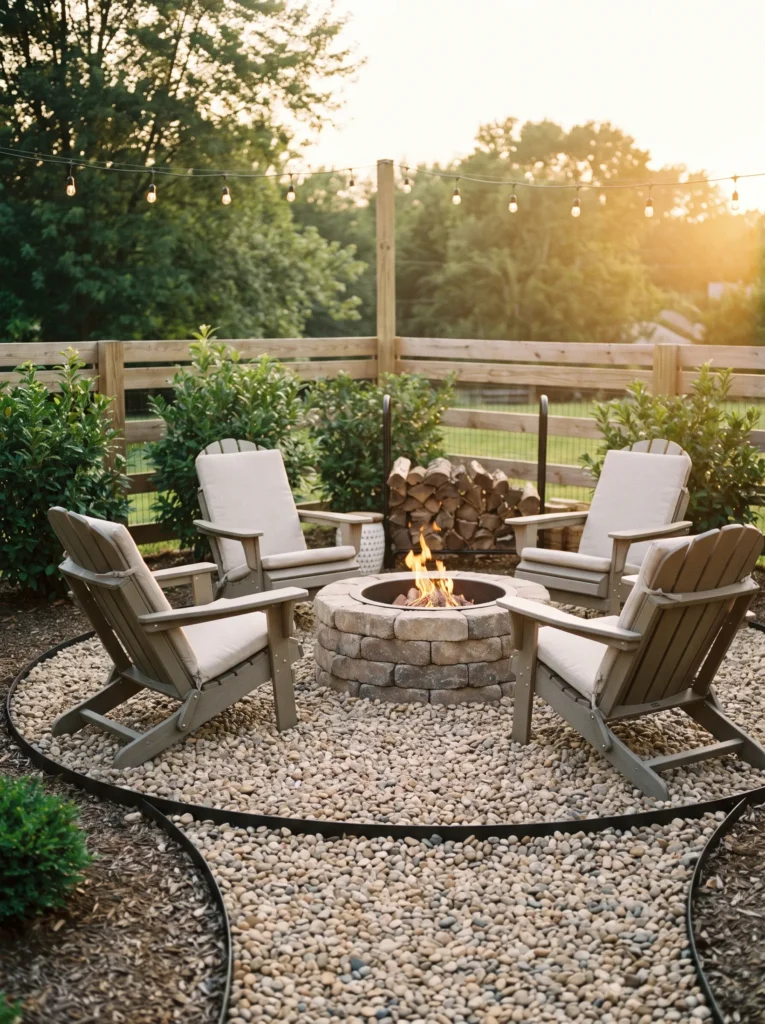
Steps to create the seating area:
- Measure the layout: Mark the fire pit footprint, seating positions, and access routes before purchasing materials.
- Prepare the ground: Remove unsuitable vegetation and prepare a stable, properly draining base.
- Install the gravel area: Use suitable edging to contain the pea gravel and reduce spreading.
- Position the furniture: Arrange chairs with enough space for people to sit down and stand up comfortably.
- Finish the surroundings: Add a few planters or low-maintenance garden plants outside the required fire clearance zone.
Pea gravel provides a relaxed texture and can cost less than installing a full paved patio, depending on local material prices and site preparation. Its light color also contrasts nicely with dark metal furniture and warm wood accents. For a cleaner finish, keep the gravel contained and sweep it away from doorways or paths. Use a fire pit approved for the prepared surface, and never allow loose gravel or decorative materials to obstruct the unit’s required airflow.
12. DIY Fire Pit With a Gravel Border
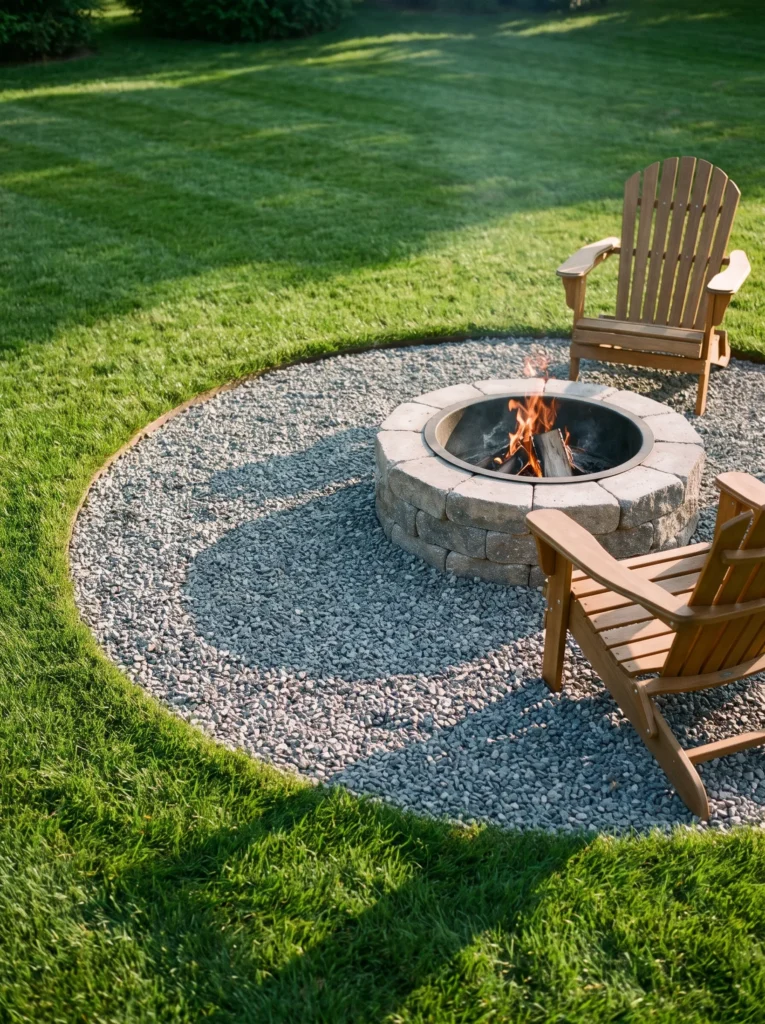
| Feature | Narrow Gravel Border | Wider Gravel Surround |
| Appearance | Subtle outline around the feature | More defined outdoor gathering zone |
| Material quantity | Lower | Higher |
| Furniture space | Limited | More room for arranging chairs |
| Upkeep | Less gravel to maintain | More area to rake and replenish |
| Best use | Very compact layouts | Small yards with extra open space |
A gravel border can help a fire pit feel like part of the landscape rather than an object placed on the lawn. Choose a stone color that complements the house exterior or nearby paving. A narrow border may define the feature visually, but it should never be mistaken for the safety clearance required around a fire. Size the noncombustible surface according to the appliance instructions and applicable local regulations, then plan the decorative gravel around those requirements.
13. Minimalist Modern Concrete Fire Pit
Quick Tip:
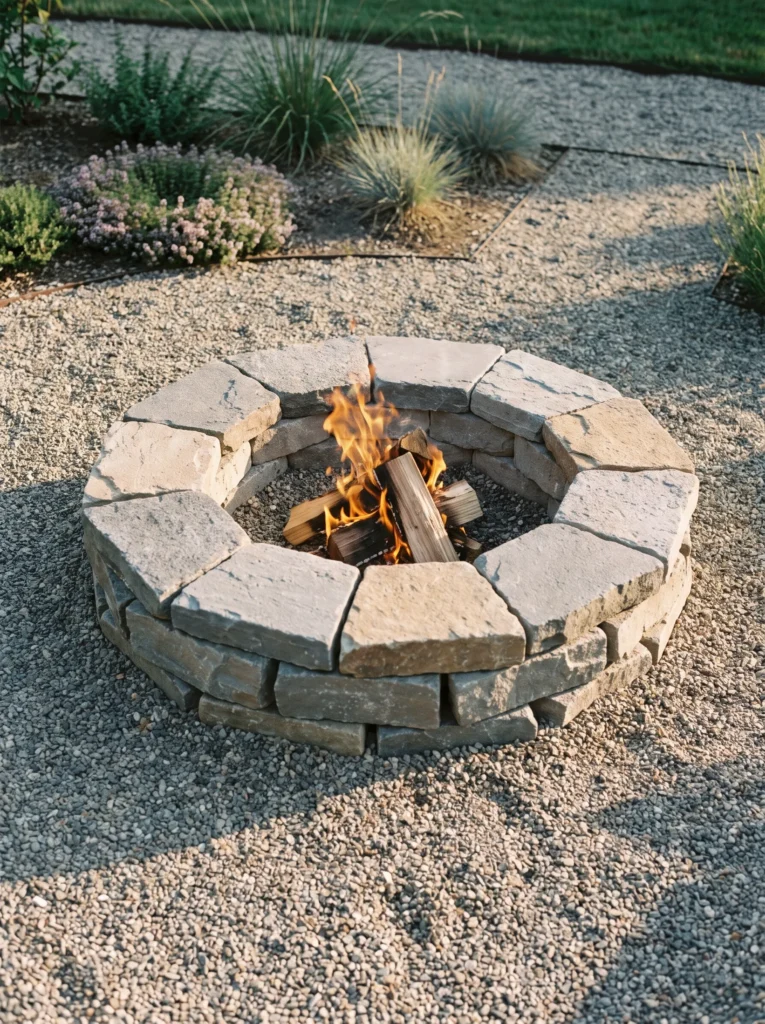
For a contemporary look, keep the shape simple and the color palette limited to two or three tones. A dark metal fire feature against pale paving creates contrast without requiring elaborate landscaping. Choose a commercially manufactured unit rated for outdoor use instead of assuming that a homemade concrete container will withstand repeated heat exposure.
A minimalist fire pit works especially well beside modern homes, clean-lined fencing, and compact patio furniture. Smooth surfaces, simple geometry, and uncluttered surroundings make the space feel organized. If you prefer the appearance of concrete, look for a product specifically designed for fire use, since ordinary concrete can crack or spall under heat. Keep accessories to a minimum, and use weather-resistant seating to complete the setting without making the patio feel crowded.
14. Small Fire Pit With Adirondack Chairs

DO:
- Select two or three Adirondack chairs scaled to the available space.
- Repeat one chair color in nearby planters or outdoor cushions.
- Leave a clear walking route between the seating and the house.
- Choose weather-resistant finishes that are easy to clean and maintain.
DON’T:
- Position wooden chairs closer to the fire than permitted by the manufacturer.
- Fill every available corner with furniture.
- Leave cushions or blankets close to an active flame.
- Forget to account for chair legs, reclining space, and room to move around the seating area.
Adirondack chairs have a relaxed, classic look that suits cottage gardens, simple lawns, and casual patios. Natural wood pairs nicely with gravel and stone, while muted green, black, or white finishes can make the setup feel more coordinated. For a small yard, begin with two chairs and add more only if the layout allows safe spacing. A small side table placed outside the fire clearance zone provides a convenient spot for drinks without cluttering the seating arrangement.
15. DIY Fire Pit With a Simple Stone Border
BEFORE
An outdoor fire feature can look unfinished when it sits directly beside grass or bare soil. Uneven edges may also make the area feel disconnected from nearby paths or planting beds.
AFTER
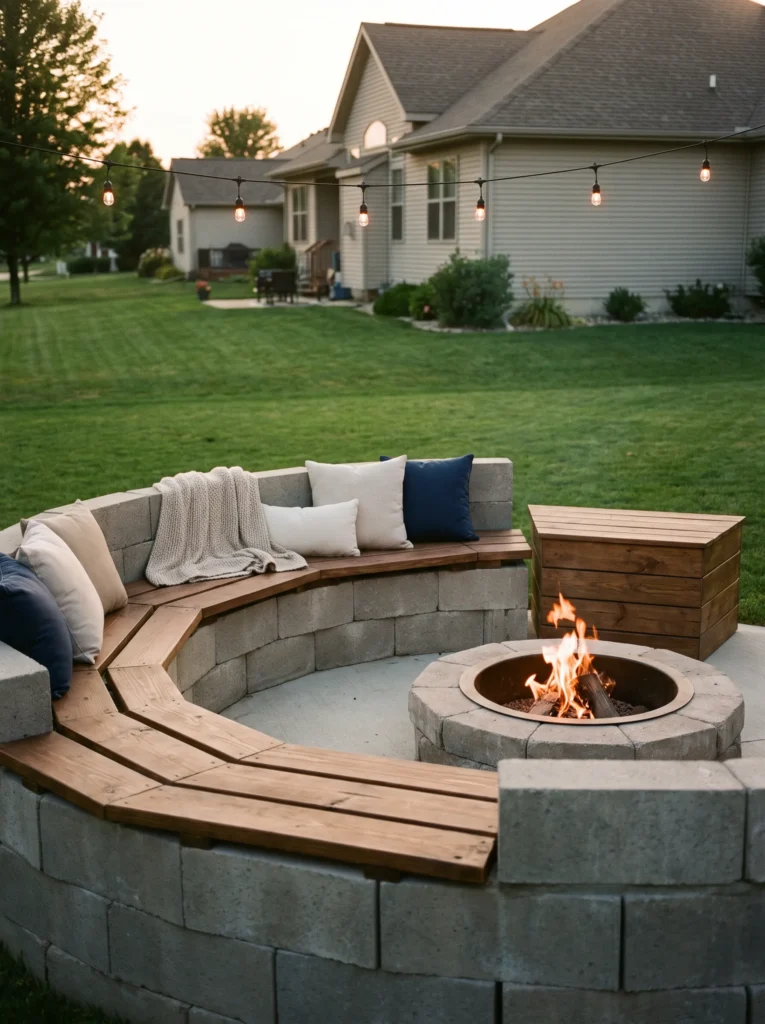
A neatly defined stone border gives the fire pit a more finished appearance. Natural stone colors connect the feature to the garden, while a restrained outline keeps the small space from looking too busy.
Choose exterior stone and construction materials suitable for the intended use, and keep the actual fire area separate from combustible landscaping. The border should be stable, level, and compatible with the fire pit design. Avoid placing mulch, dry plants, or plastic edging near hot surfaces. A consistent stone color and a clean edge are usually enough to create a cohesive look without paying for complicated landscaping.
16. Backyard Fire Pit With Budget Benches

Quick Facts
- Seating style: Simple outdoor benches with sturdy construction.
- Material choices: Weather-resistant wood or suitable outdoor-rated alternatives.
- Best layout: Benches positioned outside the required fire clearance zone.
- Budget strategy: Reuse sound outdoor furniture or choose straightforward designs without elaborate finishes.
- Comfort tip: Add removable cushions only when the fire is off and the seating area is cool enough for safe use.
Benches can accommodate several people while creating a tidy, organized look. A pair of simple benches along the outer edge of a gathering area can feel less cluttered than several individual chairs, especially in a narrow backyard. Keep enough room between the benches and the fire feature, and make sure people can enter and leave the seating area without squeezing past hot surfaces. Seal or maintain wooden furniture according to the finish manufacturer’s instructions, and inspect it regularly for weather damage.
17. Rustic Fire Pit With Log Seating
Quick Tip:
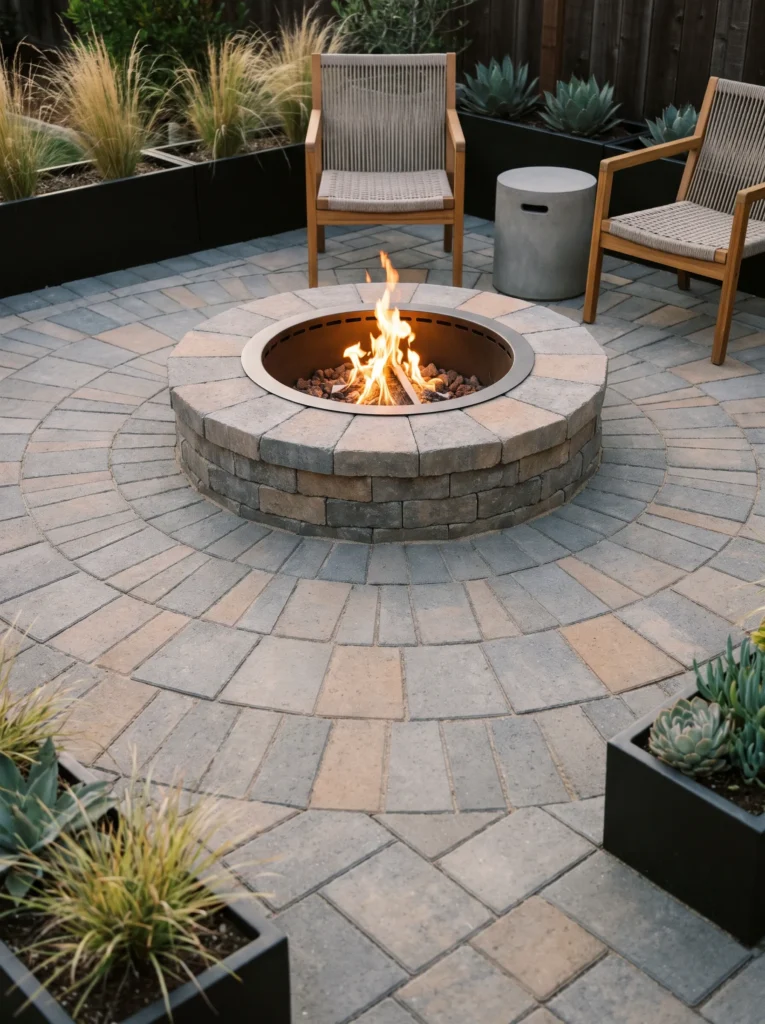
Use log seating as a decorative, rustic element only when the logs are stable, properly maintained, and placed well outside the fire pit’s required clearance area. Wood can ignite from sparks or radiant heat, even when it is not touching the flame. For a more flexible layout, choose movable outdoor stools and store them away from the fire when it is in use.
A rustic fire pit surrounded by natural wood tones creates a woodland-inspired gathering space. Log-style stools pair well with gravel, stone, and simple planting, giving the yard a casual outdoor character. Choose seating that is comfortable and stable rather than relying on uneven pieces of timber. Keep the overall arrangement open, with a clear route to the house and no low branches or dry vegetation above or beside the fire.
18. Small Patio Fire Pit With Pavers
| Feature | Small Paved Patio | Gravel Seating Area |
| Surface feel | Firm and even when properly installed | Loose and textured |
| Furniture stability | Usually easier for chairs and tables | May need wider feet or stable pads |
| Initial cost | Depends on paving and base preparation | Often lower, depending on the site |
| Maintenance | Joint and surface upkeep | Occasional raking and topping up |
| Visual style | Structured and polished | Relaxed and natural |
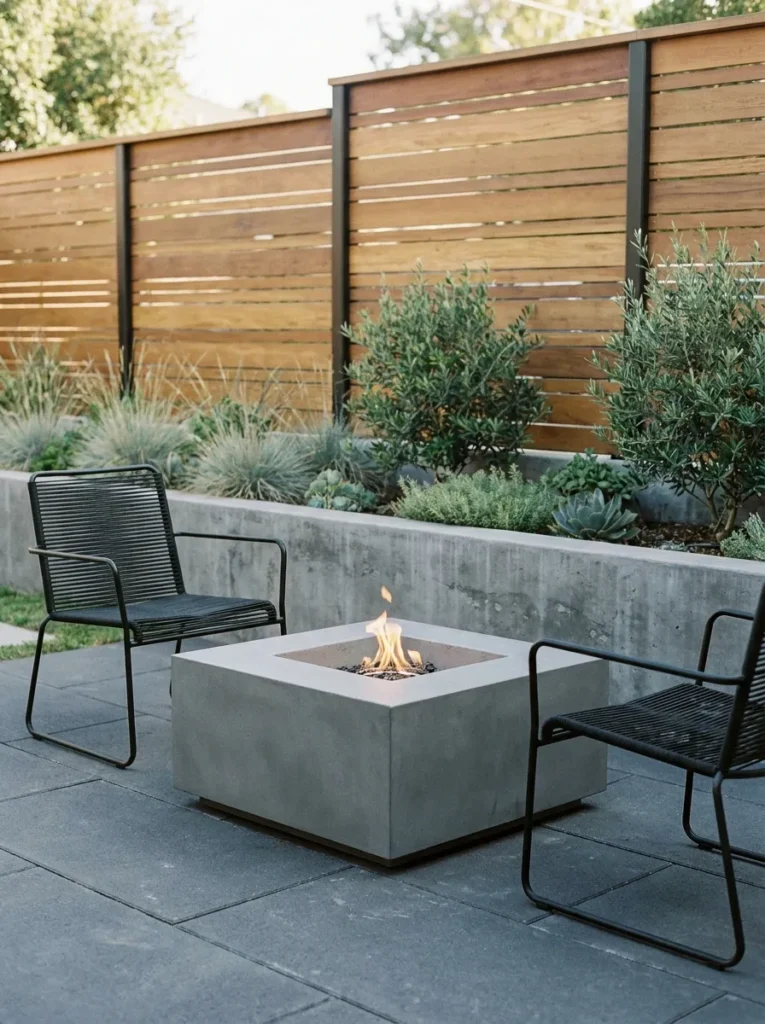
A small paved patio creates a clear foundation for a compact fire pit and a few outdoor chairs. Choose pavers that complement the home’s exterior, then keep the furniture arrangement simple so the paving remains visible. A stable, level surface can make the area easier to use, but not every paver is suitable for direct heat or every type of fire appliance. Follow the product instructions for the base and surrounding surface, and allow sufficient space for safe movement around the fire.
19. DIY Fire Pit With String Lights and Cozy Decor
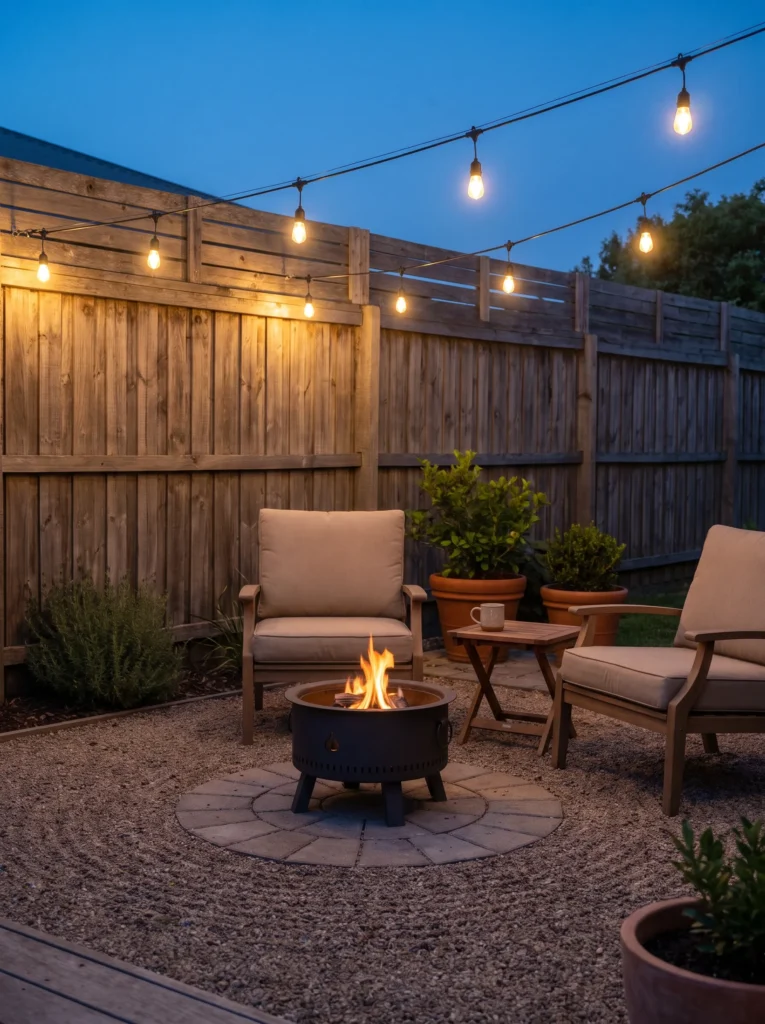
How to style the space:
- Start with the fire feature: Place an approved fire pit in a suitable location, observing all required clearances.
- Add ambient lighting: Hang outdoor-rated string lights overhead only where permitted, keeping bulbs, cables, and supports away from heat and flame.
- Choose simple furniture: Use a small pair of chairs or a compact bench arrangement that leaves an open route through the yard.
- Introduce soft textures: Keep cushions and blankets in a storage basket well away from the active fire, bringing them out only when safe.
- Finish with greenery: Position weather-resistant planters beyond the required clearance zone, choosing plants suited to your climate.
String lights create a warm evening atmosphere without needing elaborate outdoor decor. Soft white lighting pairs well with natural wood, charcoal metal, and neutral textiles, while a few green plants add color. Keep electrical connections suitable for outdoor use and protect them as directed by the manufacturer. For the most flexible arrangement, choose removable accessories that can be stored indoors when the fire pit is operating or when rain is expected.
Tips for Building a Small Backyard Fire Pit on a Budget
A little planning can prevent expensive mistakes and help you create an outdoor space that is comfortable to use.
- Measure before buying materials. Mark the fire pit, seating, and walking areas on the ground. Check the required safety clearances before deciding how large the project can be.
- Compare the full project cost. Include the fire pit or liner, base preparation, gravel or paving, delivery, seating, tools, and any permits or professional work.
- Use materials for their intended purpose. Decorative bricks, ordinary concrete blocks, and random stones are not automatically suitable for exposure to high heat.
- Keep the layout simple. A small fire feature, two chairs, and a well-defined surface may be all you need. Avoid spending money on extra structures that reduce usable space.
- Choose practical surfaces. A stable, level, noncombustible surface appropriate for the appliance helps make the area easier to maintain.
- Plan for drainage. Avoid locations where rainwater collects, particularly if you are considering a recessed design.
- Buy outdoor furniture carefully. Weather-resistant seating can reduce maintenance costs over time. Check dimensions before purchasing so the furniture does not crowd the yard.
- Decorate after installation. Add planters, cushions, and lighting only after the fire pit’s placement and clearance requirements have been established.
Safety Tips for DIY Backyard Fire Pits
Safety should guide the design from the beginning, not be added as an afterthought. Before building or using a backyard fire pit, check local regulations, fire restrictions, and any rules that apply to your property or rental agreement.
- Choose a safe location. Follow the manufacturer’s required distances from buildings, fences, trees, overhead structures, and other combustible materials. Local rules may require additional clearance.
- Use approved construction materials. Select a fire pit, liner, and surrounding materials rated for the intended fuel and temperatures. Do not use improvised containers or unknown masonry materials.
- Check the weather. Avoid lighting a fire during high winds, drought restrictions, or other conditions when sparks could spread. Follow local fire authority guidance.
- Supervise the fire. Keep children and pets at a safe distance, and never leave an active fire unattended.
- Keep fire-control equipment nearby. Have an appropriate extinguisher or other recommended equipment available and know how to use it.
- Manage smoke and fuel properly. Burn only permitted fuel and follow the manufacturer’s instructions. Never use gasoline or other accelerants to start a fire.
- Extinguish the fire completely. Follow the appliance instructions for putting out and cooling the fire. Never leave embers unattended, and do not move a hot fire pit.
- Get help for complex builds. Sunken pits, retaining walls, gas connections, and permanent masonry installations may require professional design, permits, or inspection.
Conclusion
A welcoming outdoor gathering spot can be created without a large yard or a costly landscaping project. These DIY Small Backyard Fire Pit Ideas cover everything from simple gravel surrounds and reclaimed-brick looks to portable fire bowls, compact patios, and cozy seating arrangements.
Start by measuring your available space, checking local fire rules, and choosing materials designed for the job. Then add furniture and decor that suit your budget and outdoor style. Save this article for future planning, try the idea that best fits your backyard, and share it with someone who could use a little outdoor inspiration.
Frequently Asked Questions
1. What is the cheapest way to make a small backyard fire pit?
A budget-friendly option is a purpose-built portable fire pit placed on an approved, level noncombustible surface. Depending on local prices and site conditions, a simple gravel seating area may cost less than installing a full paved patio. Include the cost of safe placement, suitable materials, and any required permits when comparing options.
2. What is the best material for a DIY fire pit?
The best material depends on the design and fuel type. Purpose-built metal fire bowls and tested fire pit kits are convenient options. For masonry designs, use a compatible fire-rated liner and materials approved for the heat they will encounter. Ordinary bricks, concrete blocks, and natural stones should not be assumed safe for direct flame exposure.
3. Can I build a fire pit in a very small backyard?
Possibly, if local regulations, manufacturer clearances, and site conditions allow it. A compact portable fire pit may use less space than a permanent masonry structure, but the required clearance around the fire can still be substantial. If the yard cannot accommodate those distances safely, choose a non-flame alternative such as an outdoor electric heating feature approved for the location.
4. Should I put gravel under a backyard fire pit?
Gravel may be suitable for some installations, but it must be used as part of a base approved for the specific fire pit. The ground should be stable and level, and the gravel should not obstruct ventilation or create a hazard around the unit. Always follow the manufacturer’s instructions rather than assuming any gravel surface is suitable.
5. How do I make a small fire pit area feel cozy?
Keep the arrangement simple and comfortable. Add two or three appropriately spaced outdoor chairs, use gravel or paving to define the area, and choose a consistent palette such as warm wood, charcoal, and natural stone. Outdoor-rated string lights can provide ambient lighting when installed safely. Keep cushions, blankets, plants, and other combustible decor outside the required fire clearance zone.