24 Moody Living Room Ideas for a Dramatic, Luxe Look
Moody living room ideas can make an ordinary space feel intimate, sophisticated, and full of character. Deep wall colors, rich fabrics, warm lighting, and carefully chosen accessories create a dramatic look without making the room feel uncomfortable or overly dark.
Whether you live in a spacious home, a small apartment, or a rental, there are plenty of ways to bring this style into your living area. From charcoal walls and forest green furniture to vintage accents and layered neutral textures, these decorating ideas offer practical inspiration for creating a luxurious room that feels personal and inviting.
1. Charcoal Gray Walls

Charcoal gray walls create a sophisticated backdrop for furniture, artwork, and decorative accents. The deep, smoky shade adds visual depth, especially when paired with a cream sofa, black metal details, and warm wood furniture. Soft textiles and layered lighting prevent the darker color from feeling flat.
For the best result, choose a warm charcoal rather than a cold gray if your living room has limited natural light. Keep the ceiling lighter to maintain contrast, and introduce reflective surfaces through glass tables, framed artwork, or metallic accessories. In a rental, removable wallpaper in a similar shade can create a comparable effect without permanent painting.
2. Deep Forest Green Living Room

- Wall color: Choose deep forest green or muted hunter green for a rich, grounded atmosphere.
- Sofa: A cream, camel, or cognac leather sofa creates contrast against green walls.
- Materials: Combine walnut furniture, linen cushions, and wool throws for varied texture.
- Lighting: Use warm white bulbs in table lamps and floor lamps to soften the dark palette.
- Decor: Add botanical prints, aged brass frames, or a few leafy plants.
Forest green works particularly well with natural wood and warm neutrals because the combination feels connected to nature without losing its dramatic character. For a balanced arrangement, keep larger furniture pieces simple and introduce pattern through cushions, curtains, or artwork. A green accent wall is also a practical starting point if painting the entire room feels like too much.
3. Moody Black Accent Wall

Quick Tip:
Choose one wall behind the sofa or television for a matte black finish. Before painting, test a sample in both daylight and evening light, since black can appear softer or more intense depending on the room. Pair it with lighter furniture or warm wood to maintain visual contrast.
A black accent wall gives a living room a strong architectural focal point. It looks especially effective with oversized artwork, sculptural lamps, and furniture in beige, rust, or caramel. Keep the surrounding walls in a soft neutral shade if the room is small. This approach creates depth without requiring every surface to be dark, and it is easier to update when your decorating preferences change.
4. Rich Burgundy and Wine Tones
BEFORE
A living room with pale walls, neutral seating, and scattered accessories may feel a little predictable. Introducing several unrelated accent colors can also make the space feel visually disconnected.
AFTER
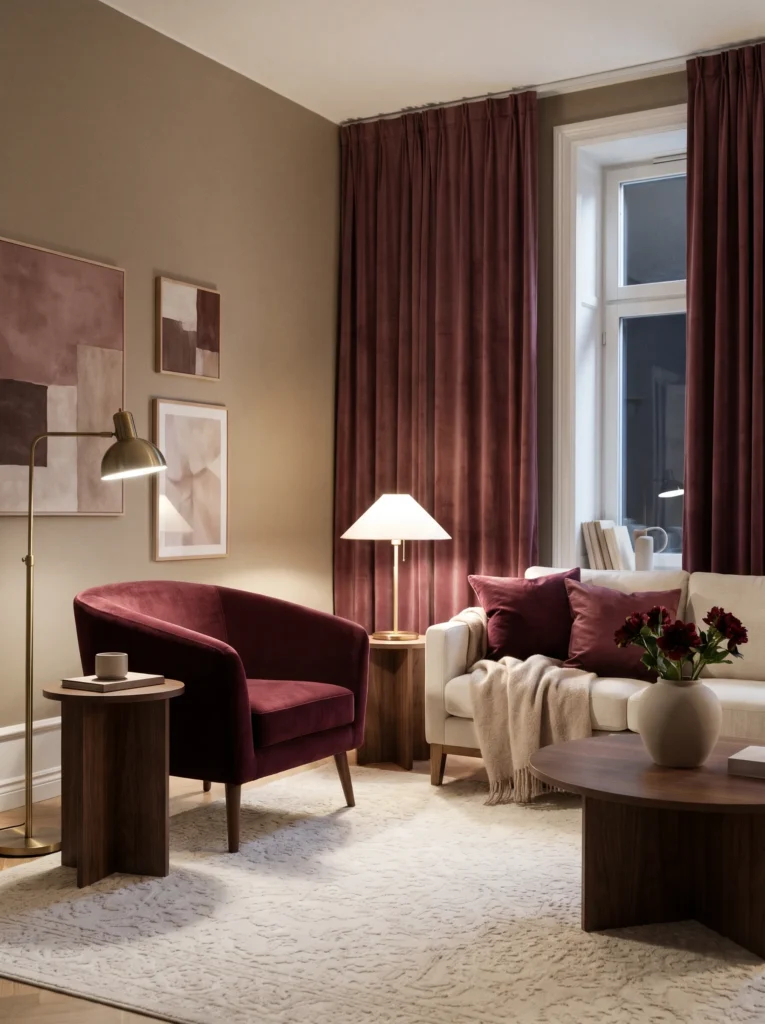
Burgundy cushions, wine-colored curtains, and a deep red accent chair create a richer, more coordinated look. Cream walls or a warm brown sofa help balance these saturated tones.
To recreate this palette, start with one substantial burgundy element, such as an upholstered chair or pair of curtains. Repeat the color in smaller accessories instead of spreading it across every surface. Velvet, wool, and matte ceramic finishes keep the room interesting without relying on too many competing patterns.
5. Dark Brown Walls With Warm Wood
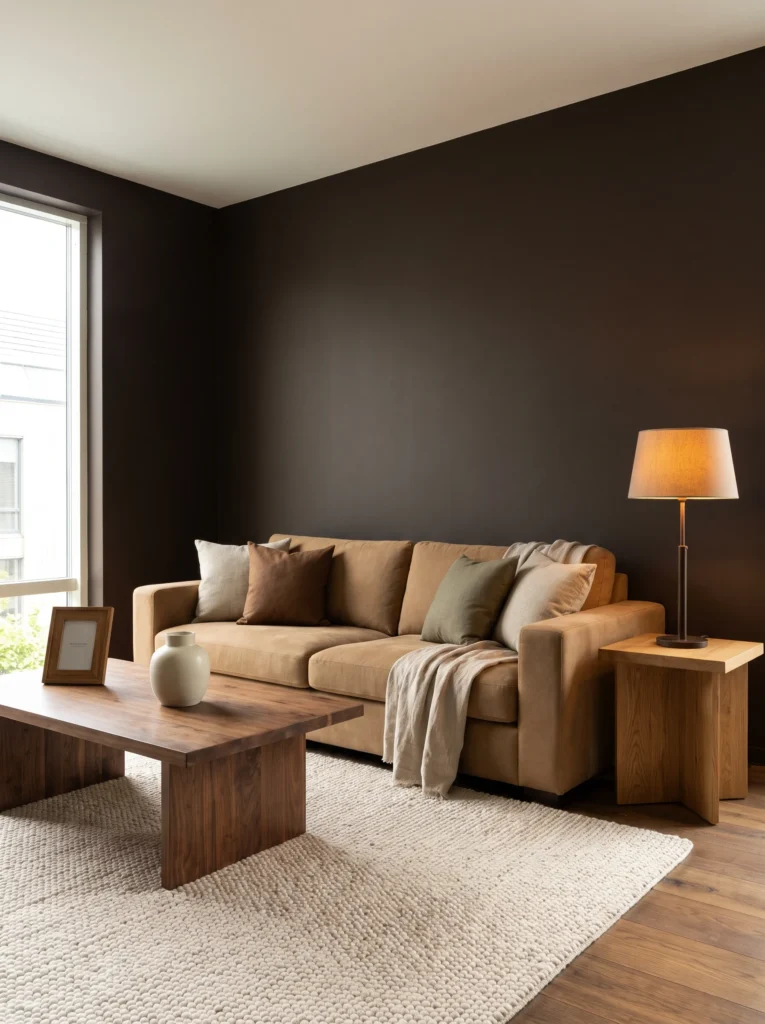
- Choose the shade. Select espresso, dark walnut, or a warm brown paint with subtle red or golden undertones.
- Coordinate the furniture. Pair the walls with a tan sofa, a lighter oak coffee table, or a cognac leather armchair.
- Add contrasting textures. Introduce boucle cushions, linen curtains, and a soft wool rug.
- Layer the lighting. Place a floor lamp near the seating area and a smaller lamp on a side table.
- Finish with restrained decor. Use framed artwork, ceramic vessels, and a few books in complementary colors.
Dark brown creates a grounded, enveloping atmosphere that feels especially inviting in living rooms with traditional or contemporary furniture. It is also an excellent alternative to black if you prefer warmer interiors. Before committing to the paint, test a large sample near the windows and sofa to see how the undertones change throughout the day.
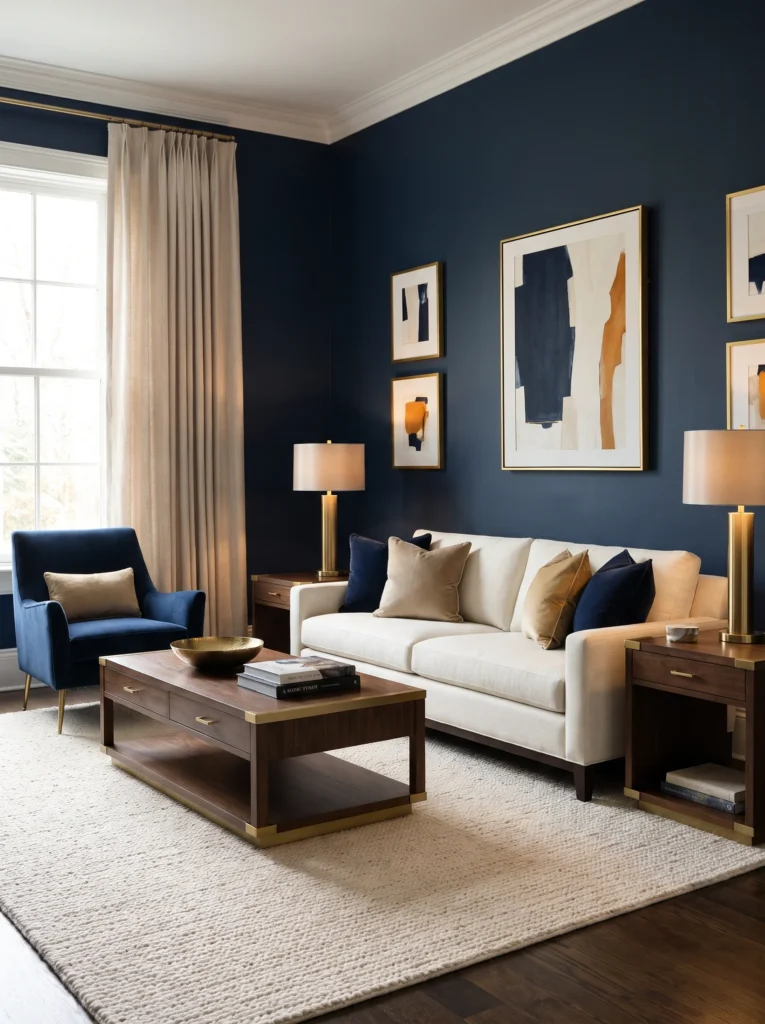
6. Navy Blue With Gold Details
| Feature | Navy Blue and Gold | Navy Blue and Silver |
| Overall mood | Warm and elegant | Cool and contemporary |
| Best metal finish | Antique brass or brushed gold | Brushed silver or chrome |
| Wood pairing | Walnut, oak, dark brown | Ash, pale oak, black |
| Textile choices | Velvet, linen, wool | Boucle, smooth cotton, velvet |
| Best lighting | Warm white | Warm or neutral white |
Navy blue creates a strong backdrop for decorative metal finishes, but the effect depends on the surrounding materials. Gold accents add warmth, while silver creates a cooler, more modern impression. For a balanced room, choose one dominant metal finish and repeat it in two or three places, such as a lamp, picture frame, or cabinet hardware.
7. Earthy Terracotta Tones
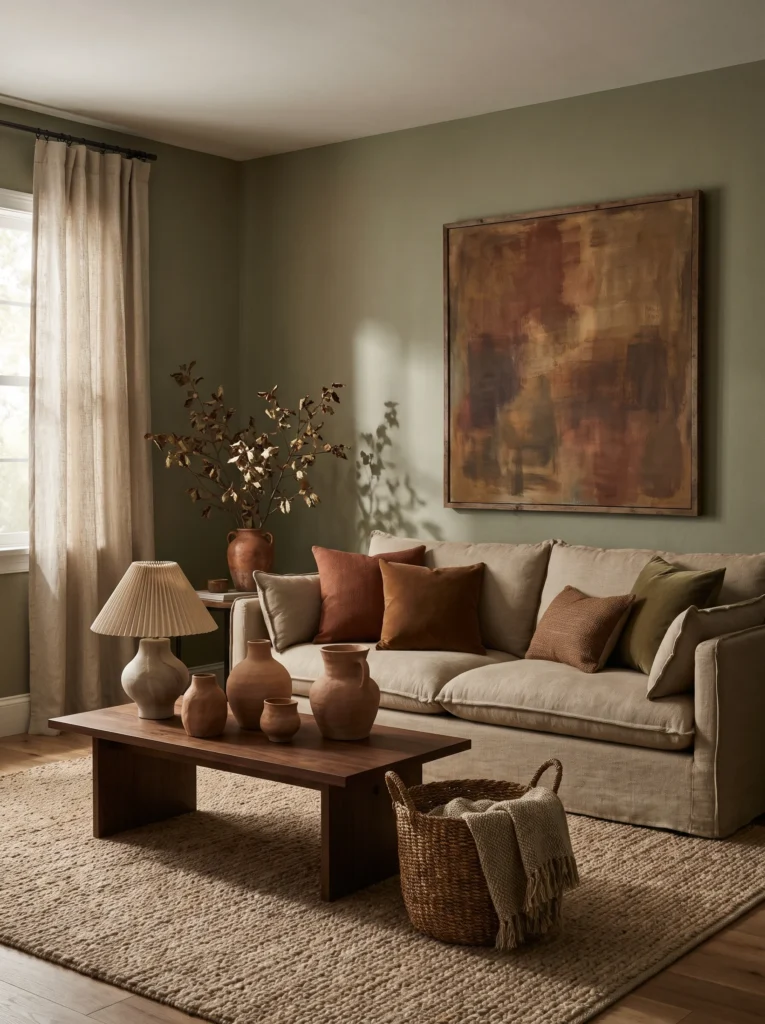
DO
- Pair muted terracotta with chocolate brown, olive green, or warm beige.
- Introduce the color through cushions, a ceramic lamp, or a textured rug.
- Choose natural materials such as linen, timber, clay, and woven fibers.
- Repeat terracotta in a few accessories to connect different parts of the room.
DON’T
- Combine too many saturated orange and red shades without a grounding neutral.
- Choose a rug that competes with heavily patterned curtains.
- Overlook how artificial lighting changes the appearance of warm paint colors.
- Fill every shelf with decorative objects in the same color.
Earthy colors bring warmth to a moody interior without relying entirely on deep wall paint. Terracotta works particularly well with olive, tobacco brown, and creamy white. Start with a neutral foundation and introduce the richer shades through movable furnishings, making it easier to adjust the palette as seasons or preferences change.
8. Chocolate Brown Sofas

Room: Contemporary, transitional, or vintage living rooms
Color palette: Chocolate, camel, cream, and dark walnut
Materials: Leather or woven upholstery, wool, linen, and wood
Budget: Moderate to high, depending on the sofa
Styling difficulty: Easy
Best placement: Against a light wall or in front of a darker accent wall
A chocolate brown sofa provides a rich anchor for a layered living room. Its deep color pairs naturally with pale rugs and warm wood, while contrasting cushions add detail without making the arrangement feel busy. Measure the sofa against your room dimensions before purchasing, and leave comfortable walking space around it. If replacing the sofa is outside your budget, a brown slipcover or carefully selected throw can introduce a similar color story.
9. Velvet Furniture
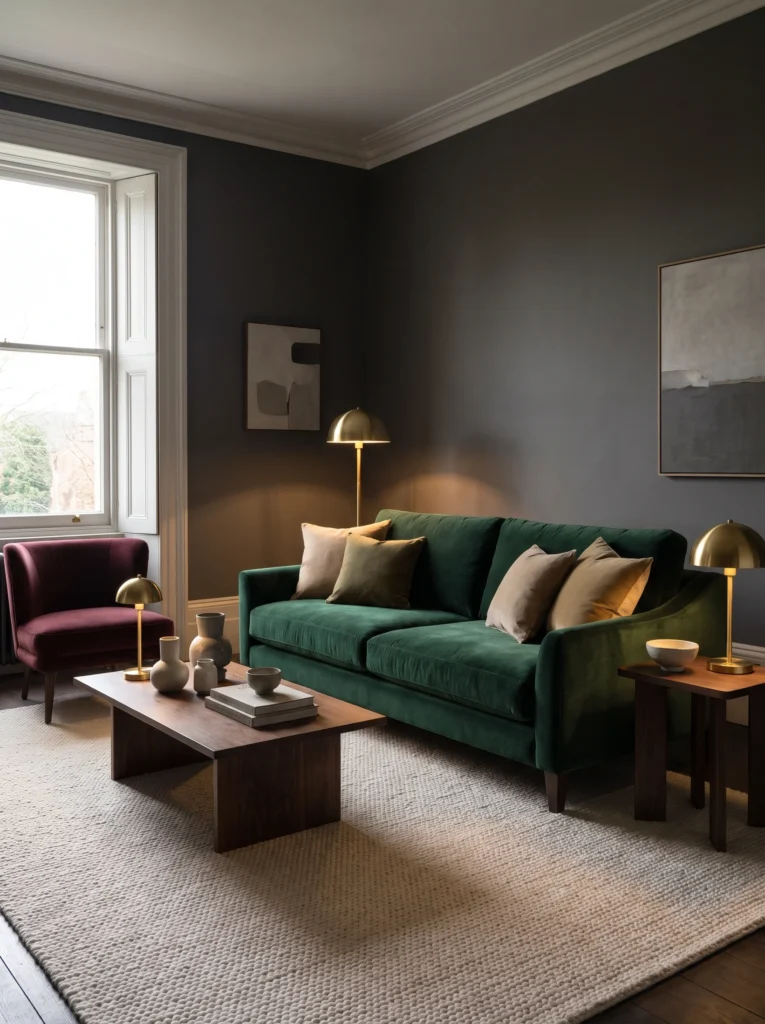
Velvet furniture adds a subtle sheen that makes dark interiors feel more dimensional. A forest green sofa, burgundy armchair, or navy blue ottoman can become the focal point of a room with understated walls and simple furnishings.
Choose the piece according to the room’s proportions. A large velvet sofa suits an open living area, while a single accent chair works better when floor space is limited. Combine velvet with matte materials such as linen, natural wood, and wool so the room does not feel overly glossy. Check the manufacturer’s cleaning instructions before buying, especially if you have children or pets.
10. Floor-to-Ceiling Curtains
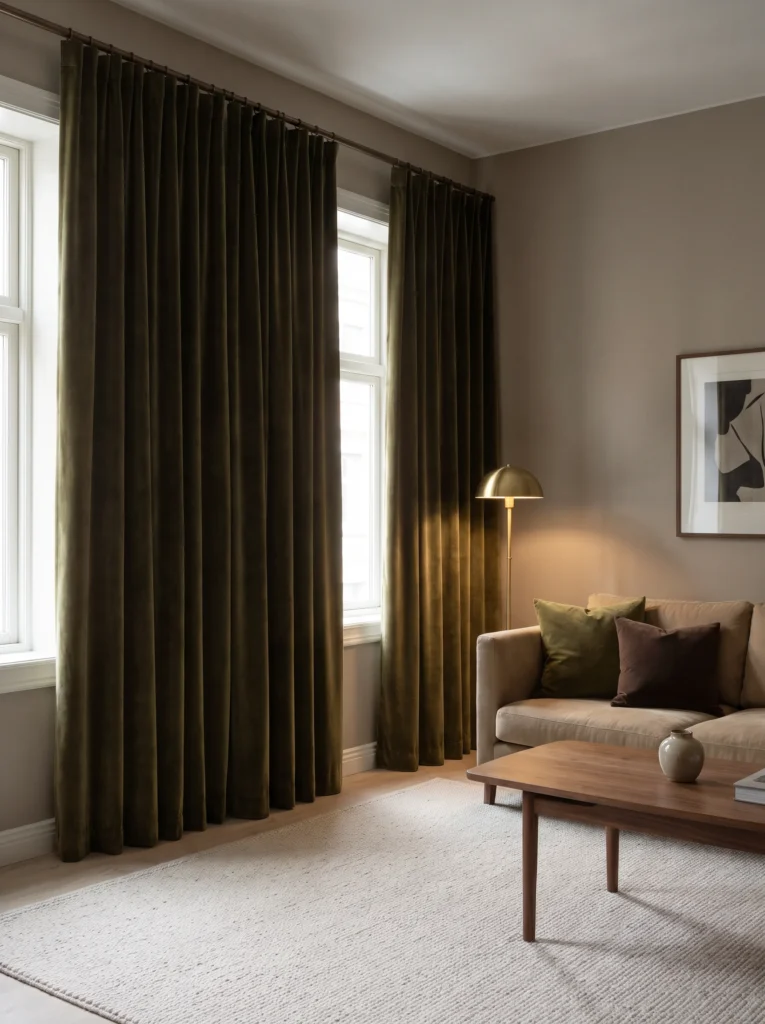
- Length: Let the panels reach the floor, with a clean finish that avoids excessive fabric pooling in busy walkways.
- Placement: Install the curtain rod above the window frame and extend it beyond the sides where space allows.
- Fabric: Choose velvet for a rich appearance or lined linen for softer texture.
- Color: Consider espresso, deep olive, charcoal, or burgundy.
- Fullness: Use enough fabric for the curtains to form attractive folds when closed.
Long curtains draw the eye upward and give a living room a more finished appearance. In a moody scheme, they can connect the window area to the darker colors used in upholstery or accessories. If the room receives limited daylight, choose a medium-weight fabric or keep the panels open during the day. Measure carefully before ordering, since curtain length and rod placement have a noticeable effect on the finished look.
11. Warm Ambient Lighting

Quick Tip:
Use several light sources at different heights rather than relying on one bright ceiling fixture. A floor lamp beside the sofa, a table lamp on a console, and a small accent light near artwork can make the room feel softer and more comfortable.
Warm lighting brings out the richness of deep paint colors, wood finishes, and textured upholstery. Choose warm white bulbs, often around 2700K, for a relaxed evening atmosphere, and consider dimmable fixtures where practical. Direct reading light should still be bright enough for the task. Position lamps so they illuminate seating and useful surfaces without creating glare on television screens or reflective artwork.
See Also 22 Modern Classic Living Room Ideas That Feel Timeless and Elegant
12. Antique Brass Accents

BEFORE
A living room with dark furniture and deep wall colors can sometimes look flat when every finish has the same matte appearance. Black accessories may blend into the background instead of providing contrast.
AFTER
Antique brass lamps, warm metal picture frames, and a brass-trimmed mirror introduce small points of reflection. Their softer golden tone adds visual warmth without overwhelming the existing palette.
Start with two or three brass details and repeat them around the room. A table lamp, decorative bowl, and picture frame are enough to establish a connection. Choose aged or brushed finishes if you prefer a quieter look, and avoid mixing too many competing metallic colors. For rental homes, freestanding accessories offer an easy way to achieve this effect without changing permanent fixtures.
13. Dark Floral Wallpaper
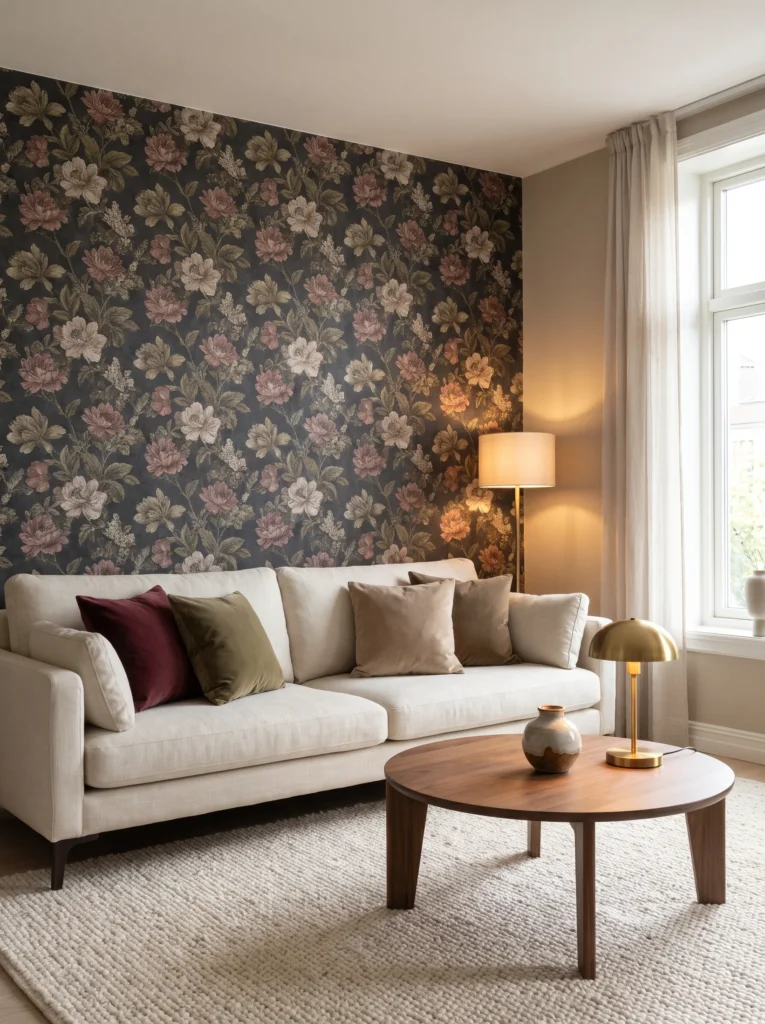
- Select a pattern. Look for oversized botanical leaves, muted roses, or delicate flowers against charcoal, navy, or forest green.
- Choose the wall. Apply the pattern behind the sofa or on a wall that naturally draws attention.
- Keep furniture simple. Solid-colored upholstery allows the wallpaper to remain the main feature.
- Repeat one accent color. Pick a shade from the print for cushions, a throw, or a small decorative object.
- Check the lighting. Position a lamp nearby so the wallpaper’s details remain visible after sunset.
Dark floral wallpaper combines traditional pattern with a dramatic color palette. It can work in modern and vintage-inspired living rooms, depending on the scale of the print and the furniture surrounding it. For a rental, look for removable wallpaper and confirm that the product suits your wall finish. Order samples first, since intricate patterns may look different on a full wall than they do on a small screen.
14. Modern Minimalist Moody Living Room

| Feature | Minimalist Approach | Layered Moody Approach |
| Furniture | Few clean-lined pieces | A mix of simple and sculptural pieces |
| Color palette | Two or three dominant shades | Several related deep and neutral tones |
| Decor | Carefully selected essentials | Selected art, books, and textured accessories |
| Surface styling | Mostly clear surfaces | A few intentional decorative groupings |
| Visual effect | Quiet and uncluttered | Rich, intimate, and dimensional |
A minimalist moody room relies on proportion, contrast, and materials instead of numerous accessories. Choose a comfortable sofa, a well-scaled coffee table, and one or two strong decorative features.
A dark wall or deep upholstery provides the drama, while clear surfaces help preserve a sense of order. The layered approach offers more room for personal objects and varied textures, so the right choice depends on how much visual detail you enjoy.
15. Vintage Moody Living Room

DO
- Mix an antique wooden side table with a contemporary sofa.
- Display framed prints, old books, or a decorative mirror with a worn finish.
- Use warm brown, deep green, burgundy, and muted gold.
- Incorporate a vintage rug to introduce pattern and soften the floor.
DON’T
- Buy every piece from the same period or furniture collection.
- Overfill shelves with small objects that are difficult to dust.
- Hide the character of attractive vintage wood beneath unnecessary coverings.
- Ignore the condition of old furniture, especially unstable legs or loose hardware.
Vintage furnishings give a moody room a sense of history and individuality. The most convincing arrangements balance old and new rather than making every item look antique.
If original vintage pieces are expensive, secondhand shops and simple restoration projects can provide alternatives. Check furniture stability and upholstery condition before purchasing, and use felt pads to protect floors beneath heavier pieces.
16. Leather Seating
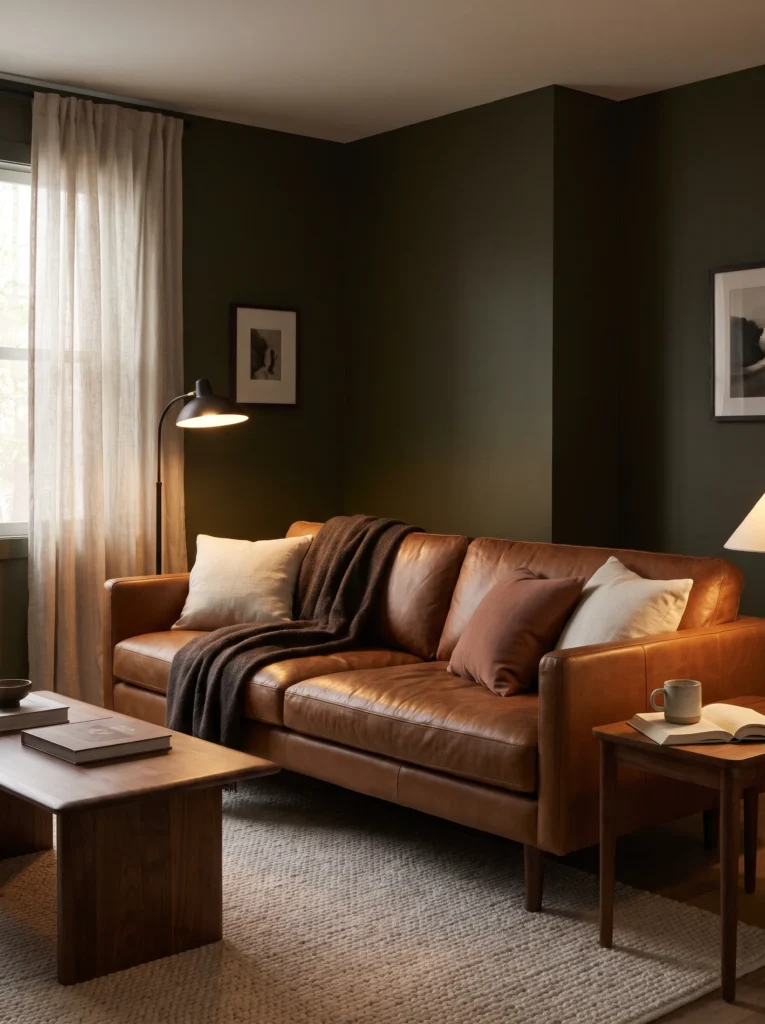
Look: Cognac or deep brown leather against olive, charcoal, or navy walls.
Best materials: Wool rugs, linen cushions, timber, and matte ceramics.
Styling note: Balance the smooth upholstery with soft, tactile textiles.
Alternative: A single leather armchair in a reading corner.
Best placement: Near a window or beside a floor lamp.
Maintenance: Follow the upholstery manufacturer’s cleaning and conditioning guidance.
Leather seating adds structure and a natural variation in color that works beautifully with dark interiors. Cognac leather brings warmth to cooler walls, while darker brown upholstery creates a quieter, more traditional mood.
A leather armchair is a useful starting point if a new sofa is not practical. Check the type of leather and its care requirements before buying, since different finishes respond differently to sunlight, spills, and cleaning products.
17. Dark Stone and Marble Accents

Quick Tip:
Choose one substantial stone feature, such as a dark marble coffee table, a veined side table, or a decorative stone tray. Let the natural pattern remain visible by keeping nearby accessories relatively simple.
Dark stone adds weight and visual interest through its natural veining and varied surface patterns. A black marble coffee table can stand out against a cream rug, while charcoal stone works well beside dark wood and neutral upholstery.
If natural stone exceeds your budget, consider a well-made stone-look table or decorative accessory. For everyday use, check the manufacturer’s care advice and use suitable coasters to help protect the surface from spills and scratches.
18. Layered Rugs

BEFORE
A large living room rug in one flat color may leave the seating area looking unfinished, especially when the sofa and walls are also dark. A small rug can also make the furniture grouping feel disconnected.
AFTER
A larger neutral base rug defines the seating zone, while a smaller patterned rug adds contrast and texture. Deep red, faded traditional patterns, or muted charcoal designs can introduce character without competing with the rest of the decor.
Begin with a base rug large enough to sit beneath at least the front legs of the main seating pieces. Place the smaller rug so its edges remain visible and the layers look intentional. Check the pile height and use a suitable rug pad to reduce slipping. This approach can also help distinguish the living area in an open-plan room.
19. Black Ceiling With Soft Neutral Walls
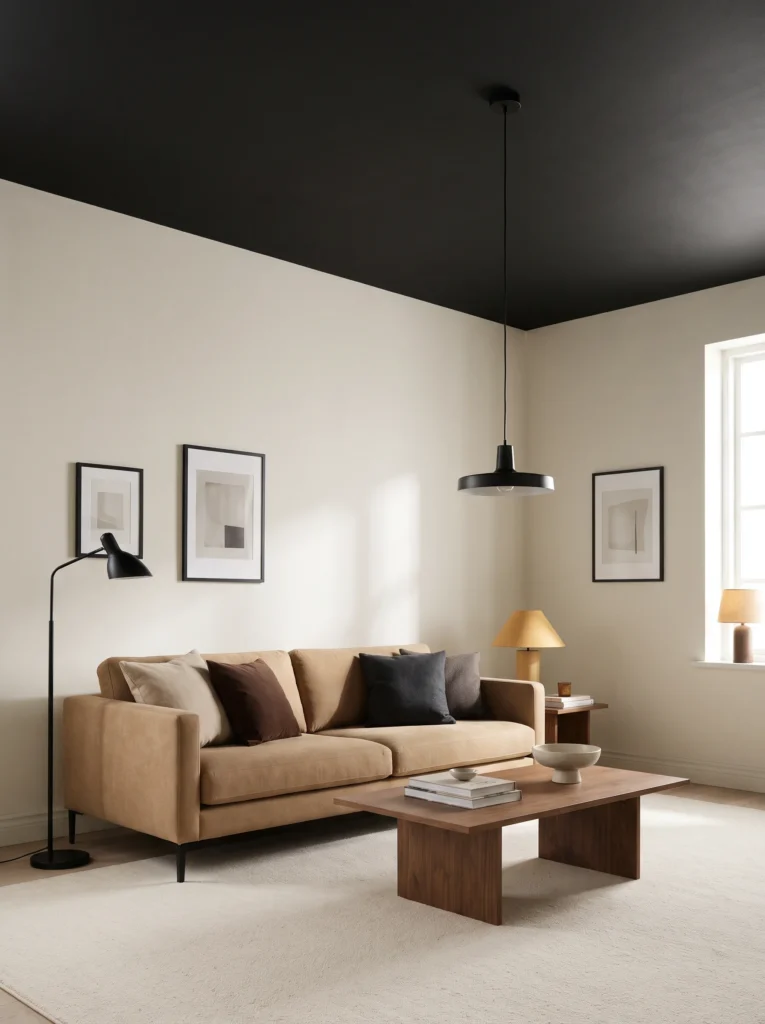
- Assess the room. Check ceiling height, natural light, and the position of existing light fixtures.
- Choose a finish. A matte black ceiling creates a restrained appearance, while a slightly softer charcoal can feel less stark.
- Keep the walls lighter. Warm white, pale taupe, or soft beige creates a clear contrast overhead.
- Repeat dark accents. Add black frames, a floor lamp, or a dark coffee table to connect the ceiling with the rest of the room.
- Review the lighting. Make sure the room has enough layered illumination for evenings.
A black ceiling creates an unexpected focal point without requiring dark paint on every wall. It can look particularly effective in rooms with architectural details, exposed beams, or a defined seating area. In a low-ceilinged room, the effect may feel more enclosed, so test the shade before painting. Renters can explore dark ceiling fabric panels or other removable decorative treatments, provided they can be installed safely.
20. Oversized Artwork
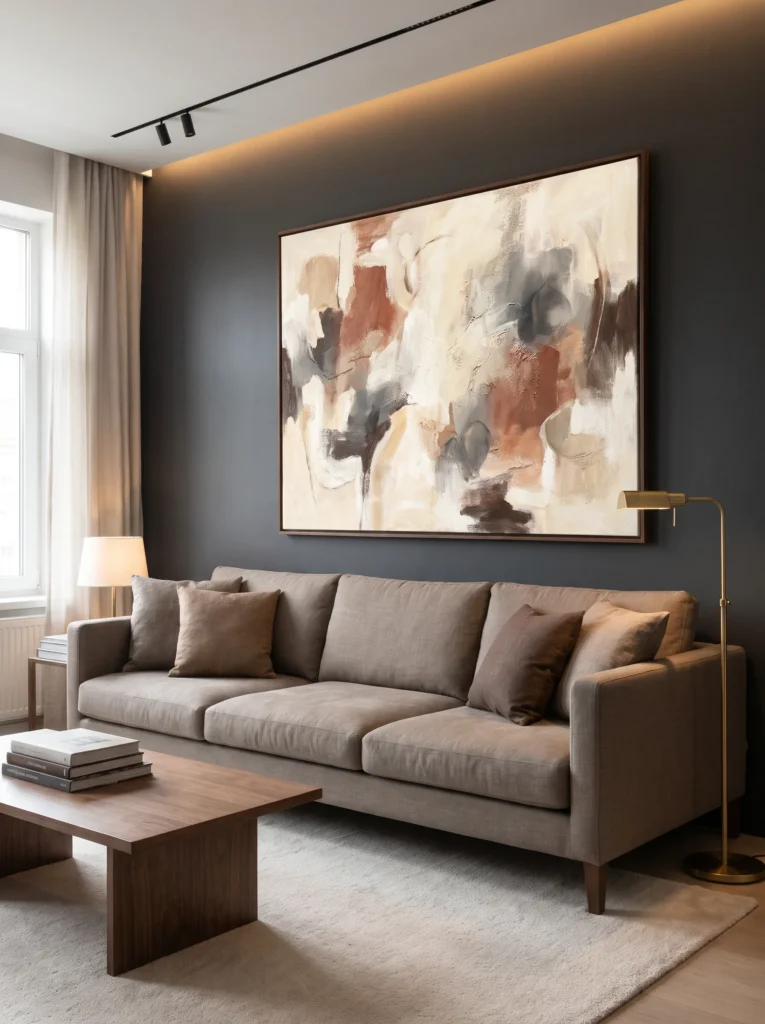
| Feature | One Large Artwork | Gallery Wall |
| Visual effect | Strong, simple focal point | Collected and expressive |
| Best placement | Above a sofa or console | Along a larger uninterrupted wall |
| Styling effort | Low to moderate | Moderate to high |
| Budget approach | One statement purchase or large print | Several affordable prints |
| Maintenance | Simple dusting and frame care | More frames to maintain |
A large artwork can bring a dark living room together by connecting the wall color with the sofa, rug, and accent accessories. Choose a piece with a clear palette rather than a print that introduces too many unrelated shades. As a starting point, artwork above a sofa often looks balanced when its width is roughly two-thirds to three-quarters of the sofa’s width. Measure before hanging and use suitable fixings for the wall type and frame weight.
21. Dark Academia Living Room

DO
- Combine dark wood bookcases with leather seating and a traditional-style rug.
- Display books, framed botanical prints, and a few meaningful vintage objects.
- Use deep green, oxblood, tobacco brown, and warm cream.
- Add a shaded table lamp near a reading chair.
DON’T
- Pack every shelf so tightly that the books and objects become difficult to use.
- Block windows with oversized bookcases.
- Mix too many competing patterns in rugs, curtains, and upholstery.
- Neglect task lighting for reading or working.
A dark academia-inspired living room draws on libraries, classic studies, and vintage interiors. Books and wooden furniture provide the foundation, while warm lighting and aged finishes create depth. You do not need a dedicated library to achieve the look.
A bookcase, comfortable chair, and compact side table can establish a reading corner, even in a shared living area. Keep everyday essentials accessible and secure tall bookcases properly.
22. Natural Wood Beams

Color palette: Natural oak, charcoal, warm beige, and deep brown.
Best feature: Exposed beams that add structure and draw attention upward.
Furniture: Simple upholstery and a substantial timber coffee table.
Alternative style: Reclaimed wood paired with olive walls and leather seating.
Budget option: Faux decorative beams designed for interior use.
Practical note: Confirm ceiling structure and installation requirements before adding overhead features.
Wood beams bring architectural character to a living room and balance dark paint with a more natural material. If your home has exposed structural beams, keep their finish consistent with the flooring or other wood elements where possible.
Decorative faux beams can provide a similar appearance, but they need secure installation and suitable clearance around fixtures. In rooms without beams, a substantial wooden mantel or tall timber shelving can introduce a related visual effect.
23. Small Moody Living Room

Small living rooms can handle deep colors when the furniture, lighting, and layout are chosen carefully. A dark olive wall, compact sofa, and walnut side table can create an intimate atmosphere without filling every corner with furniture.
- Furniture scale: Choose a sofa that leaves comfortable routes through the room.
- Storage: Use a coffee table with a shelf or a closed storage ottoman to reduce visible clutter.
- Lighting: Combine a wall light, table lamp, or slim floor lamp instead of relying on a single ceiling fixture.
- Mirrors: Position a mirror where it reflects natural light or an attractive part of the room.
- Color balance: Add a pale rug or light curtains to provide contrast.
A small space does not need oversized furniture or a large collection of accessories to feel luxurious. Focus on a few well-chosen materials and keep the floor as open as possible. Before buying new pieces, measure doorways, wall lengths, and walking routes. If painting is not allowed, dark cushions, curtains, and removable wallpaper can introduce the same atmosphere with less commitment.
24. Moody Neutral Living Room

Quick Tip:
Build the palette from related neutrals rather than relying on one shade. Combine warm taupe walls with a mushroom-colored sofa, chocolate accents, charcoal details, and a cream or oatmeal rug. Vary the textures to keep the room from looking flat.
A neutral moody living room feels quieter than a room filled with saturated colors, but it can still have plenty of depth. Linen curtains, textured cushions, dark timber, and matte ceramics create subtle differences that become more noticeable in soft lighting. Repeat two or three tones across the furniture and accessories for a connected look. This approach also makes it easier to refresh the room by changing cushions or artwork instead of replacing large pieces.
Tips for Creating a Dramatic, Luxe Living Room
The most successful moody interiors balance deep colors with comfortable furniture, practical lighting, and a thoughtful mix of materials. Keep these tips in mind as you plan your room.
- Start with a clear color palette. Choose one dominant shade, such as charcoal, forest green, navy, or chocolate brown. Add two or three supporting colors to keep the room cohesive.
- Layer different light sources. Combine ceiling lights with table lamps, floor lamps, and accent lighting. Use warm white bulbs for a comfortable evening atmosphere.
- Pay attention to furniture proportions. Measure your sofa, coffee table, and storage pieces before purchasing. Leave enough room to walk comfortably between furniture.
- Mix soft and hard textures. Pair velvet or linen with wood, stone, metal, and woven fabrics. The contrast adds depth without requiring extra decorative objects.
- Use artwork to connect colors. Select prints that repeat shades already present in your rug, cushions, or curtains.
- Keep clutter under control. Use closed cabinets, storage ottomans, and baskets to hide everyday items while keeping frequently used essentials accessible.
- Adapt the look to your budget. Repaint an accent wall, rearrange existing furniture, change cushion covers, or update lampshades before investing in expensive furnishings.
- Consider natural light. Test dark paint samples in the morning and evening. In a room with limited daylight, introduce lighter textiles and multiple lamps to maintain visibility.
- Make the room comfortable. A dramatic interior should still support relaxing, entertaining, reading, and everyday family activities.
Conclusion
Creating a dramatic living room is about finding the right balance between rich colors, inviting textures, comfortable furniture, and thoughtful lighting. These moody living room ideas offer plenty of ways to achieve a luxurious appearance, whether you prefer forest green walls, chocolate brown upholstery, vintage furniture, or understated neutral layers.
Start with one change that suits your space and budget. You might paint an accent wall, add velvet cushions, introduce warmer lighting, or rearrange your existing furniture. Pay attention to room proportions and the way different materials work together. Save your favorite ideas on Pinterest for inspiration, and share this article with someone planning a living room refresh. The best result is a room that reflects your style and feels welcoming every day.
Frequently Asked Questions
1. What Colors Work Best for a Moody Living Room?
Charcoal gray, forest green, navy blue, burgundy, chocolate brown, and deep olive are popular choices. These shades create depth and pair well with warm wood, cream textiles, brass accents, and natural materials. Choose colors according to your existing furniture and the amount of natural light your room receives.
2. How Can I Make a Moody Living Room Feel Cozy?
Layer soft textiles, use warm lighting, and introduce materials such as velvet, wool, linen, and natural wood. Add a comfortable rug, cushions, and a throw within easy reach of the sofa. Several smaller light sources usually create a more inviting atmosphere than one bright overhead fixture.
3. Can a Small Living Room Have a Moody Design?
Yes. Dark colors can work in small living rooms when furniture proportions and lighting are carefully considered. Try one deep-colored wall, a compact sofa, a light-colored rug, and a few reflective surfaces. Keep walkways clear and avoid filling every available surface with accessories.
4. How Do You Decorate a Moody Living Room on a Budget?
Start by rearranging your existing furniture and choosing a more coordinated color palette. Paint one accent wall, replace inexpensive cushion covers, shop secondhand for vintage accessories, or add a warm table lamp. Concentrating your budget on one or two noticeable changes can make the room feel more intentional without requiring a complete makeover.
5. What Lighting Works Best in a Moody Living Room?
Warm white lighting, often around 2700K, is a good starting point for a cozy atmosphere. Combine ambient lighting with task lighting near reading areas and accent lighting for artwork or architectural features. Dimmable fixtures can provide flexibility, while appropriately positioned lamps help dark walls and furniture retain their visual detail.