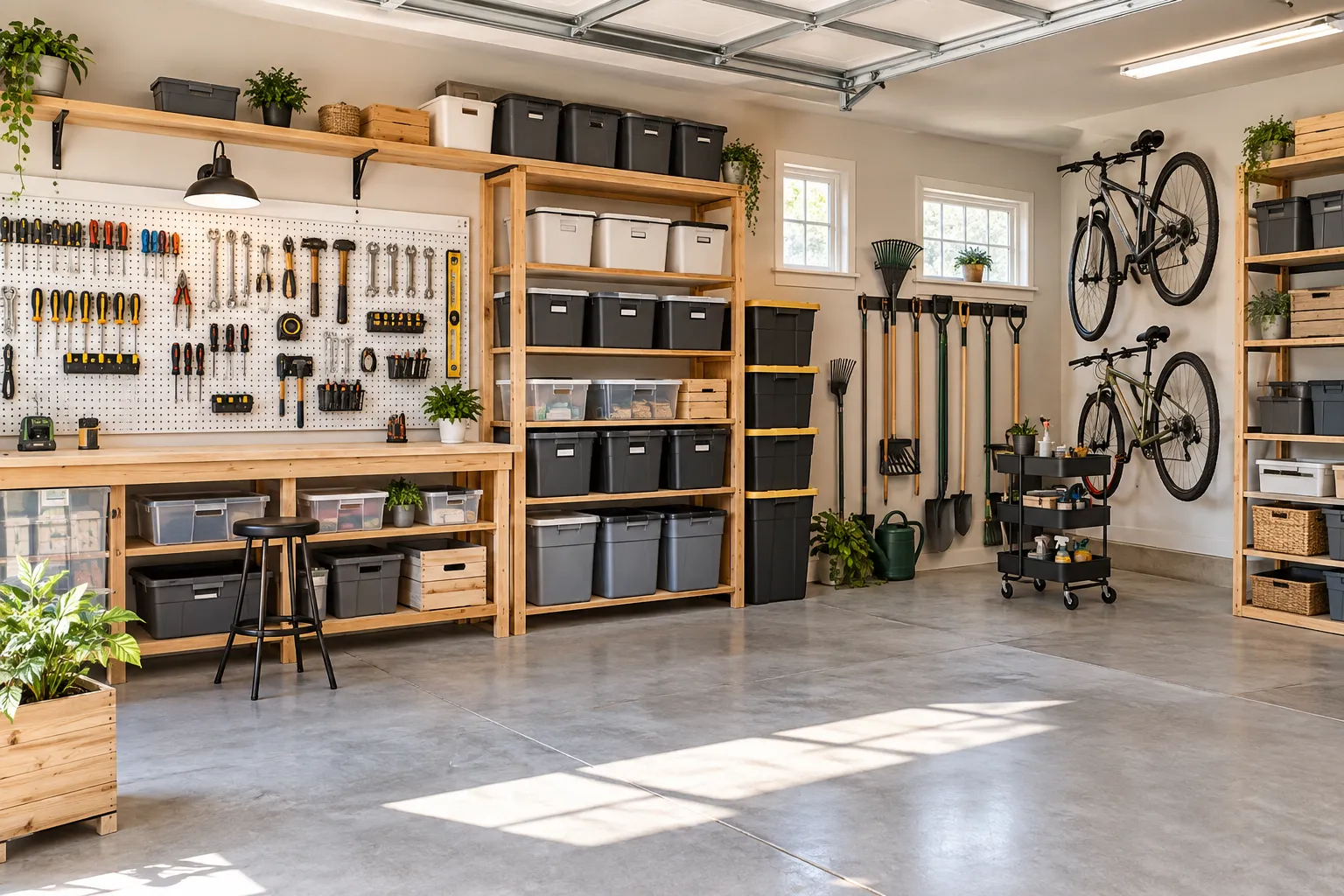
22 Garage Organization Ideas on a Budget That Actually Work
A cluttered garage can make even simple tasks feel frustrating. Tools disappear, boxes pile up, and valuable floor space slowly vanishes. Garage Organization Ideas on a Budget can help you take back that space without spending a fortune.
This article brings together 22 practical ideas for creating a cleaner, more functional garage using affordable storage solutions and smart layouts. From pegboards and wall hooks to rolling carts, storage bins, and repurposed cabinets, there are options for garages of different sizes and needs.
In my experience, the biggest improvement often comes from getting items off the floor and giving frequently used belongings a specific home. You do not need an expensive renovation to make your garage work better. A few thoughtful changes can make tools easier to find, walkways clearer, and everyday projects much less stressful.
Pegboard Tool Wall
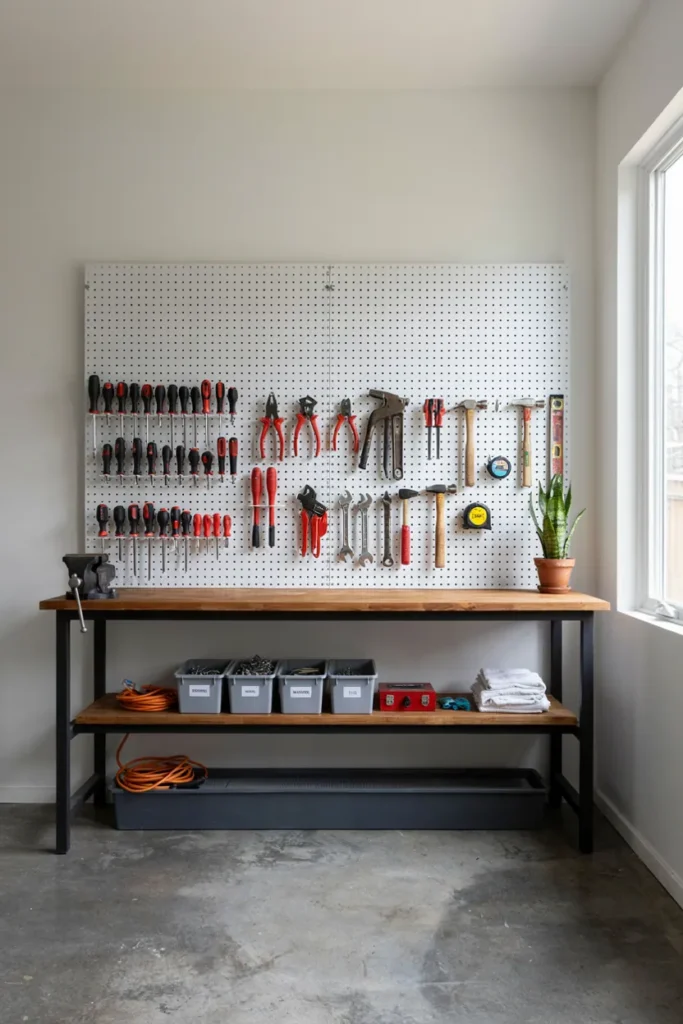
A blank garage wall becomes valuable storage when tools move off the floor and onto a pegboard. Arrange frequently used items at eye level, then place less-used tools higher up. Hooks, baskets, and small shelves let one panel handle several storage needs without taking much space.
In my experience, the biggest benefit is visibility. When every screwdriver, wrench, and tape measure has a designated spot, cleanup takes minutes instead of becoming another project. Leave a little empty space between groups so new tools can be added without rearranging the entire wall.
Overhead Storage Bins

- Choose sturdy plastic bins with secure lids for seasonal belongings.
- Label each container on the front so contents are easy to identify.
- Group similar items together, such as decorations, camping supplies, or sports gear.
- Keep heavy containers on lower shelves and lighter items overhead.
- Leave enough clearance around garage doors and lighting fixtures.
Overhead storage works especially well for belongings you only reach a few times each year. Clear bins make identification easier, while simple labels prevent unnecessary searching. Before installing anything, check the ceiling structure and use hardware rated for the intended load. Keep frequently needed items at waist or eye level instead.
PVC Tool Holders

Quick Tip: Cut PVC pipe into short sections and smooth the edges before mounting them. Use different diameters for different tools, and secure each holder firmly to a wall stud or properly anchored mounting board.
Short PVC sections can turn an unused strip of wall into organized tool storage without requiring expensive specialty racks. I’ve noticed this setup works particularly well for narrow garages because the holders keep handles upright and easy to grab. Measure your tools first so each opening fits comfortably without making removal awkward.
Wall-Mounted Shelves

BEFORE: Boxes and supplies sit in uneven piles across the garage floor, leaving narrow walking paths and making everyday items difficult to reach. Smaller objects often disappear behind larger containers.
AFTER: Sturdy wall shelves lift those belongings off the floor and create clear storage zones. Frequently used items stay within easy reach while seasonal supplies can occupy the higher shelves.
A few properly spaced shelves can dramatically increase usable storage without taking up valuable floor area. Choose shelf depth based on what you actually store rather than making every shelf oversized. For safety, anchor brackets securely and avoid placing heavy items near the front edge where they could fall during use.
See Also: 21 Car Garage Design Ideas That Combine Style and Smart Storage
Rolling Storage Cart

- Choose the size: Measure the space between your workbench, vehicle, and walls before building or buying a cart.
- Add useful levels: Include two or three shelves so small tools and larger containers have separate places.
- Install locking casters: Choose sturdy wheels with brakes to keep the cart stable while working.
- Group supplies: Keep one category together, such as painting supplies, car-care products, or gardening tools.
A mobile cart earns its place by bringing supplies directly to the task instead of making repeated trips across the garage. I’ve seen this work especially well beside a workbench. Keep the heaviest items on the bottom shelf, and return the cart to its designated parking spot after each project.
Open Crate Storage
| Storage Approach | Option A: Closed Cabinets | Option B: Open Crates |
| Cost | Usually higher | Often budget-friendly |
| Visibility | Contents stay hidden | Contents are easy to spot |
| Installation | May require more work | Simple wall mounting |
| Best use | Valuable or delicate items | Everyday garage supplies |
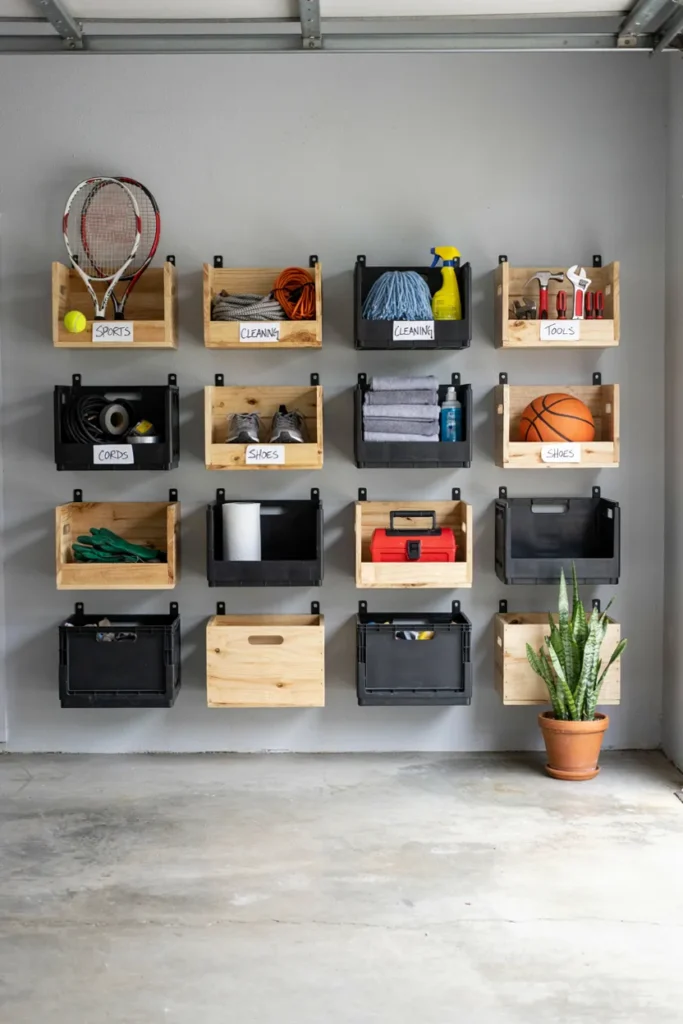
Open crates make inexpensive storage especially practical because you can see what is inside before pulling everything apart. Use matching crates for a cleaner appearance, then assign each one a category. Mount them at comfortable heights and avoid overloading the wall hardware. This setup suits active garages where supplies need to stay accessible.
Magnetic Tool Strip

DO:
- Mount the strip where you naturally reach for hand tools.
- Check the magnet strength before loading it with heavier tools.
- Group frequently used tools together for faster access.
- Leave small gaps so individual tools are easy to remove.
DON’T:
- Don’t overload a strip beyond its rated capacity.
- Don’t mount it where children can easily reach sharp tools.
- Don’t rely on weak adhesive for heavy tools.
- Don’t place tools where they interfere with your workspace.
A magnetic strip uses a surprisingly small amount of wall space while keeping metal tools visible. It works particularly well above a workbench or beside a storage cabinet. For heavier tools, choose a properly mounted magnetic rack rather than a lightweight strip designed for small household items.
Labeled Storage Totes

Cost: Low to moderate | Time: 1 to 2 hours | Skill Level: Beginner
Best For: Seasonal and miscellaneous belongings | Works In: Small or large garages
Clear or consistently labeled totes make forgotten belongings much easier to locate. Use one category per container instead of mixing unrelated items together. I’ve noticed that simple labels become even more useful when several family members share the garage because everyone can return supplies without asking where they belong.
Slatwall Storage System
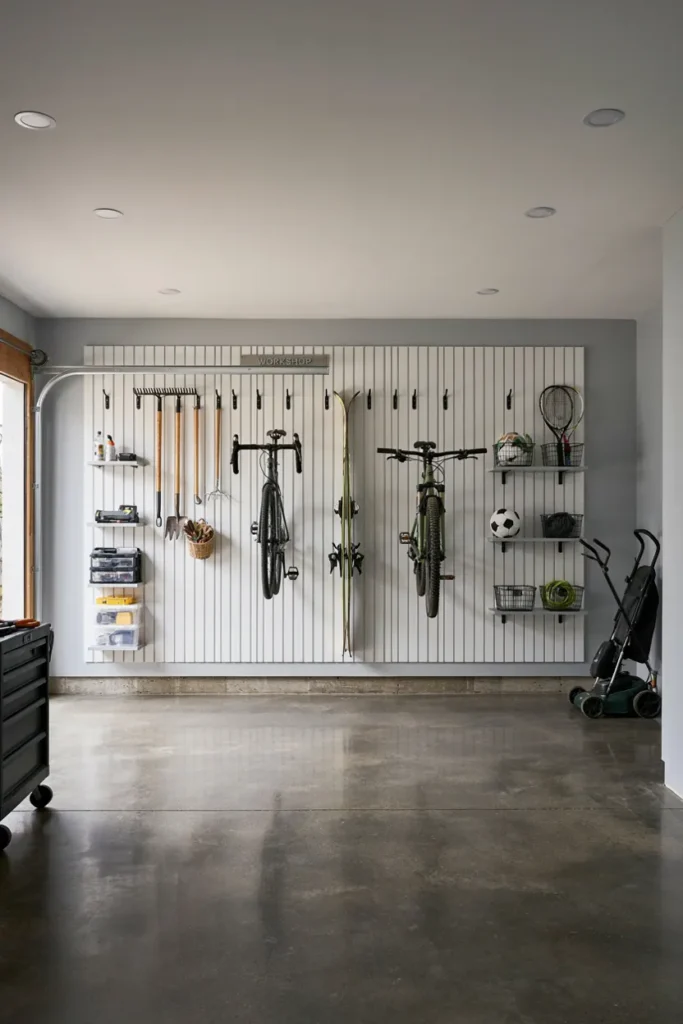
BEFORE: Bikes lean against walls while garden tools, cords, and sports equipment compete for the same floor space. Moving one item often means shifting several others.
AFTER: A slatwall creates adjustable vertical zones for different categories. Hooks can hold long-handled tools, while baskets and shelves handle smaller supplies without crowding the floor.
A slatwall costs more than a few basic hooks, but its adjustable layout can make it useful as your storage needs change. Place bulky equipment toward the lower section and smaller accessories higher up. Check the manufacturer’s weight limits and install the panels according to the recommended mounting method for reliable support.
Stacked Wooden Crates
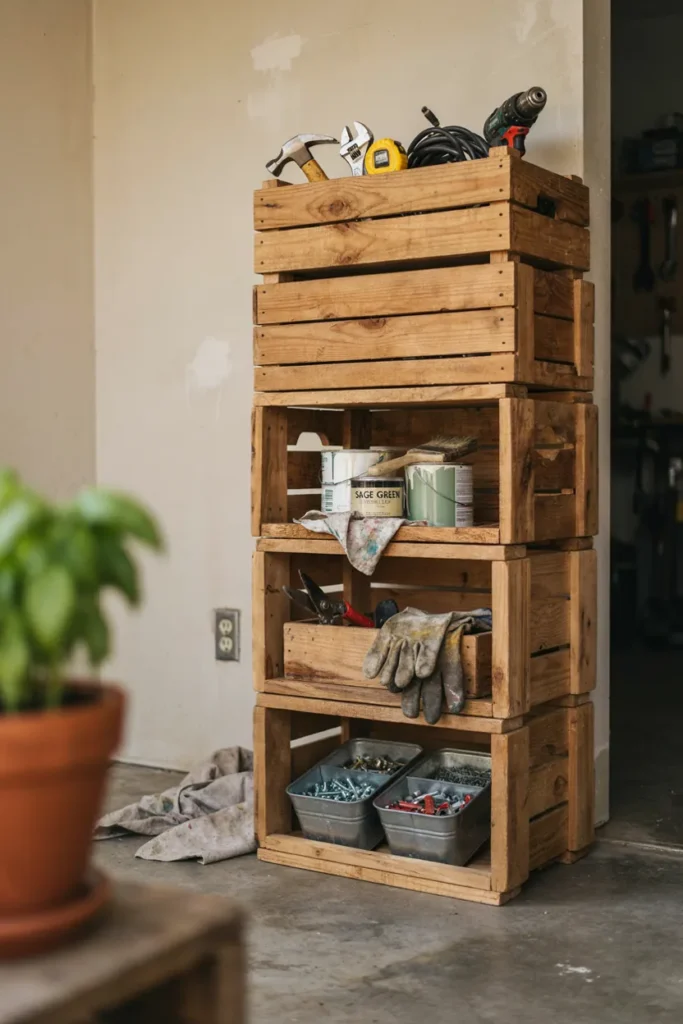
DO:
- Secure tall crate stacks to the wall to prevent tipping.
- Place heavier supplies in the lowest crates.
- Group similar items inside each crate.
- Sand rough wooden edges before using the crates.
DON’T:
- Don’t stack unstable crates beside a vehicle or doorway.
- Don’t place heavy equipment in high compartments.
- Don’t block electrical panels or garage access points.
- Don’t leave sharp tools loose inside open crates.
Wooden crates offer flexible storage for garages where every dollar matters. They can be arranged vertically, horizontally, or beneath a workbench depending on the available space. Leave enough room around each opening to grab stored items comfortably. A simple coat of clear protective finish can also make unfinished wood easier to clean.
Reclaimed Wood Shelving
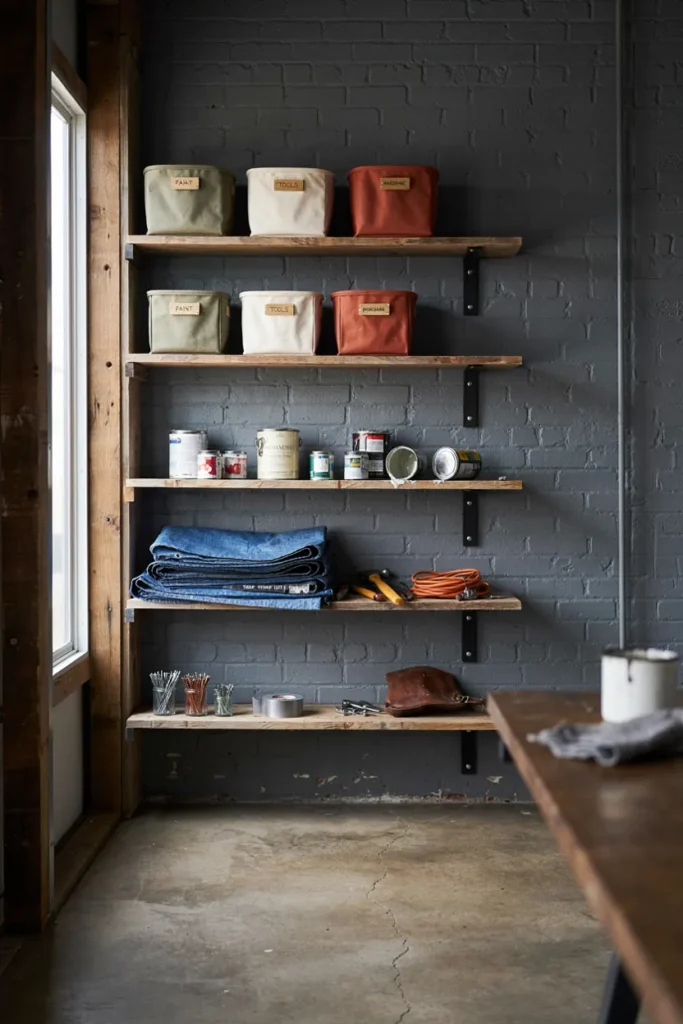
Cost: Low | Time: Half a day | Skill Level: Beginner to intermediate
Best For: Tools, bins, and supplies | Materials: Reclaimed boards and brackets
Result: More floor space with inexpensive vertical storage
Reclaimed boards can become useful shelves when the wood is structurally sound and properly prepared. Check each board for cracks, rot, nails, or signs of damage before installation. I’ve found that slightly varied wood tones can add character while still keeping the garage organized, especially when paired with matching storage bins.
Ceiling Rack Platform

A ceiling platform can reclaim storage space that would otherwise sit unused above your head. Keep lightweight, infrequently accessed belongings there, such as empty luggage, seasonal decorations, or camping equipment. Measure carefully around the garage door mechanism, vehicle height, lights, and sprinklers before installing the platform.
The safest setup starts with a properly supported frame rather than simply attaching boards to drywall. Use hardware appropriate for the ceiling structure and follow the manufacturer’s load limits. Keep a clear path below the platform so vehicles, doors, and people can move freely without hitting stored items.
Corner Tool Rack
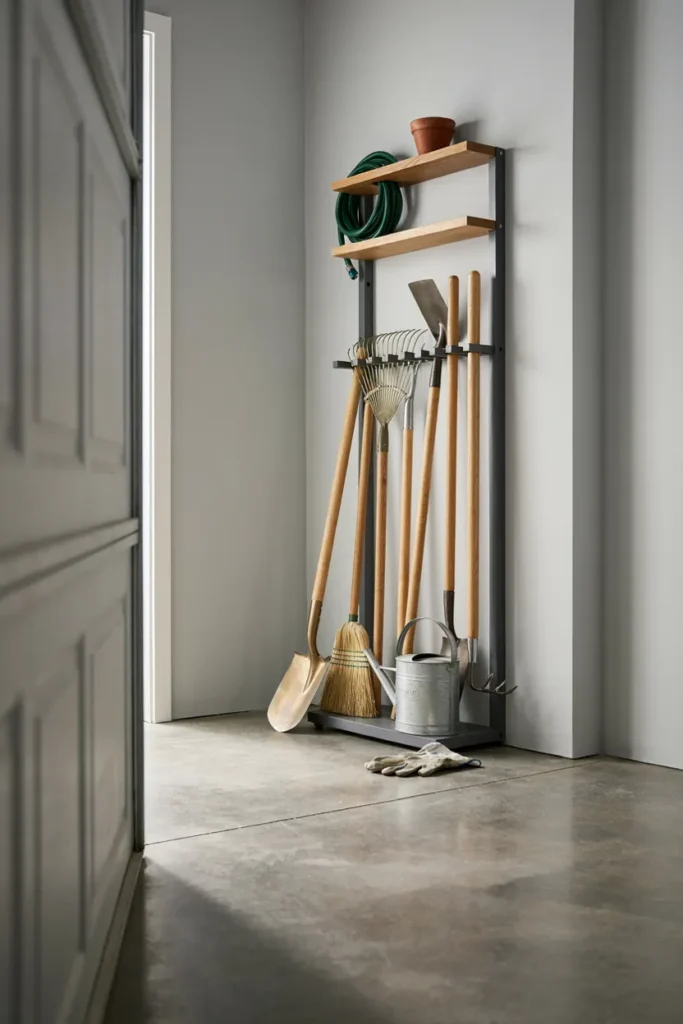
- Use a narrow rack to reclaim an otherwise awkward corner.
- Group long-handled tools by type so they are easier to grab.
- Keep frequently used tools toward the front.
- Add small hooks for gloves, cords, or hand pruners.
- Secure the rack if children or pets could knock it over.
Long-handled tools are notorious for creating messy garage corners because they rarely stack neatly. A dedicated rack keeps handles upright and prevents them from sliding across the floor. Position it near the garage entrance if you frequently use garden equipment, but leave enough clearance for doors and vehicles.
Clear Wall Bins
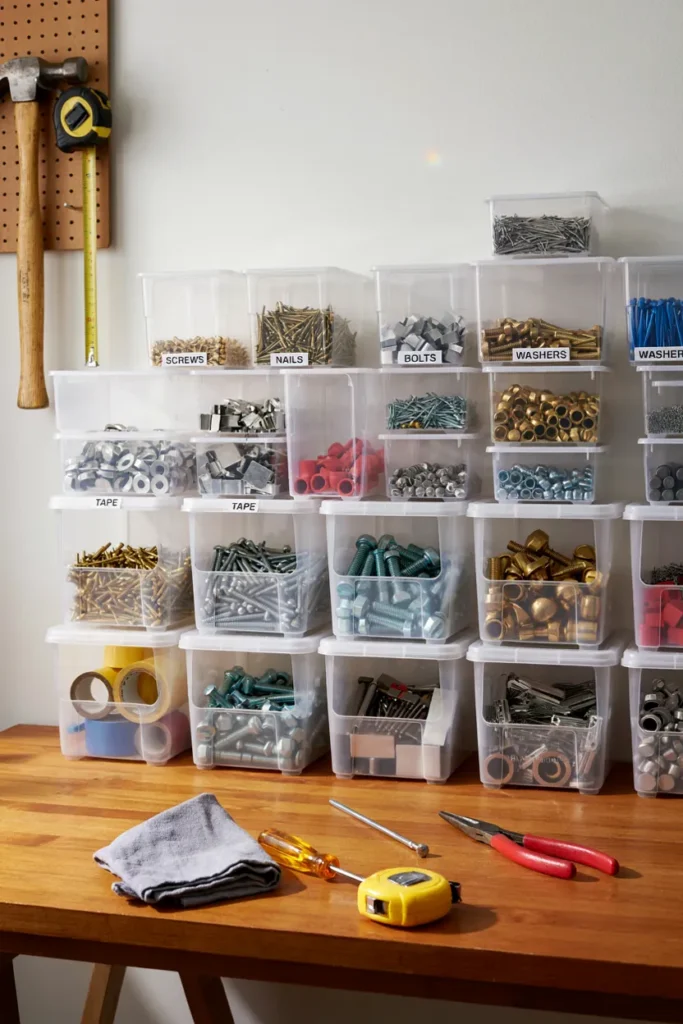
Quick Tip: Sort small hardware before filling the bins, and label each container with large, readable text. Keep commonly used screws and fasteners between waist and eye level so you can identify them without opening several containers.
Small parts become much easier to manage when they’re visible and separated by type. Clear bins prevent the familiar problem of buying another box of screws because the original one disappeared somewhere in the garage. In my experience, consistent labels matter just as much as the containers themselves for maintaining order.
Under-Bench Storage
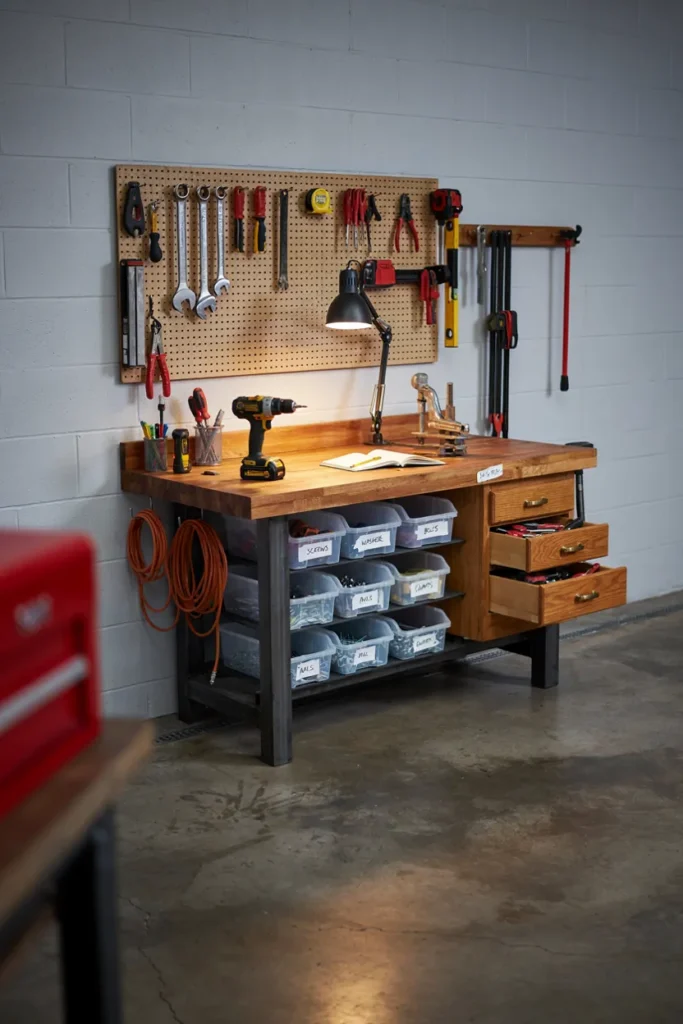
BEFORE: The area beneath a workbench often becomes a dumping ground for boxes, cords, and half-finished project supplies. Items get pushed farther back until they are difficult to reach.
AFTER: Low-profile bins and drawers turn that forgotten space into organized storage. Larger containers can hold bulky supplies while smaller drawers keep hardware separated.
Under-bench storage is especially useful because it adds capacity without claiming another section of wall or floor. Measure the clearance first, including the space needed to pull bins outward. Reserve the easiest-to-reach containers for tools and supplies you use regularly, while deeper storage can handle less frequently needed materials.
Vertical Bike Hooks
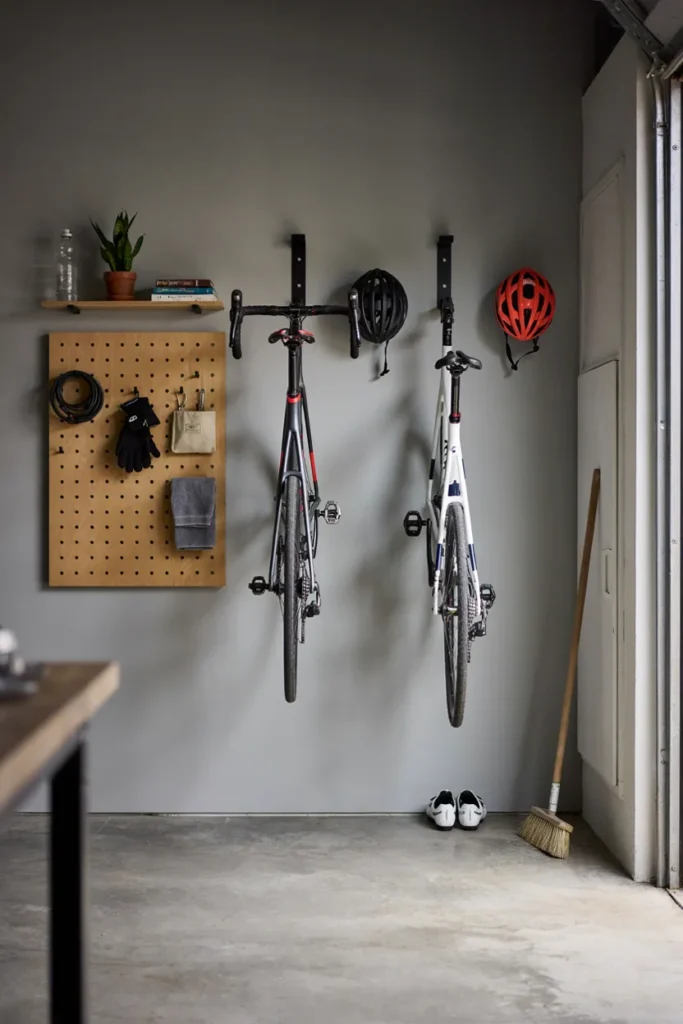
- Measure the wall: Check the bicycle height and available wall clearance before choosing hook positions.
- Find solid support: Mount hooks into studs or use suitable anchors rated for the bicycle’s weight.
- Set the spacing: Leave enough room between bikes so handlebars and pedals do not collide.
- Add accessory hooks: Store helmets, locks, and pumps beside the bicycles to keep the entire cycling setup together.
Getting bikes off the floor can free a surprising amount of walking and parking space. Vertical hooks are particularly useful in narrow garages where floor storage quickly becomes crowded. Keep bicycles away from the garage door track and vehicle path, and lift them only to a height that feels comfortable and safe.
Repurposed Kitchen Cabinets
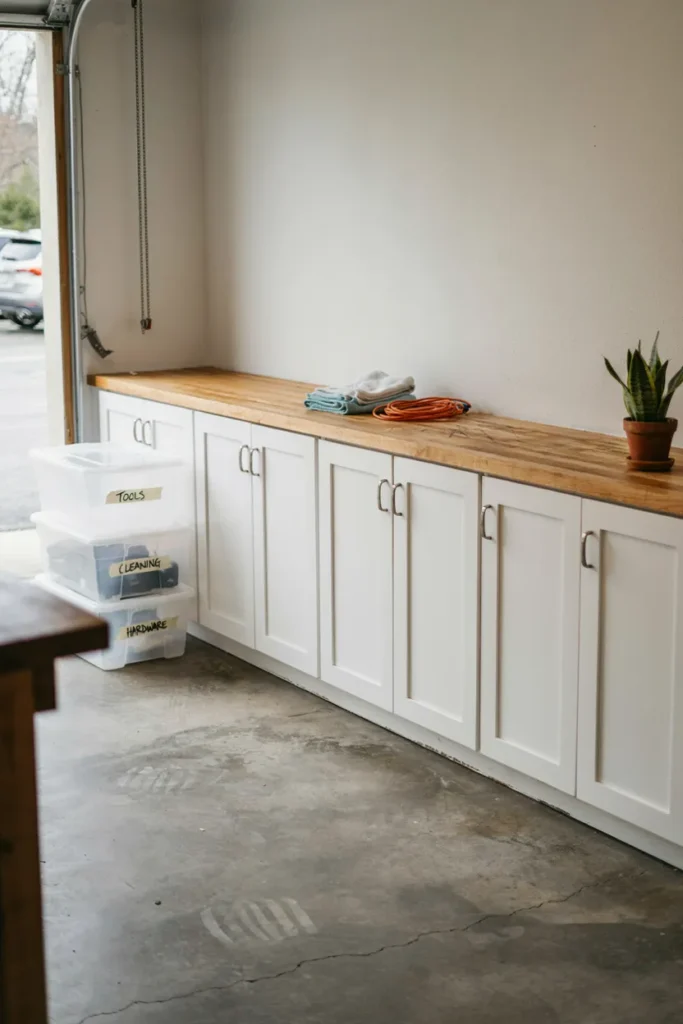
| Option A | Option B |
| New garage cabinets | Repurposed kitchen cabinets |
| Higher purchase cost | Often lower material cost |
| Consistent new finish | Existing finish can be refreshed |
| Designed for garage use | May require reinforcement or adjustment |
| Easy to match | Great for upcycling |
Old kitchen cabinets can provide substantial enclosed storage without requiring a completely new cabinet system. Check the boxes carefully for moisture damage, loose hinges, and weak backs before installing them. A fresh coat of paint and new handles can help different cabinet pieces look more consistent when combined.
Hanging Garden Tools

DO:
- Group long-handled tools together on one wall.
- Mount hooks at heights that make tools easy to lift.
- Keep sharp-edged tools capped or positioned safely.
- Leave enough spacing between handles for quick access.
DON’T:
- Don’t pile garden tools loosely in a corner.
- Don’t mount hooks into weak drywall without suitable anchors.
- Don’t place sharp tools near walking paths.
- Don’t overcrowd one small section of wall.
A row of sturdy hooks can replace a bulky floor rack and make garden equipment much easier to find. Arrange tools by frequency of use, keeping everyday items within comfortable reach. I’ve noticed that assigning each tool a fixed hook also makes cleanup faster because the storage location stays obvious.
Pegboard Supply Bins
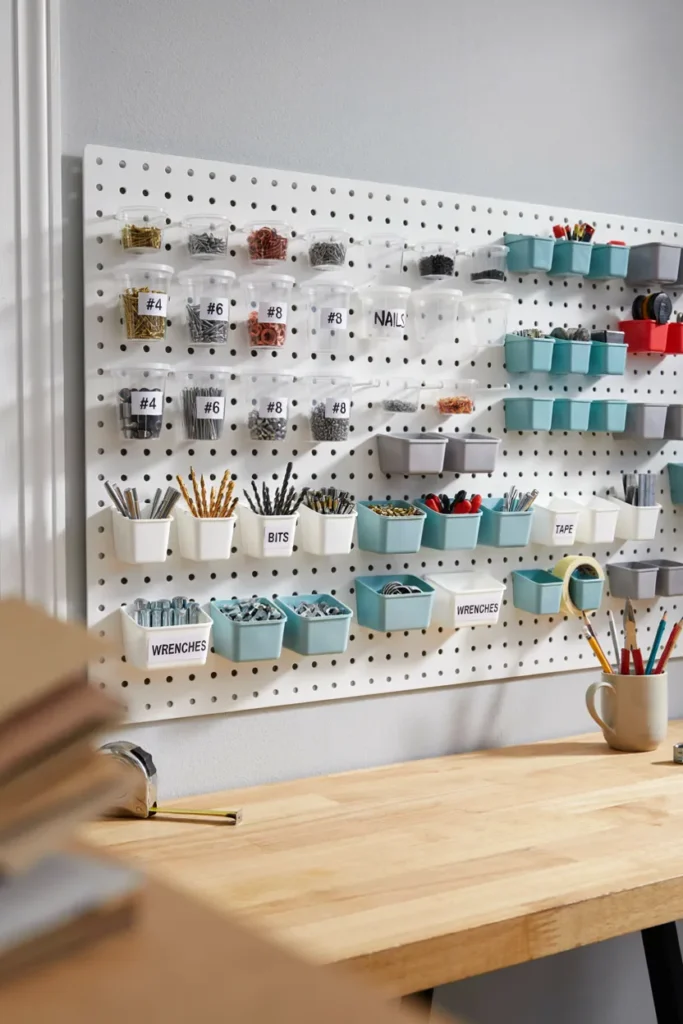
Cost: Low to moderate | Time: 1 to 2 hours | Skill Level: Beginner
Best For: Small hardware and accessories | Space Needed: One wall section
Result: Visible, easy-access storage
Small pegboard bins make the tiny items that usually scatter across a workbench much easier to control. Use separate containers for screws, anchors, drill bits, nails, and electrical accessories. Label the front edge of each bin, especially if several pieces look similar. Keep the most-used supplies around eye level.
Foldable Workbench
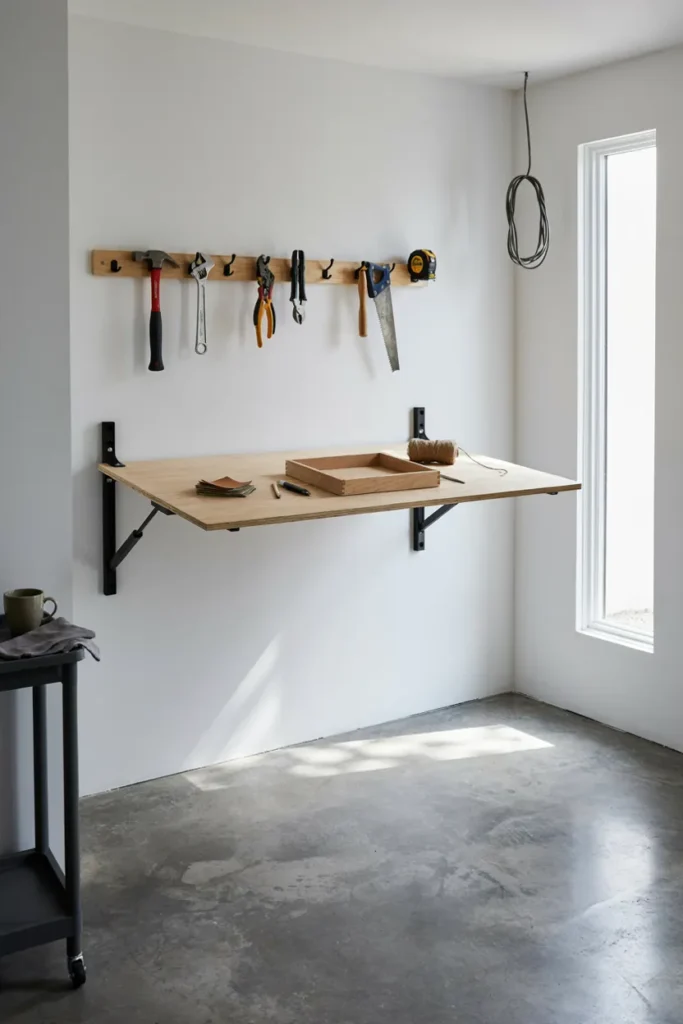
BEFORE: A permanent workbench occupies valuable floor space even when no project is underway. Cars, storage bins, and walking paths compete for the remaining room.
AFTER: A fold-down bench provides a sturdy work surface when needed and folds flat against the wall afterward. The cleared floor can then serve as parking, storage, or workspace.
A folding workbench is particularly useful for smaller garages where every square foot needs to serve more than one purpose. Choose heavy-duty hinges and a properly supported frame, then keep the folded surface clear of nearby doors and equipment. Add a narrow shelf above it for tools you reach for during projects.
Rolling Tool Chest

- Choose a chest with drawers suited to the number of tools you own.
- Keep heavy power tools in the lowest drawers.
- Label drawers that contain similar hardware.
- Lock the wheels before opening several drawers at once.
- Position the chest where it can roll close to your work area.
A rolling tool chest combines storage and mobility, making it useful for garages where projects happen in different areas. Drawer dividers prevent small tools from becoming mixed together. For a budget setup, look for a used chest in good condition and inspect the wheels, drawer slides, and locking mechanism before purchasing.
Ladder Wall Hooks

Quick Tip: Measure the ladder while folded before installing the hooks. Place the supports far enough apart to distribute its weight, and leave clearance around the garage door, electrical equipment, and vehicle parking area.
Ladders consume valuable floor space when they are simply leaned against a wall. Heavy-duty wall hooks give them a dedicated vertical home while keeping the floor clear. I’ve found that storing a ladder near other maintenance tools makes sense because those items are often needed together, especially during cleaning and repair projects.
Conclusion
An organized garage does not have to require a big budget or a complete renovation. These Garage Organization Ideas on a Budget show how simple shelves, hooks, bins, crates, and clever wall storage can create more usable space while keeping everyday items within reach.
I’ve seen how small changes like these can completely shift the way a space feels and functions. Start with one cluttered corner, choose an idea that fits your needs, and build from there.
Save this post on Pinterest so you can return to these ideas when you’re ready to organize. Try one or two this week, and share the article with someone who could use a more functional garage.
FAQs
1. How can I organize my garage on a small budget?
Start with inexpensive solutions such as pegboards, wall hooks, PVC holders, wooden crates, and labeled storage bins. Focus first on getting items off the floor and using unused wall space.
2. What is the cheapest way to organize a garage?
Repurposing items you already own is often the most affordable approach. Old shelves, kitchen cabinets, wooden crates, jars, and sturdy containers can become useful garage storage with little or no modification.
3. How do I maximize garage storage without taking up floor space?
Use vertical and overhead areas. Wall-mounted shelves, pegboards, tool hooks, ceiling racks, and vertical bike storage can hold many items while keeping the main floor open.
4. How should I organize garage tools?
Group tools by type and frequency of use. Keep everyday hand tools on a pegboard or magnetic strip, long-handled tools on wall hooks, and larger equipment in cabinets or a rolling tool chest.
5. How do I keep my garage organized after cleaning it?
Give every category a designated storage location and label containers clearly. After using an item, return it to the same place. A quick five-minute cleanup after each project can prevent clutter from building up again.