26 Minimalist Bohemian Living Room Ideas for a Calm, Earthy Home
Minimalist Bohemian Living Room Ideas combine the relaxed character of boho decor with the simplicity of minimalist interiors. The result is a warm, inviting space filled with natural materials, earthy colors, comfortable furniture, and thoughtful decorative details.
Whether you live in a small apartment or a spacious home, these decorating ideas can help you create a living room that feels calm without looking plain. From linen sofas and rattan furniture to terracotta accents and indoor plants, discover practical ways to bring natural beauty into your everyday space.
1. Neutral Minimalist Boho Living Room
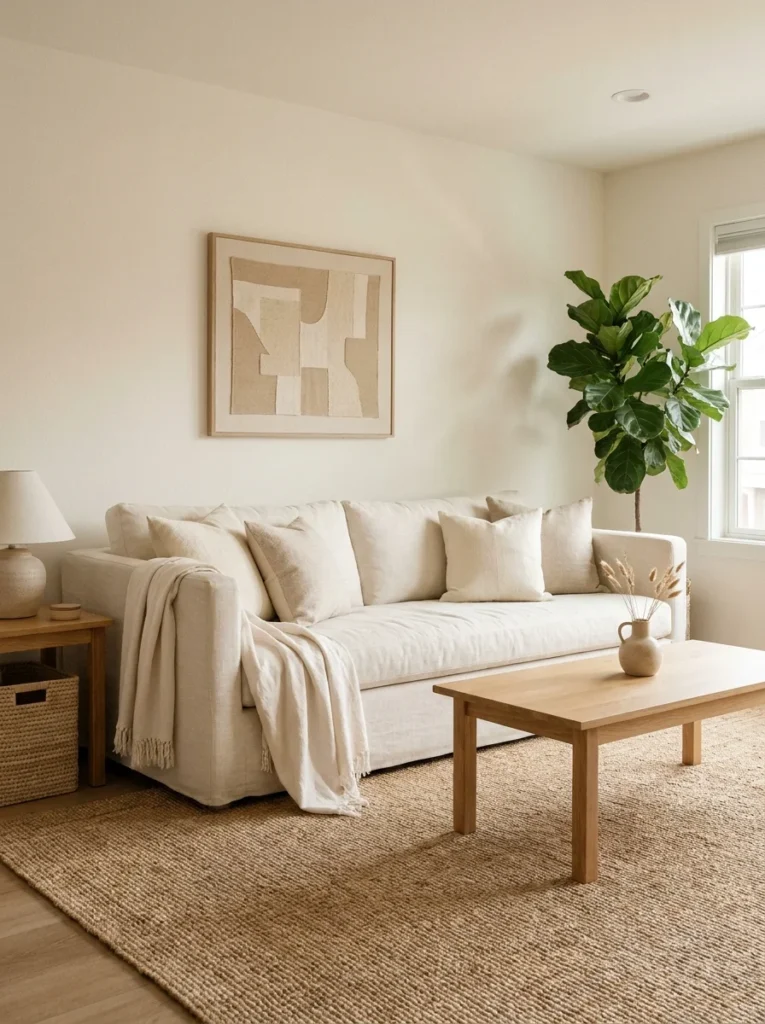
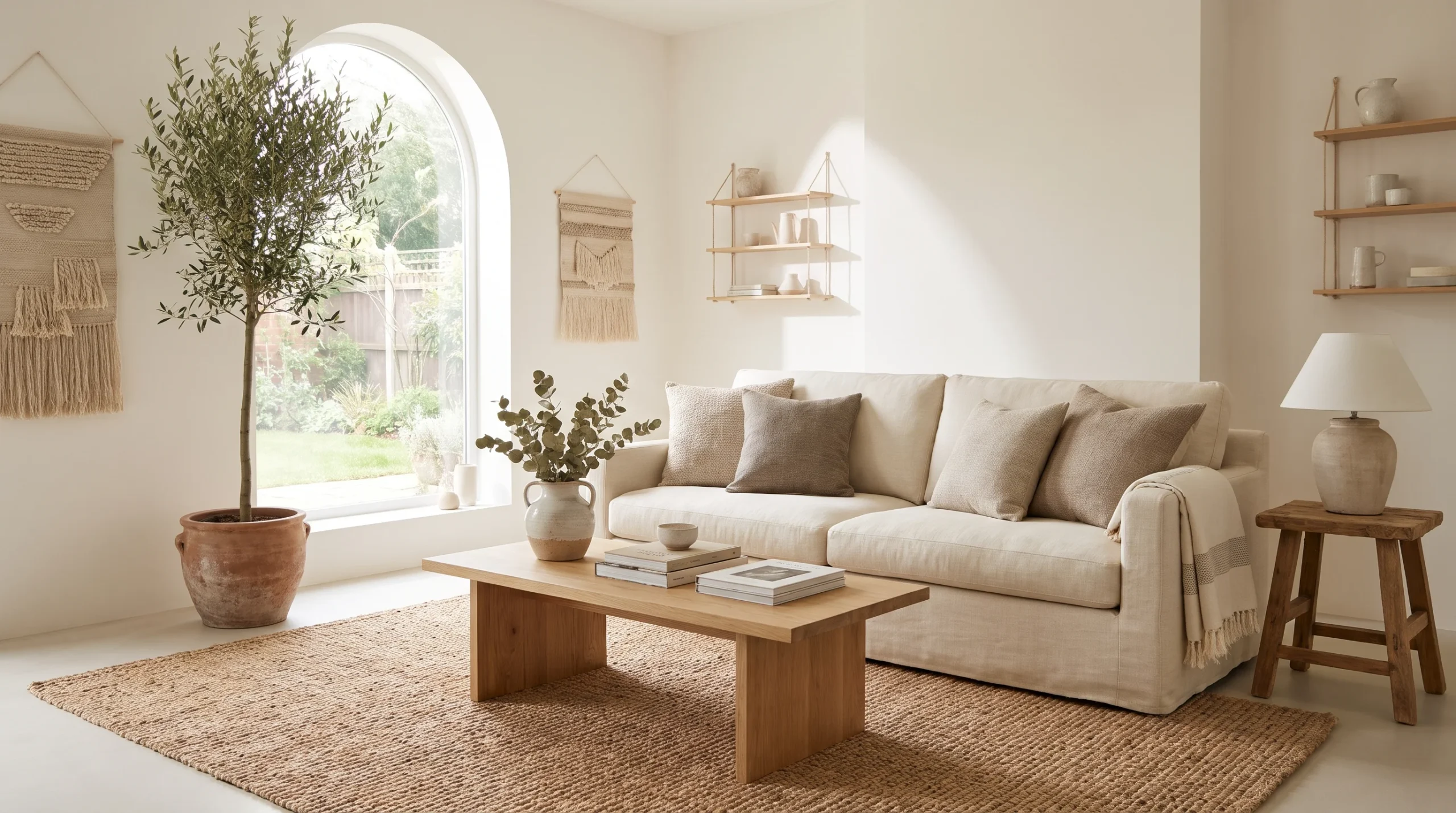
A neutral palette creates a peaceful foundation for a minimalist bohemian living room. Start with an ivory or oatmeal-colored sofa, warm white walls, and a natural wood coffee table. Add a textured cream rug and a few linen cushions to create depth without introducing too many colors. The overall look feels light, relaxed, and welcoming.
Keep the furniture arrangement simple, with enough open floor space around the seating area. A ceramic vase, a woven basket, and one piece of understated wall art can provide the finishing touches. This approach works especially well in apartments and smaller living rooms where too many decorative pieces can make the space feel crowded.
2. Earthy Beige Bohemian Living Room
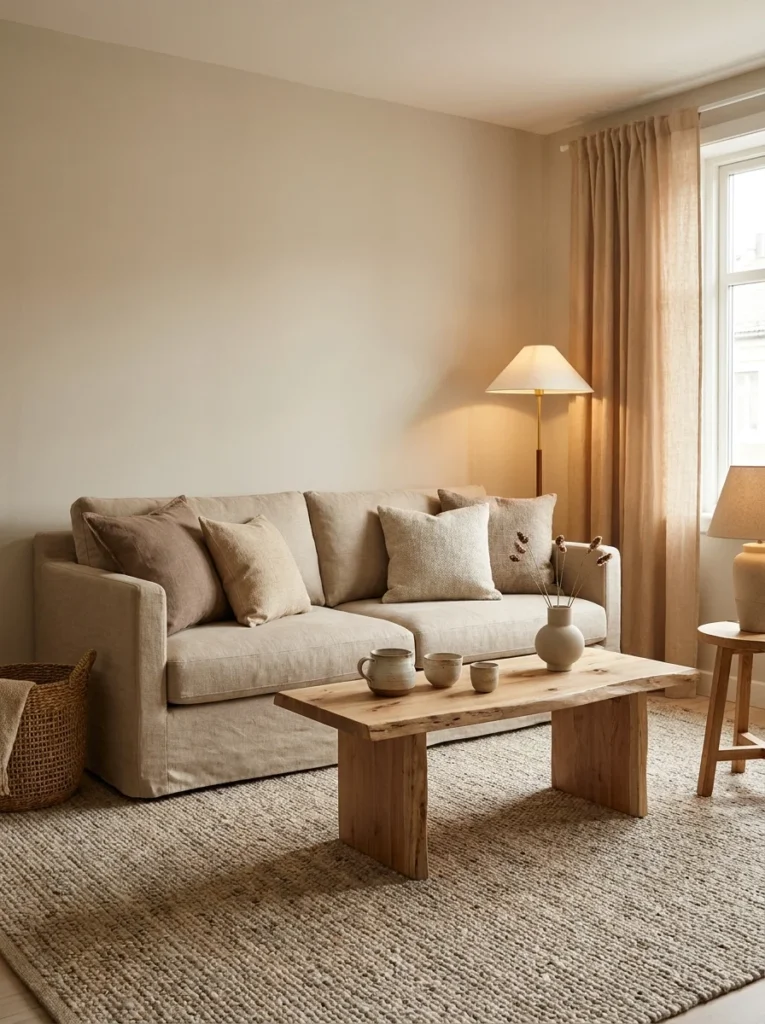
Decor details:
- Walls: Choose warm beige, sand, or light taupe instead of cool gray.
- Sofa: A beige linen or cotton sofa creates a soft visual foundation.
- Rug: Add a textured wool or jute rug to introduce natural character.
- Accessories: Use wooden trays, handmade ceramics, and woven baskets.
- Lighting: Choose warm-toned table lamps or a natural fiber pendant.
An earthy beige palette makes the living room feel comfortable without relying on bold patterns or bright colors. Combine different shades of beige to prevent the room from looking flat. A slightly darker coffee table or caramel-colored cushion can introduce contrast while keeping the overall design understated.
3. Natural Wood Accents
Quick Tip:
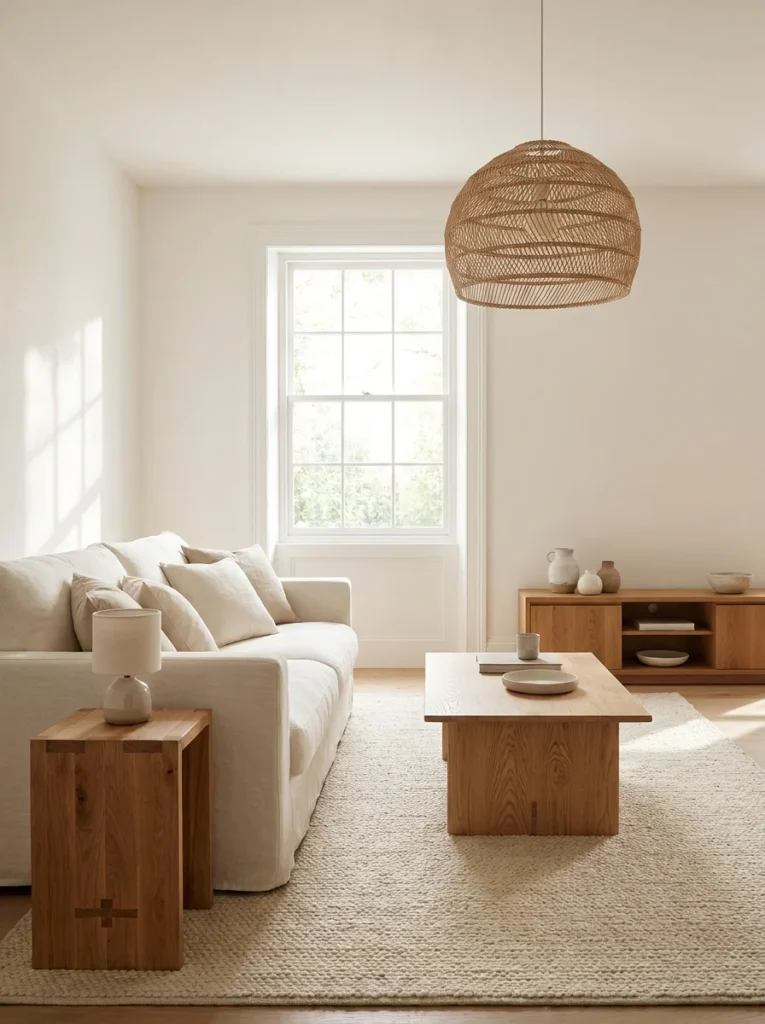
Mix at least two natural wood finishes to create depth, but keep their undertones similar. For example, pair a light oak coffee table with a medium-toned wooden side table rather than introducing several unrelated finishes.
Natural wood brings warmth to a simple bohemian interior. Consider a low-profile coffee table, wooden shelving, or a handcrafted media console with visible grain. Keep the surrounding furniture light and uncomplicated so the wood remains noticeable. This combination is particularly useful in rooms with white walls, neutral upholstery, and limited decorative accessories.
4. Cozy Linen Sofas

BEFORE
A living room with a plain sofa and smooth surfaces can feel slightly cold, especially when the color palette is mostly white or beige. The seating area may lack the softness associated with relaxed bohemian interiors.
AFTER
A relaxed linen sofa introduces a natural texture that makes the room feel warmer. Add two or three cushions in cream, muted brown, or olive, along with a soft cotton throw.
Choose a sofa with comfortable proportions rather than an oversized design that dominates the room. Linen-look upholstery is also available in easier-care fabrics, which can be useful for busy households. Keep a little breathing room around the seating area to maintain the minimalist appearance.
5. White and Beige Styling

- Paint the walls a warm white rather than a stark, blue-toned white.
- Choose a beige or oatmeal sofa as the main seating piece.
- Introduce a natural wood coffee table to break up the lighter surfaces.
- Layer a cream rug with subtle texture underneath the furniture.
- Finish with a few ceramic accessories and soft neutral cushions.
This color combination creates a bright living room that still feels warm and comfortable. It works particularly well in spaces with limited natural light because the lighter surfaces help distribute available daylight. For a balanced result, use different textures instead of adding too many contrasting colors.
6. Rattan Furniture
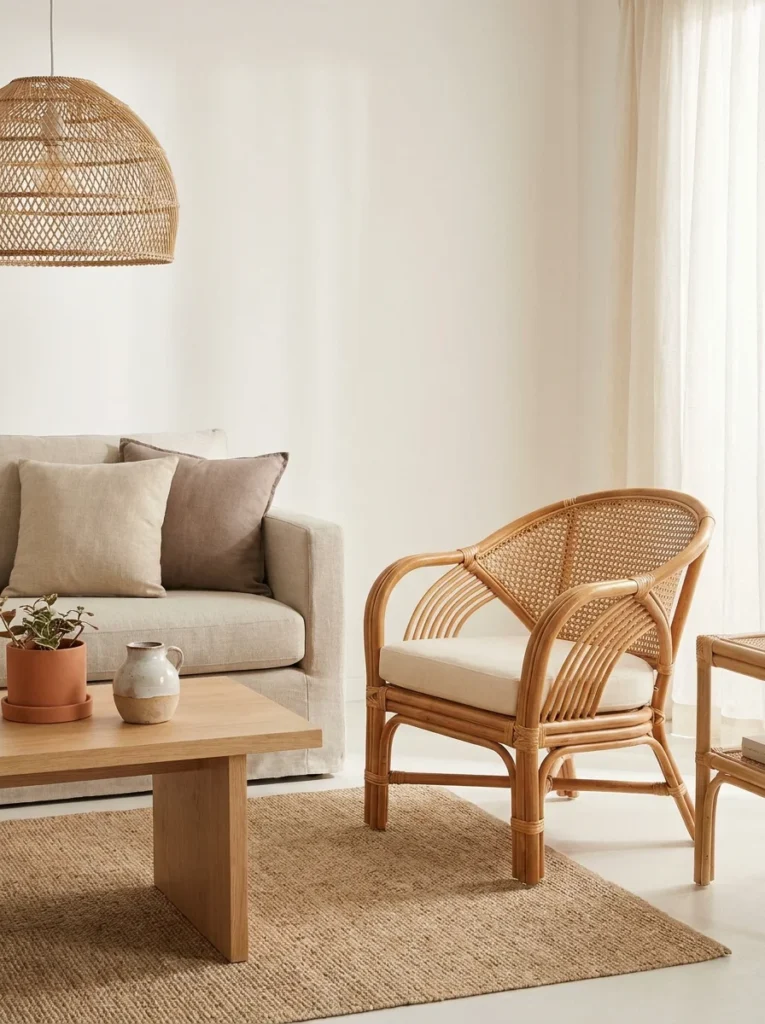
| Feature | Rattan Accent Chair | Rattan Coffee Table |
| Visual Effect | Adds a decorative focal point | Creates a natural center |
| Best Placement | Beside a window or sofa | In the main seating area |
| Function | Additional seating | Everyday surface |
| Space Needed | Floor space around the chair | Clearance around the table |
| Styling | Linen cushion and throw | Ceramic tray and vase |
Rattan furniture introduces an organic quality that suits bohemian interiors. An accent chair can create a comfortable reading corner, while a rattan coffee table adds texture to the center of the room. Choose the piece according to your available space and existing furniture rather than using both automatically.
7. Jute Rug Layers
DO:
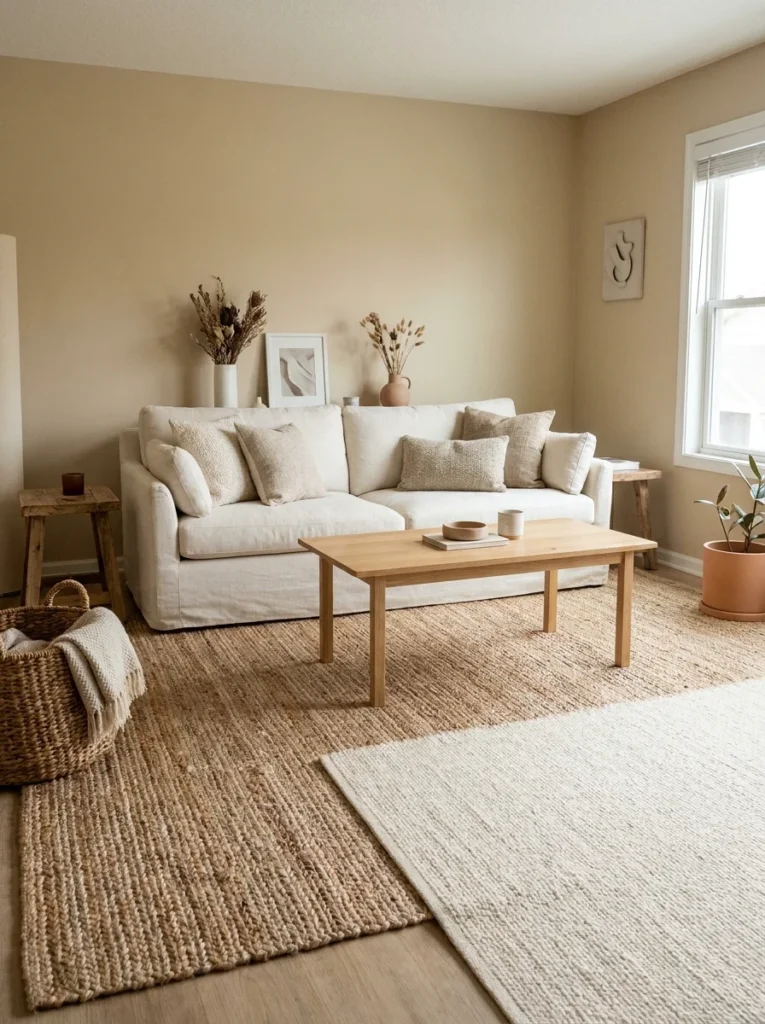
- Choose a jute rug large enough to sit beneath the front legs of your sofa.
- Layer a smaller cotton or wool rug over it for added softness.
- Keep the colors muted to maintain a cohesive look.
- Use a suitable rug pad to prevent slipping.
DON’T:
- Choose a rug that is too small for the seating arrangement.
- Place a natural fiber rug in an area exposed to frequent moisture.
- Allow loose edges to become a tripping hazard.
- Ignore the cleaning requirements of natural fibers.
Jute adds earthy texture without introducing a strong pattern. Its slightly rough surface creates an interesting contrast with soft upholstery, linen curtains, and smooth wooden furniture. In high-traffic living rooms, regular vacuuming and prompt attention to spills help maintain its appearance.
8. Terracotta Color Accents
QUICK DECOR FACTS
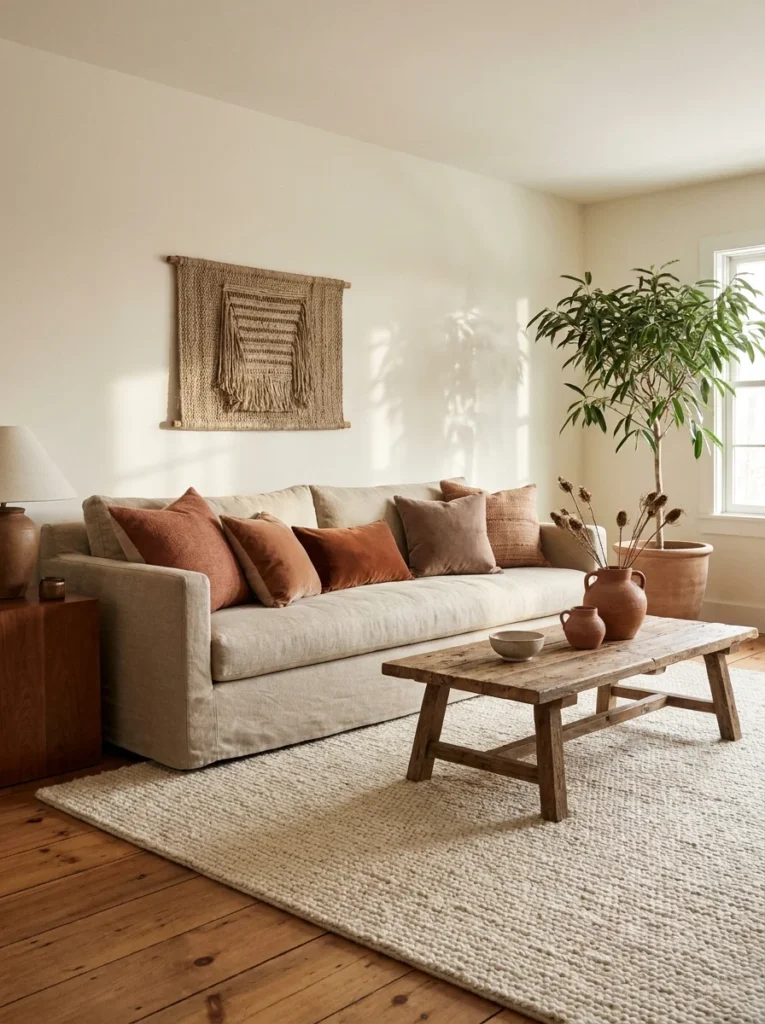
- Main Colors: Terracotta, warm cream, sand, and muted brown.
- Best Surfaces: Cushions, ceramic vases, planters, and small decorative objects.
- Materials: Clay, cotton, linen, and natural wood.
- Styling Level: Beginner-friendly.
Terracotta brings a gentle warmth to neutral interiors without overwhelming the room. Use it through two or three carefully chosen accents, such as a clay vase on the coffee table, a rust-colored cushion, and a small planter near the window. Keep larger furniture pieces neutral so the earthy shades remain balanced and easy to update.
9. Floor Cushion Seating
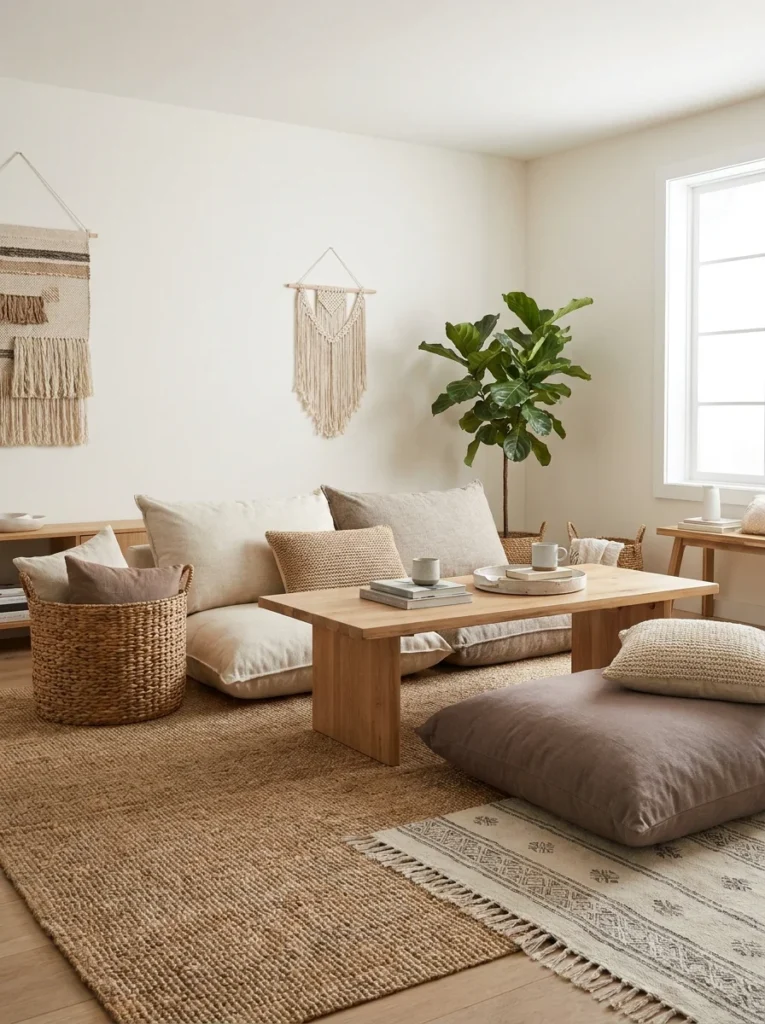
Floor cushions create a relaxed seating arrangement that gives a living room a casual bohemian character. Choose oversized cushions in cream, taupe, or muted brown and arrange them beside a low coffee table. A textured rug underneath helps define the seating area and makes the arrangement feel intentional.
For everyday comfort, select cushions with supportive filling and removable covers. Keep a woven basket nearby for storing them when extra floor space is needed. This arrangement is particularly useful in apartments, informal family spaces, or homes where occasional additional seating is more practical than purchasing another bulky chair.
10. Indoor Plant Corners

Decorating tip: Group plants at different heights rather than placing every pot directly on the floor. A tall leafy plant, a medium-sized plant on a wooden stand, and a smaller tabletop variety create a more natural arrangement.
A dedicated plant corner brings life and color into an earthy living room. Position larger plants near a bright window, where their leaves can receive suitable light. Use terracotta pots, woven planters, or simple ceramic containers to complement the furniture. Check each plant’s light and watering requirements before choosing its location, and leave enough space around the leaves for easy maintenance.
11. Warm Cream Color Palette
BEFORE
A room decorated entirely in bright white can sometimes feel stark, especially when the furniture has smooth finishes and the accessories lack texture.
AFTER
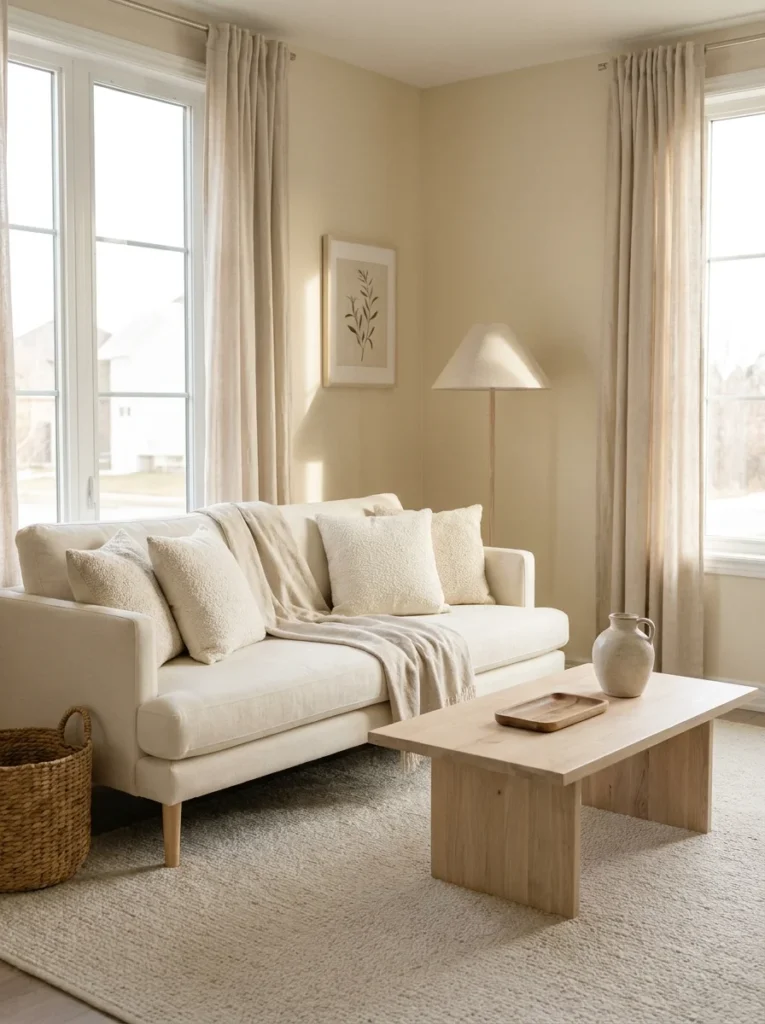
Warm cream introduces a softer atmosphere. Cream walls, an ivory sofa, beige cushions, and a natural wool rug create a layered palette that feels comfortable without looking busy.
To keep the room visually interesting, combine matte ceramics, woven fabrics, and lightly textured upholstery. A wooden side table or caramel-colored accessory can provide subtle contrast. This palette also makes it easier to change seasonal cushions or small decorative pieces without redesigning the entire living room.
12. Woven Wall Decor

- Choose the wall: Select an open wall above the sofa or beside a reading corner.
- Select the pieces: Look for woven baskets, natural fiber wall plates, or handmade textile art.
- Plan the arrangement: Arrange the pieces on the floor first to test their spacing.
- Create balance: Combine different sizes while keeping a consistent natural color palette.
- Install securely: Use appropriate wall fixings based on the weight of each piece.
Woven wall decor adds dimension to plain walls without requiring bold artwork or multiple paint colors. A small collection of natural fiber pieces works especially well above a neutral sofa. Keep the arrangement relatively contained so the wall remains decorative rather than becoming visually crowded.
13. Low-Profile Furniture
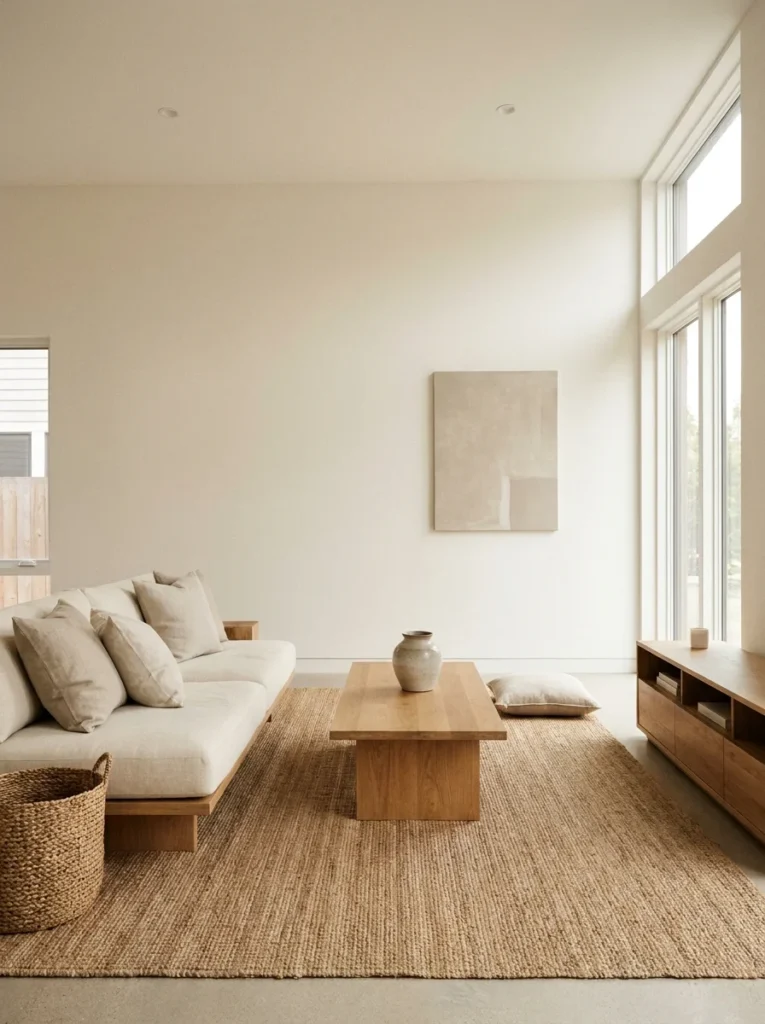
| Feature | Low Furniture | Standard-Height Furniture |
| Appearance | Relaxed and grounded | Traditional and familiar |
| Visual Space | Leaves more visible wall area | Creates a conventional room profile |
| Seating | Often casual and lounge-focused | Easier for many people to stand from |
| Best For | Informal boho interiors | Mixed-use family spaces |
Low-profile furniture gives a living room a relaxed, grounded appearance. Consider a low sofa, a simple wooden coffee table, or a floor-level media console. Standard-height seating may be more comfortable for older family members or people with mobility concerns, so consider everyday needs before choosing furniture based only on appearance.
14. Rustic Wood and Neutral Decor

Quick Tip:
Let one substantial wooden piece become the main focal point. A rustic coffee table with visible grain or a reclaimed wood console can provide enough character without requiring several decorative wooden accessories.
Combine the wood with soft beige upholstery, cream walls, and natural textiles. Avoid overly polished finishes if you want to preserve the rustic character. A handmade ceramic bowl or a simple woven basket can complete the arrangement. For a cohesive look, repeat a similar wood tone in one smaller detail elsewhere in the room.
15. Small Minimalist Bohemian Living Room

DO:
- Choose a compact sofa with visible legs to maintain a lighter appearance.
- Use a round coffee table to soften tight walking paths.
- Add wall-mounted shelves instead of bulky storage furniture.
- Keep the main color palette light and consistent.
DON’T:
- Push too much furniture into the center of the room.
- Cover every available surface with accessories.
- Use oversized rugs that interfere with doorways.
- Block windows with tall furniture.
A small living room benefits from a clear furniture layout and carefully selected decor. Keep everyday essentials in baskets or closed storage, and choose multifunctional furniture when possible. A compact sofa with a slim side table can provide comfortable seating without taking up unnecessary floor space.
16. Scandinavian Boho Blend

Decor details:
- Furniture: Simple Scandinavian-inspired sofas and light wood tables.
- Colors: Warm white, beige, pale gray, and muted olive.
- Textiles: Linen cushions, cotton throws, and subtle woven patterns.
- Decor: Handmade ceramics, small plants, and understated wall art.
- Lighting: Minimal floor lamps and natural fiber pendants.
Scandinavian styling keeps the room organized and visually simple, while bohemian materials add warmth and personality. The combination works best when furniture shapes remain uncomplicated and natural textures provide most of the decorative interest. Choose a few meaningful accessories rather than filling shelves with unrelated objects.
17. Arched Architectural Details
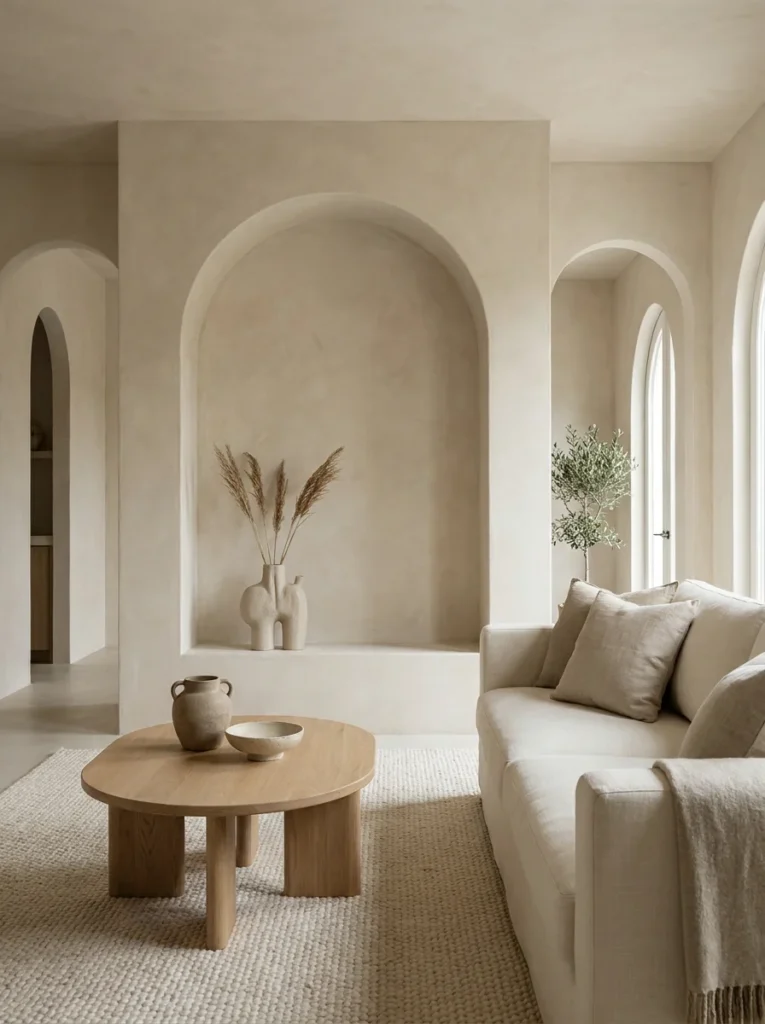
BEFORE
A plain living room wall can feel unfinished when the space has minimal furniture and very little architectural detail. Adding numerous decorative objects may create more clutter than character.
AFTER
An arched wall niche, curved mirror, or arched shelving unit introduces a softer architectural shape. Combined with beige walls and natural wood, the curves create a gentle focal point.
For a simple update, consider an arched floor mirror rather than a permanent renovation. Place it where it can reflect natural light without obstructing a walkway. Renters can achieve a similar look with freestanding furniture and removable decorative elements.
18. Brown and Cream Contrast

- Start with cream walls and light-colored upholstery.
- Introduce a medium or dark brown coffee table for visual contrast.
- Add chocolate or caramel cushions in different fabric textures.
- Use a woven rug to connect the lighter and darker elements.
- Finish with a wooden frame, ceramic vase, or warm-toned lamp.
Brown and cream create a balanced combination that feels grounded without appearing heavy. The lighter surfaces keep the room open, while darker accents give the furniture arrangement definition. This palette is easy to adapt across seasons by changing smaller accessories rather than replacing major furniture pieces.
19. Sheer Linen Curtains
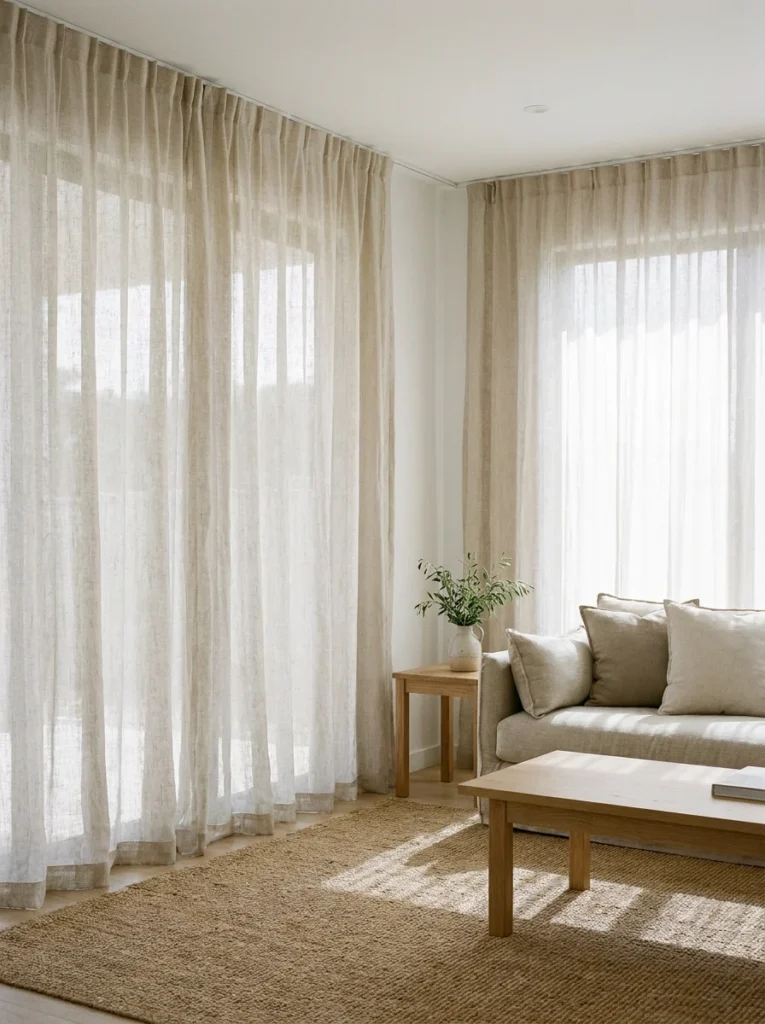
| Feature | Sheer Linen Curtains | Lightweight Cotton Curtains |
| Appearance | Soft and naturally textured | Simple and casual |
| Light | Diffuses daylight | Varies by fabric thickness |
| Privacy | Limited, especially at night | Depends on opacity |
| Maintenance | Requires fabric-specific care | Often easier to wash |
| Best For | Airy daytime spaces | Everyday practical use |
Sheer curtains soften the windows and complement the relaxed feel of bohemian interiors. Choose a warm white or natural flax shade that coordinates with the sofa and rug. If privacy is important, add a separate blackout or lined layer rather than relying on sheer fabric alone.
20. Vintage Decorative Accents

Quick Tip:
Choose vintage objects that have a clear purpose or visual connection to the room. A wooden stool, an aged ceramic vase, or a small framed artwork can add personality without turning the living room into a crowded collection.
A few carefully selected vintage pieces bring individuality to a minimalist interior. Place a small wooden stool beside the sofa, use an old-style ceramic vessel as a centerpiece, or display one framed print on an otherwise simple wall. Mixing vintage accents with contemporary furniture creates contrast while keeping the overall arrangement fresh and functional.
21. Layered Natural Textures
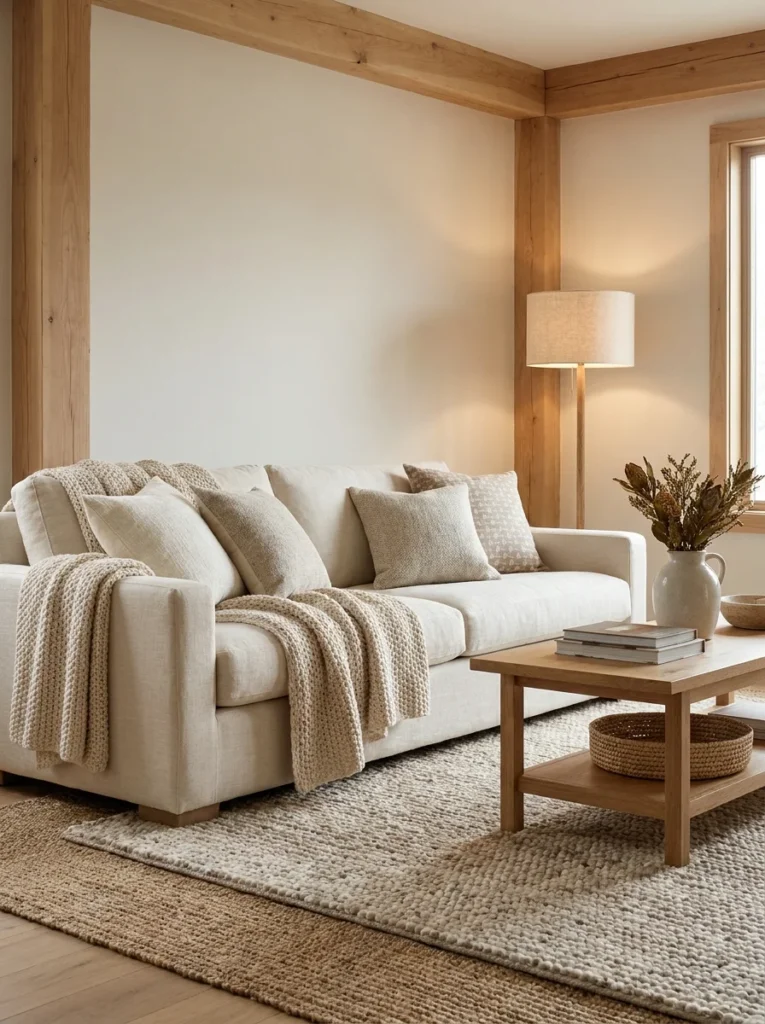
DO:
- Combine linen upholstery with chunky cotton cushions.
- Place a woven rug beneath smooth wooden furniture.
- Add a soft throw over one side of the sofa.
- Use ceramic and woven accessories to vary the surface finishes.
DON’T:
- Introduce too many competing patterns.
- Mix every available texture in one small seating area.
- Cover the sofa with excessive cushions.
- Choose decorative materials that are difficult to clean for everyday use.
Layering textures is one of the easiest ways to make a neutral room feel warm and inviting. The key is to vary the materials while keeping the color palette consistent. When the colors relate to one another, different surfaces can provide visual interest without making the room feel cluttered.
22. Natural Lighting
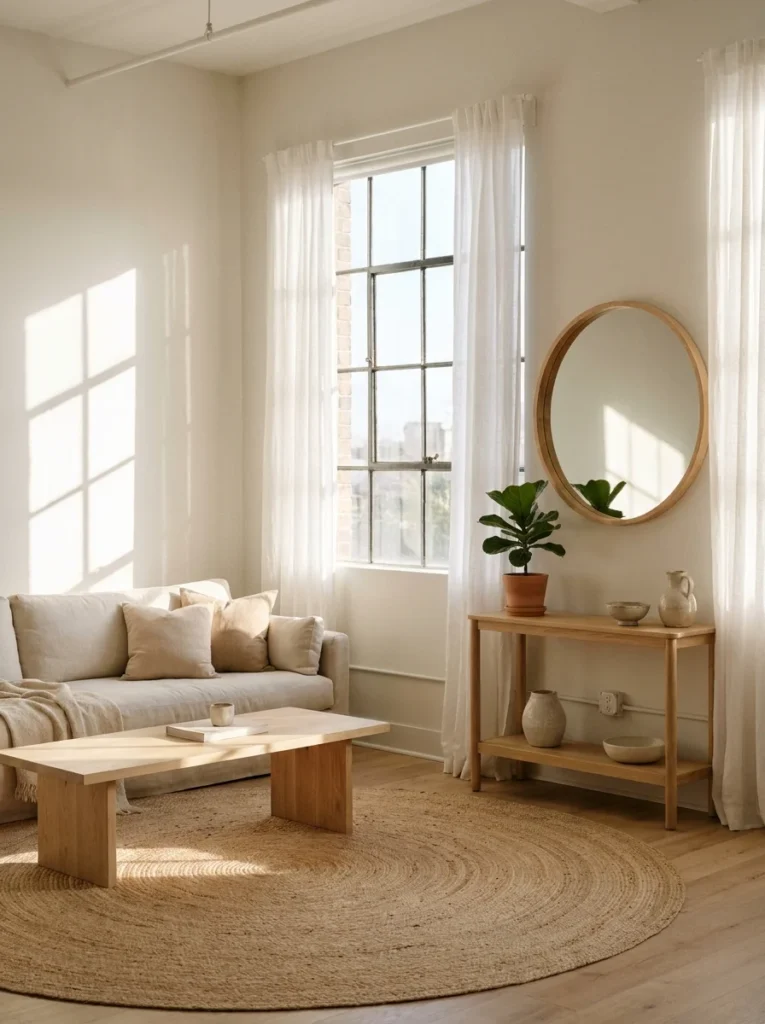
QUICK DECOR FACTS
- Best Placement: Near windows and bright open corners.
- Window Treatments: Sheer linen or lightweight cotton.
- Furniture: Keep tall pieces away from major light sources.
- Artificial Lighting: Add warm table lamps for evening use.
Natural light helps highlight the texture of wooden furniture, woven rugs, and neutral fabrics. Avoid placing bulky cabinets directly in front of windows, and use mirrors strategically to reflect daylight into darker parts of the room. For evenings, combine overhead lighting with table or floor lamps so the space remains comfortable after sunset.
23. Organic Furniture Shapes
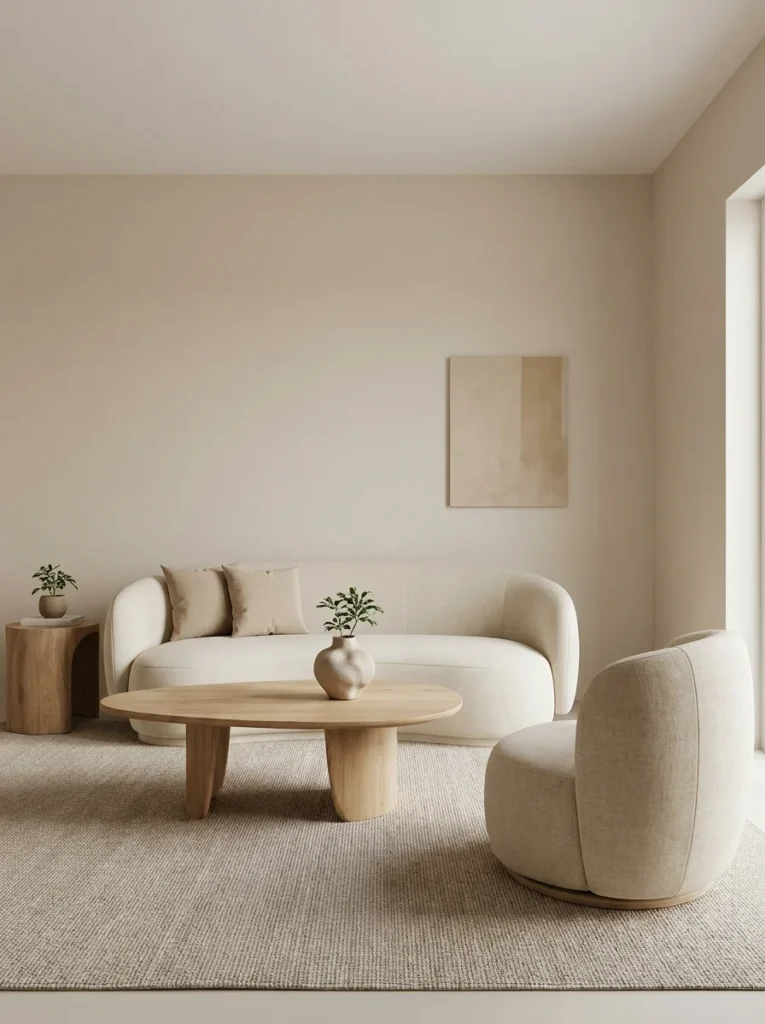
BEFORE
A room filled with square furniture, straight edges, and rigid arrangements can feel overly structured, particularly when the decor palette is minimal.
AFTER
Rounded furniture introduces softer lines. A curved accent chair, oval coffee table, or circular side table creates a more relaxed arrangement while preserving a clean appearance.
Choose one or two rounded pieces rather than replacing every item. For example, an oval coffee table can soften a rectangular sofa arrangement without reducing its functionality. Check the table dimensions and walking clearance before purchasing, especially if the living room is narrow.
24. Macrame Wall Decor

- Select a location: The wall above the sofa or beside a reading chair is a natural choice.
- Choose the size: Match the width of the macrame piece to the available wall area.
- Coordinate the colors: Natural cotton, ivory, and beige work well with earthy furniture.
- Balance the display: Keep nearby shelves and artwork simple.
- Install carefully: Use a secure hook suitable for the hanging weight.
Macrame introduces handmade texture and a distinctly bohemian detail. A medium-sized wall hanging can become a focal point without requiring a gallery wall. Keep it away from areas where it may frequently catch on furniture or collect excessive dust. Occasional gentle cleaning helps maintain its natural appearance.
25. Simple Neutral Accessories

Decor details:
- Coffee Table: Use one ceramic bowl or a small wooden tray.
- Side Table: Add a compact lamp with a fabric shade.
- Sofa: Choose two or three cushions in complementary neutral shades.
- Shelves: Display a few handmade ceramics or small framed prints.
- Floor: Place a woven basket beside the sofa for blankets.
Neutral accessories make it easier to maintain a tidy, understated interior. Instead of decorating every surface, leave some areas intentionally empty. This gives each decorative piece room to stand out and makes routine cleaning easier. You can also swap small accessories when you want a subtle seasonal update.
26. Airy Open Living Space
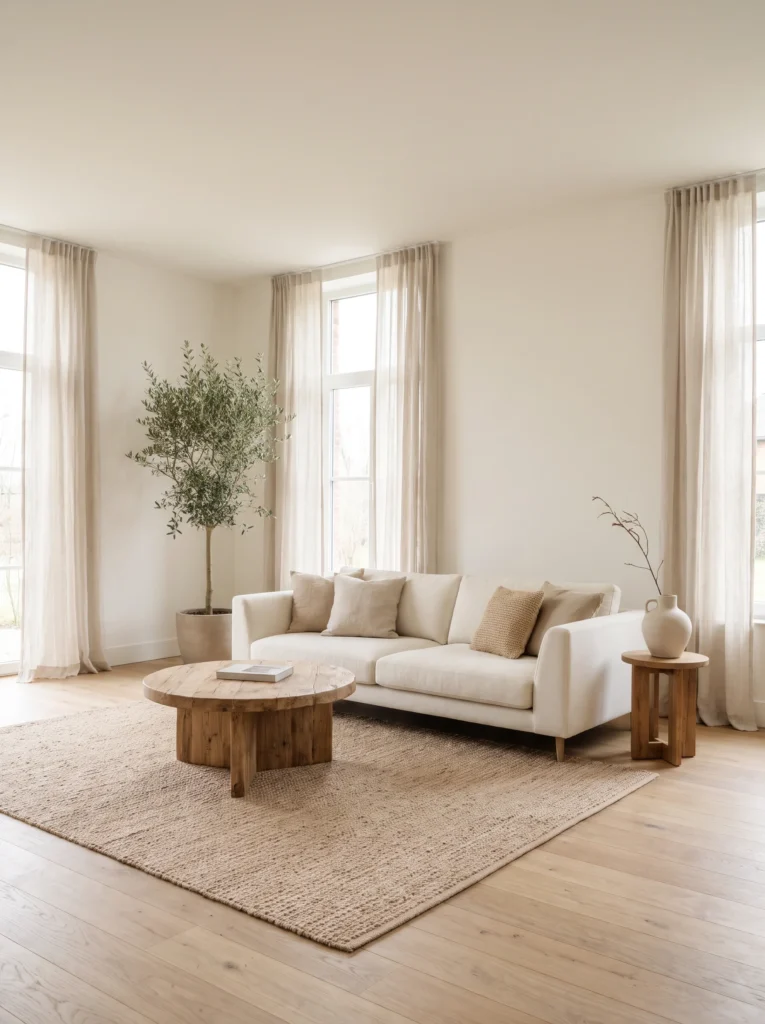
BEFORE
A living room with oversized furniture, crowded shelves, and too many small accessories can feel visually restricted. Even a generous floor plan may appear smaller when every corner is occupied.
AFTER
An open arrangement creates breathing room around the furniture. A streamlined sofa, a simple coffee table, and a few well-placed natural accessories establish a clear focal point while keeping the floor area accessible.
Focus on maintaining comfortable walking paths between the sofa, coffee table, and nearby doors. Store everyday items in closed cabinets or woven baskets, and resist the urge to fill every empty corner. An airy layout allows natural materials and subtle textures to become the main decorative features.
Tips for Creating a Calm, Earthy Minimalist Boho Living Room
Creating a balanced bohemian interior is more about thoughtful choices than buying lots of decorative pieces. Keep these practical tips in mind while styling your living room.
– Start with a warm foundation: Choose cream, beige, warm white, or soft taupe for the walls and larger furniture pieces. These shades make it easier to introduce natural textures.
– Mix materials thoughtfully: Combine wood, rattan, jute, linen, cotton, and ceramics. Different materials create depth even when the colors remain similar.
– Pay attention to furniture scale: Measure your seating area before purchasing a sofa, coffee table, or accent chair. Leave comfortable walking space between furniture pieces.
– Keep decorations intentional: Select a few meaningful objects instead of filling every shelf and tabletop. Empty surfaces are an important part of minimalist styling.
– Use plants for natural color: Add greenery through plants that suit your room’s available light. Choose simple pots that complement the existing palette.
– Layer your lighting: Combine natural daylight with floor lamps, table lamps, and soft ambient lighting. This makes the room comfortable throughout the day.
– Choose practical fabrics: Consider washable cushion covers, durable upholstery, and easy-to-clean rugs if you have children or pets.
– Add personality gradually: Introduce vintage finds, handmade ceramics, woven accessories, and personal artwork over time. This keeps the room from feeling overly decorated.
Conclusion
Creating a peaceful bohemian interior does not require expensive furniture or excessive decoration. These Minimalist Bohemian Living Room Ideas show how neutral colors, natural wood, woven materials, comfortable seating, and thoughtful lighting can work together to create a warm home.
Start with one idea that suits your available space and budget, then gradually introduce textures and accessories that reflect your personal style. Remember to keep the layout functional and leave enough open space for everyday living. Save your favorite ideas on Pinterest and share this collection with someone planning a cozy living room refresh.
Frequently Asked Questions
1. What is a minimalist bohemian living room?
A minimalist bohemian living room combines the relaxed, artistic character of boho decor with the simplicity of minimalist design. It features natural materials, earthy colors, comfortable furniture, handmade accessories, and uncluttered layouts. The goal is to create a cozy, personal space without excessive decoration.
2. What colors work best for a minimalist boho living room?
Warm white, cream, beige, sand, taupe, terracotta, olive green, and earthy brown are excellent choices. Use lighter shades for walls and larger furniture, then introduce darker earthy colors through cushions, rugs, pottery, and decorative accents.
3. How can I make my living room look bohemian but not cluttered?
Choose a limited color palette and focus on a few natural materials. Instead of displaying numerous small accessories, select a handful of meaningful decorative pieces. Keep furniture arrangements simple, use hidden storage for everyday items, and leave some wall and floor space open.
4. What furniture works best in a minimalist boho living room?
Natural wood coffee tables, linen sofas, rattan accent chairs, low-profile media consoles, and simple wooden side tables work particularly well. Choose comfortable furniture with uncomplicated shapes and finishes that complement the earthy color palette.
5. How do you decorate a small minimalist bohemian living room?
Use light neutral colors, compact furniture, and multifunctional storage. A small round coffee table, slim sofa, wall-mounted shelves, and a textured rug can help create a comfortable arrangement. Avoid oversized decorative pieces and keep windows unobstructed to maintain an open feeling.