

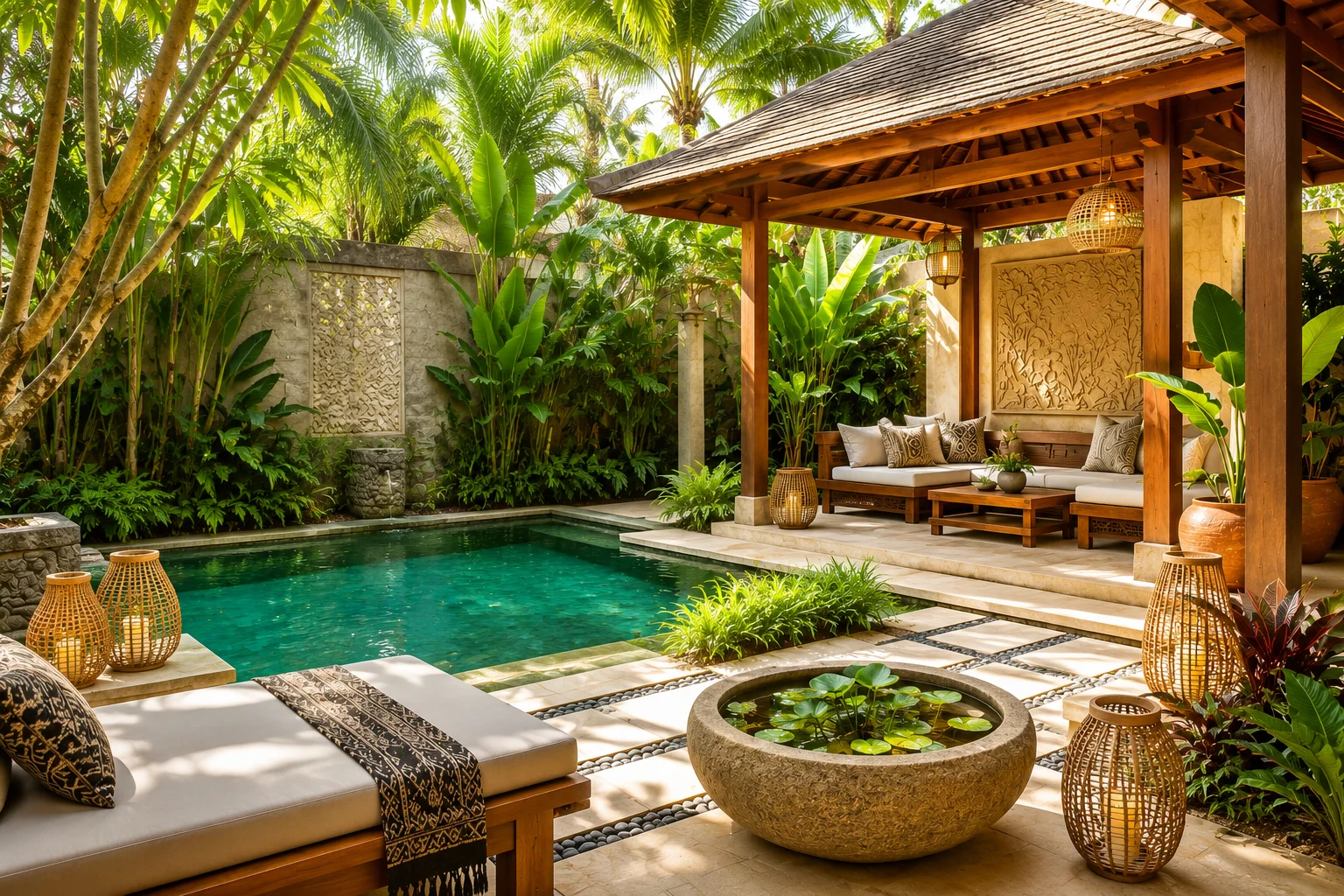
Imagine stepping into your backyard and feeling like you’ve arrived at a peaceful tropical retreat instead of your own home. That’s exactly what drew me to Balinese-inspired outdoor design. After experimenting with natural materials, lush greenery, and calming water features, I realized you don’t need a beachfront villa to capture this relaxing atmosphere.
These ideas will help you create an outdoor space that feels warm, welcoming, and effortlessly luxurious.
1. Thatched Roof Cabanas and Gazebos
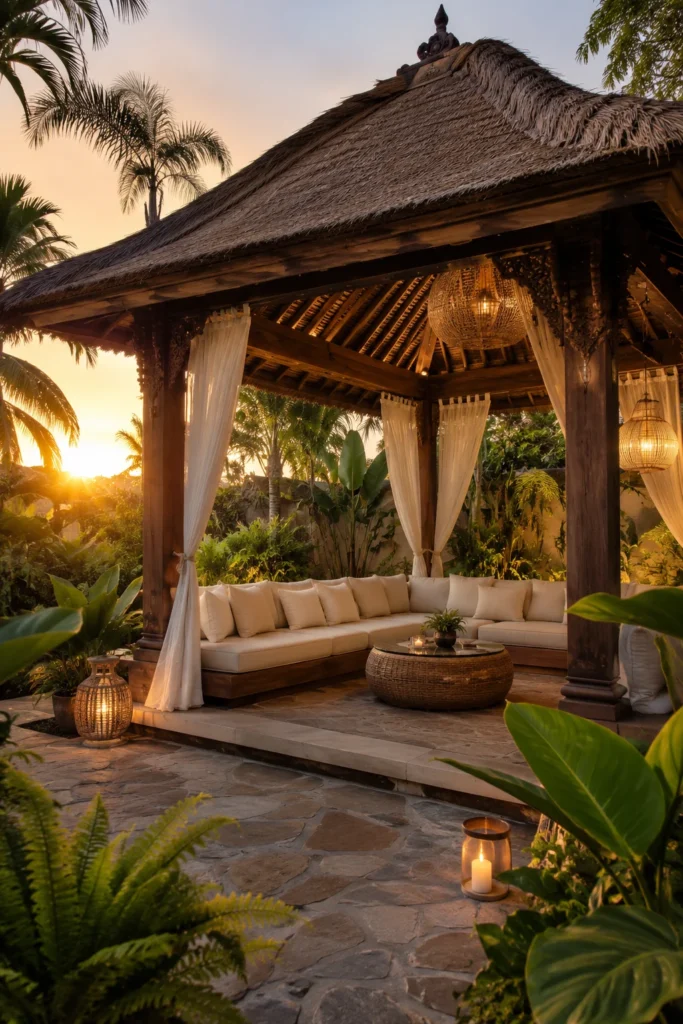
The alang-alang thatched roof is probably the single most recognizable feature of Balinese architecture, and it’s the first thing I noticed when I started redesigning my own patio. There’s something about that textured, golden-brown roofline that instantly softens a space and makes it feel like it belongs somewhere tropical.
You don’t need a full villa to pull this off. A single cabana over a seating area or a small gazebo near the garden can carry the whole look.
- Look for synthetic thatch if you live somewhere with heavy rain or snow, since it holds up far better than the real thing
- Pair the roof with dark timber posts for contrast
- Keep the structure open on at least two sides so air moves through freely
2. Natural Stone Pathways and Flooring
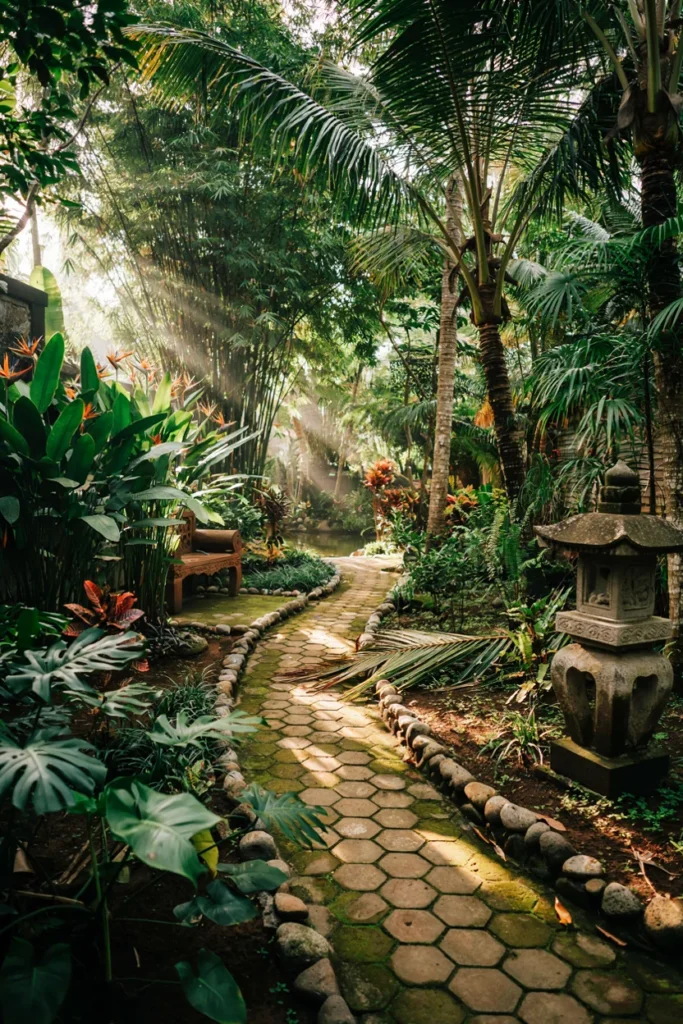
Bali gardens rarely use straight, poured concrete paths. Instead you get irregular stone slabs, often volcanic or river stone, set into grass or gravel with gaps between each piece. It looks unplanned, but it’s actually very deliberate.
I redid my own side yard this way last year, and honestly it changed how the whole space felt underfoot. The uneven texture slows you down in a good way, like you’re meant to wander rather than rush through.
- Mix stone sizes instead of using a uniform pattern
- Let moss or low groundcover grow between the gaps
- Use flat, honed stone near seating areas so furniture sits level
3. Freestanding Outdoor Daybeds
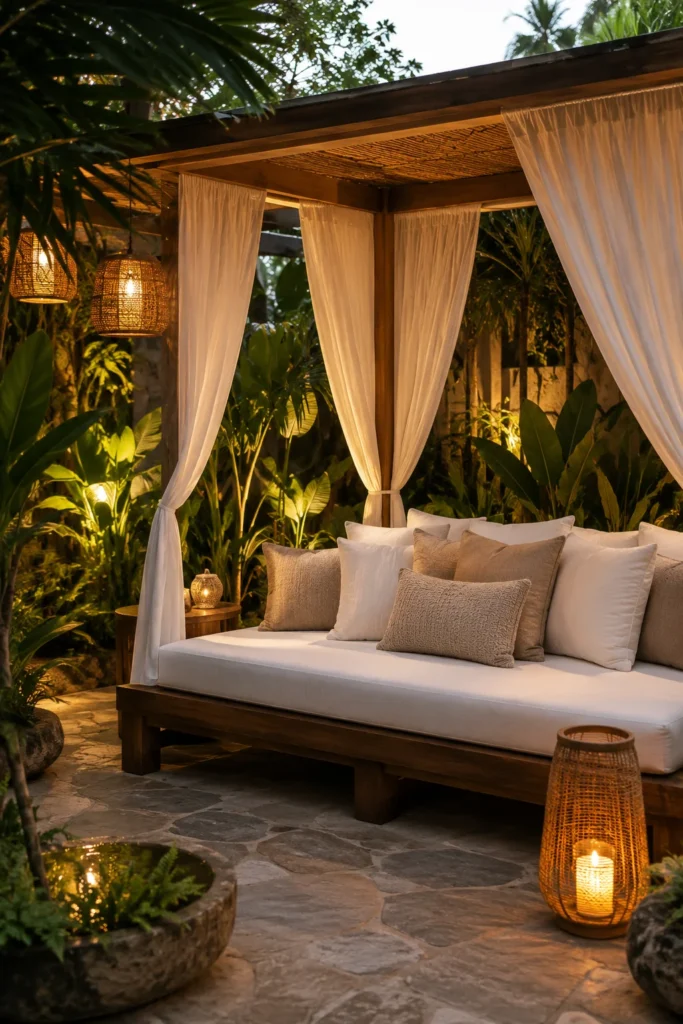
If there’s one piece of furniture that defines resort-style outdoor living, it’s the daybed. Wide, low, and usually shaded by its own canopy, it turns a corner of the yard into a destination rather than just a walkway.
I added one under a pergola near our fence line and it’s now the most used spot on the entire property, more than the dining table, more than the actual patio furniture.
- Choose weather-resistant wicker or teak frames
- Layer in cushions with tropical prints or solid earth tones
- Add a mosquito net for evening use if bugs are an issue where you live
4. Tropical Plant Layering
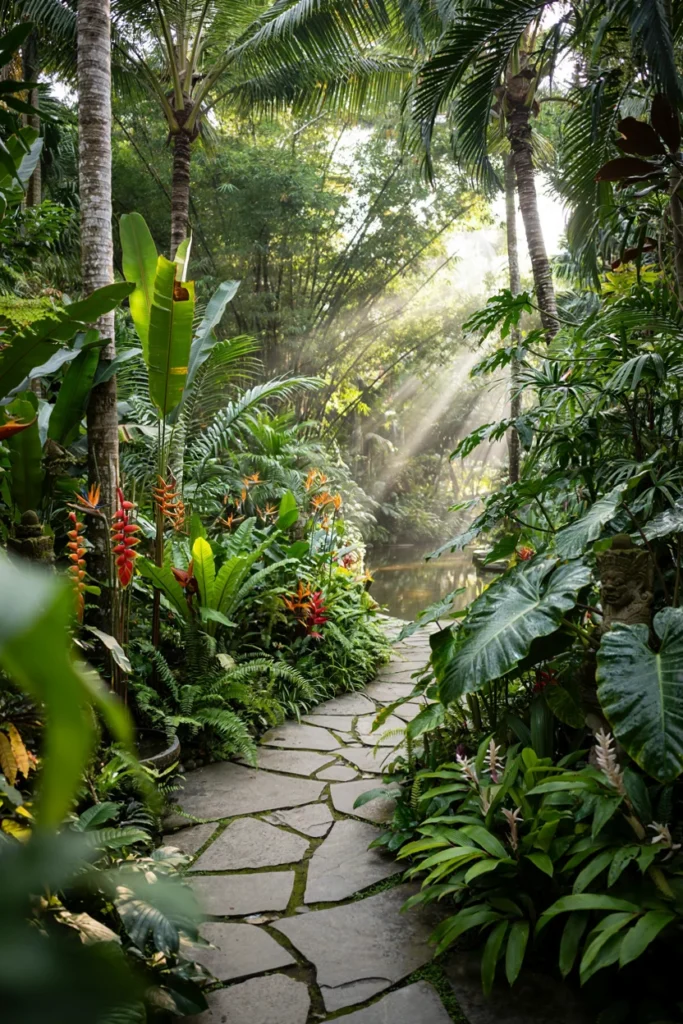
Balinese gardens are lush, but they’re not messy. The look comes from layering plants by height, tall palms and banana leaves at the back, mid-size ferns and heliconias in the middle, and low groundcover or moss up front.
This is the part people tend to rush, and it shows. Give it a season or two and the payoff is worth it.
- Use bird of paradise or traveler’s palm for height and drama
- Fill gaps with philodendrons or elephant ears for that dense, jungle feel
- Stick to a limited color palette so it reads as intentional, not cluttered
5. Koi Ponds and Water Features
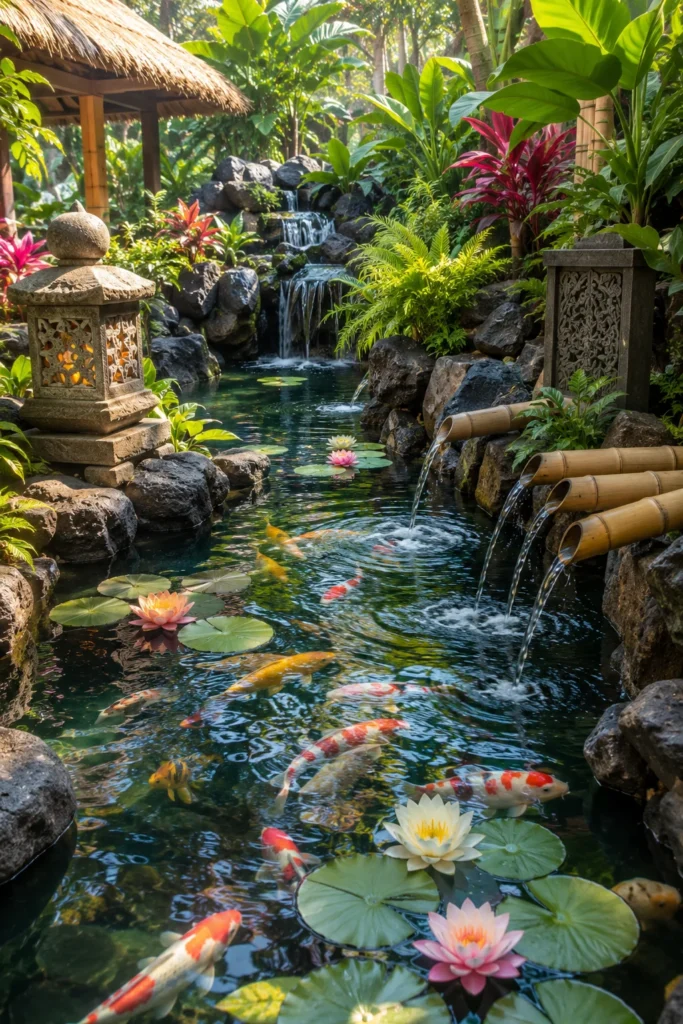
Water is everywhere in Balinese design, and it’s rarely just decorative. A small koi pond or a stone basin with trickling water does a lot of work in terms of atmosphere. It masks street noise, cools the air a little, and gives the eye somewhere calm to land.
We installed a small pond near our seating area two summers ago, and I’ll admit I was skeptical about the maintenance. It turned out to be far less demanding than I expected once the filtration was set up properly.
- Keep the pond shape irregular rather than a perfect circle or rectangle
- Add floating lotus or water lilies for texture
- Use a simple pump system so the water stays moving and clear
6. Carved Wood and Stone Statues
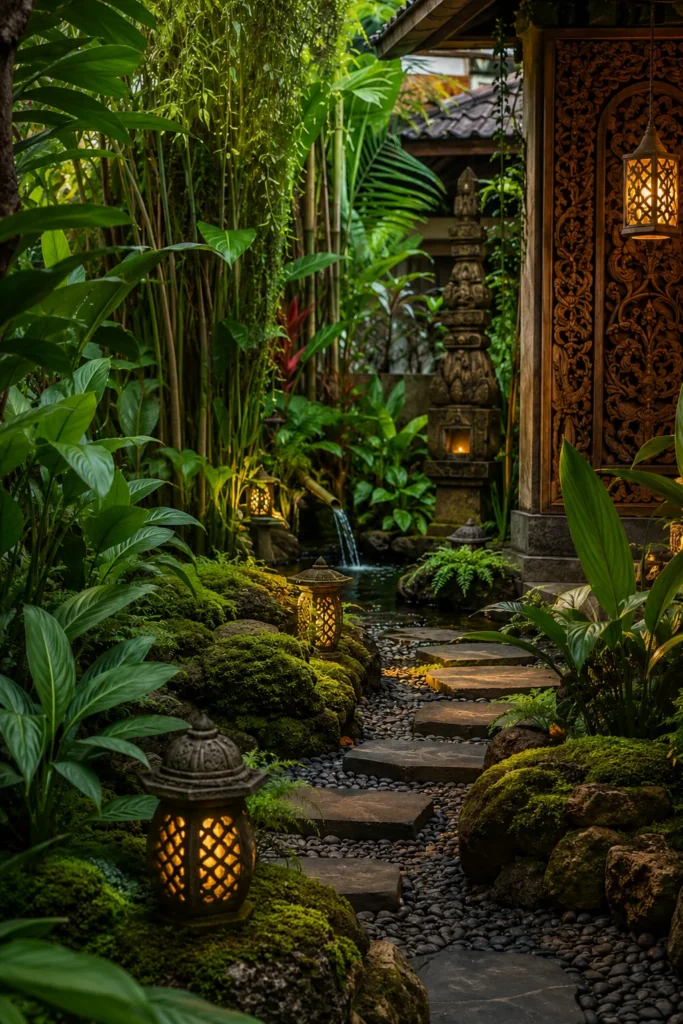
Traditional Balinese gardens often include carved stone figures, guardian statues, or wooden panels with intricate patterns. These pieces add a sense of history and craftsmanship that plants and furniture alone can’t provide.
You don’t need anything ornate or religious in nature if that’s not your style. Even a simple carved wood panel used as a garden screen adds texture and depth.
- Place statues at path intersections or garden entrances rather than scattering them randomly
- Choose weathered stone or aged wood finishes over anything too polished
- Use uplighting at night to create shadow and dimension
7. Open-Air Outdoor Showers
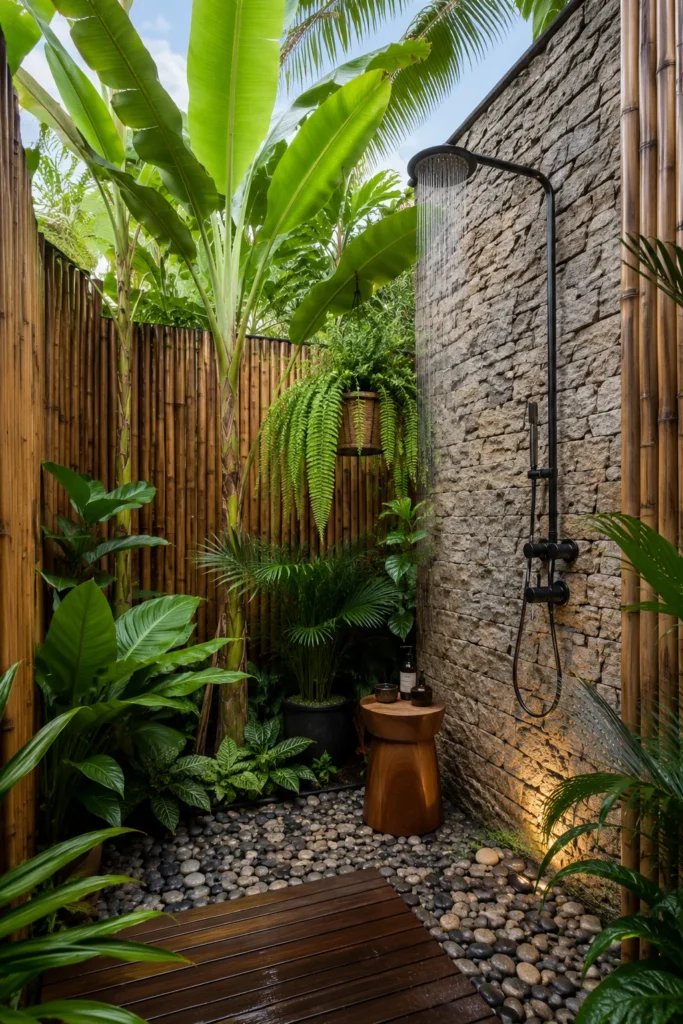
This one surprises people, but open-air showers are common in Balinese resorts and they’re easier to add at home than most think. There’s something genuinely relaxing about rinsing off outside, surrounded by plants instead of tile walls.
I added a small one off the side of our pool area, screened with bamboo on two sides, and it gets used constantly during summer.
- Use pebble flooring with proper drainage underneath
- Screen the space with bamboo, wood slats, or dense planting for privacy
- Add a simple rain-style showerhead for that resort feel
See Also: 15 Zen Bathroom Concepts That Feel Like a Spa Retreat
8. Bamboo Fencing and Screens
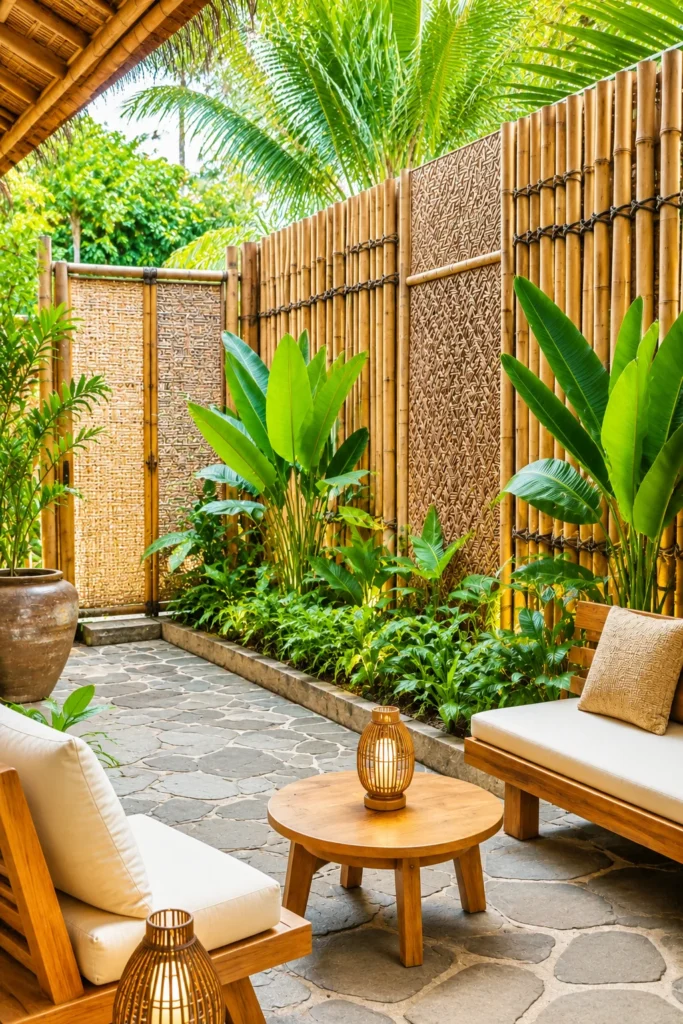
Bamboo shows up constantly in Balinese outdoor spaces, as fencing, as privacy screens, as accents on furniture and structures. It’s lightweight, renewable, and it brings warmth that vinyl or metal fencing just can’t match.
- Use split bamboo panels for fencing sections
- Combine bamboo with stone or concrete posts for durability
- Treat the bamboo properly so it resists rot in humid or rainy climates
9. Fire Pits with Tropical Surroundings
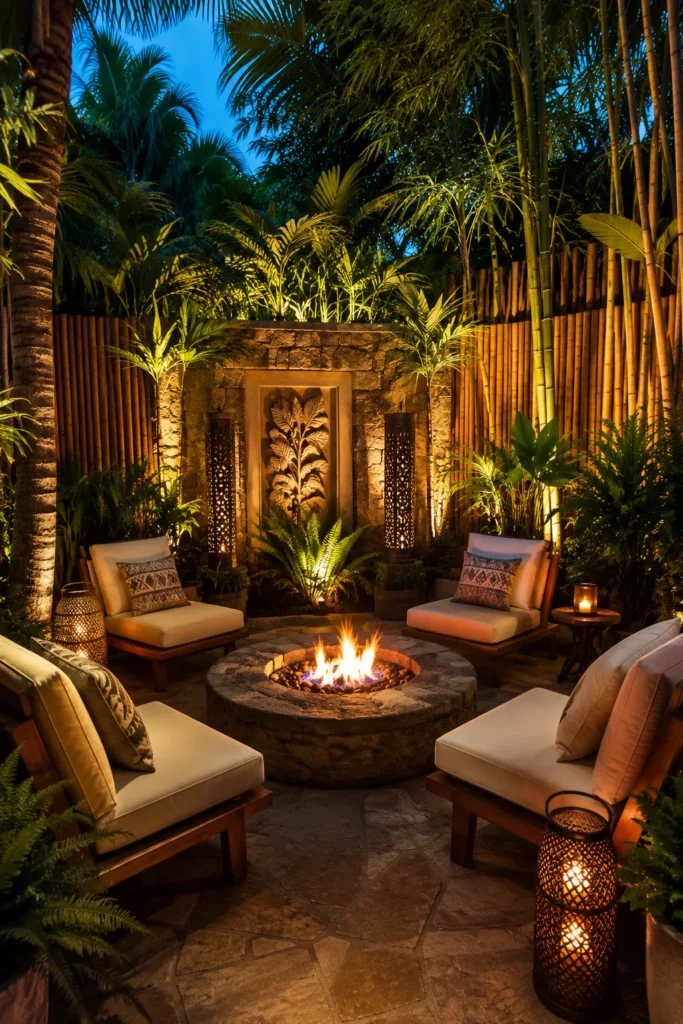
A fire pit isn’t specifically Balinese, but surrounded by palms, stone, and low lighting, it fits the aesthetic naturally. It also solves the practical problem of using your outdoor space once the sun goes down and the temperature drops.
We built ours from stacked stone with a simple gas insert, and it’s become our go-to spot for evenings with friends.
- Keep the pit low and wide rather than tall
- Surround it with built-in stone or wood seating instead of separate chairs
- Add lanterns nearby instead of harsh overhead lighting
10. Floating or Elevated Pavilions
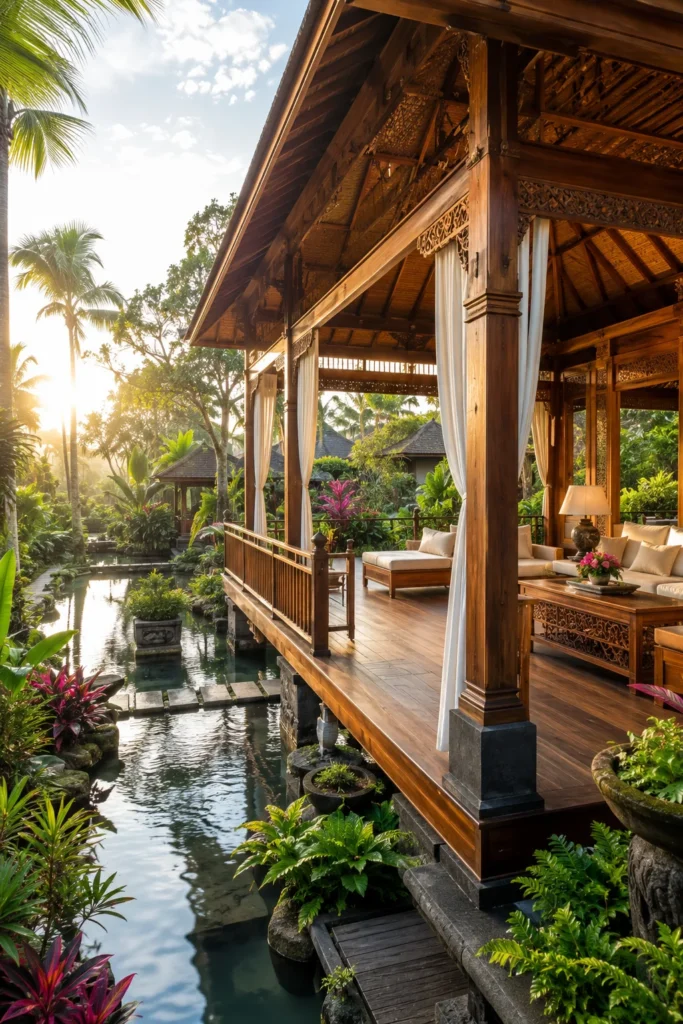
Many Balinese resorts build small pavilions that sit slightly elevated over water or garden beds, connected by a short wooden walkway. It’s a simple trick, but raising a structure even a foot or two off the ground changes how it feels entirely.
If a full pavilion isn’t realistic for your space, even a raised wooden deck for a single daybed or dining table can capture the same effect.
- Use a simple post-and-beam structure rather than anything overly complex
- Add a short bridge or stepping stones leading up to it
- Keep the roofline low so it feels intimate rather than imposing
11. Warm Lantern and String Lighting
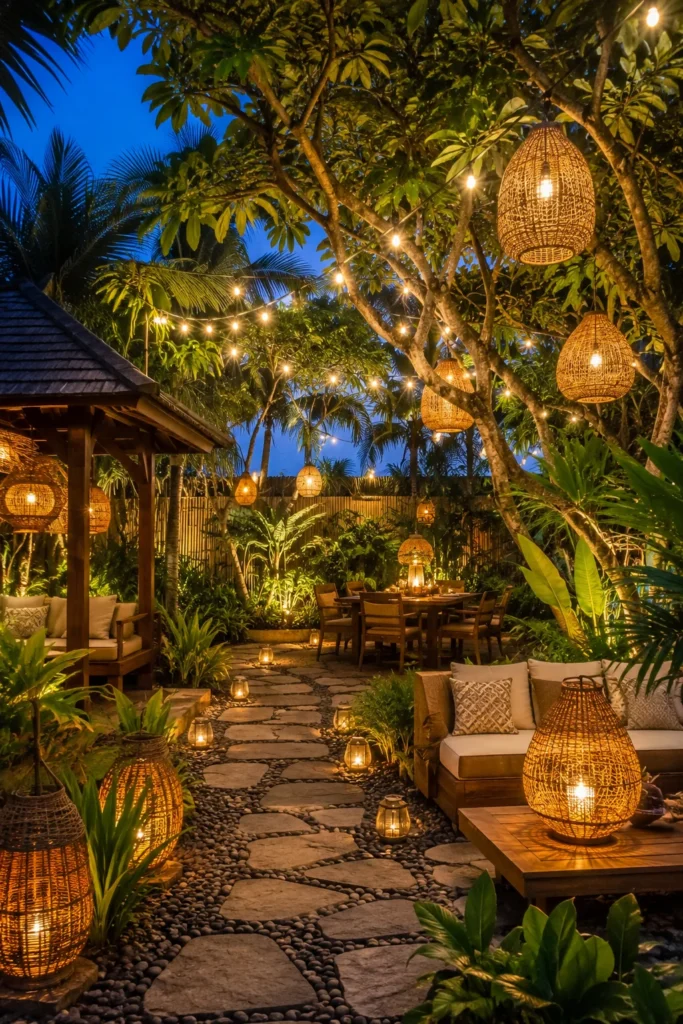
Lighting makes or breaks the resort feeling once the sun sets. Balinese spaces lean heavily on warm, low lighting, think paper or rattan lanterns, small ground lights along paths, and the occasional string of bulbs overhead rather than bright floodlights.
- Choose warm white or amber bulbs, never cool white
- Line pathways with small ground-level lights instead of tall post lamps
- Hang lanterns at varying heights for a more natural, layered look
12. Infinity-Style or Reflecting Pools
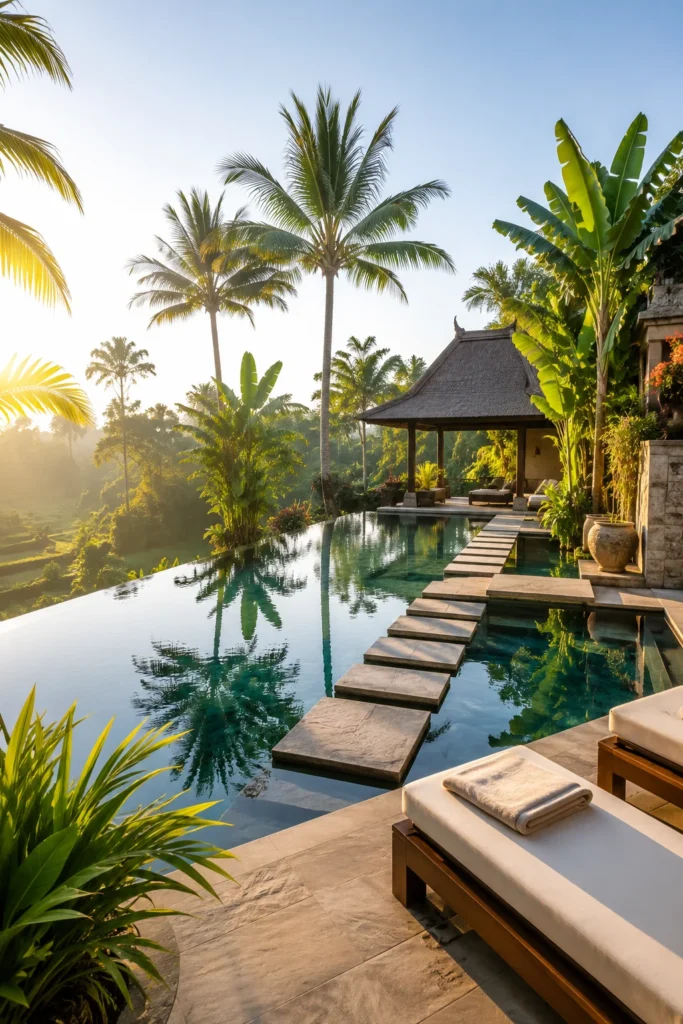
Not everyone has the budget or space for a true infinity pool, and that’s fine. Even a small reflecting pool, a shallow basin that mirrors the sky and surrounding plants, creates a similar sense of calm.
- Use dark tile or stone on the pool floor to enhance the reflective effect
- Keep the edges minimal, without a lot of visible coping or trim
- Add a single statement plant or statue near the water’s edge as a focal point
13. Outdoor Dining Pavilions with Local Textiles
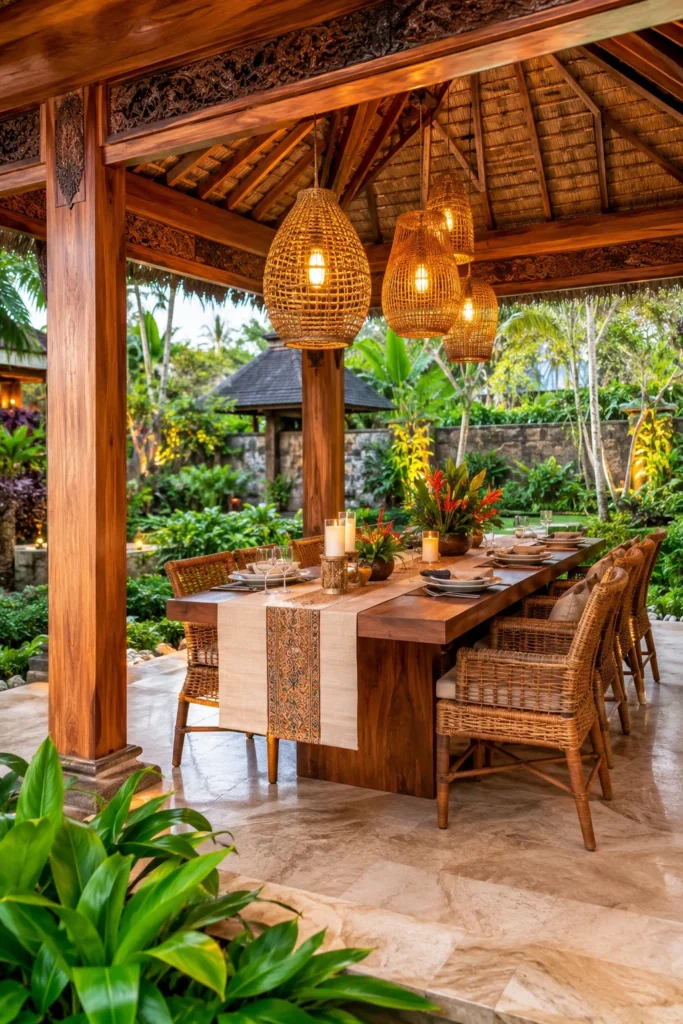
An outdoor dining area covered by its own small roof, furnished with teak furniture and topped off with woven textiles or batik-print cushions, brings the whole look together. This is usually where people gather the longest, so it’s worth investing a bit more here.
- Choose a teak or dark wood table that can handle outdoor exposure
- Add cushions or table runners in natural fibers and earthy prints
- Keep the pavilion roof consistent with your other structures for a cohesive look
Tips for Creating an Authentic Balinese Outdoor Space
A few things I’ve learned firsthand while putting this look together:
- Stick to a natural material palette. Stone, wood, bamboo, and rattan should dominate over anything plastic or overly polished
- Don’t rush the plants. A lush, layered garden takes at least one full growing season to look right
- Keep colors earthy and muted, with greenery doing most of the visual work
- Add water somewhere, even a small feature makes a noticeable difference in how the space feels
- Prioritize shade. Balinese outdoor spaces are built around escaping direct sun, not sitting in it
Conclusion
Bringing this style home isn’t about copying a resort brochure. It’s about slowing down the details, choosing natural materials over synthetic ones, and giving your plants room to actually grow into the space.
Start with one or two elements, a daybed, a water feature, some layered greenery, and build from there. The resort feeling comes from the atmosphere as a whole, not any single piece.
FAQs
What makes an outdoor space look Balinese-inspired?
It comes down to natural materials like stone, bamboo, and teak, layered tropical planting, water features, and warm, low lighting. The overall feeling should be lush and calm rather than sharp or formal.
Can Balinese outdoor style work in a small backyard?
Yes. Scale it down with a single daybed, a small water feature, and layered pots of tropical plants instead of a full garden. The style adapts well to smaller spaces since it relies more on atmosphere than square footage.
What plants are best for a Balinese-inspired garden?
Palms, banana plants, bird of paradise, ferns, heliconias, and frangipani all work well. Combine tall statement plants with lower, denser greenery for that layered jungle look.
Is Balinese outdoor design expensive to achieve?
It can be done at almost any budget. Natural stone and teak furniture cost more upfront, but elements like bamboo screening, lanterns, and plant layering are affordable and still make a real difference on their own.