26 Small Narrow Laundry Room Ideas That Maximize Every Inch
A narrow laundry room can feel cramped when the washer, dryer, cleaning supplies, and laundry baskets compete for limited space. The right Small Narrow Laundry Room Ideas can make even the tightest layout feel organized, attractive, and easier to use.
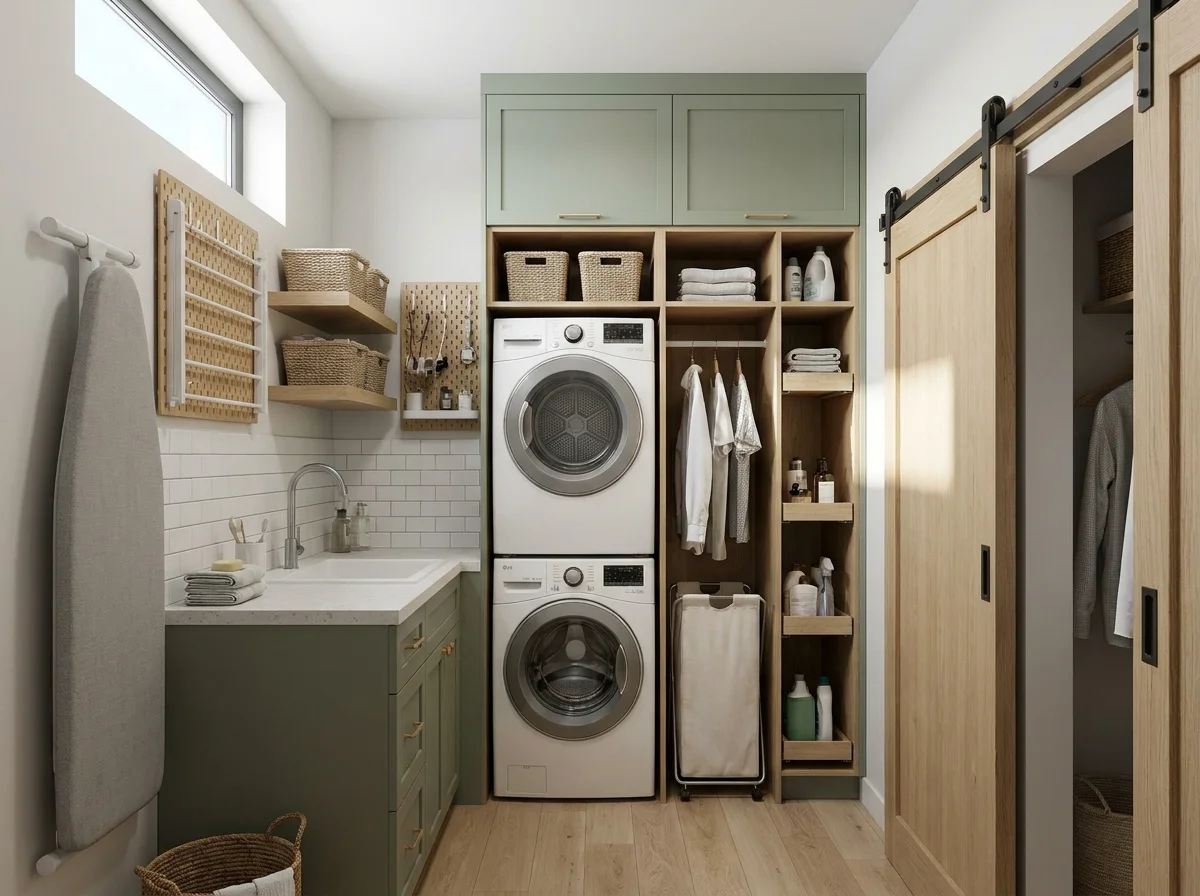
From stacked appliances and floor-to-ceiling cabinets to floating shelves and clever folding stations, these ideas show how to make better use of every inch. Whether you have a small apartment laundry closet, a hallway laundry room, or a compact utility space, you will find practical decorating solutions that suit different layouts and budgets.
1. Stack Your Washer and Dryer
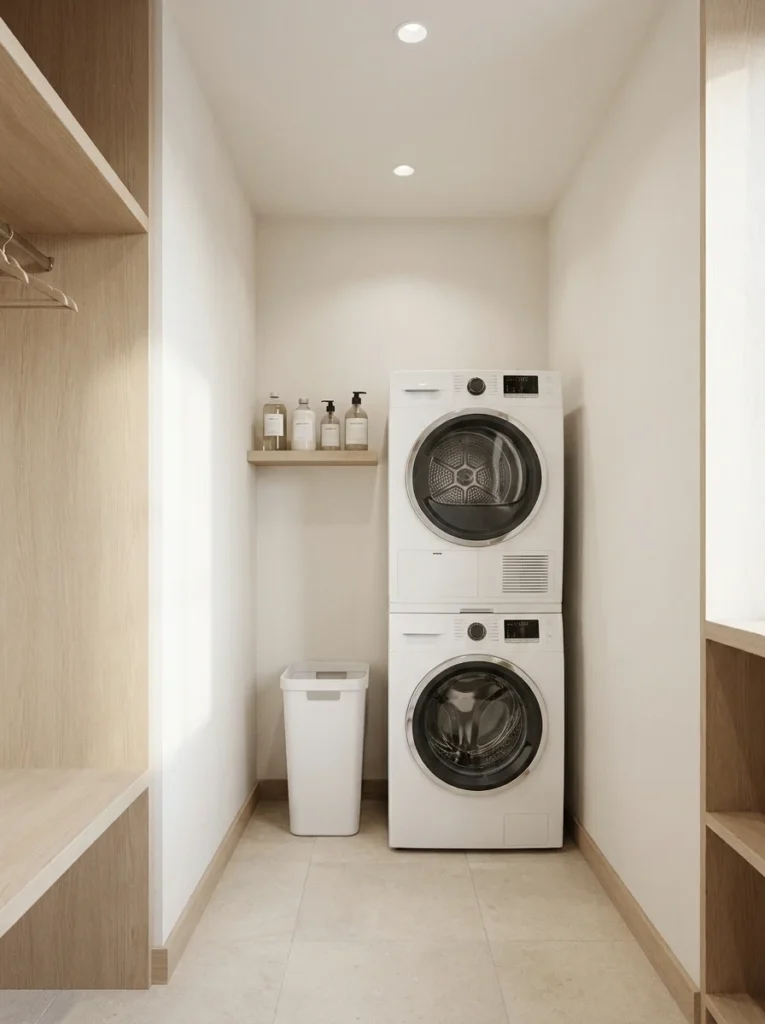
Stacking your washer and dryer is one of the most practical ways to free up floor space in a narrow laundry room. Instead of placing both appliances side by side, position a compatible dryer above the washer to create a vertical arrangement. The remaining floor area can accommodate a slim laundry basket, narrow cabinet, or small utility cart.
This layout works particularly well in hallway laundry rooms and compact utility spaces. Choose a matching appliance finish for a coordinated appearance, and use the newly available wall space for shelving. Always check manufacturer requirements and use an approved stacking kit rather than placing appliances directly on top of each other.
2. Install Floor-to-Ceiling Storage Cabinets
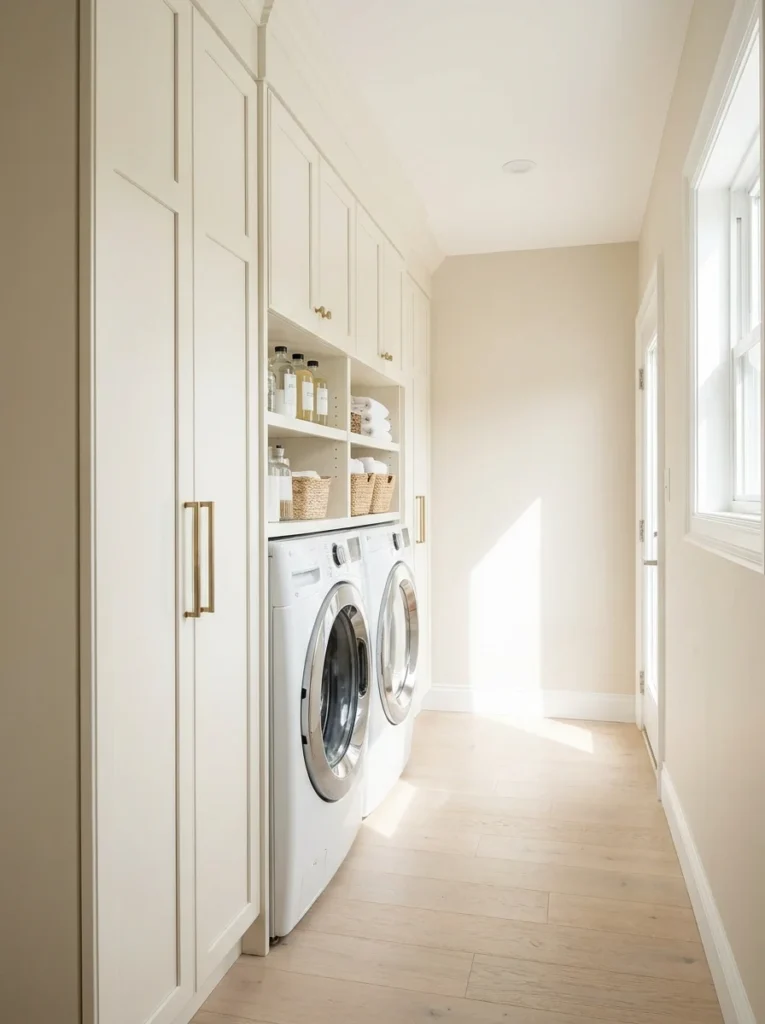
- Cabinet Style: Choose tall, narrow cabinets with simple flat-panel or shaker doors.
- Color Palette: White, warm beige, soft gray, and light oak keep the room looking balanced.
- Storage: Reserve upper shelves for seasonal supplies and lower sections for detergents and cleaning products.
- Hardware: Small brushed brass or matte black handles add a decorative finishing touch.
- Budget: Ready-made utility cabinets can be more affordable than custom built-ins.
Floor-to-ceiling cabinetry makes use of wall height that often goes completely unused. In a narrow room, choose a cabinet depth that does not interfere with appliance doors or walking space. Adjustable interior shelves also make it easier to accommodate bottles, towels, and larger cleaning supplies.
3. Add Floating Shelves Above the Washer
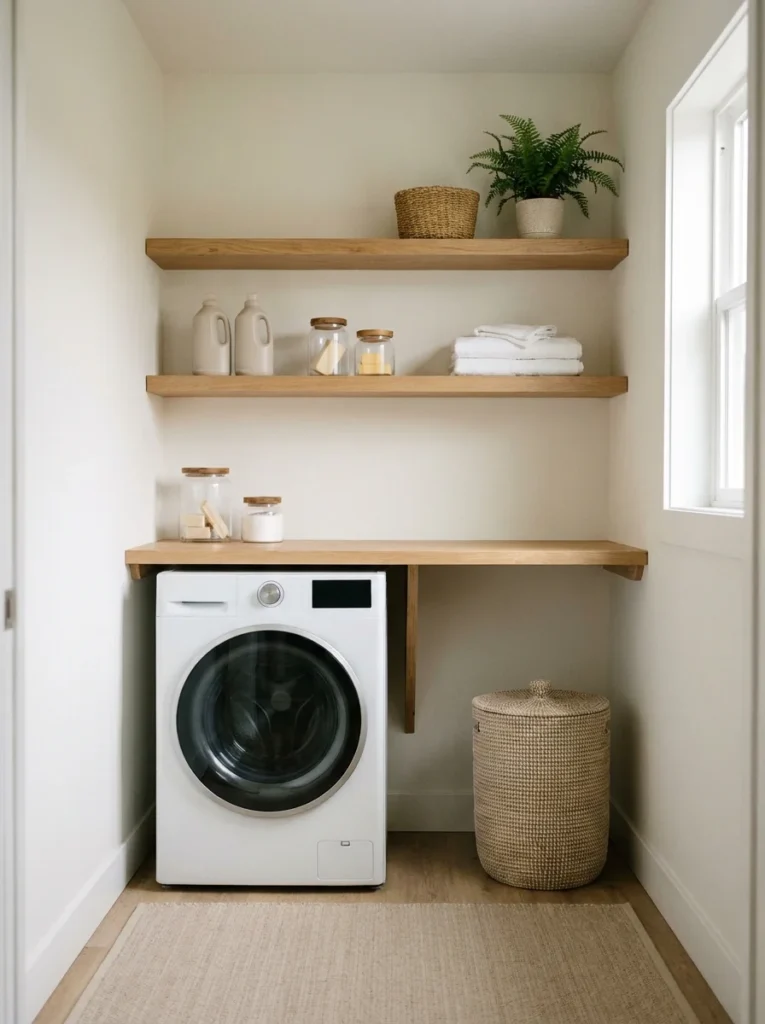
Quick Tip: Install two or three floating shelves above your washing machine, leaving enough clearance for appliance access and ventilation. Keep frequently used products on the lowest shelf and less-used supplies higher up.
Natural wood shelves against a white or pale gray wall create a warm, relaxed laundry room aesthetic. Arrange matching detergent bottles, small woven baskets, and folded cleaning cloths in neat groups. Keep heavier items on properly supported shelving, and avoid placing anything where appliance vibrations could cause it to fall.
4. Use Slim Rolling Laundry Carts
BEFORE
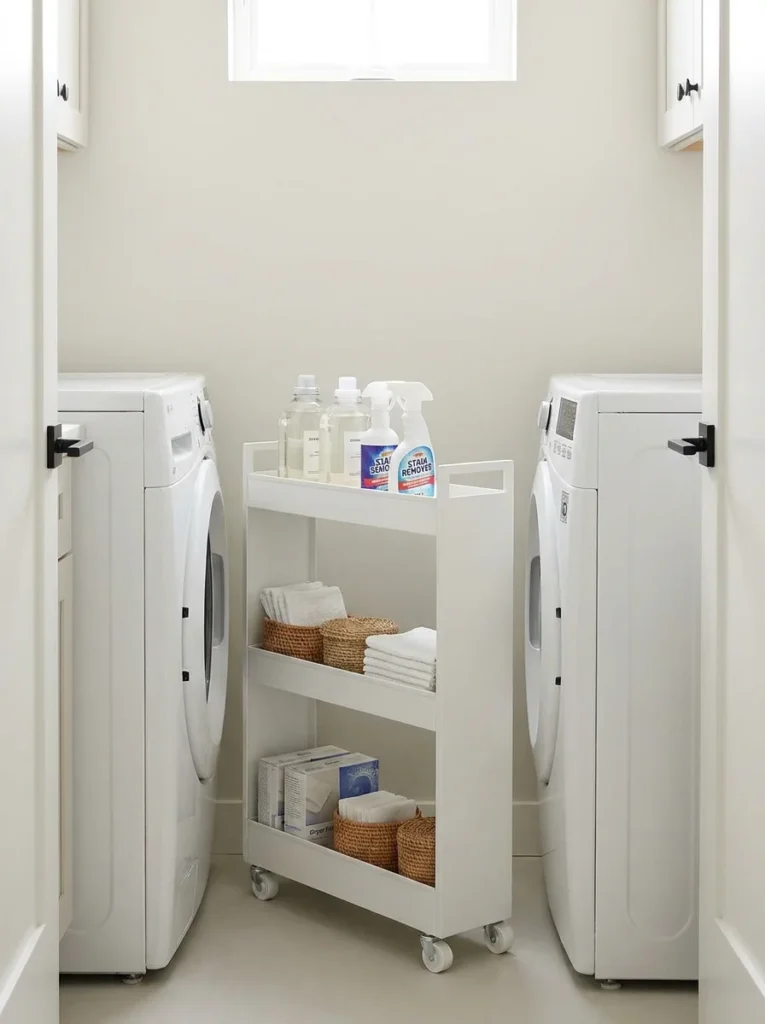
A narrow gap beside the washer and dryer often becomes wasted space. Laundry products end up scattered across shelves or crowded together on the floor, making everyday tasks less convenient.
AFTER
A slim rolling cart fits into that unused gap and keeps detergents, stain removers, dryer sheets, and cleaning accessories together. Its wheels allow you to pull it out whenever you need something.
Look for a cart with multiple tiers and a width that fits comfortably between your appliances and the wall. Measure the narrowest part of the opening, including handles and baseboards. Metal or plastic designs are easy to wipe clean, making them practical for a frequently used laundry area.
5. Create a Built-In Laundry Station
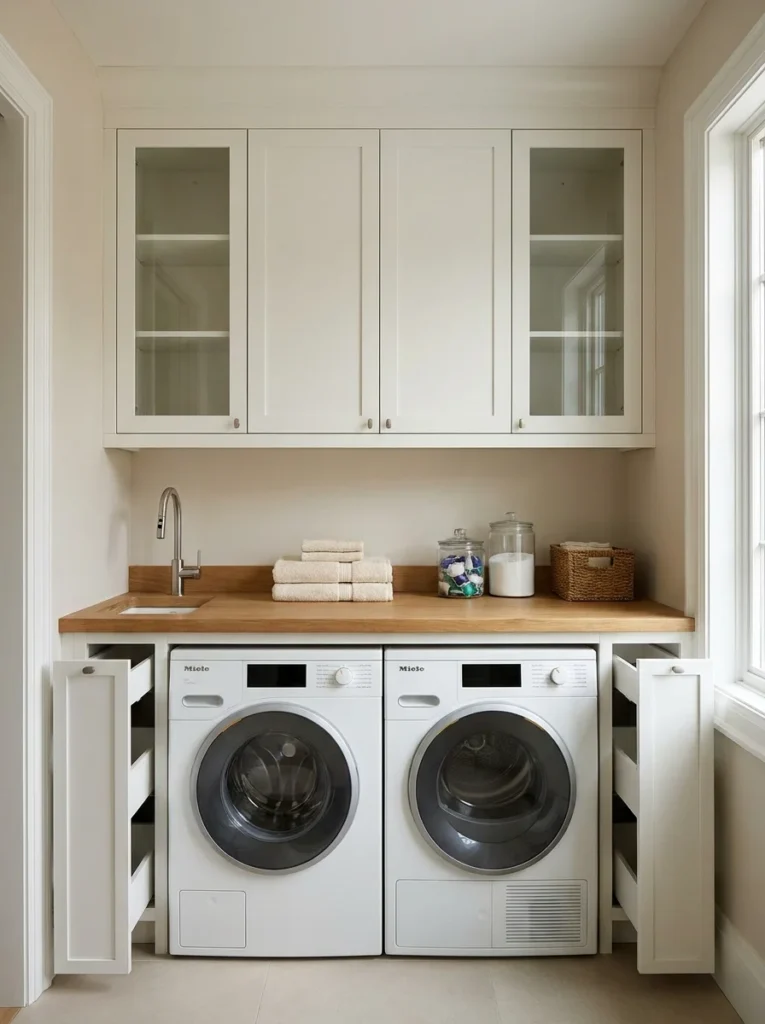
- Measure the Layout: Check the width and depth of your appliances, along with available wall space.
- Plan the Cabinetry: Add fitted side cabinets or a tall storage unit around the laundry appliances.
- Choose a Countertop: Use moisture-resistant laminate, sealed wood, or another suitable durable surface.
- Add Storage: Include drawers, pull-out baskets, and shelves for everyday laundry essentials.
- Finish the Design: Coordinate cabinet handles, lighting, and wall colors for a unified appearance.
A built-in laundry station creates a more intentional layout by bringing appliances, storage, and folding space together. It is especially useful in dedicated narrow laundry rooms where every fixture needs a specific purpose. Have cabinetry planned around appliance ventilation, servicing access, plumbing, and electrical requirements.
6. Install Wall-Mounted Drying Racks
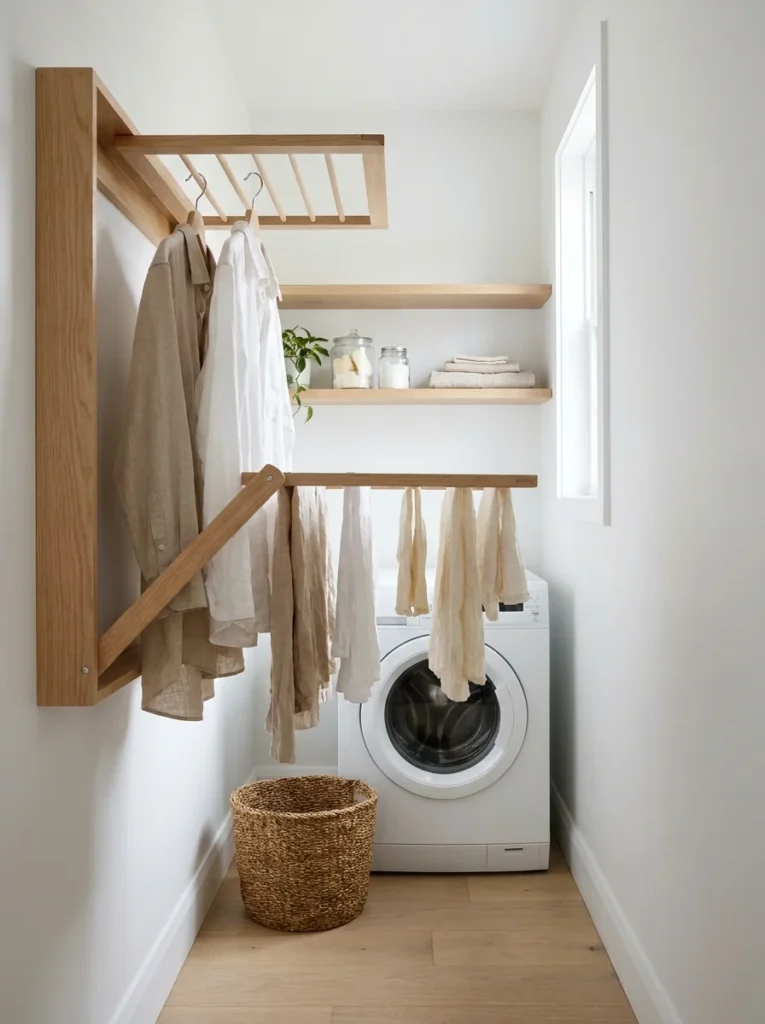
| Feature | Fold-Down Rack | Retractable Rack |
| Appearance | Visible when installed | Minimal when closed |
| Space | Folds against the wall | Disappears when retracted |
| Best For | Everyday air drying | Occasional drying |
| Capacity | Depends on rack size | Depends on model |
| Maintenance | Simple to clean | Check moving parts |
Wall-mounted drying racks provide useful hanging space without taking up valuable floor area. A fold-down wooden rack adds a natural decorative detail, while a retractable metal design offers a more understated look. Choose a sturdy model suited to the weight of damp clothing and install it into appropriate wall support.
7. Choose White Cabinets for an Airy Look
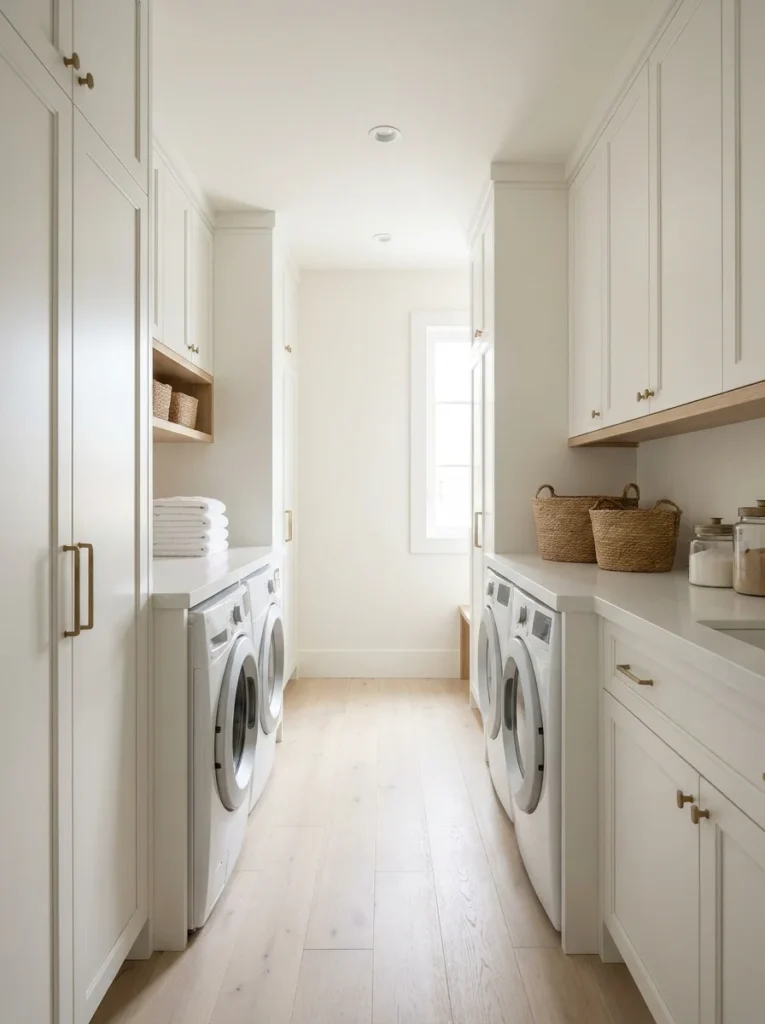
White cabinetry gives a narrow laundry room a clean and open appearance. Floor-to-ceiling white doors create a continuous visual line, while simple hardware keeps the design from feeling too busy. Pair them with light gray walls, pale flooring, and a white countertop for a soft, cohesive palette.
To prevent the room from looking flat, introduce a few contrasting materials. Light oak shelves, woven storage baskets, or brushed nickel handles add subtle texture. Semi-gloss or other washable cabinet finishes can also make routine cleaning easier, especially around appliances.
8. Add Wooden Shelves for Warmth
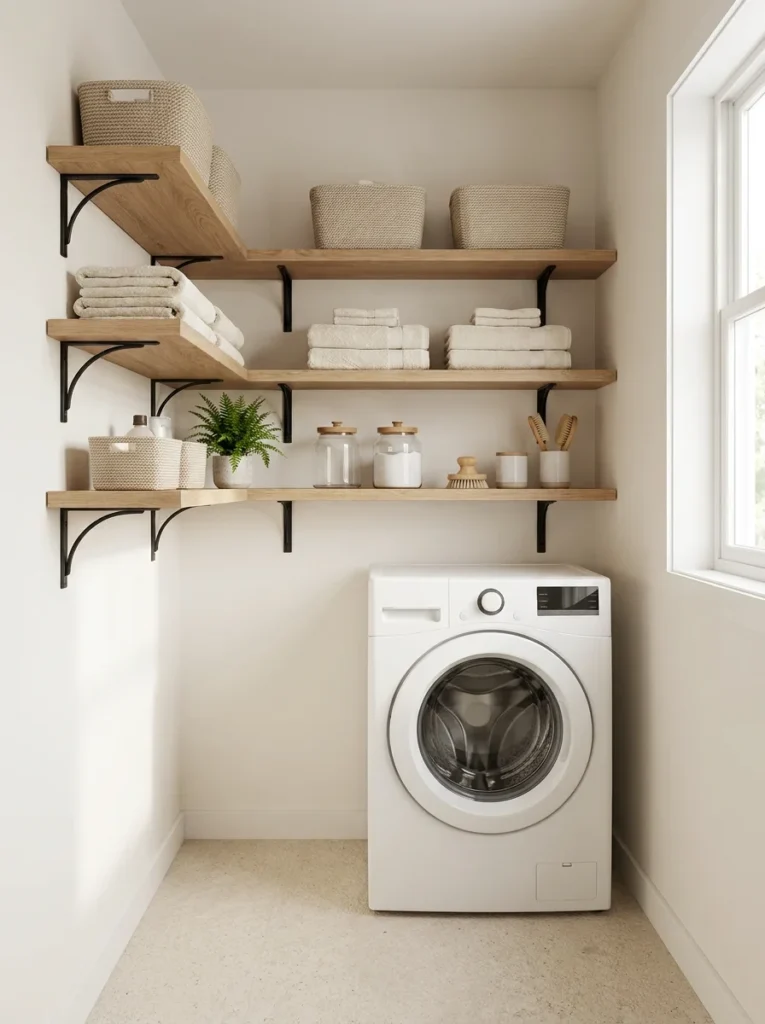
DO:
- Choose natural oak, walnut, or light pine shelves.
- Coordinate the wood tone with baskets or cabinet details.
- Use simple black or brass shelf brackets.
- Leave enough space between shelves for detergent bottles.
DON’T:
- Install untreated wood where it may receive regular moisture.
- Overload shelves with heavy laundry products.
- Mix too many competing wood finishes.
- Place decorative accessories where they interfere with appliance access.
Wooden shelving balances the hard surfaces commonly found in laundry rooms. A combination of natural wood, white walls, and neutral storage containers creates a comfortable look without making the narrow room feel visually crowded. Seal suitable wood surfaces and maintain them according to the finish manufacturer’s instructions.
9. Use Over-the-Door Storage Organizers
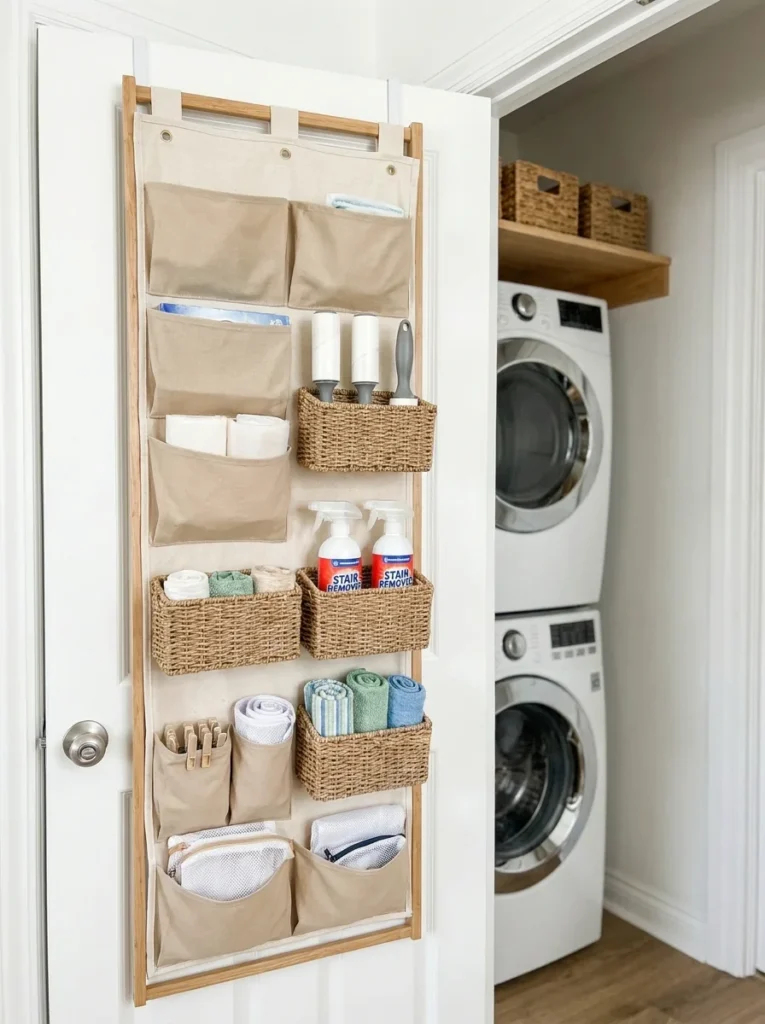
Room: Laundry closet or narrow utility room.
Best Placement: Inside the laundry room door or on a suitable cabinet door.
Materials: Metal, coated wire, or durable plastic.
Storage: Cleaning cloths, lint rollers, stain removers, small detergent containers, and laundry accessories.
Budget: Low to moderate, depending on size and material.
Over-the-door organizers turn an otherwise unused surface into convenient storage. Choose a design with several pockets or adjustable baskets so smaller items stay separated. Before purchasing, check the door thickness, available clearance, and whether the organizer will prevent the door from closing properly.
10. Install a Countertop Over Front-Load Machines
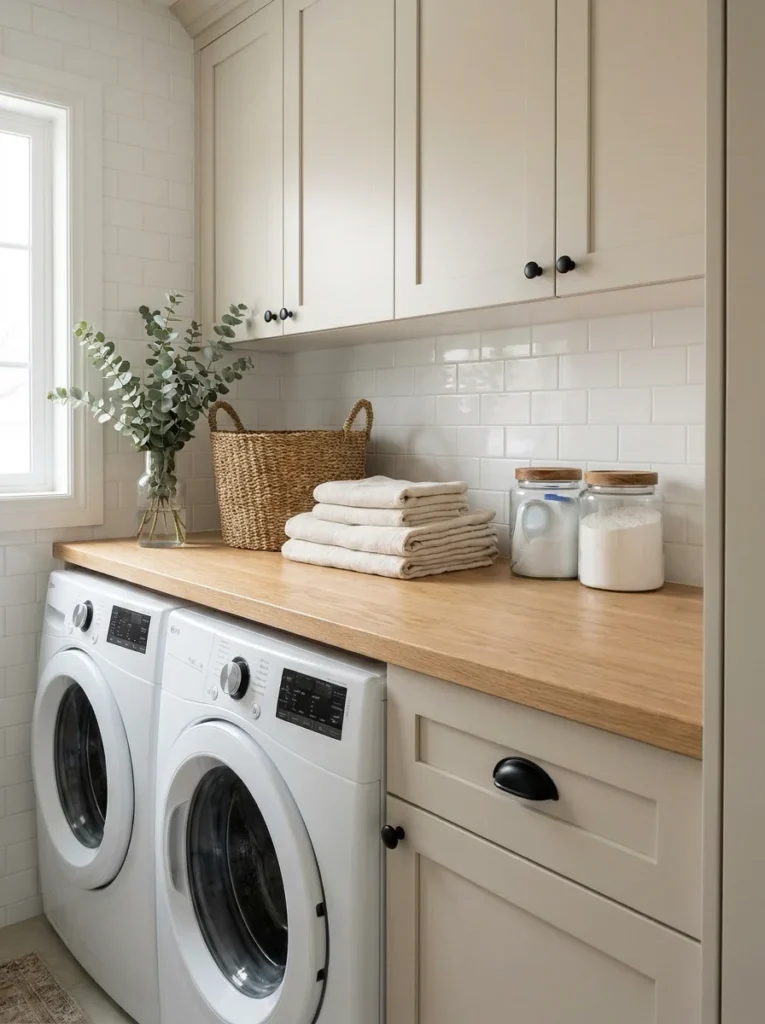
A countertop over front-load washing machines creates a convenient folding surface without requiring a separate table. The continuous surface also makes the laundry room appear more organized because the appliances sit neatly beneath one horizontal line.
| Feature | Wood Countertop | Laminate Countertop |
| Appearance | Warm and natural | Clean and versatile |
| Color Options | Natural wood tones | Many colors and patterns |
| Maintenance | Requires suitable sealing | Generally easy to wipe |
| Cost | Varies by wood type | Often budget-friendly |
| Best For | Farmhouse and modern styles | Contemporary and practical rooms |
Choose a moisture-resistant material and ensure the countertop is independently supported. It should not restrict appliance movement, vibration control, servicing, or ventilation. Leave the required clearance around machines according to their installation instructions.
11. Add Pull-Out Laundry Hampers
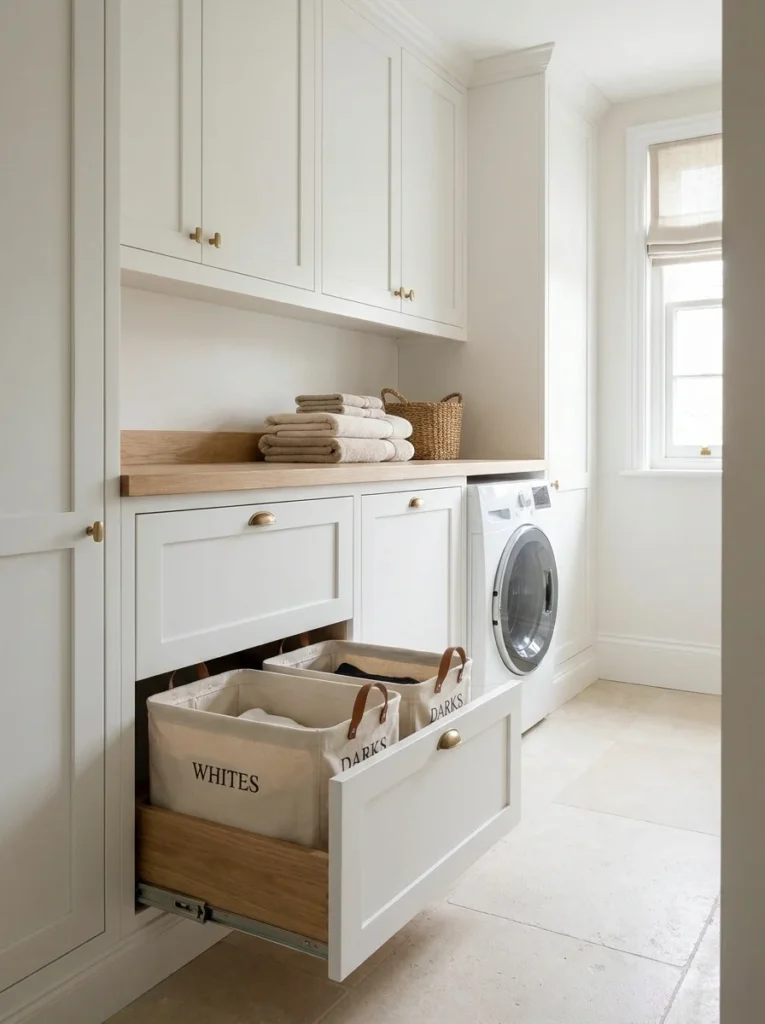
Quick Tip: Replace bulky freestanding laundry baskets with pull-out hampers inside a cabinet or beneath a suitable countertop. Separate white, dark, and delicate clothing with individual removable containers.
Pull-out hampers keep dirty laundry hidden while making sorting easier. A two-section design is useful for households that wash different clothing types regularly, while a single removable basket may be enough for a smaller apartment.
Choose washable or ventilated hamper inserts to help manage moisture and odors. Make sure the cabinet has enough depth for the sliding mechanism and that the hamper can be removed comfortably for carrying.
12. Make Use of Vertical Wall Space
BEFORE
The floor is crowded with laundry baskets, cleaning products, and miscellaneous household items. Meanwhile, the upper walls remain mostly empty and provide little practical storage.
AFTER
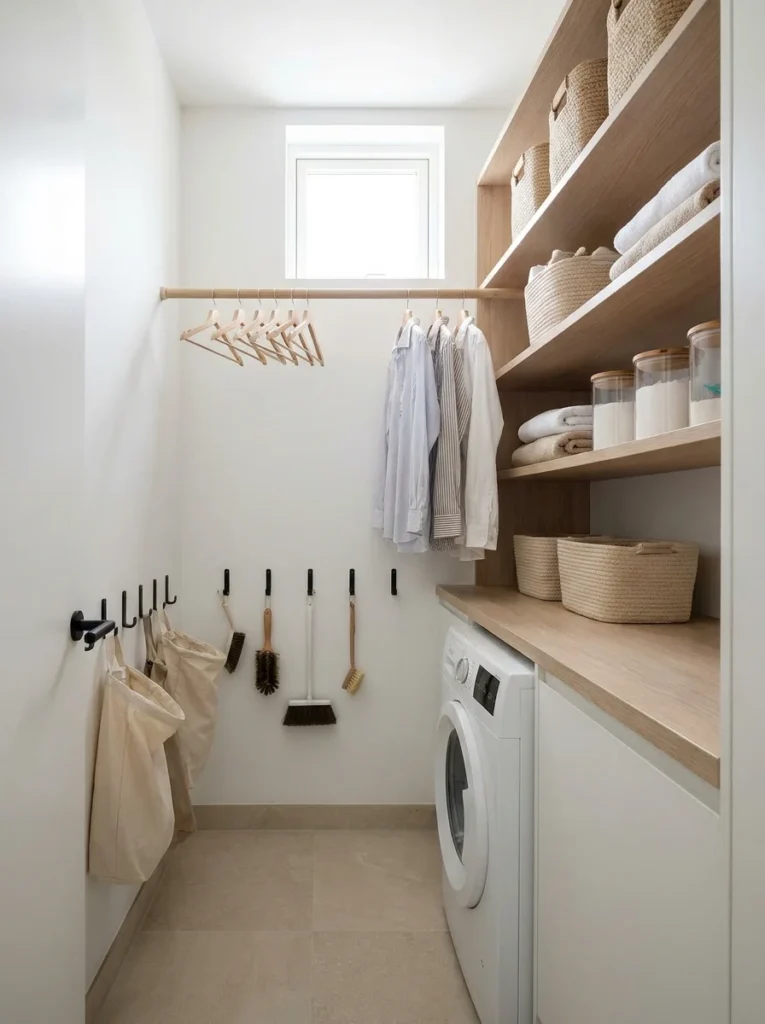
A combination of wall-mounted shelves, hooks, and a narrow hanging rail creates organized vertical storage. Laundry accessories stay accessible, while the floor remains clearer for moving baskets and opening appliances.
Start with the wall above or beside the machines. Install shelves for lightweight supplies, hooks for reusable bags, and a small rail for hangers. Keep frequently used items within comfortable reach, and avoid placing shelves where they obstruct access to plumbing, electrical outlets, or ventilation.
13. Try a Narrow Farmhouse Laundry Room Design
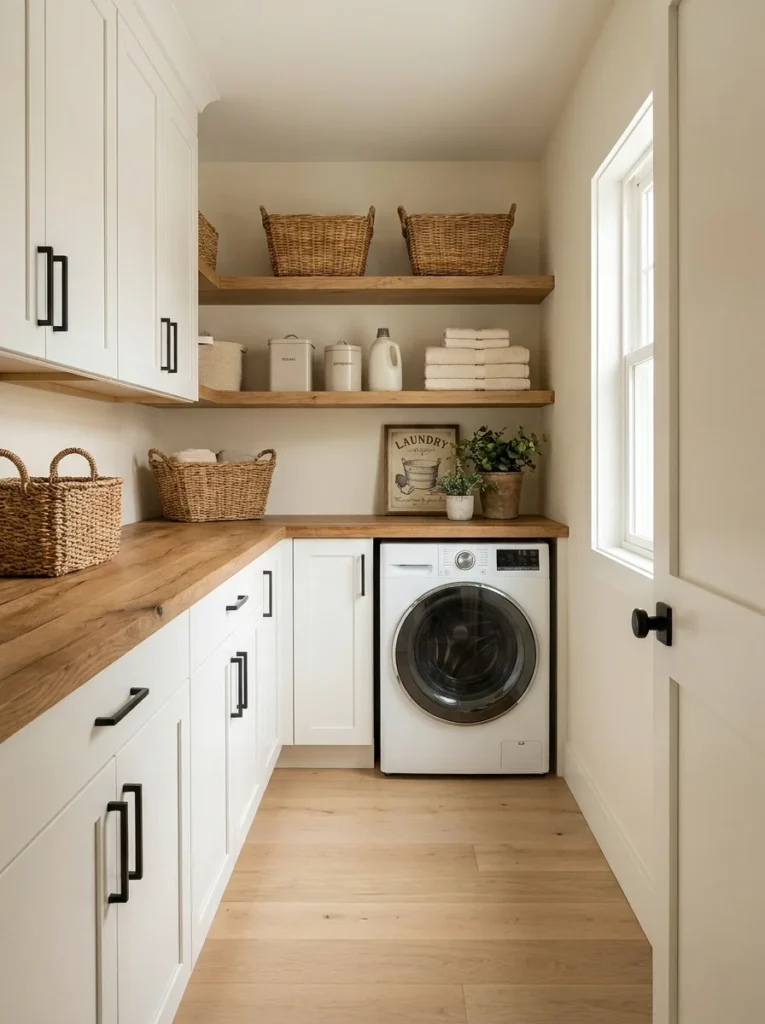
- Choose a Base Palette: Start with warm white or creamy beige walls and cabinets.
- Introduce Natural Wood: Add a light oak countertop or rustic floating shelves.
- Use Woven Baskets: Choose natural wicker or seagrass containers for laundry accessories.
- Add Farmhouse Details: Incorporate simple black handles, vintage-inspired labels, or a small framed laundry print.
- Keep the Layout Simple: Use only a few decorative pieces so the narrow room remains functional.
Farmhouse styling combines practical storage with warm, natural textures. A narrow room can feature white shaker cabinets, wood shelving, woven baskets, and understated black hardware without feeling overly decorated. Choose moisture-resistant materials and avoid oversized accessories that take up valuable counter space.
14. Install Open Shelving with Woven Baskets
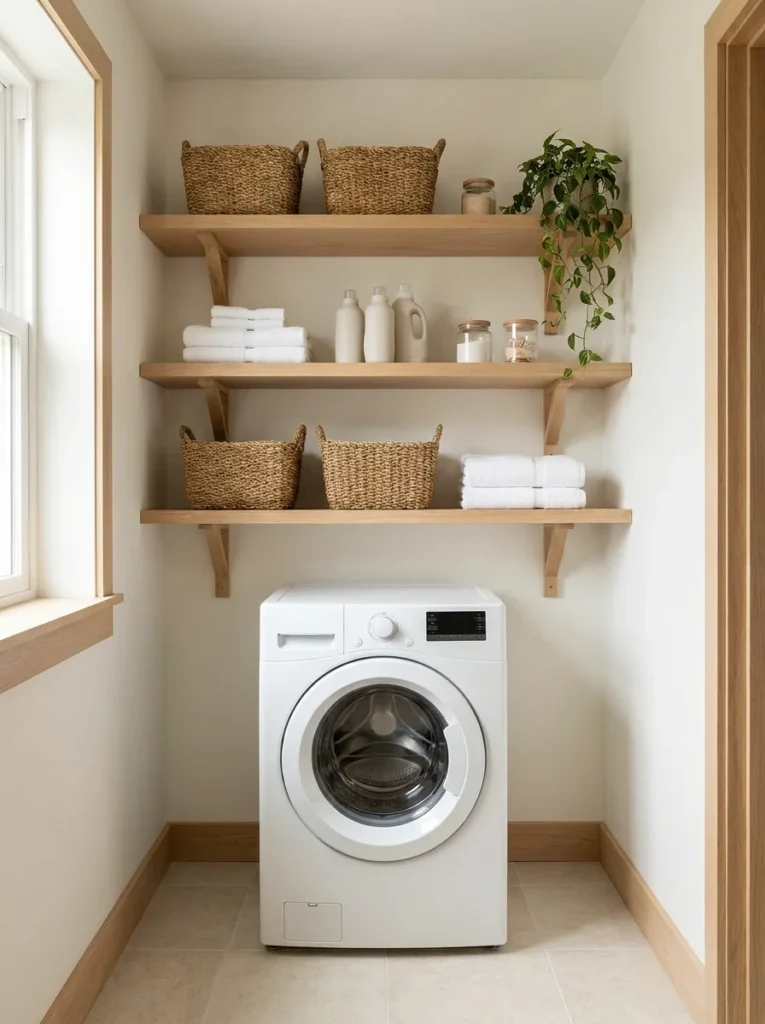
Open shelving paired with woven baskets gives a laundry room an organized but relaxed appearance. Install two or three shelves above a folding counter or along an available wall. Place matching baskets across the shelves to hide smaller items and create a consistent visual arrangement.
Natural wicker, seagrass, and woven fabric containers introduce texture against white or neutral walls. Use labeled baskets for cleaning supplies, spare towels, and laundry accessories. Keep the most frequently used items on lower shelves, and choose baskets that can be removed easily for cleaning.
15. Use Pocket Doors to Save Space
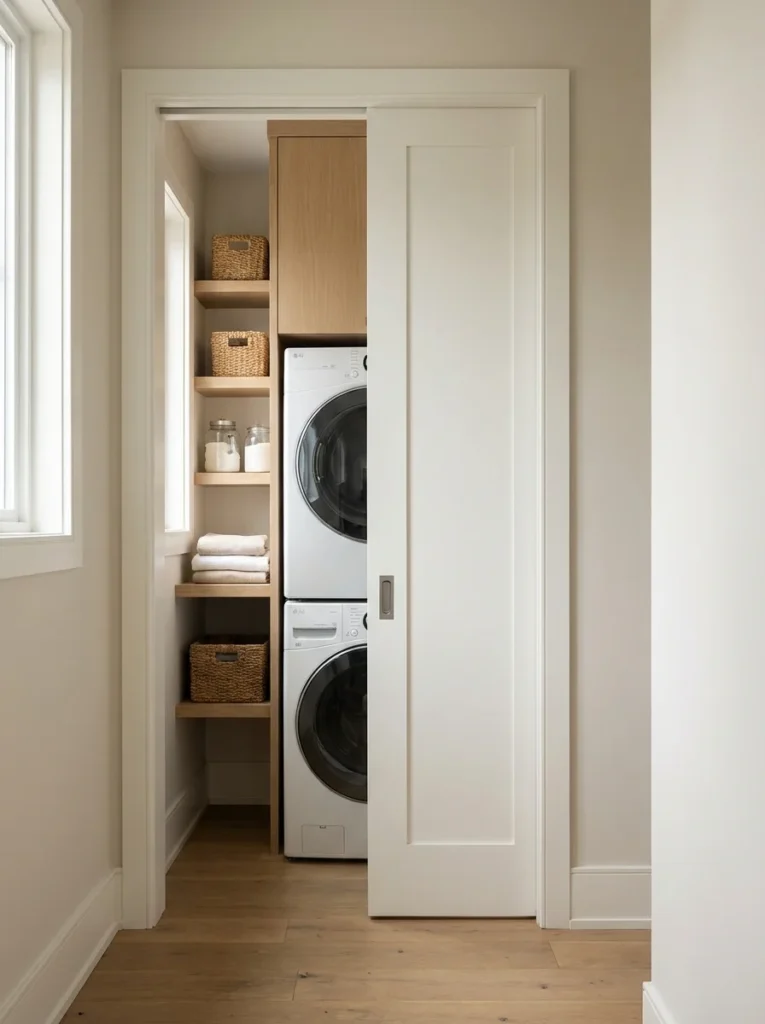
| Feature | Pocket Door | Standard Hinged Door |
| Opening | Slides into the wall | Swings into the room |
| Floor Space | No door swing | Requires clearance |
| Appearance | Clean and understated | Traditional |
| Installation | More involved | Usually simpler |
| Best For | Tight hallway laundry rooms | Rooms with sufficient clearance |
A pocket door can make a noticeable difference when a laundry room opens into a narrow hallway. Since the door slides into the wall instead of swinging outward, it frees up space for nearby storage or easier movement.
This option is particularly useful for laundry closets and compact utility rooms. However, installation may require wall modifications, and plumbing, wiring, and structural elements must be checked before construction. A sliding barn-style door is another alternative when there is not enough wall space for a pocket door.
16. Add a Fold-Down Ironing Board
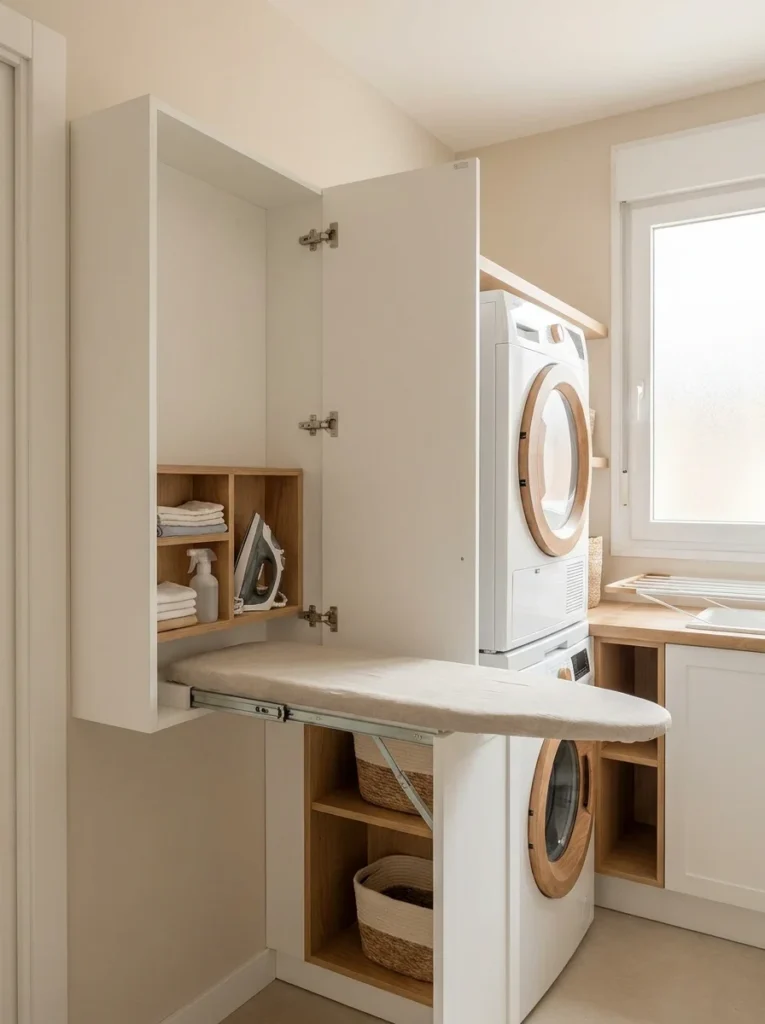
DO:
- Mount the ironing board inside a suitable cabinet or on a supported wall.
- Choose a folding mechanism that locks securely in place.
- Position it where there is enough room to use the iron safely.
- Store the iron and accessories separately in a suitable heat-resistant location.
DON’T:
- Install the board directly in front of an appliance door.
- Place it where it blocks the main walkway.
- Store a hot iron immediately after use.
- Ignore electrical outlet placement and cord safety.
A fold-down ironing board provides a dedicated pressing surface without requiring a permanent ironing station. Cabinet-mounted models are especially useful because they can disappear behind a door when not needed. Check the manufacturer’s installation instructions and ensure the mounting surface can support the mechanism safely.
17. Create a Minimalist Laundry Room
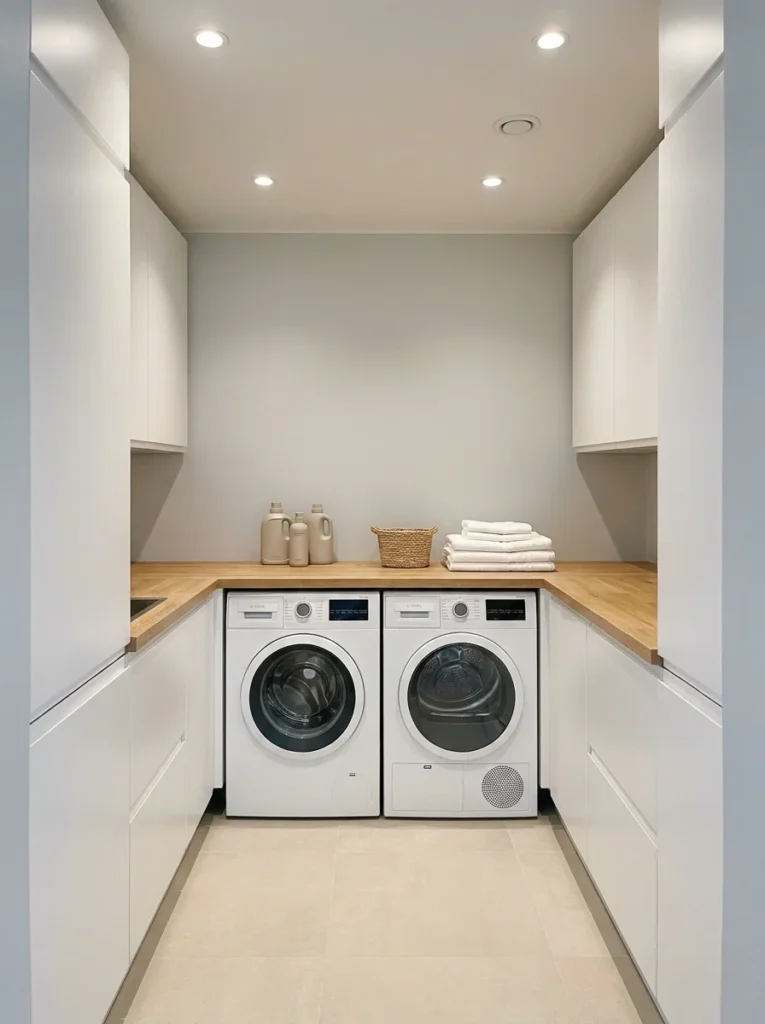
Room: Narrow laundry rooms and compact apartment utility spaces.
Color Palette: Soft white, warm gray, beige, and pale wood.
Furniture: Simple cabinets, flat-front drawers, and a streamlined folding counter.
Decor: One small framed print, a matching container set, and understated hardware.
Maintenance: Easy to maintain when surfaces remain uncluttered.
A minimalist laundry room focuses on function rather than decoration. Keep countertops mostly clear, store everyday products inside cabinets, and choose matching containers for the essentials that need to remain visible.
Avoid introducing too many colors or patterns. A consistent palette and a few well-chosen materials help the room feel calm and orderly. This approach is also easy to update when your storage needs change.
18. Use Light Colors to Make the Room Feel Bigger
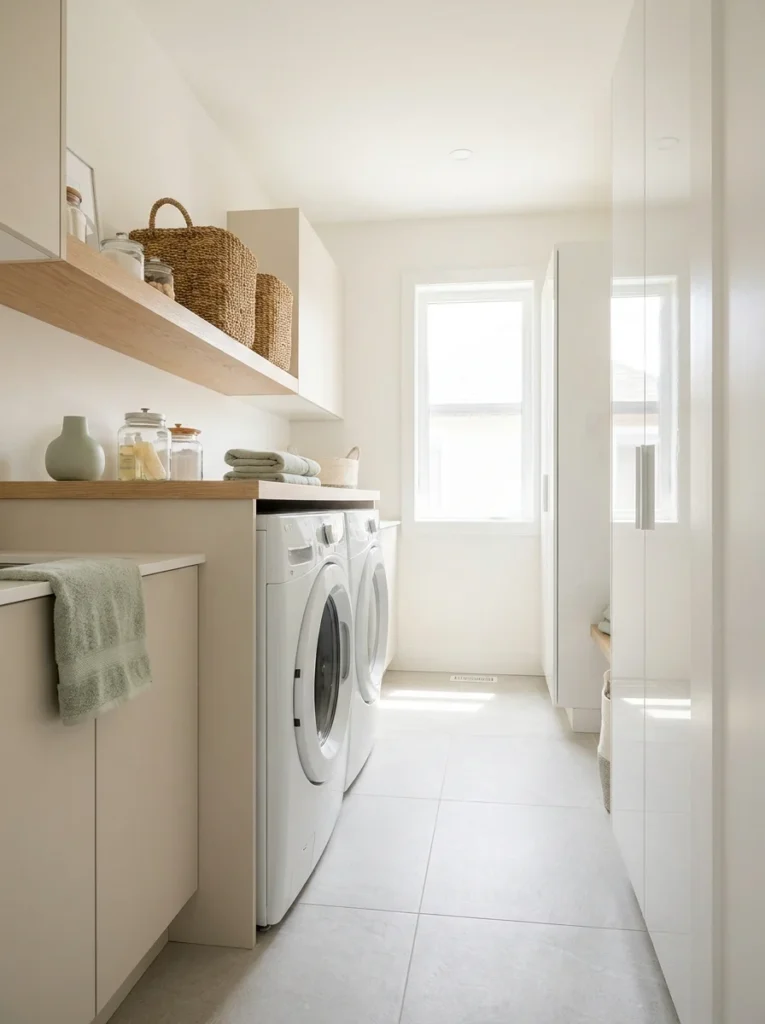
Light colors help reflect available light and create a softer visual effect in a narrow laundry room. White walls, pale beige cabinetry, and light gray flooring form a versatile foundation. If the room receives little natural light, warm white paint can prevent the space from feeling too cold.
For added depth, introduce one subtle accent such as pale sage, muted blue, or natural oak. Keep larger surfaces light and use darker shades in smaller details, such as handles, hooks, or picture frames. This creates contrast without making the room feel visually compressed.
19. Add a Tall, Slim Utility Cabinet
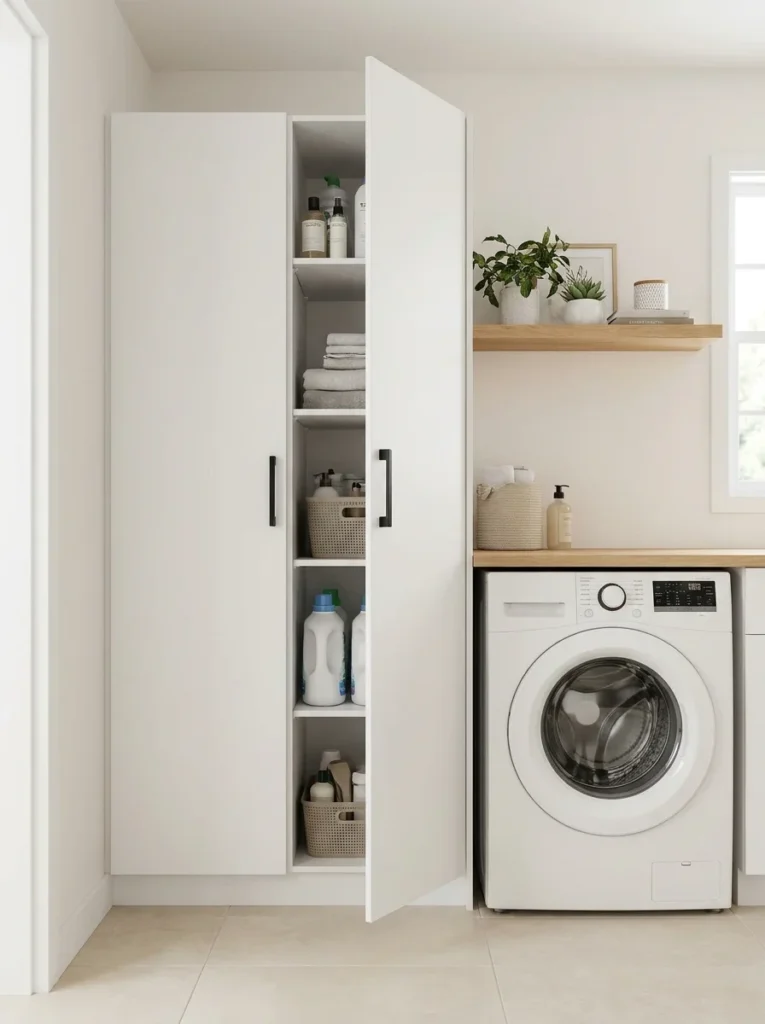
- Measure the narrowest available gap beside the appliances or at the end of the room.
- Select a tall cabinet with adjustable shelves and a depth suitable for the available clearance.
- Organize cleaning products, spare supplies, and household tools into separate sections.
- Use door-mounted hooks or small organizers for lightweight accessories.
- Secure the cabinet appropriately to prevent tipping.
A tall, slim utility cabinet can store a surprising number of household essentials while occupying relatively little floor space. Look for adjustable interior shelves that accommodate both small containers and taller cleaning products.
For a coordinated design, match the cabinet color to the surrounding appliances or cabinetry. If you store chemicals or detergents, keep them securely closed and out of reach of children and pets.
20. Install Hooks for Laundry Accessories
| Feature | Wall Hooks | Rail with Hooks |
| Installation | Individual mounting points | One continuous mounting rail |
| Appearance | Simple and flexible | More coordinated |
| Storage | Bags and lightweight tools | Multiple accessories |
| Space | Very little wall depth | Depends on rail design |
| Best For | Small collections | Frequently used items |
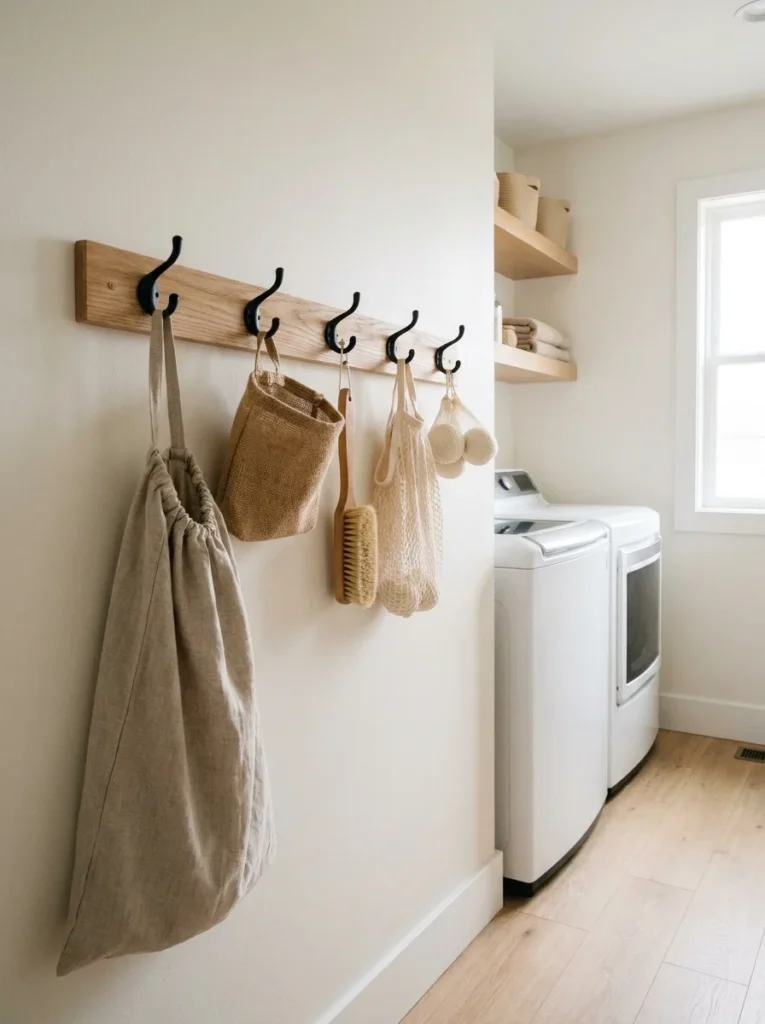
Hooks are a simple way to organize accessories that otherwise end up on countertops or inside laundry baskets. Install a short row near the entrance or above a utility counter for reusable laundry bags, dusters, and small hanging baskets.
Choose durable hooks that suit the weight of the items. A wooden rail creates a warm farmhouse look, while matte black metal works well in a modern laundry room. Keep hooks away from appliance controls and areas where hanging objects could interfere with doors.
21. Create a Stylish Laundry Closet
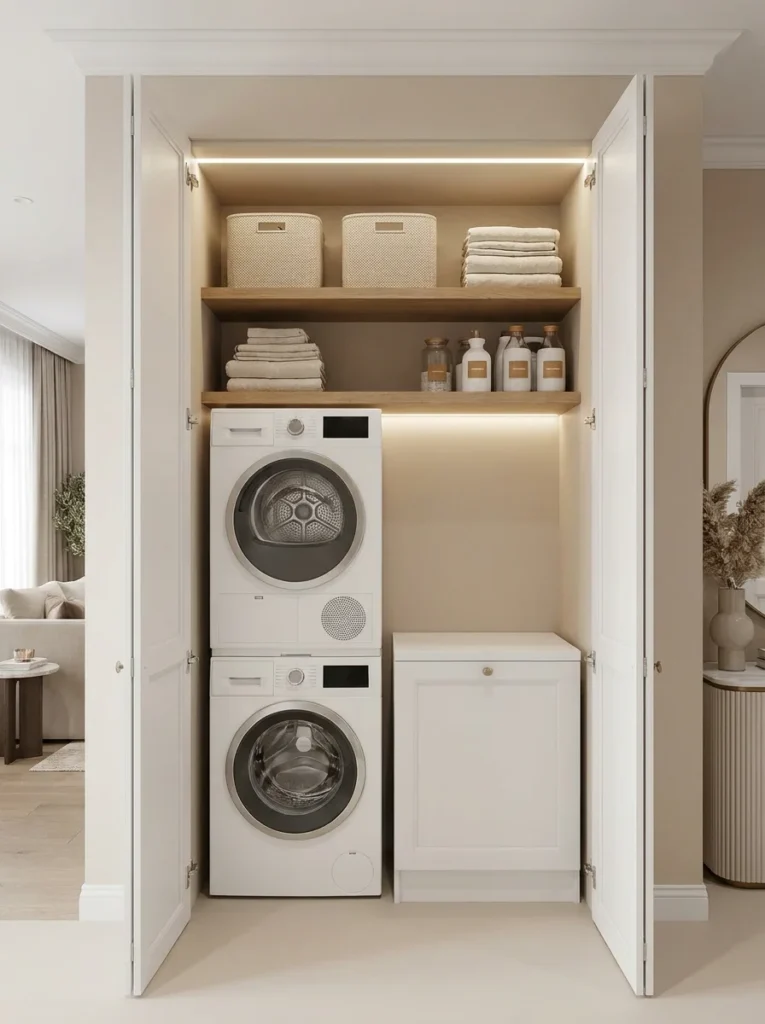
A laundry closet can look just as considered as a dedicated laundry room. Start with a stacked washer and dryer to maximize the available width. Add a shelf above the appliances for detergents, folded towels, and a few neatly arranged containers.
Choose matching cabinet doors or a clean curtain to conceal the appliances when they are not in use, provided the arrangement meets ventilation and manufacturer requirements. Light-colored walls, compact lighting, and consistent storage containers help the small enclosure feel organized.
Practical detail: Make sure there is adequate clearance for appliance doors, hoses, ventilation, and future servicing. A closet should never be sealed in a way that compromises the appliances’ operating requirements.
22. Add Patterned Wallpaper for Personality
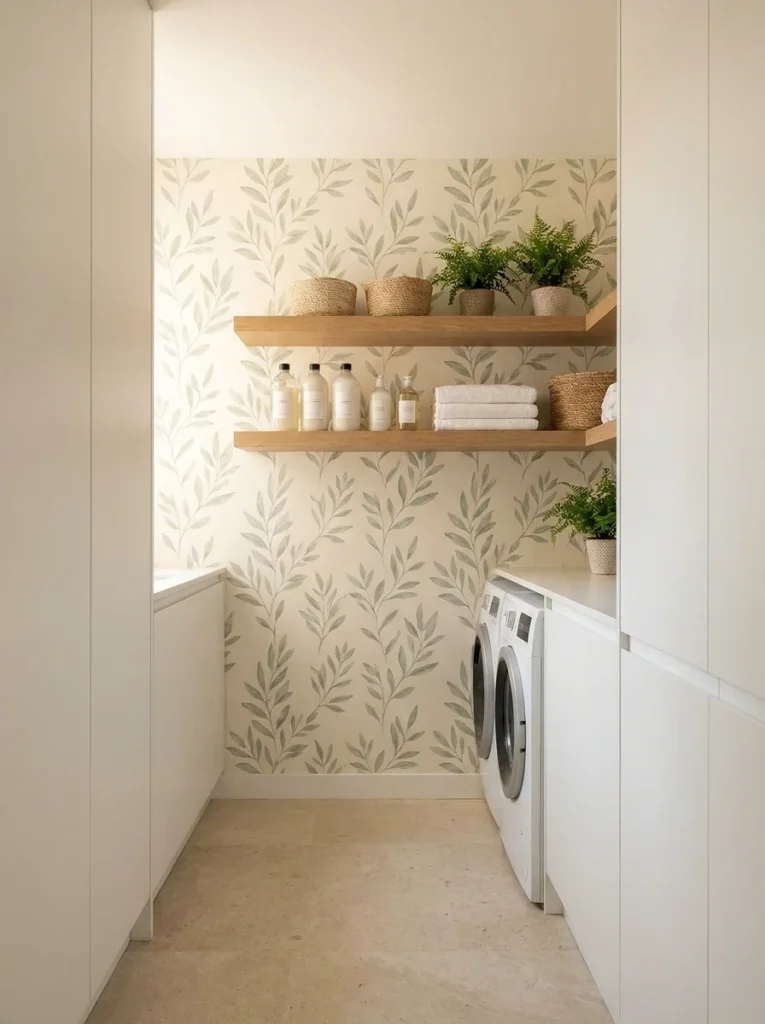
Quick Tip: Use a small-scale wallpaper pattern on one wall instead of covering every surface in a narrow room. Botanical prints, delicate stripes, and subtle geometric designs add character without competing with storage.
Soft green leaves on a creamy background create a fresh look, while muted blue patterns offer a classic laundry room feel. Pair patterned walls with simple white cabinets and understated hardware to maintain visual balance.
Choose wallpaper suitable for the room’s moisture conditions, and follow the manufacturer’s preparation and installation recommendations. A washable finish is particularly useful around laundry appliances and frequently touched surfaces.
23. Use Matching Storage Containers
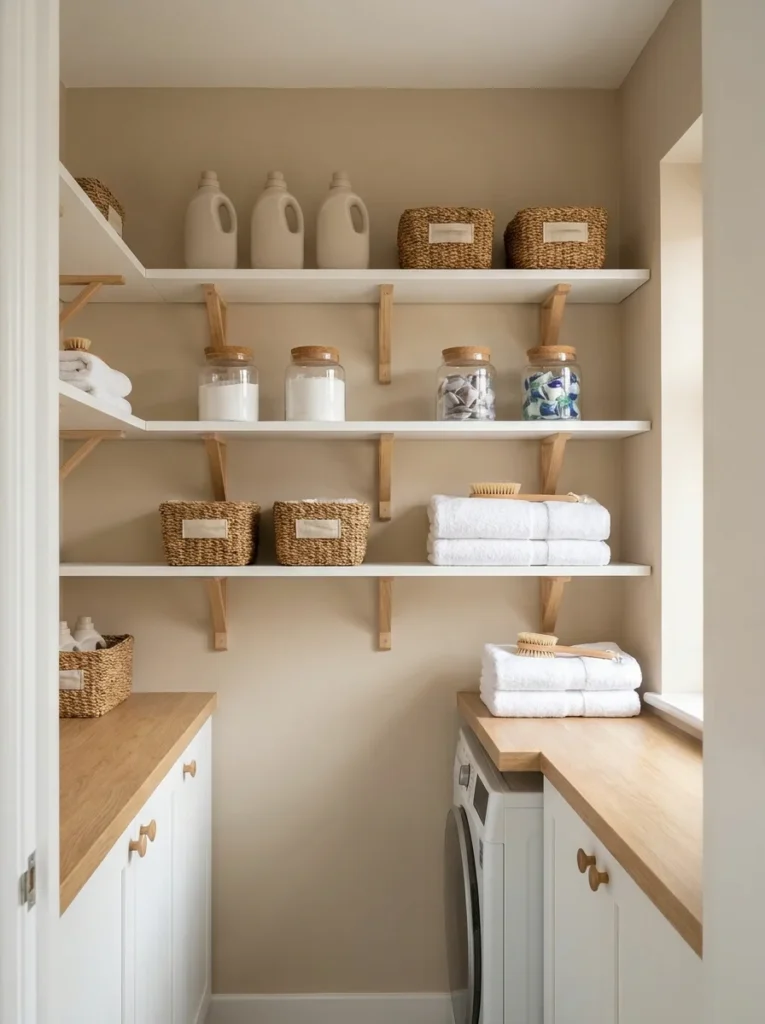
BEFORE
Detergent bottles, stain removers, dryer sheets, and cleaning supplies come in different shapes, colors, and sizes. Leaving everything visible can make a small laundry room look crowded even when the surfaces are clean.
AFTER
Matching storage containers create a more coordinated appearance. Neutral bottles, clear jars, and labeled baskets give frequently used products a consistent home while making the shelves easier to organize.
Choose containers that suit the products being stored and keep original safety information available. Never transfer cleaning chemicals into food or beverage containers. Use clearly labeled, compatible containers and follow product storage instructions. Keep everything securely closed and away from children and pets.
24. Install Under-Shelf Storage Baskets
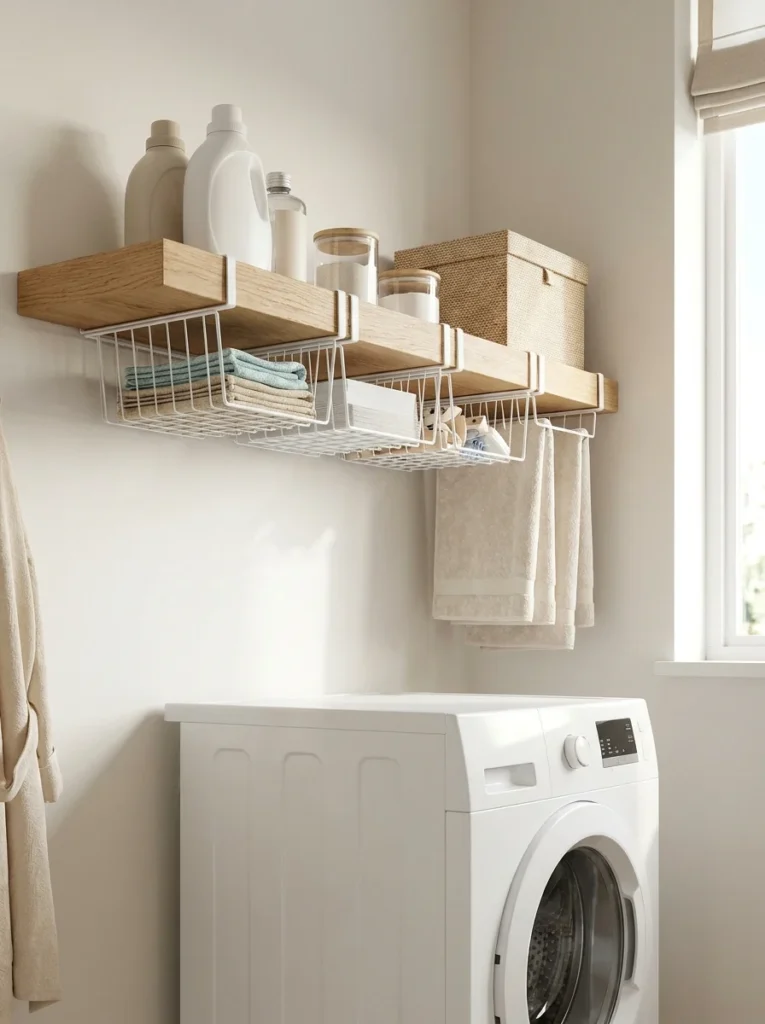
Under-shelf baskets are useful for creating extra storage without installing another complete shelving unit. These wire or metal baskets attach beneath an existing shelf, providing a convenient place for dryer sheets, cleaning cloths, small towels, and other lightweight accessories.
In a narrow laundry room, use them on shelves above the appliances or inside suitable cabinets. Choose a finish that complements the existing hardware, such as white, chrome, or matte black.
Before purchasing, check the shelf thickness and basket dimensions. Avoid overloading the baskets or using them for heavy detergent bottles unless the product is specifically designed to support that weight.
25. Add Recessed Shelving Between Wall Studs
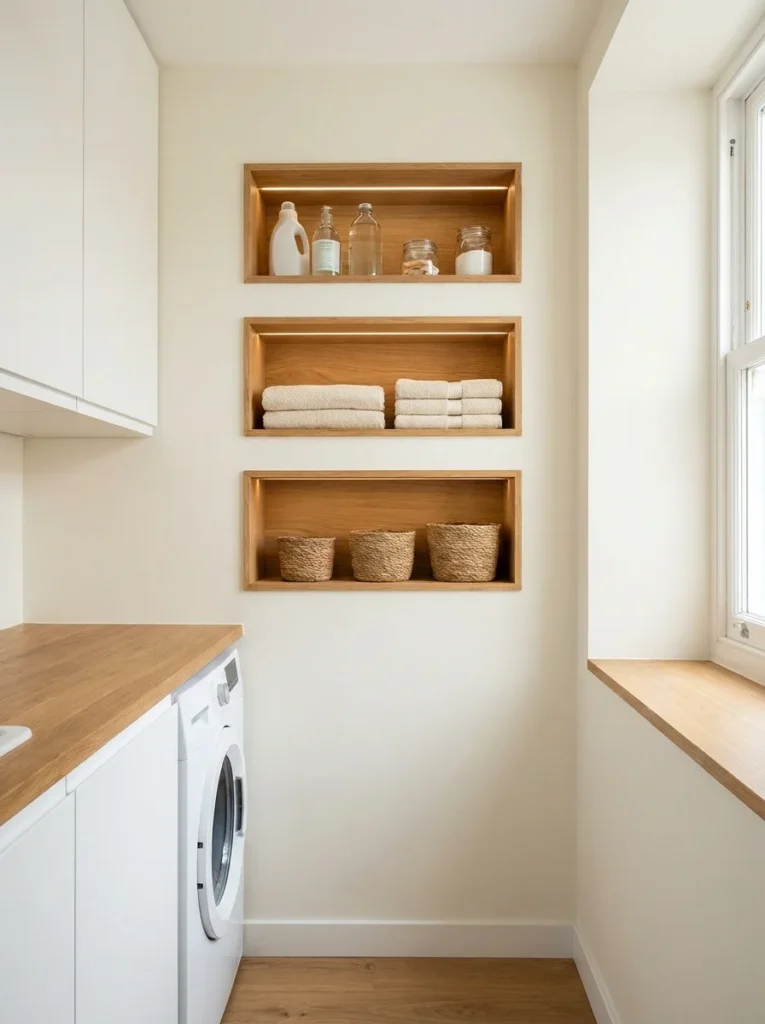
Room: Narrow utility rooms with suitable framed walls.
Best Placement: Above a folding counter or on an available wall beside the appliances.
Materials: Painted wood, moisture-resistant board, or suitable prefabricated recessed shelving.
Space Needed: Depends on wall construction and available cavity depth.
DIY Level: Moderate to advanced.
Recessed shelving makes use of space within the wall rather than projecting far into the room. A few built-in niches can hold small detergent bottles, folded cloths, and laundry accessories while keeping the main walkway clear.
The shelves can be painted to match the wall for a subtle appearance or finished in light wood for a decorative accent. Before cutting into a wall, have the area checked for wiring, plumbing, structural components, and other obstructions. Use suitable materials for the room’s moisture conditions.
26. Combine Laundry Storage with a Folding Station
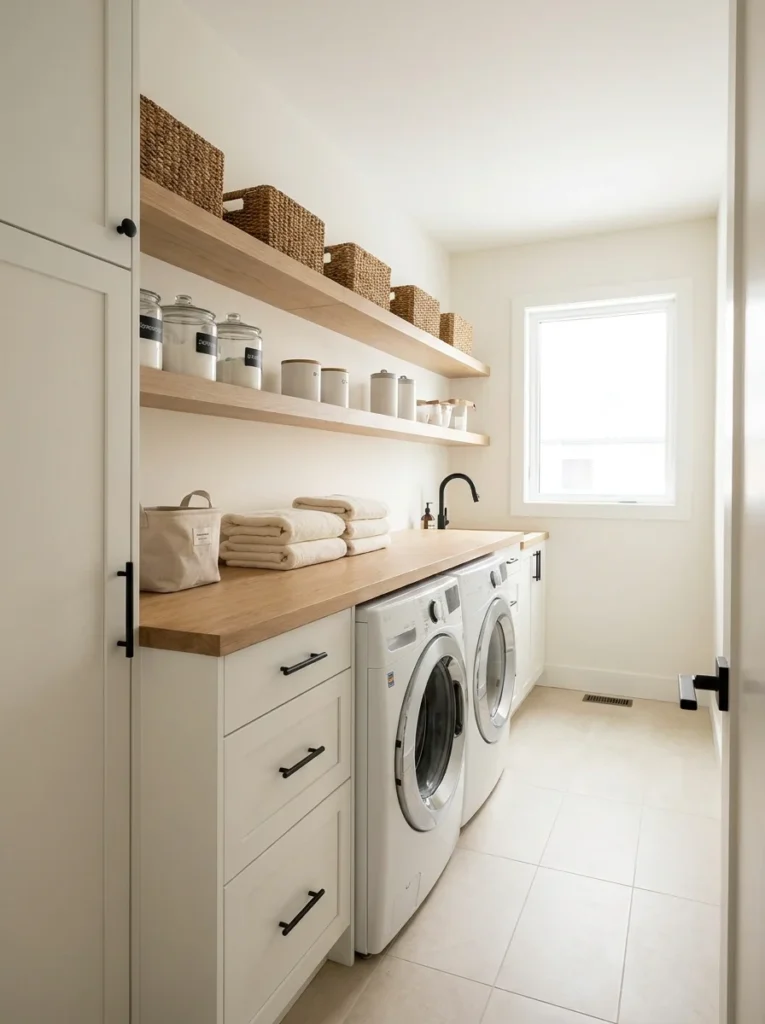
A combined storage and folding station brings several laundry tasks into one organized area. Place a durable countertop above front-load appliances, then add drawers or cabinets underneath where the layout allows. A tall cabinet at one end can hold cleaning supplies, while open shelves above the counter provide space for baskets and folded linens.
For a cohesive appearance, combine white cabinetry with a natural wood countertop and matching storage baskets. Leave enough uninterrupted counter space for sorting and folding clothes. This setup works especially well in dedicated narrow laundry rooms where a separate table would take up too much room.
Choose a countertop that can withstand regular use, moisture, and cleaning. Make sure appliance access and ventilation remain unobstructed.
Practical Tips for Organizing a Small Narrow Laundry Room
A well-organized laundry room depends on more than attractive cabinets and shelves. A few thoughtful decisions can make daily laundry tasks easier while keeping the room comfortable to move around in.
- Measure before buying: Check appliance dimensions, cabinet depth, door swings, and walking clearance before purchasing storage furniture.
- Prioritize vertical storage: Use wall shelves, tall cabinets, and hooks instead of filling the floor with extra furniture.
- Combine open and closed storage: Keep everyday essentials accessible while hiding less attractive supplies behind cabinet doors.
- Choose moisture-resistant materials: Use suitable finishes and materials for countertops, shelves, and cabinets that may experience humidity or occasional splashes.
- Keep the floor clear: Slim carts and wall-mounted organizers help prevent laundry baskets and cleaning supplies from taking over the walkway.
- Improve the lighting: Bright ceiling lights and suitable task lighting above folding surfaces make the room more comfortable to use.
- Use a consistent color palette: White, beige, pale gray, and natural wood help create a more unified appearance.
- Organize by frequency: Keep detergent and stain removers within easy reach, while storing backup supplies on higher shelves.
- Allow appliance access: Never block ventilation openings, electrical connections, water shutoffs, or areas needed for maintenance.
- Avoid unnecessary decoration: A small framed print, a plant suitable for the conditions, or attractive storage baskets can add personality without creating clutter.
The most important thing is to design around your actual laundry routine. A family that washes several loads daily may need more sorting baskets, while someone living in an apartment might benefit more from a folding countertop and compact storage.
Conclusion
A narrow laundry room does not need to feel crowded or difficult to organize. With the right layout, thoughtful storage, and a balanced color palette, even a small utility area can become a practical and attractive part of your home.
These Small Narrow Laundry Room Ideas offer plenty of ways to use vertical space, organize everyday supplies, and create useful folding areas without sacrificing valuable floor space. Start with one improvement that suits your room and budget, then build on it as needed. Save your favorite ideas, adapt the details to your home, and share this inspiration with someone planning a laundry room update.
Frequently Asked Questions
1. How do you organize a small narrow laundry room?
Start by placing the washer and dryer in the most space-efficient arrangement possible. Stacking compatible appliances can free up valuable floor space. Add wall-mounted shelves, slim rolling carts, and pull-out hampers to organize detergents, cleaning supplies, and dirty laundry. Keep frequently used items within easy reach and store occasional supplies in higher cabinets.
2. How can I make a narrow laundry room look bigger?
Use light wall colors, white cabinetry, and reflective surfaces to make the room feel brighter. Keep the floor as clear as possible by choosing wall-mounted storage and compact furniture. Consistent storage containers and simple decor also help reduce visual clutter. Good overhead lighting and suitable task lighting can make a noticeable difference.
3. Where should storage go in a small laundry room?
The best storage locations are usually above the appliances, along available wall sections, and inside tall or narrow cabinets. Floating shelves are useful for everyday laundry products, while closed cabinets can hide cleaning supplies and backup items. Hooks and over-the-door organizers are also useful for lightweight accessories.
4. How do you maximize space in a narrow laundry closet?
Consider stacking your washer and dryer if the appliances are compatible. Add a shelf above the machines, use a slim utility cart, and install a wall-mounted drying rack. Pocket doors can also help when a standard hinged door takes up too much clearance. Always maintain the ventilation, plumbing, and servicing space required by your appliances.
5. What colors work best in a small laundry room?
White, warm beige, soft gray, pale sage, and light blue are excellent choices. These shades create a bright and relaxed appearance without overwhelming a narrow layout. Natural wood can introduce warmth, while black or brushed brass hardware adds subtle contrast. For patterned walls, choose smaller prints and keep surrounding cabinetry relatively simple.